What makes an earring a drop
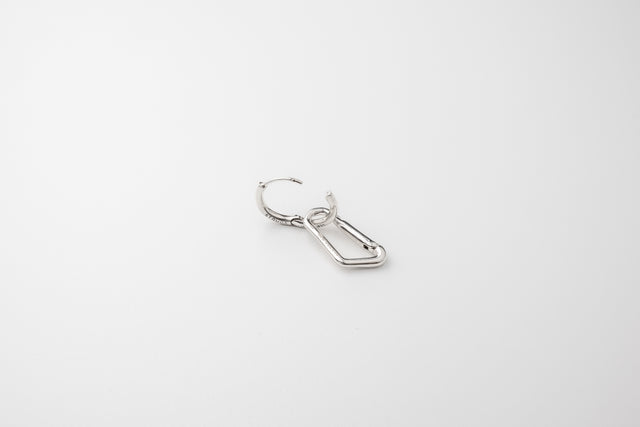
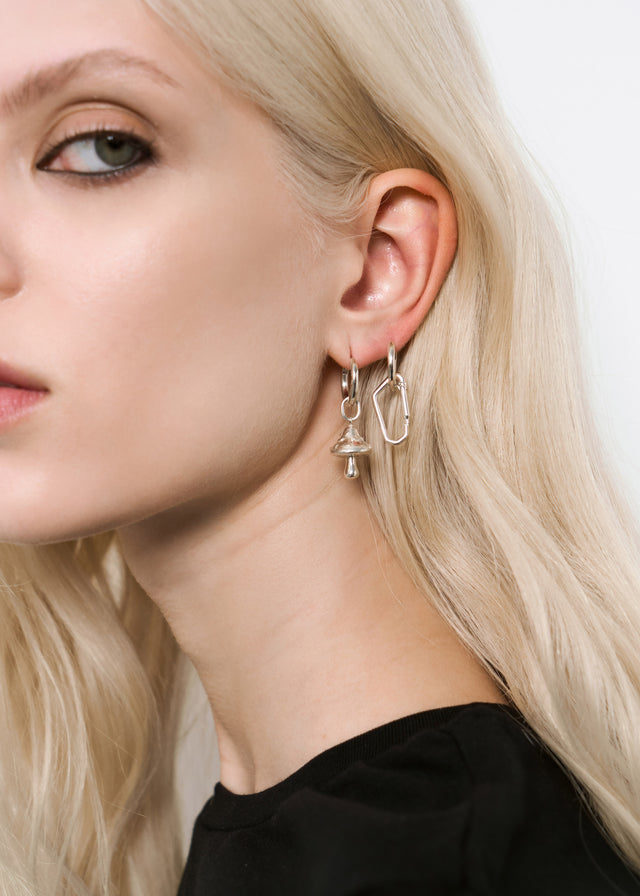
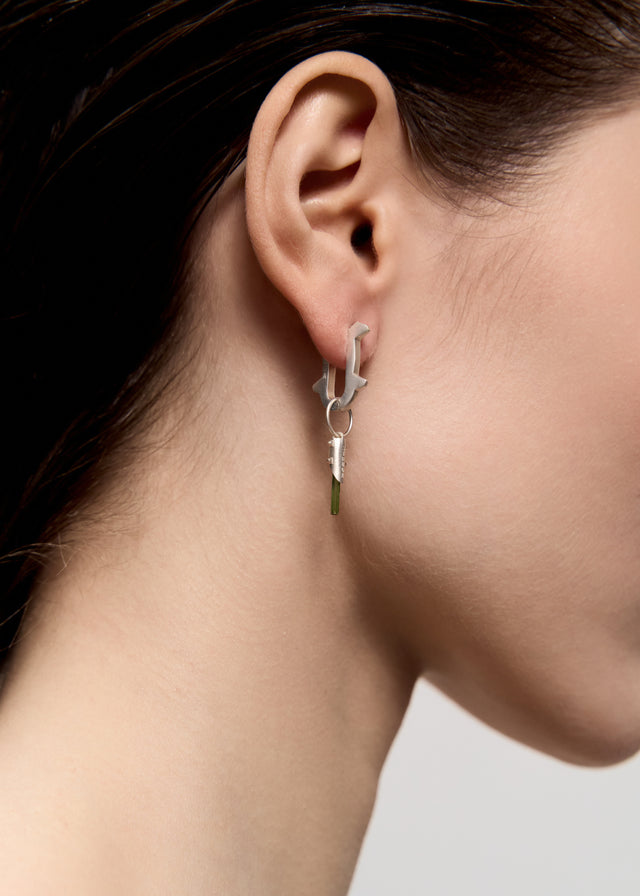
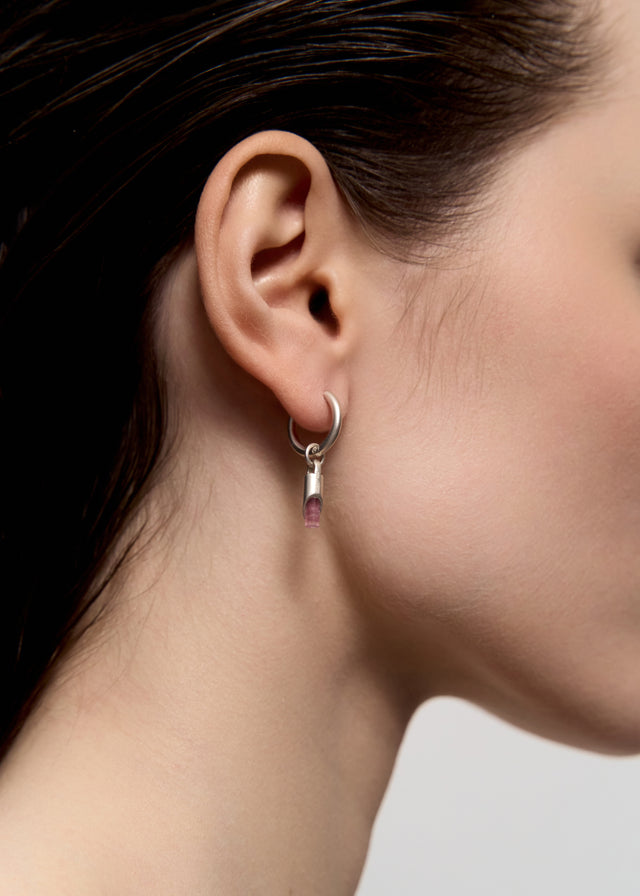
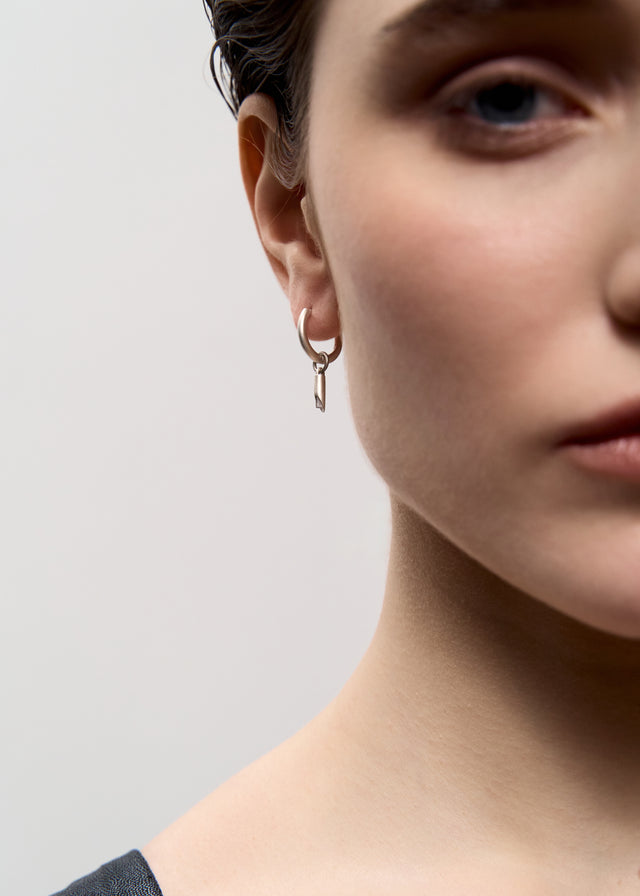
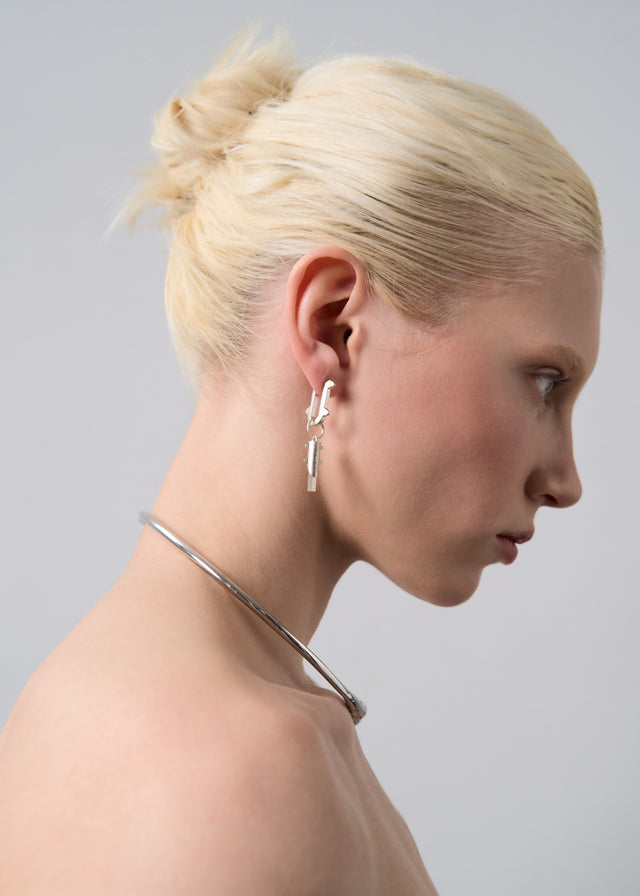
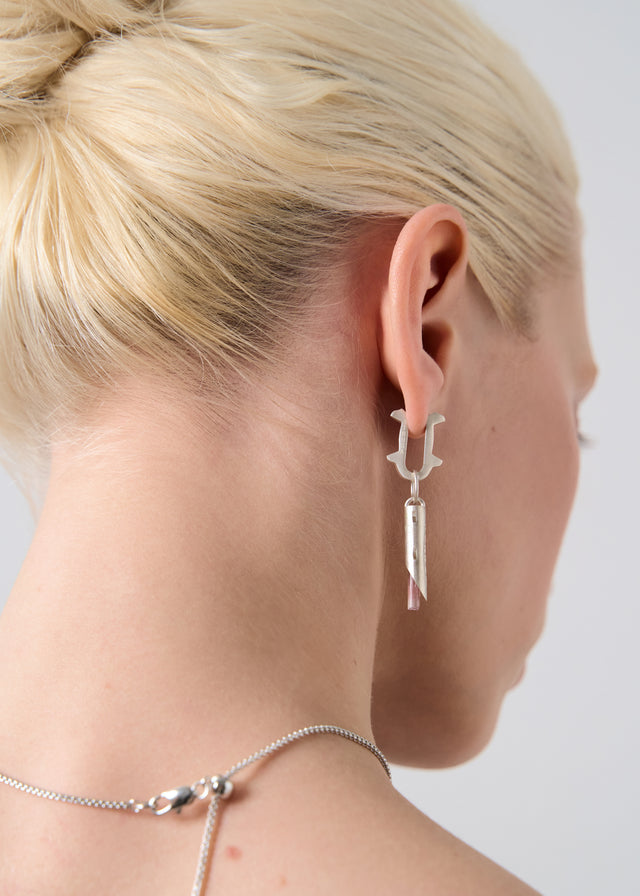
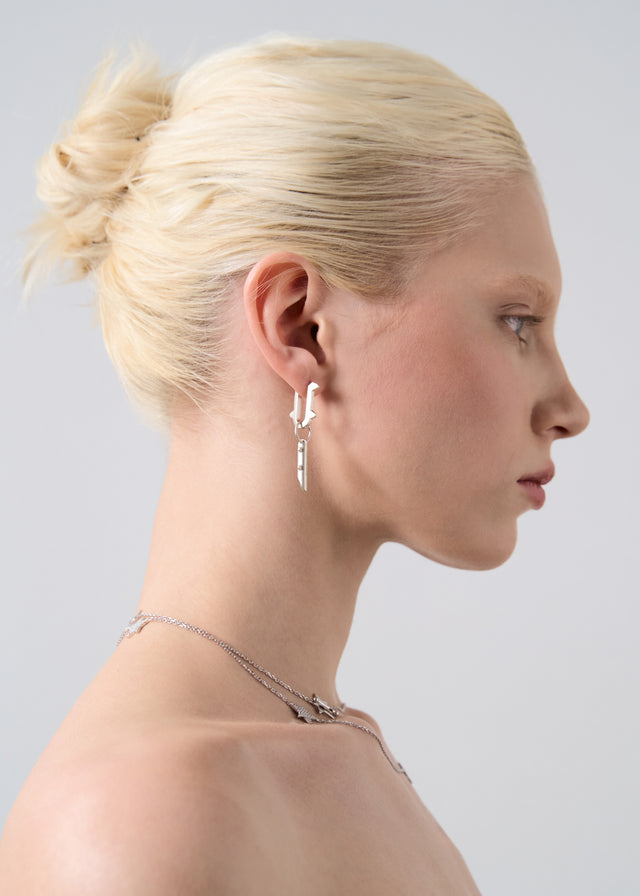
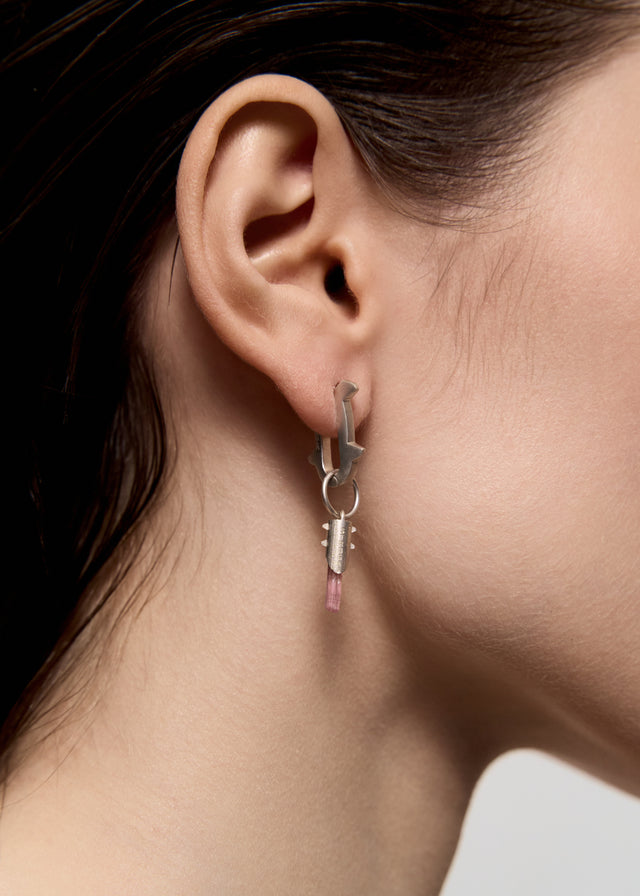
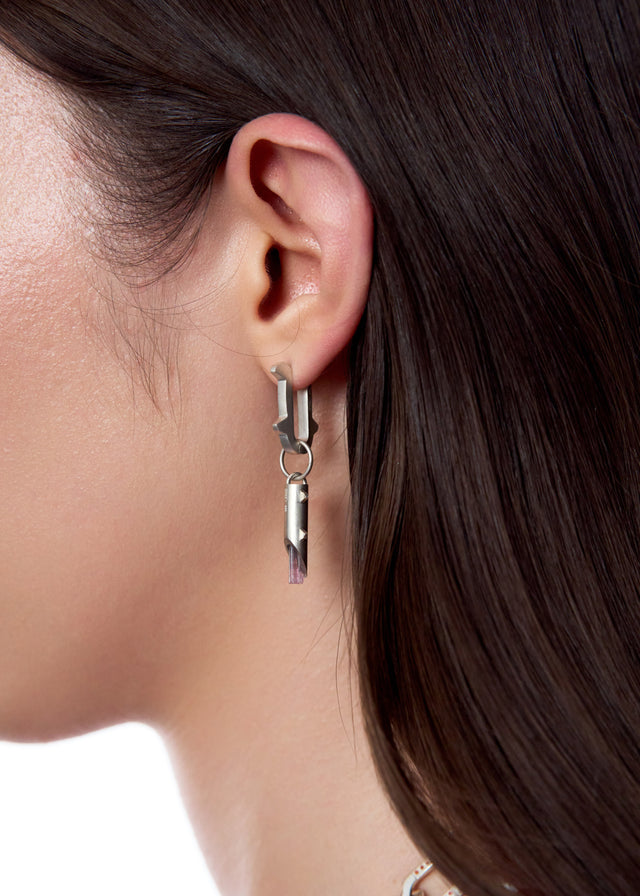
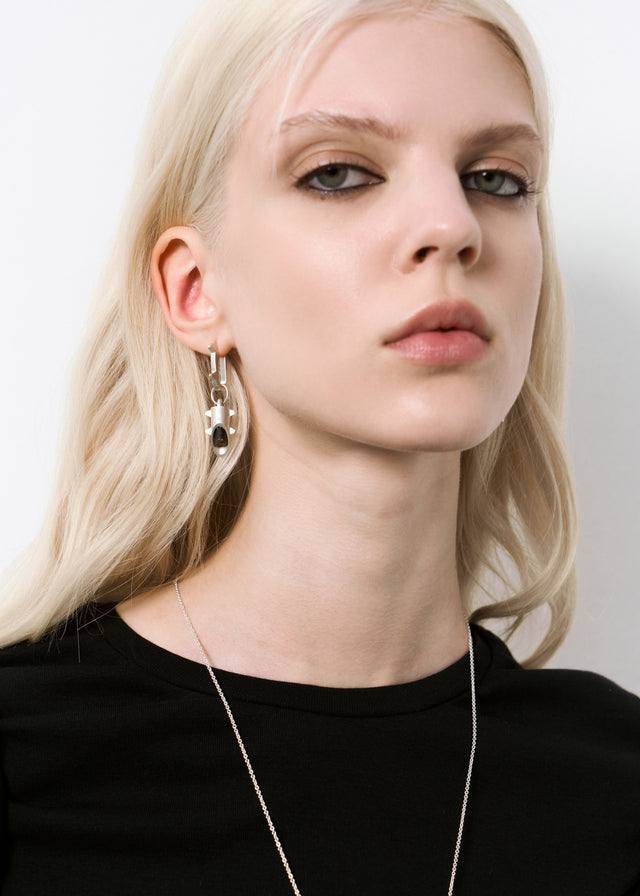
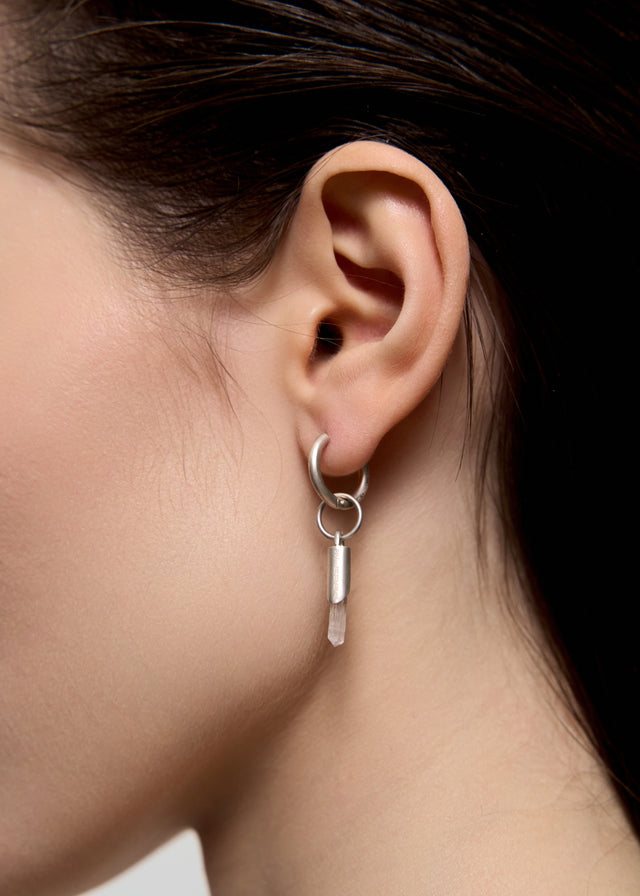
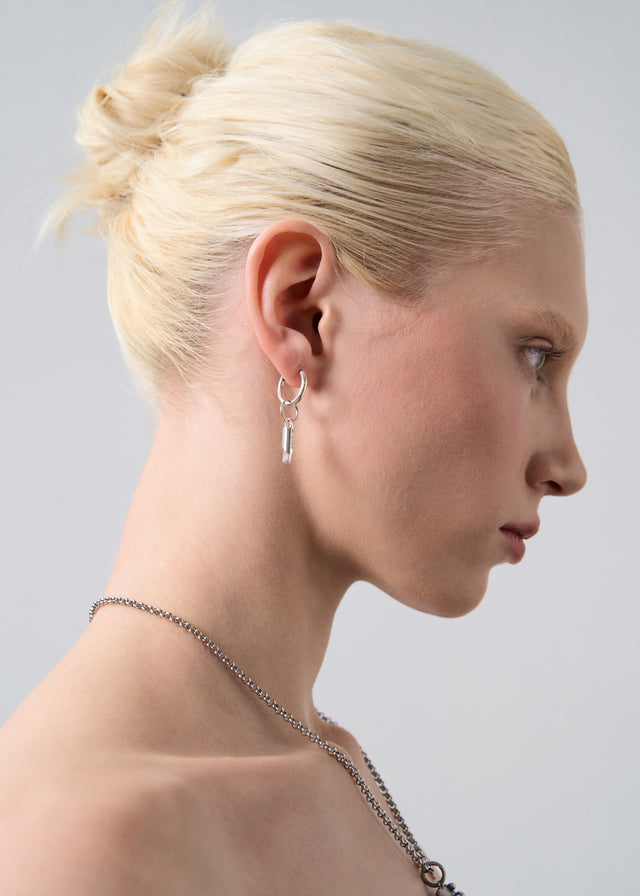
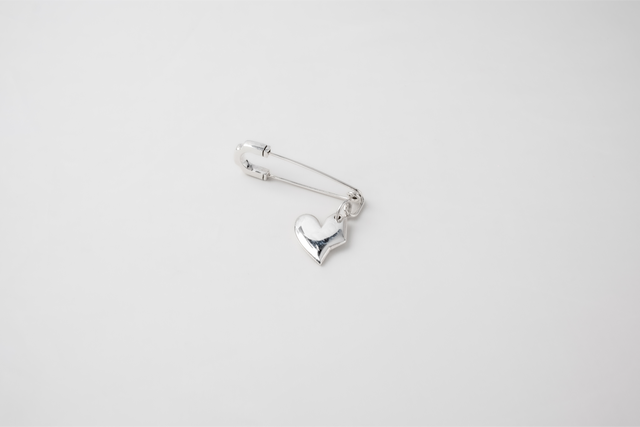
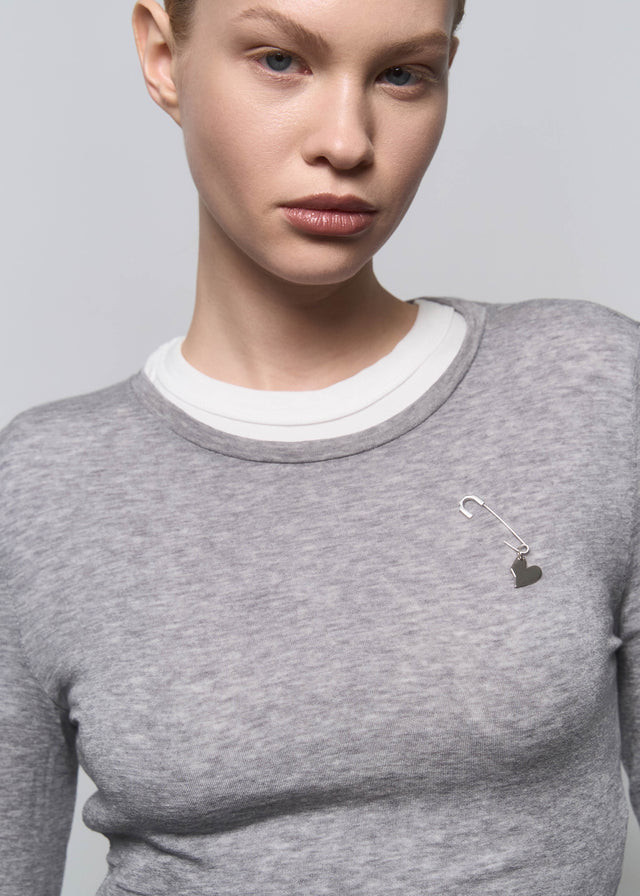
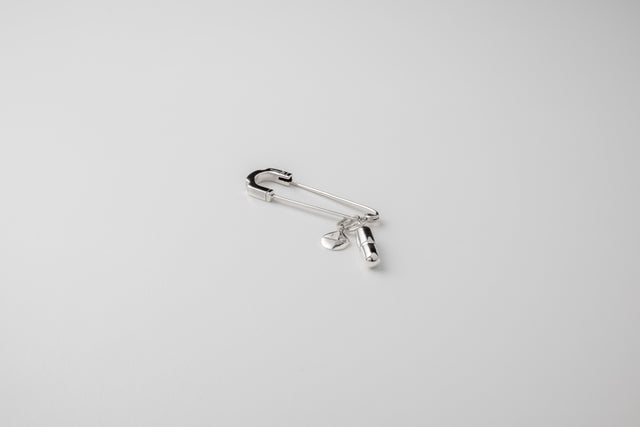
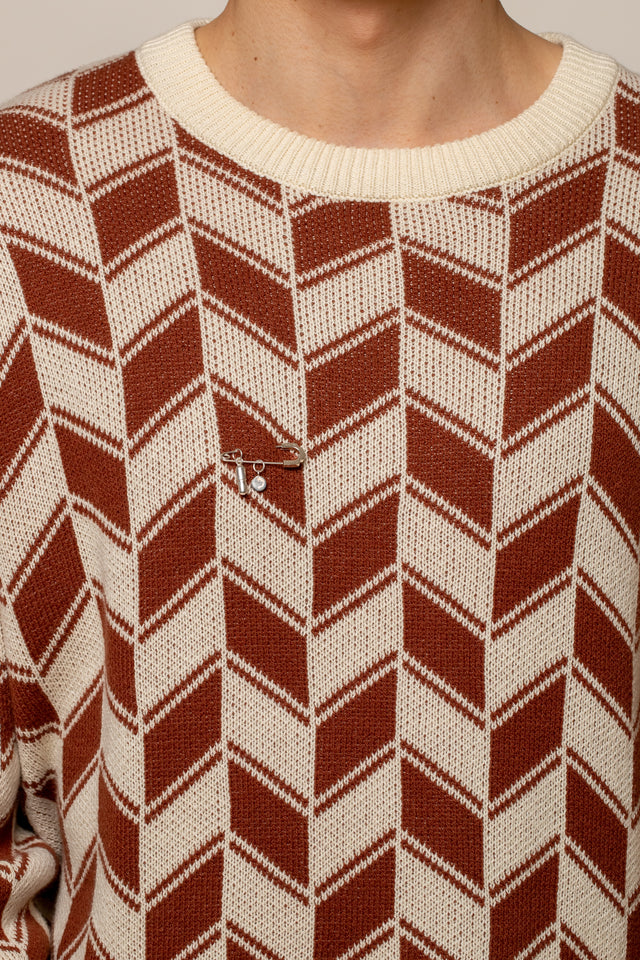
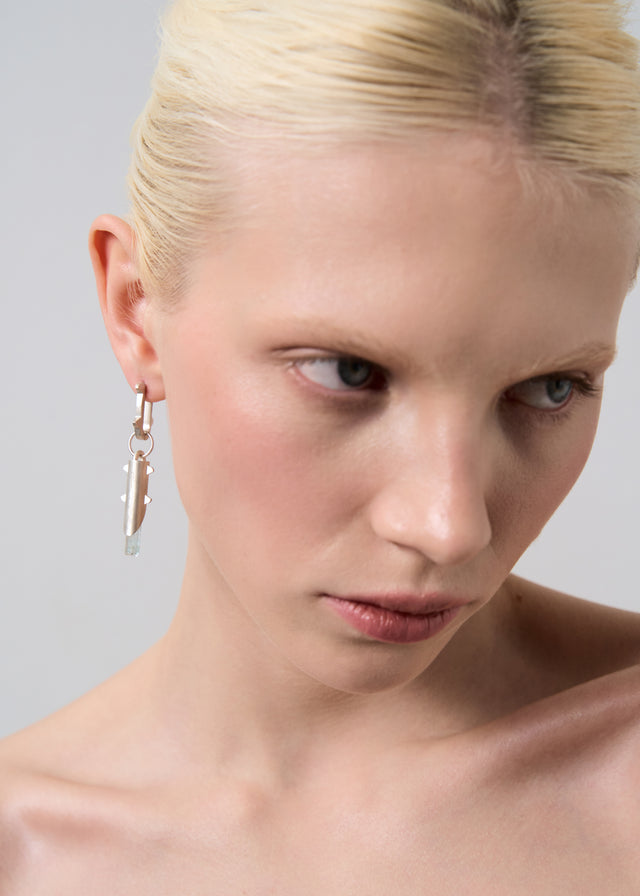
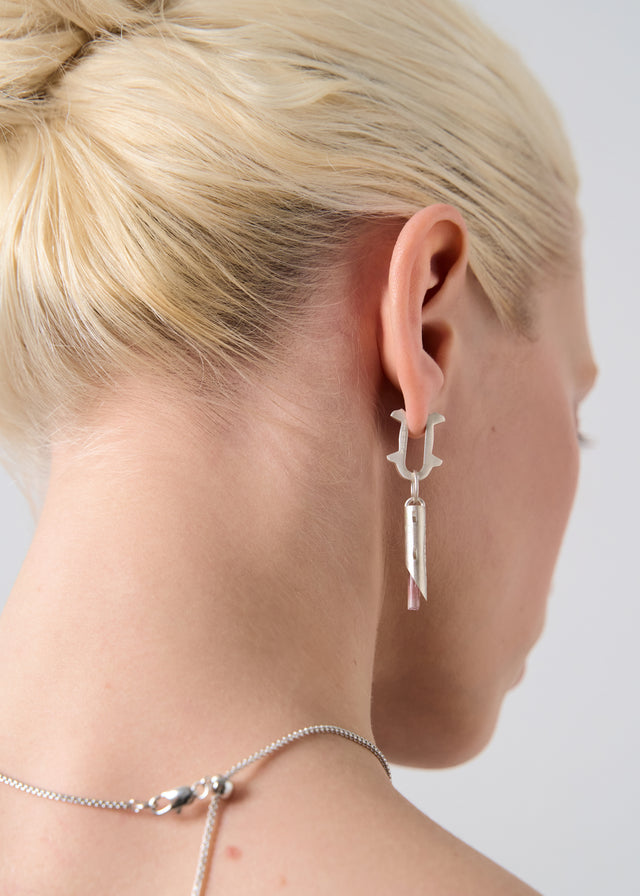
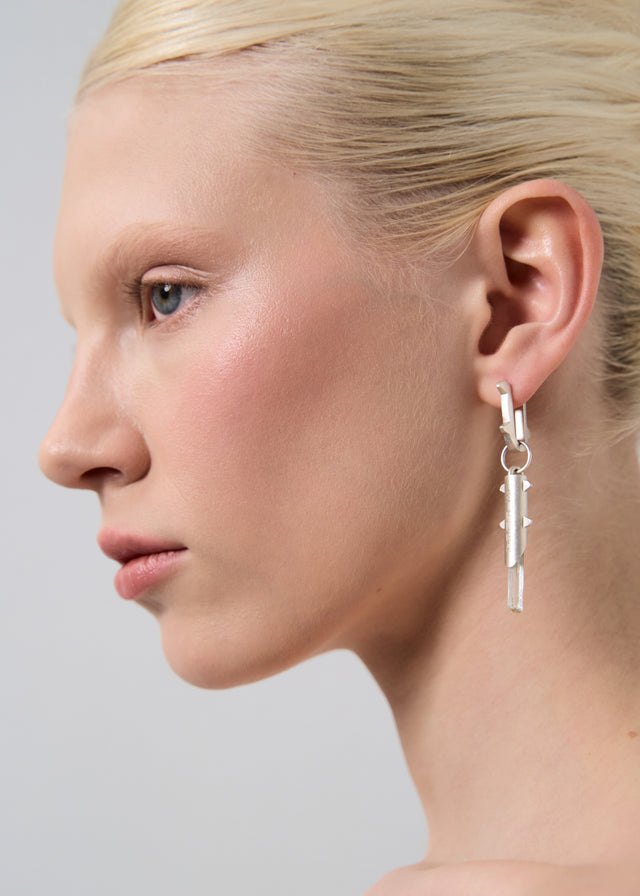
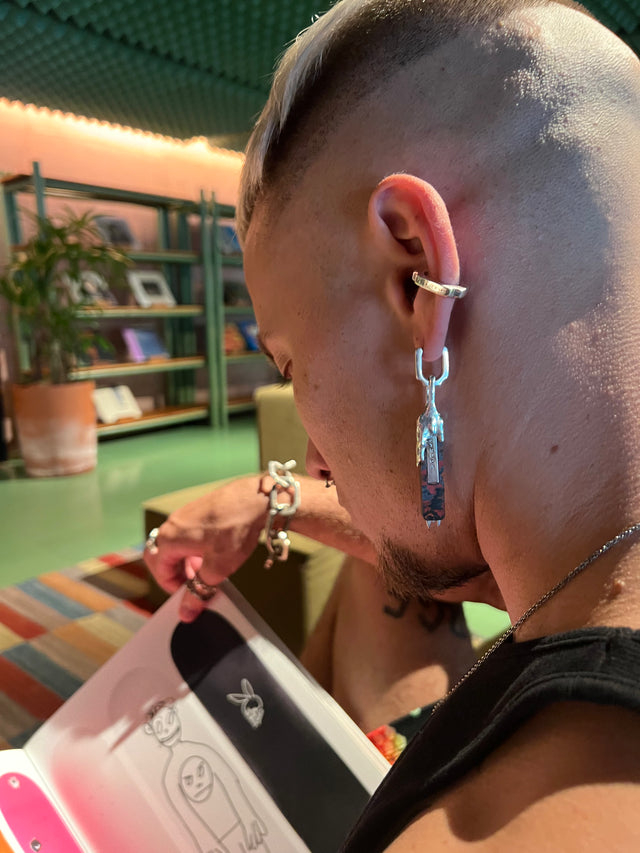
Two parts and a free joint between them. The upper part holds the ear: on forty of these it is a hinged hoop that closes in the lobe, on three it is a silver pin passed through it. Below the joint hangs the object, and because the joint turns, the object swings as the head turns. That movement is the whole definition. An earring fixed flat against the lobe belongs to another form, however long it looks from the front.
Drop, stud, cuff, mono — four words, three different questions
Three neighbouring forms are easy to confuse with this one, and each answers a different question.
A stud answers where the earring sits: on the lobe. A straight post goes through, a fixing holds it from behind, and nothing hangs underneath, so it stays still. Five STRUGA earrings are built that way and they keep their own section.
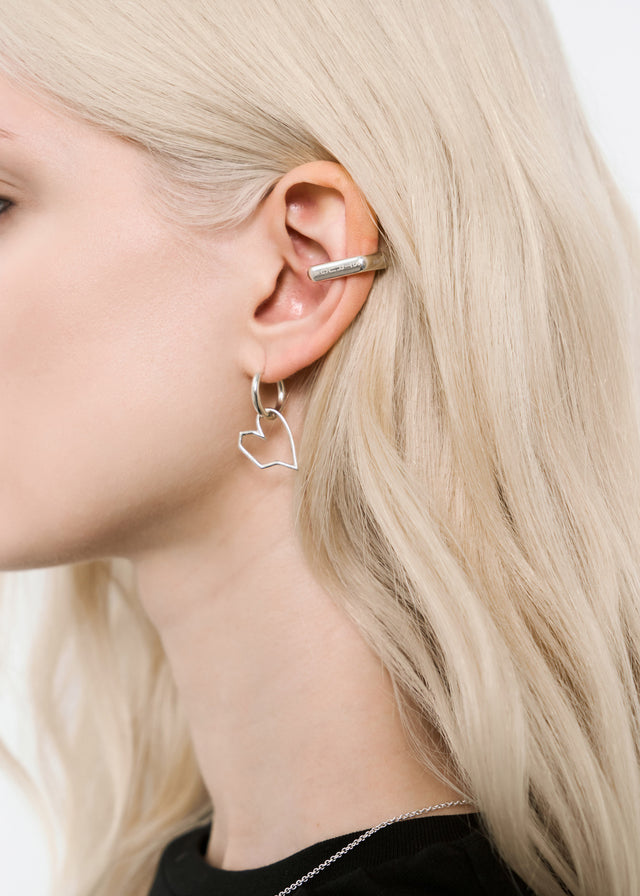
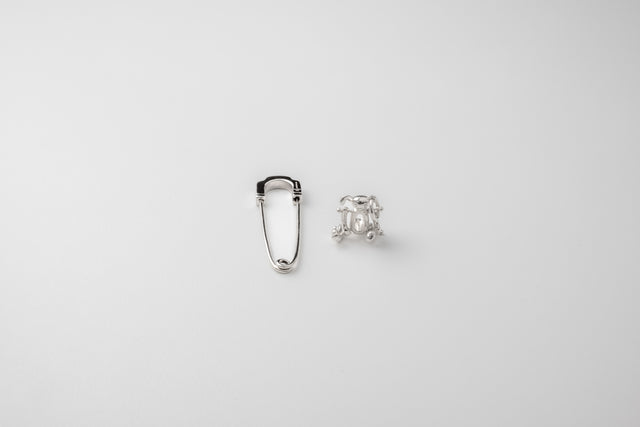
An ear cuff answers how the earring holds: by pressure on the outer edge of the ear, with no piercing anywhere. Sixteen of them, also a separate section.
A mono earring answers how many: one, rather than a matched pair. That is a count, not a rival form — every piece in this section is sold singly, so each of these forty-three is a drop earring and a mono earring at the same time. The two words describe different axes, which is why the same piece is listed under both.
The line is built from a link
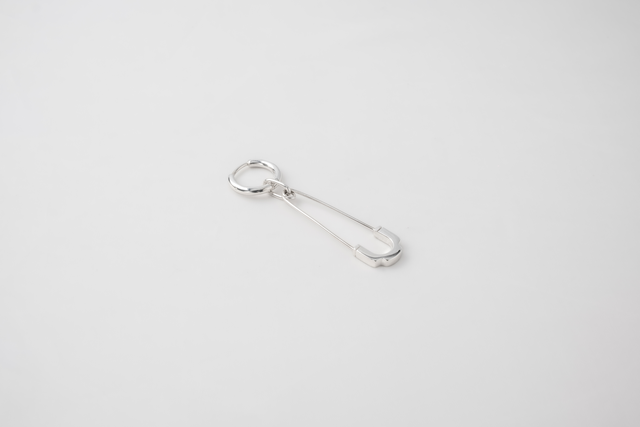
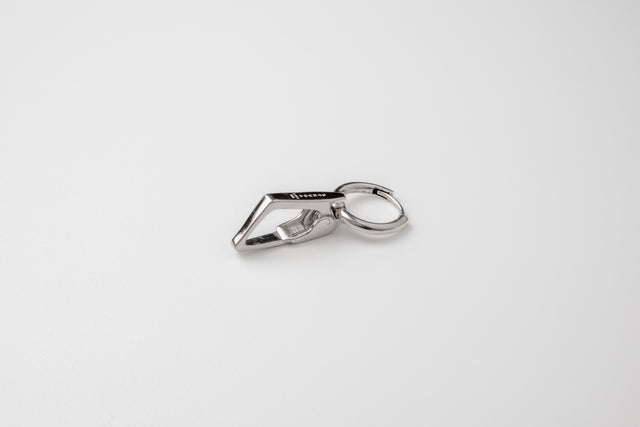
A drop earring is usually pictured as fine openwork: a thin thread, a light weave, a scatter of small stones. STRUGA builds the drop the other way round. A cast silver body hangs on a jump ring under a hoop, so the weight is in the metal and the metal holds the shape. What swings is an object, and it reads from across a room. The same argument is set out at length in the Atlas entry on drop and dangle earrings.
Weight: 2.5 to 8 grams
Nine pieces stay under 3 grams and hang quietly; thirty-two sit between 3 and 6 grams, which is the everyday range here; two pass 6 grams and stay present all day. Mass works against the swing rather than with it — a heavier body settles the small tremor and moves in one slow arc instead of a flutter.
The catalogue states weight, not drop length. Twenty-nine of the forty-three end in a raw uncut crystal, and no two crystals grew to the same size, so the finished drop differs from piece to piece. Where an exact length decides it for you, write through Custom Order.
What hangs below the hoop
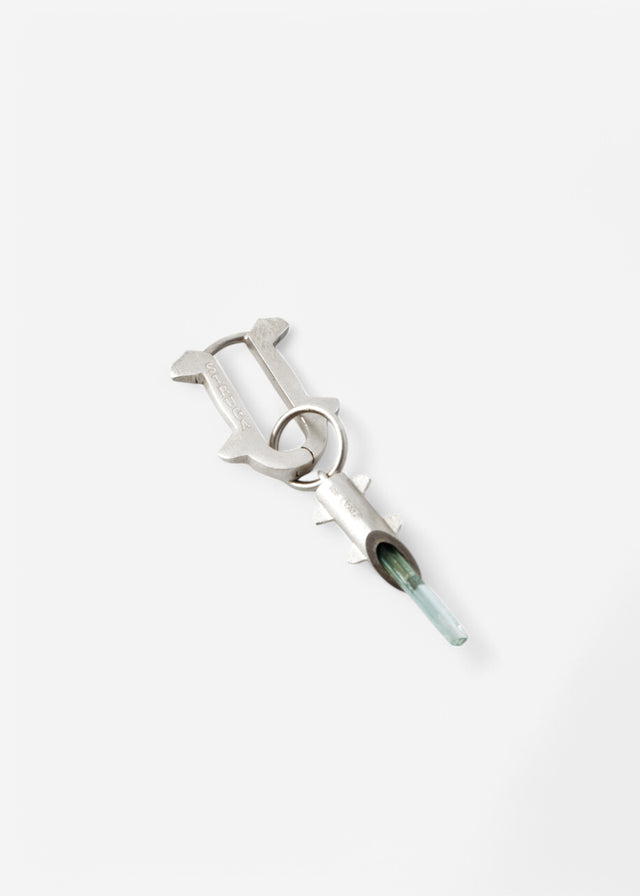
Twenty-nine belong to AMULET, silver built around a stone or a chamber: eighteen Thorn Amulets, where a torpedo hangs from a thorn-shaped hoop, and eleven Classic Amulets, where a silver cap and a raw crystal hang from a round one. STRUGA names the family for its construction and attaches no claim about what a stone does.
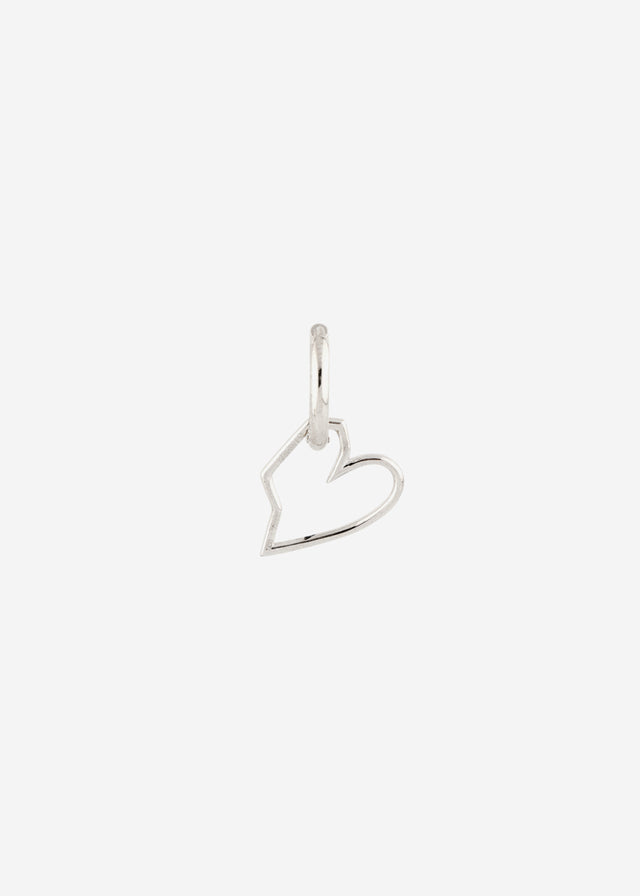
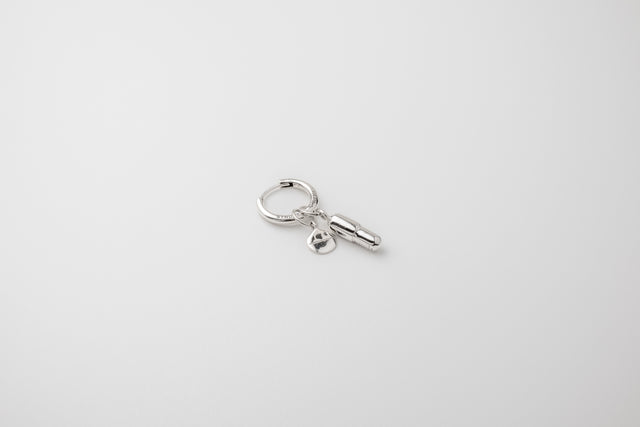
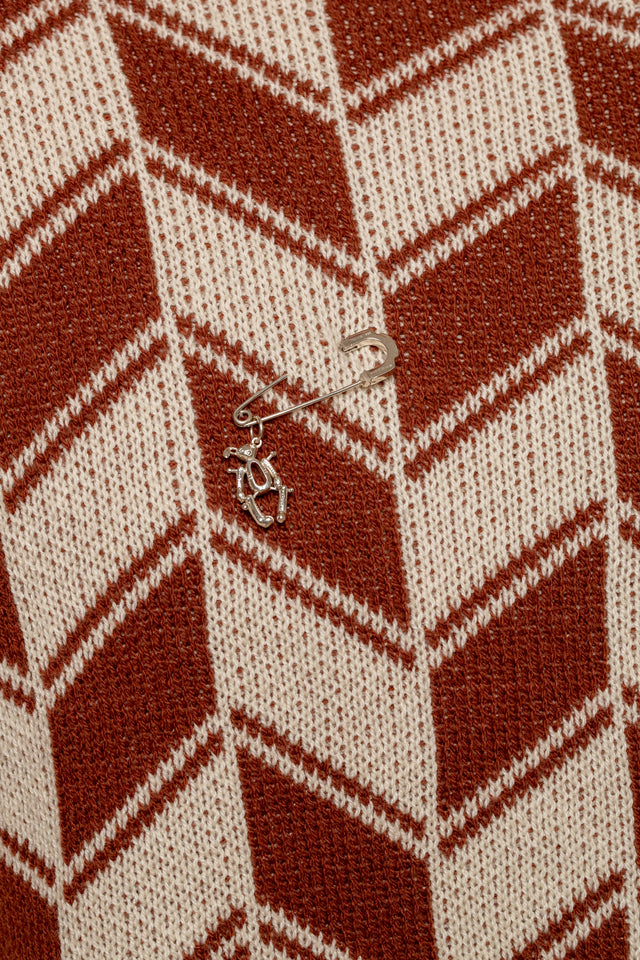
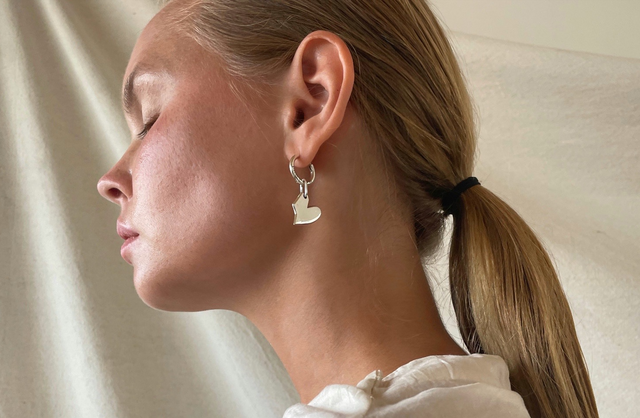
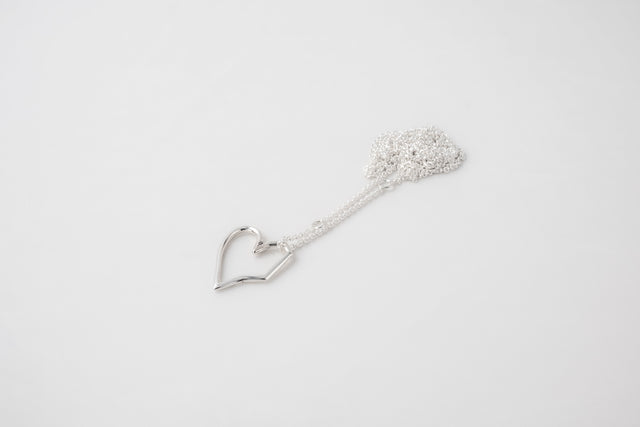
Beside them: eight from EXPERIMENTAL, six from BLADE, three from SIGNATURE HEART, three from SIGNATURE ASYMMETRIC. By world, thirty come from RITUAL, seven from LAB — the silver pills and the mushroom — and six from CODEX. The families overlap, because a thorn-set amulet belongs to two at once.
Three worlds divide these forty-three between them with nothing left over.
| World |
Pieces |
Weight |
Price |
What hangs below |
| RITUAL |
30 |
2.5–6.5 g |
Rp 2,850,000 – 4,227,000 |
Amulets: a silver cap and a raw uncut stone |
| LAB |
7 |
2.6–8.0 g |
Rp 2,410,000 – 4,990,000 |
Experiments: pills, a mushroom, BearRabbit |
| CODEX |
6 |
2.5–5.9 g |
Rp 2,260,000 – 3,920,000 |
The everyday form: a link, a carabiner, a heart |
Silver, stone, carbon
Forty-two of the forty-three are 925 sterling throughout; one brings in carbon fiber. Twenty-one hold tourmaline and eight hold aquamarine, all raw and uncut, set in the shape they grew in — which is why each of those exists in one copy and a matching second cannot be assembled. The remaining fourteen hang silver alone.
Ten arrive already blackened at the bench. The other thirty-three are left unplated and darken on the wearer: recesses go to graphite, friction lightens the raised edges, and a piece worn daily separates visually from one worn occasionally. Patina is a property, not a defect, and silver cleaner reverses either whenever you want. The method is in the Atlas entry on silver care.
Read further