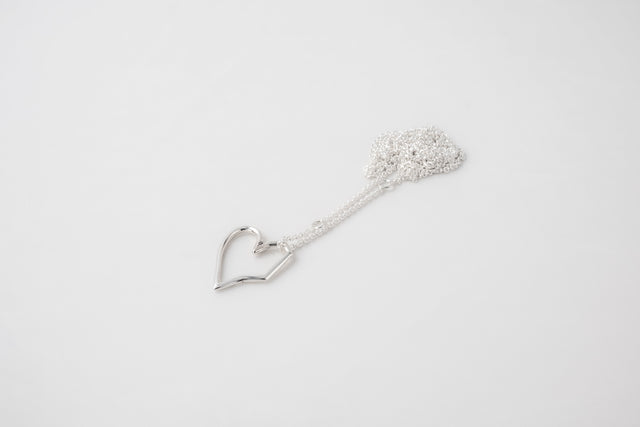
The Living Metal: How Sterling Silver Transforms Over Time
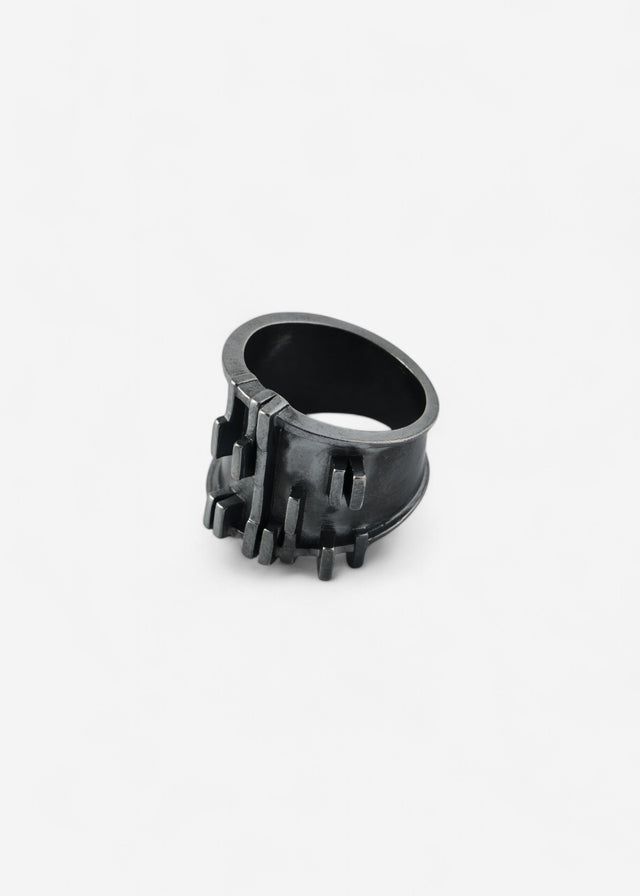
Yes — sterling silver darkens, and Living Silver is STRUGA's name for leaving its surface open. Sulfur-containing substances can form a thin dark layer on 925 silver. Wear lightens exposed edges while recesses hold their contrast. We use no rhodium plating on our silver. You can keep the patina or ask to restore a brighter surface; neither choice changes the silver's grade.
Updated October 12, 2026
- Silver darkening is a surface reaction, mainly associated with silver sulfide (Ag₂S). On 925 sterling silver, the layer can also contain copper compounds. Removing it changes the surface rather than reversing time.
- STRUGA does not rhodium-plate its silver: the 925 surface stays exposed and develops patina with wear, an approach the brand calls Living Silver.
- Living Silver describes the exposed silver itself. An oxidized finish describes a deliberate dark starting surface. Check the finish of the individual object rather than assuming every design in a world or family starts the same way.
- Carbon does not develop silver patina. The metals combined with it need their own care: a silver setting and a Seymchan meteorite insert do not react in the same way.
- STRUGA offers lifetime cleaning and minor repair free of charge while the piece remains with its owner; shipping to us is the owner's responsibility. Patina is removed only on request. Discuss the desired finish before sending the object.
- Wedding bands are the strongest case for Living Silver because they are worn every day: the patina map becomes a record of the marriage, set out in the dark wedding rings guide and commissioned through dark union paired rings.
- Living Silver runs across all five worlds — CODEX, RITUAL, LAB, DARK UNION and ISLAND ARTIFACTS — and eleven design families; the metal itself is covered in our sterling silver 925 guide.
Silver is not alone in this: copper, bronze and iron all build their own surface layers, and the reactions differ across patina formation in metals — a bare metal reacting with what surrounds it.
What is silver patina, in one paragraph
There's a moment — when someone notices a change in an exposed silver ring — when we get a message: "My ring is turning dark. Is something wrong?"
Nothing is wrong. Everything is exactly right.
That darkening is often called silver patina in jewelry: a surface changing through exposure and wear. The dark reaction layer is mainly silver sulfide. It can look yellowish at first and deepen toward grey or black. In this guide, patina describes an appearance you choose to keep; it is not a separate chemical substance from ordinary silver tarnish.
Patina is a word for an aged surface. It does not name one chemical process shared by every material: silver, copper and iron form different compounds. On a worn silver ring, the useful distinction is visible — light on the ridge, darkness in the cut, a surface shaped by contact.
Why does sterling silver turn black?
Sterling silver contains 92.5% silver; copper is a common component of the remaining alloy. Sulfur-containing gases in air contribute to surface darkening. A yellow or brown film can develop toward a darker tone; its speed depends on exposure, storage and the surface itself.
Several factors speed up the process.
- Humidity and exposure. Moist air can accelerate tarnishing in the presence of sulfur-containing gases. It does not supply a fixed timetable. For the international market, STRUGA objects are made in Bali; the material still needs care appropriate to its finish and inserts, wherever you wear it.
- Contact with the body. Oils, perspiration and friction leave different traces on a surface. Look at where an object touches skin and clothing rather than diagnosing the wearer from its colour. A dark ring does not establish anything about medication, diet or health.
- Sulfur-containing surroundings. Some foods, rubber, wool and gases from hot springs can contribute to tarnishing. Storage matters as much as wear. Keep an object dry and follow its care instructions rather than exposing it to harsh conditions to force a darker colour.
- The alloy. Sterling silver is not pure silver; its other components affect its surface reaction. Do not identify a green stain as one particular oxide from colour alone. If the appearance is unexpected, show the object to a jeweler before cleaning it aggressively.
The takeaway: ordinary surface darkening is expected in exposed silver. It is different from a crack, loose setting or damaged insert.
Patina vs tarnish vs oxidation — comparison at a glance
These are three descriptions of a surface, not three mutually exclusive chemical reactions. In jewelry language, oxidation usually names a deliberately darkened finish; patina and tarnish frame natural darkening differently. The table compares their use and appearance.
| Aspect | Oxidized finish (intentional) | Patina (appearance kept) | Tarnish (darkening to remove) |
|---|---|---|---|
| Intention | Choose a dark starting finish | Keep the naturally changing appearance | Restore a lighter appearance |
| Surface chemistry | Deliberately formed dark reaction layer | Natural dark reaction layer | The same natural dark reaction layer |
| Where it appears | Selected areas of the design | Exposed areas and protected recesses; wear changes the contrast | Exposed areas and protected recesses; wear changes the contrast |
| Changing the appearance | Treatment depends on the actual finish and construction | Keep it or brighten selected areas | Choose appropriate cleaning for the whole object |
| Should you change it? | Only if you want another finish | Only if you want another appearance | The owner chooses how much darkening to remove |
| STRUGA position | A finishing choice, separate from Living Silver | Patina is a property of exposed silver, not a defect | Patina is removed only at the owner's request |
Living Silver describes the uncoated material and its ability to change. Oxidizing is a finishing choice. An intentionally darkened object can keep changing after it leaves the jeweler; its starting colour does not seal the surface.
What is oxidized silver?
The two words sound similar but mean different things in workshop language.
Tarnish is the natural, uncontrolled darkening that happens through environmental exposure. It's uneven, gradual, and unique to how you wear and store the piece. Tarnish is what your grandmother's silver spoons develop in a drawer.
Oxidation in the jewelry context is a deliberate, controlled process. A silversmith applies a chemical solution — typically liver of sulfur (potassium polysulfide) — to darken the silver intentionally. The piece is then selectively polished: high points are buffed back to bright silver while recesses stay dark. This creates contrast that highlights texture and detail.
At STRUGA we use both approaches.
An oxidized finish starts dark. Recesses can hold a darker tone while polished ridges catch the light. Whether a particular RITUAL, Thorn, Brutalism or Blade object has this finish is stated on its product page; a family name alone does not establish the treatment.
Bright silver starts from another point. It can darken with exposure while friction changes its contact areas. The same design can acquire different surface patterns in daily use. Check the individual object in Signature Asymmetric, Signature Heart or CODEX for its actual starting finish.
This is intentional, not neglect.
The Living Silver philosophy — why we don't plate
Rhodium plating places another metal over the silver. It helps preserve a bright appearance while the coating remains intact, but its lifetime depends on the piece and wear. Exposed silver and plated silver therefore call for different care. STRUGA's silver line uses the exposed surface: its changing tone belongs to the object, rather than sitting beneath a bright coating.
STRUGA doesn't rhodium-plate. The metal is left exposed, alive, responsive to its wearer. We call this Living Silver: 925 without a coating, evolving day by day instead of frozen in time.
Three reasons we made this choice.
1. Honesty. Plating is cosmetic; it hides the metal underneath. A Living Silver piece shows you what it is — 925 sterling, hand-cast, hand-finished, ageing in real time on your hand.
2. Care. An exposed silver surface can be cleaned or its finish changed without renewing rhodium plating. That does not make every treatment suitable for every object. The setting and inserts matter; agree the work for the actual piece.
3. The personal record. A raised edge grows brighter where it meets the hand, while a protected cut can keep its darkness. The contrast belongs to how the object is worn, not to a promised number of years.
Hand finishing leaves texture on the Living Silver surface. As the silver changes, contact areas and sheltered cuts show different traces.
How patina reads on different forms
The same Living Silver chemistry shows up differently on rings, chains, cuffs, and pieces with material inlays. Quick guide.
- Rings. Contact with skin and other fingers can change the surface pattern. High-contact areas — outer edge of the band, the spot where the ring rests on the next finger when you make a fist — lighten quickly. Recessed details stay dark. A daily-worn band can make these traces easy to see. Full discussion in our dark wedding rings guide. The map is easiest to follow on a band worn daily — Signature Links V.1 Ring.
- Chains. The pattern follows the contact between links, clothing and skin. The links closest to skin (back of neck) darken faster than links hanging loose at the front. Heavy Blade chains and Thorn chains can reveal contrast with wear. Heavy links in the catalogue: Thorn Links Chain.
- Cuffs and bracelets. Lightening on the inside (skin contact, sweat) and on the highest outer surface (where the cuff meets sleeves and table edges). Recessed work — Brutalism textures, Mosaic seams — stays dark.
- Earrings and ear cuffs. Contact and friction differ from a ring or bracelet, so the surface can develop a different pattern. That does not make one category universally slower to darken. The finish on the actual piece remains the starting point for care.
- Pieces with carbon. Carbon does not form silver patina. A silver setting around it changes independently, which can make the contrast more visible. CARBON also includes other metal combinations; do not treat every pale insert as sterling silver. Read the carbon material guide and the specifications of the Signature Asymmetric Carbon Ear Cuff.
- Pieces with Seymchan meteorite. The iron-nickel insert needs different care from silver. Avoid soaking it and dry it after accidental contact with water. Rust is not the same finish as silver patina; do not assume that a polishing method for the setting suits the insert.
- Pieces with raw stones. Tourmaline, aquamarine, heliodor and quartz do not develop silver sulfide patina, but the stone, its setting and any treatment still affect cleaning. Preserve the contrast between crystal and metal without assuming every stone can be soaked or put in an ultrasonic cleaner.
How an aged surface changes the form
An aged surface changes how a form reads. A polished ridge catches light; a dark recess holds the cut. You can read the difference without turning wear into a defect or assigning it a fixed cultural meaning.
The choice is in the surface you keep.
Bali is part of STRUGA's origin and design language. That biography does not establish what every silversmith or wearer values. Our position is specific: exposed silver can change with the object, and the wearer decides how much of that surface to keep.
Some wearers prefer a bright surface, others keep the darker traces. STRUGA leaves its silver open to those changes. What matters is the object in front of you: the cut, the contact point and the surface you choose to keep.
When someone asks what silver patina means for jewelry, the answer is: it means the piece is alive. The metal is honest. Sterling silver doesn't pretend to be permanent. It wears its history on the surface, and if you let it, it becomes more beautiful — not less — as time passes.
That philosophy runs through everything we design. The dark, minimal aesthetic isn't only a style choice; it's a statement about how objects should age. A STRUGA ring at one month and a STRUGA ring at one year are two different objects, and both are exactly what they should be. Style angle covered separately in our dark fashion jewelry style guide.
How does Living Silver change with wear?
There is no year-by-year schedule for an exposed silver surface. The following stages are ways to look at a worn object, not promised dates. Finish, contact, storage and cleaning can change their order and intensity.
- The starting surface. Look at the finish when the piece arrives: bright, matte or deliberately darkened. This is the reference for later changes, not a surface every design must share.
- Contact appears. Friction can lighten a raised ridge while sheltered cuts keep their darker tone. Where that happens depends on how the object sits on your hand, neck or ear.
- The contrast develops. The surface need not settle after a particular year. A change in wear or storage can change its appearance again; two pieces of one design need not follow the same pattern.
- Care changes the surface. Selective polishing can brighten a contact area. Cleaning the whole object gives a different result. Decide which contrast you want before choosing the method.
- The object continues. Patina is one part of its history, alongside small marks and the places your hand touches most. Keeping it or removing it is a choice about appearance, not a test of whether you wore the piece correctly.
If you want another surface, contact STRUGA with a photograph and the finish you want. Cleaning and minor repair are covered by the lifetime-care policy; the work required for a different finish should be agreed for the actual object. The work and time are confirmed after the object is assessed.
How do you clean sterling silver without killing the patina?
Start with the result you want: remove dirt, brighten a ridge, or remove the dark layer. Those are different jobs. The method must also suit the inserts and setting; a silver-only routine is not a routine for every object.
- After wear — inspect. Look for dirt, surface marks or a loose part. Normal darkening is not a reason to scrub the whole object. Damage to a setting or insert needs a different response.
- For ordinary dirt — a soft cloth. Wipe gently with a clean dry cloth. This is not the same as a treated silver-polishing cloth, which can brighten the metal and alter its dark finish.
- Water — according to the object. Mild washing may suit plain silver, but do not apply a scheduled soak to meteorite inserts or every stone and setting. Check the product's care instructions and dry the piece thoroughly after an appropriate wash.
- To brighten a chosen area — selective polishing. Use a silver-polishing cloth only where you want a brighter surface. It also removes material from the surface, so repeated aggressive polishing is not neutral care.
- Liquids and machines — choose for the whole piece. A silver-cleaning liquid can remove patina when that is your intention. It may also affect a dark finish or another material. Ultrasonic cleaning is not a universal method for stone-set and composite pieces; ask before using it.
- Between wears — store it dry. A dry airtight box slows the reaction, and anti-tarnish tabs absorb sulfur from the air. Keep silver away from rubber, wool, perfume and lotion, which all speed darkening up.
- For a reset — agree the result. STRUGA provides free cleaning and minor repair while the object remains with its owner; shipping to us is the owner's responsibility. Patina is removed only at the owner's request. Ask about the treatment of your particular finish rather than assuming a fixed process or deadline.
Where Living Silver fits in the dark silver landscape
Dark silver is a way of reading form, not a guarantee that every maker uses the same surface treatment. Our guides to Chrome Hearts alternatives and other dark silver brands compare their objects. Check the actual piece for plating, finish and care rather than inferring those facts from the brand name.
If you're drawn to dark silver, you probably already understand intuitively what Living Silver is about. You're not looking for something that stays the same. You're looking for something that changes with you.
The living metal
We named this guide The Living Metal because that's how silver behaves after years of working with it.
Every ring that leaves the workshop is the beginning of something, not the end. The metal will shift, darken, warm, and settle into a surface that reflects the person wearing it. Two people buying the same design will end up with two different objects. That isn't a flaw in the material — it's the entire appeal.
Wear the object, but follow its care instructions. Ocean water, a workout or a chemical bath are not necessary ways to earn patina. Its appeal is the ordinary contact between a surface and a person, with care that suits the silver, stone or insert.
The metal remembers. Let it.
Explore STRUGA's silver objects across CODEX, RITUAL and LAB. For the international market, STRUGA objects are made in Bali. Looking for a single bespoke piece? Browse Custom Order; for paired wedding and engagement rings, explore Dark Union.
About STRUGA. STRUGA was founded by Dmitry Strugovshchikov and Ekaterina Strugovshchikova. Its silver line uses 925 sterling silver without rhodium plating; CARBON and objects combining other materials are separate parts of the catalogue. The darkening of exposed silver is part of how the surface lives with its wearer.
Continue from STRUGA catalog:
Sources and further reading
Frequently asked questions
Didn’t find the answer — write to us, we reply personally.
Ask a question →01Is oxidized silver the same as tarnished silver?+–
They can have related surface chemistry, but the words describe different intentions. In jewelry, oxidized silver usually means a deliberately darkened finish. Tarnish develops through exposure. Living Silver names STRUGA's uncoated silver and its continuing changes, not the act of darkening it.
02Is oxidized 925 a lower grade of silver?+–
No. A dark finish does not make sterling silver a lower grade. The 925 designation describes the silver content of the alloy; the visible surface can be bright or deliberately darkened. Check the material specifications of the actual object.
03Is oxidized silver the same as silver that blackened with age?+–
The difference is how the surface started. An oxidized finish is deliberately darkened before wear; natural darkening develops through exposure. They can coexist: an intentionally dark piece still changes at its contact points and recesses.
04Is silver patina desirable?+–
Yes — for many wearers it is the point of the piece. Patina records the wear of the silver: where the hand rubs, where the chain falls against skin, where time accumulates. The recessed darkening contrasts against polished raised surfaces, making the relief more visible. STRUGA's Living Silver philosophy treats patina as the metal's natural aged state.
05How can silver develop a darker patina?+–
Its exposed surface can darken through normal wear and storage conditions. There is no fixed timetable. For a controlled dark finish, discuss the actual object with a jeweler. Do not use exercise, seawater or improvised chemicals as a care routine, especially on pieces with inserts.
06Can you remove silver patina?+–
Yes, a brighter appearance can be restored. Choose the method for the object and the finish you want: selective polishing, an appropriate silver-cleaning liquid or professional care. Cleaning can remove surface material, so avoid repeated aggressive treatment. STRUGA removes patina only at the owner's request.
07What is the difference between patina and tarnish?+–
In this jewelry guide, both words can describe natural surface darkening. Patina emphasizes the aged appearance you choose to keep; tarnish describes the change itself. They are not two separate chemicals. Conservation terminology can use these words differently.
08Does silver patina damage the metal?+–
Ordinary darkening is a surface reaction and is expected on exposed silver. It is not the same as a cracked object or damaged setting. A bright appearance can be restored, but polishing and chemical cleaning alter the surface. An unexpected change should be checked before treatment.
09How does oxidized silver behave with daily wear?+–
Friction can lighten raised areas while darker recesses remain visible. The pattern depends on the finish and how the object is worn. Care must suit the complete piece, including stones and inserts; a dark silver surface does not establish the safety or cleaning requirements of every other material.
10Does Living Silver work for wedding rings worn daily?+–
Yes — an exposed silver band can acquire a personal pattern of contact and darkening. Daily wear does not mean the ring belongs in every shower, workout or chemical environment. Follow its care instructions and agree any cleaning according to the surface you want to preserve.
11What is silver oxidation, in plain terms?+–
In jewelry language, oxidizing means intentionally darkening the surface. The dark layer is largely associated with sulfide compounds; the word is not a claim that it is simply a silver oxide coating. Living Silver describes the uncoated material, while oxidizing describes a finishing step.
12What does oxidizing silver actually do?+–
It changes the starting tone and contrast of the surface. Dark cuts and lighter ridges can make relief easier to read. That finish can change with friction and exposure; it does not guarantee that the metal never changes again or that any cleaning method can restore the original surface without loss.
13How is niello different from an oxidized finish?+–
Niello is a dark material used in recessed decoration. An oxidized silver finish darkens the surface itself. These are different techniques, so do not choose a cleaning method merely because both look black. Check the construction and finish of the actual piece first.
14How is rhodium plating different from oxidation — and which is better?+–
Rhodium plating adds another metal over silver to help preserve a bright surface while the coating remains intact. Oxidizing deliberately darkens the silver surface. The choice is about the finish you want and how it will be cared for. Neither establishes a universal service life; STRUGA's silver line has no rhodium plating.
15Does oxidised silver fade over time?+–
It can lighten where it meets friction. Raised edges may become brighter while protected recesses retain more darkness; the result depends on wear and cleaning. An oxidized finish does not seal the silver against later changes. If you want a different starting tone again, discuss treatment for that object.
16Can oxidized silver tarnish further over time?+–
Yes. A deliberately darkened finish does not prevent the silver from reacting to later exposure. Some areas can darken while contact points become lighter. Living Silver names this continuing life of uncoated silver; oxidizing names the initial finishing choice. Storage and care can change the result.