Bali Silver Jewelry — The Complete Guide 2026 | STRUGA
Bali silver describes silver jewelry made in Bali. Sterling 925 specifies 92.5% silver; the remaining alloying metals are commonly copper. Celuk in Gianyar is a recognized craft center. This guide follows the material through making, design, buying and care.
Updated October 15, 2026 — STRUGA editorial team
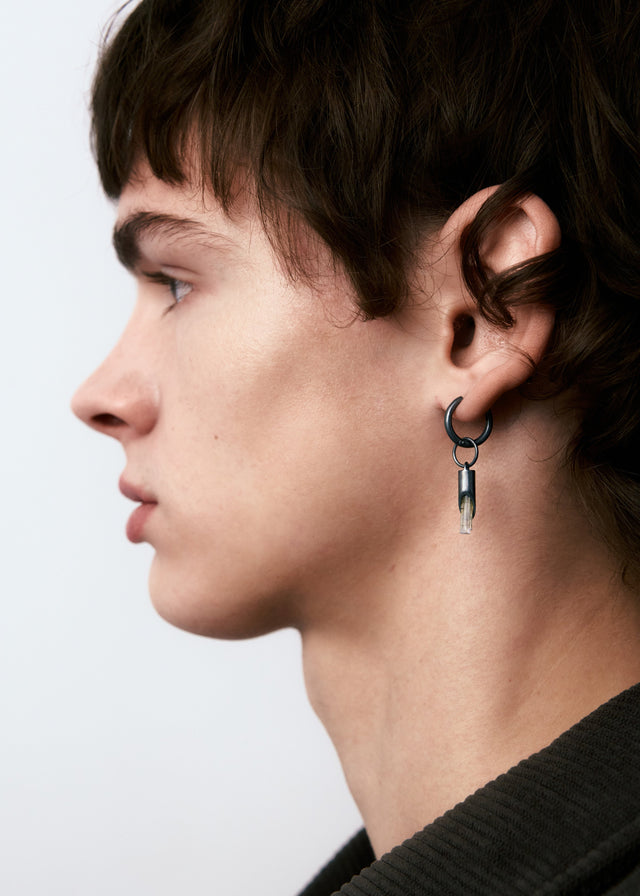
On the THORN amulet in the photograph, a pale crystal projects from a dark silver form. Its long facets remain visible below the metal. The two surfaces meet in a small object worn on the ear: a useful starting point for looking at what contemporary Bali-connected jewelry can be.
That close view raises several different questions. What is the metal? How was the form made? Why is its surface dark? The word Bali answers a question about place. To understand the object, we need to look at the material and the work as well.
The Big Thorn Bracelet gives silver a larger scale than the small crystal setting. Comparing the two objects makes it easier to see how material and form work together in pieces worn on different parts of the body.
What is Bali silver?
Bali silver is a name for jewelry made on the island. Sterling is a material standard: an alloy containing 92.5% silver. Many Bali-made pieces use it, while other silver alloys and silver-plated objects also exist. Read the material description of the piece you are considering.
The island's silver work sits within the wider Indonesian culture. Here we will stay close to the jewelry: its material, the way its parts are made and the decisions that give it a particular form.
A smooth band, an ornamental pendant and a dark sculptural piece can all come from Bali. They need not share a surface treatment or a making method. The differences become easier to see once origin and silver content have been separated.
Bali silver vs sterling silver — what's the difference?
A Bali-made 925 ring has the same stated silver content as a sterling ring made elsewhere. Its remaining 7.5% consists of other metals, commonly copper; the exact alloy can vary. The word sterling specifies that proportion, while Bali identifies the place.
What remains to compare is the object itself: the workmanship, the design and the total price.
A filed edge or a polished inner band shows a finishing decision. A very smooth surface can also be finished by hand. Ask which stages were used for the piece; visible marks describe its surface, rather than measuring its silver content.
In the design, look at proportions, ornament and how the stone is held. A plain band and a relief built from projecting elements create very different silhouettes on the hand. Bali is broad enough to include both, along with many other approaches.
For price, put comparable offers beside each other. Include dimensions, metal, stones and the work involved, then delivery, taxes and any resizing. A large setting and a small plain band are different purchases even when both are sterling.
How Bali silver is made — the hand-finishing tradition
For a cast silver piece, the form passes through a model and a metal blank before the surface is finished. The following sequence describes that route; a workshop may use other methods for other designs.
1. The model. A physical model or a 3D design establishes the form. A mold makes it possible to prepare wax copies. The starting method depends on the design.
2. The mold. A silicone mold records the model's relief, including fine tool marks. Wax poured into it takes the same shape. The mold is useful precisely because small details can pass from the model to the copy.
3. The metal blank. The wax copy is enclosed in a casting shell and melted out. Silver is poured into the space it leaves. Once the shell is removed, there is a silver blank to work on.
4. Hand finishing. The blank is cleaned, filed and polished. A maker may darken the surface, set a stone or assemble a fastening. These operations affect the edges, relief and movement of the finished piece.
STRUGA uses the sequence wax model → silicone mold → 925 silver → hand finishing to explain cast silver work. The model and final operations depend on the object. Carbon and combinations of materials have their own descriptions.
Where did Bali silver come from — the Bali tradition
Celuk, a village in Gianyar regency, is a recognized center of silver and gold craft. Its administration documents the Celuk Jewelry Festival of 2024. That is a concrete record of contemporary craft activity; it does not date the beginnings of every workshop.
If you plan a visit, ask which stages a workshop can show and which pieces were made there. Seeing a blank beside a finished object can explain the work on its surface. A named maker's own account is the place to begin learning about that workshop's history.
Our guide inside a Bali silver workshop follows the making stages in more detail. It is a companion to the material questions here, rather than a reason to assume one process is used across the island.
Why is Bali known for silver?
The craft center is one part of the answer. The range of work and designs is another.
1. A place to discover makers. Celuk gives the subject a specific location: silver and gold craft, identifiable workshops and a documented jewelry festival.
2. Work on the finished surface. Filing, polishing, stone setting and darkening can make the same silver alloy look very different. The details of an individual piece show what the maker has chosen to emphasize.
3. Different design languages. Ornament and contemporary sculptural forms belong in the same conversation. STRUGA's dark silver is one Bali-connected example; it does not stand for every maker on the island.
Contemporary Bali designers — the STRUGA worlds
At STRUGA, that choice of form leads into five worlds. They describe different uses of the brand's design language: everyday geometry, a personally meaningful object, an experiment or a commissioned pair. The worlds are useful ways into the catalog, with room for an object to connect to more than one.
- CODEX brings together everyday architectural forms in unplated silver: SIGNATURE ASYMMETRIC, BLADE, SIGNATURE HEART, THORN and BRUTALISM. Edges, planes and the outline of the piece lead the choice.
- RITUAL brings a personally meaningful object into everyday wear. AMULET, CARBON and MOSAIC combine raw stones, carbon or meteorite with other materials. Their meaning belongs to the wearer; no protective or other effect is promised.
- LAB is for experiments, prototypes and exceptions. EXPERIMENTAL is its core family, with FUSED alongside its material experiments. The work can extend into clothing and object design.
- DARK UNION is the world for commissioned wedding and paired objects. Its namesake family has another role: pre-oxidized designs ready to buy. The catalog gives the current options for an individual piece.
- ISLAND ARTIFACTS is a changing selection for gifts and Bali-connected journeys. It draws from different worlds and families rather than defining another product type.
To extend the comparison beyond STRUGA, our guide to handmade silver jewelry brands from Bali covers John Hardy, Sunaka, Bits of Bali, JewelryLab, UC Silver, Samuel B., Novica and other makers. It compares material, construction, design language and buying terms to help you decide what is worth choosing for your needs.
STRUGA design families — eleven families
The eleven families bring that map back to visible forms. Start with recognizable geometry: BLADE links, THORN spikes, asymmetry, the heart and BRUTALISM relief. Then look at stones and material combinations in AMULET, CARBON and MOSAIC. The wavy surfaces of FUSED, experiments with familiar objects and DARK UNION pairs suggest further directions. This gives the list a route for comparing individual designs.
- BLADE, the brand's second form, began as a chain link. Flat planes suggest a shape cut from sheet material—the CNC reference behind the design. Those links led to the first large bracelet, then chains, chokers, a pin, an earring and a cuff.
- THORN, the third form, also began with a chain link. Its sharp thorn geometry combines CNC and 3D-modeled design references. That shape extends through chokers, earrings, rings and bracelets.
- SIGNATURE ASYMMETRIC was the first form and the start of STRUGA's experiment with one shape across different objects, from pendant to carabiner. Sharp edges, flat planes and recesses recall CNC-cut sheet material. It remains the brand's most widely represented form.
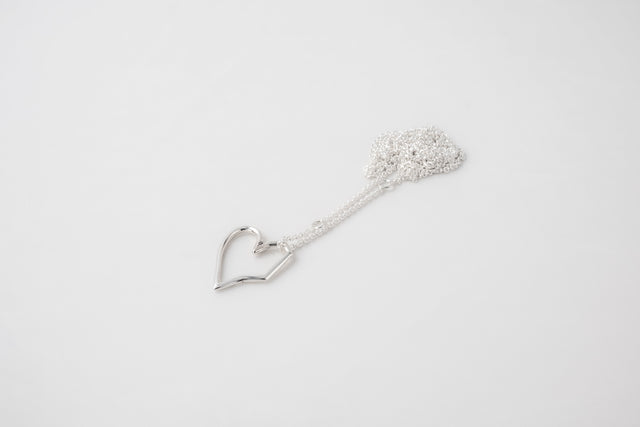
- SIGNATURE HEART, the fifth form, joins a smooth half and an angular half in one heart. It ranges from a light wire-like heart to Solid Heart, the working Heart Lock clasp and the tiny stud—the smallest object in the brand.
- BRUTALISM, the fourth form, explores Soviet brutalism and Suprematism in silver. Its raised geometry appears in the brand's heaviest, largest rings and in cuffs, with scope for the family to develop further.
- In MOSAIC, carbon is combined with silver, meteorite, brass, copper or steel. An insert and its surrounding material form a single composition in one plane.
- CARBON was STRUGA's starting point. Its multi-layered matte composite is light and water-resistant. The signature Graphite range has six palettes and a CNC-cut-sheet design language. Inserts and combinations with other materials helped MOSAIC develop alongside it.
- AMULET includes earrings and necklaces set with raw stones, from restrained forms influenced by Japanese minimalism to larger designs. In the THORN amulet, a crystal sits inside a split torpedo-like form, a design homage to Daniel Arsham.
- FUSED is defined by the appearance of melted metal. Wavy surfaces replace defined angles and edges; a piece may be silver throughout or combine flowing silver forms with another material.
- EXPERIMENTAL includes reworkings of familiar forms in Triple Drills, Mushroom, Pills and BearRabbit. The brand’s experiments with material and form also extend into clothing and object design.
- DARK UNION includes alternative engagement and wedding forms in oxidized silver. Raw stones, meteorite or other metals can be discussed as inserts for a particular design.
Materials beyond silver — Living Silver, Seymchan, Graphite
Silver is common to many of these objects, but it is not their only material. A crystal, meteorite insert or matte carbon surface changes the outline and color and may require different care. These are materials used by STRUGA, not an exclusive list for Bali jewelry.
Living Silver is STRUGA's name for 925 silver without rhodium plating. Its surface can develop patina through wear and contact with the environment. Some pieces are darkened during finishing; others change gradually. The finish and any coating determine how a particular piece should be cared for.
Seymchan is a main-group pallasite found in 1967. STRUGA uses it in pendants and MOSAIC inserts, and it can be discussed for a DARK UNION design. The meteorite guide introduces the material; the combination is chosen for the individual object.
Graphite is a multi-layered matte carbon composite. STRUGA's six palettes are Classic, Bloody, Toxic, Arctic, Winter and Multy Graphite. CARBON pieces can include other materials, so the product description explains the combination you are looking at.
Raw aquamarine, tourmaline, heliodor and quartz bring their natural forms and colors into the silver setting. The AMULET family includes different stones; check which one is used in the particular piece before choosing its care.
How to compare silver from Bali, Mexico and Italy?
A country label gives context about where a piece was made, but the useful comparison begins with the piece itself. These material combinations return us to that first question. Put a Bali-made object beside one made in Mexico or Italy and ask the same questions about material, making and construction.
| What to compare | Why it matters | What to ask |
|---|---|---|
| Material | The origin does not establish the alloy. | Ask for the stated fineness and whether there is plating. |
| Marks | A stamp states a claim; it is not an independent test. | Ask how the seller supports the material description. |
| Making | Methods differ by maker and object. | Ask which casting, forming and finishing operations were used. |
| Surface | Polish, darkening and coatings need different care. | Ask what the finish is and how to clean it. |
| Construction | Appearance does not establish fit or durability. | Check joins, edges, fastening and any stone setting. |
| Purchase | Compare the complete offer for the particular piece. | Confirm dimensions, price, delivery and resizing or return terms. |
For the international market, STRUGA objects are made in Bali. A particular design still needs its own material description, dimensions and care instructions. The table helps compare those details across makers.
How to tell real Bali silver
The material description and a 925 mark are the starting points. If the silver content remains uncertain, a qualified jeweler or assay service can advise on testing. The following observations help you examine the piece and ask a precise question.
1. Find the mark. It may be inside a ring, on a clasp or on the back of a pendant. 925 states a claimed fineness of 92.5% silver. A stamp can be copied; ask how the seller supports the description, taking local marking rules into account.
2. Examine the construction. Look at joins, edges and stone settings in good light. These details show how parts meet and which surfaces will touch you. They help assess workmanship and fit; they do not measure the alloy.
Weight describes the scale of a piece, not its purity. A heavy object can be plated base metal, while a light one may be open or hollow silver. Compare weight with dimensions, and keep the metal question separate. Our guide to Balinese silver develops that distinction.
How much does Bali silver cost?
Start a price comparison with similar objects. A small plain band and a large stone-set commission involve different amounts of material and work. A useful quotation separates the following parts.
- Material. Ask whether the piece is solid silver or plated, its stated fineness and the materials in its inserts. Price alone cannot answer that question.
- Dimensions. Compare weight, width and construction. A solid band, an open shape and a hollow form can look similar in a close photograph and feel different on the hand.
- Work. Identify the stone, setting and any changes made for the order. A ready-made piece and an individual commission need their own quotations.
- The complete purchase. Include currency, delivery, taxes, returns and resizing. Keep the actual offer you are comparing.
The current catalog lists individual designs and their details. A Blade ear cuff and a Big Thorn bracelet offer two different scales of silver: compare their own dimensions and current prices rather than a permanent catalog-wide range.
5 questions before buying Bali silver
Before ordering, these five questions bring the description, the actual object and its future care together.
- What is the material? Read the description and check which part any 925 mark refers to, especially in a mixed-material object.
- Who made it, and how do its parts meet? Examine the edges, joins, fastening and stone setting. A smooth finish can also be hand-finished.
- Will the dimensions suit you? Compare the stated measurements and weight for proportions and fit, keeping the purity question separate.
- How is the surface finished? Ask whether it is patinated, deliberately darkened or coated, and what care the maker recommends. A promised rate of color change is not an authenticity test.
- What if the alloy is uncertain? Ask a qualified jeweler or assay service about testing. A household magnet is inconclusive: non-attraction does not prove silver, and a clasp can affect the result.
How to care for Bali silver
A finish chosen at the bench can change on the hand. Raised areas exposed to friction may grow brighter, while recesses stay darker. Care should suit the intended surface and every material in the piece.
- Store pieces separately in a dry, dark place. A cloth pouch or sealed zip bag can protect the surface between wears.
- Remove the piece before swimming, showering or applying perfume. Chlorine and sulfur compounds can accelerate changes to the surface.
- Polish according to the intended finish, not a calendar. Polishing removes some material and can brighten deliberately dark recesses. Ask the maker which areas should be cleaned.
- Check stones, coatings, glued parts and material combinations first. Avoid household abrasives; a method for plain silver may not suit the whole piece.
For tourmaline, GIA recommends warm soapy water and advises against steam and ultrasonic cleaning. A different stone or a composite piece may need a different method. Store pieces separately to limit scratches; our silver care guide explains the brand's recommendations.
Where to buy Bali silver — STRUGA and beyond
Once the material and form are clear, choose how and where to buy the piece.
1. The international catalog. Start at strugadesign.com for individual objects and their material descriptions. Check the delivery options for your address when placing the order.
2. A purchase during a Bali visit. Contact STRUGA before traveling to a point of sale. Ask whether it currently carries the piece you want; this guide does not list live stock.
3. An individual request. Discuss paired and wedding objects through Dark Union, and other individual forms through Custom Order. Agree the design, materials, price and production time for that request before ordering.
For a piece connected to a Bali trip or a gift, Island Artifacts gathers objects from across the brand. The 12-brand guide offers a separate comparison with other makers, including John Hardy, Sunaka, Bits of Bali, JewelryLab, UC Silver, Samuel B. and Novica.
Related guides in this cluster
- Inside a Bali silver workshop — the bench, the torch, the casting shell, step by step.
- Best handmade silver jewelry from Bali — 12 brands insider guide 2026 — full comparison.
- Why Balinese silver is special and how to verify it's real — authentication primer.
- Handmade 925 silver from Bali that ages with you — the case for silver as a meaningful souvenir.
- 7 meaningful gifts from Bali — broader gift-from-Bali context.
- Bali jewelry vs Turkish and Thai silver — what makes Bali different from the other major silver origins.
- Carbon fiber and meteorite jewelry guide — STRUGA’s material vocabulary.
- Brands like Chrome Hearts — affordable dark silver alternatives — where STRUGA fits in the broader dark-silver landscape.
Bali silver — the numbers that matter
A short reference for the terms used in this guide:
- 925 / 92.5% — the stated silver content of sterling. The remaining alloying metals are commonly copper, though the formulation can vary.
- Weight and dimensions — a way to compare proportions and fit, not an assay of the metal.
- 2024 — the Celuk Jewelry Festival documented by the village administration; a dated record of contemporary craft activity.
- Celuk, Gianyar — a recognized center of silver and gold craft on Bali. A workshop's own history is a separate subject.
- 0 rhodium plating — STRUGA's Living Silver standard. The surface can develop patina through wear.
Related reading
Continue by subject: the dark wedding rings guide and Dark Union for a pair, the Living Silver guide for patina, and the manufacturing guide for the making stages. The sterling silver guide explains the metal. For combinations with carbon fiber and meteorite, start with the material guide; the dark fashion and Chrome Hearts comparisons explore how the objects are worn.
About STRUGA. Founded by Dmitry Strugovshchikov and Ekaterina Strugovshchikova, STRUGA designs dark silver objects. International-market pieces are made in Bali. The silver is 925 without rhodium plating; carbon can join other materials. Some surfaces are darkened during finishing, while others develop patina through wear.
Continue from STRUGA catalog:
Further reading from STRUGA Journal
- Best Handmade Silver Jewelry from Bali — 12 Brands Insider Guide 2026
- Bali Jewelry vs Turkish and Thai Silver — What Makes Bali Different
- Balinese Silver: Technique, 925 Hallmark, How to Tell It Apart
Sources and further reading
Frequently asked questions
Didn’t find the answer — write to us, we reply personally.
Ask a question →01Is Bali silver a different metal from sterling silver?+–
No. Bali identifies an origin, while sterling specifies 92.5% silver. A Bali-made piece described as 925 has that stated silver content; the place name alone does not establish its composition or making method.
02Is Living Silver the same as oxidized silver?+–
Living Silver means 925 silver without rhodium plating. Oxidizing is a deliberate darkening during finishing. An unplated piece can be darkened from the start and can also develop patina with wear.
03Is patina on Bali silver a defect?+–
Patina is a surface change and part of STRUGA's Living Silver design. Raised areas may brighten with friction while recesses stay dark. If you want a brighter finish, ask which cleaning method suits the piece.
04Does a heavier Bali silver piece mean it is more authentic?+–
No. Weight cannot establish purity: a heavy object may be plated, and a light one may be open or hollow silver. Ask how the material description is supported; seek professional testing if needed.
05What is Bali silver?+–
Silver jewelry made on Bali. Many pieces are 925 sterling, while designs, alloys and making methods vary. Celuk in Gianyar is a recognized silver and gold craft center.
06Is Bali silver good quality?+–
Judge the individual piece: its fit, edges, joins, fastening and settings, along with the material description. A place of origin or a 925 stamp cannot establish the quality of the workmanship.
07Is Bali silver jewelry real silver?+–
It may be. Check whether the seller describes solid silver or plating, and which alloy is used. A claimed 925 fineness means 92.5% silver; uncertainty about composition calls for professional testing.
08Is it worth buying jewelry in Bali?+–
It can be, if you find a design you want from a maker whose material description and terms are clear. Compare the object and total price with alternatives, including delivery, returns and sizing work. Bali is not a guarantee of a lower price.
09Is silver good to buy in Bali?+–
A visit lets you examine a piece and speak with its seller. Choose for its material, construction and fit. The place of purchase and its price do not guarantee authenticity or resale value.
10Bali silver vs sterling silver — what's different?+–
Bali describes the origin; sterling specifies 92.5% silver. A Bali-made sterling piece has that stated fineness, while design, finish and price depend on its maker.
11Where can I buy STRUGA in Bali?+–
Start at strugadesign.com and contact STRUGA to confirm the current Bali point of sale and stock before visiting. For an individual design, use Custom Order. This guide is not a live partner-store inventory.
Primary sources: Celuk Jewelry Festival 2024; GIA: sterling silver; GIA: tourmaline care; CCI: silver care.