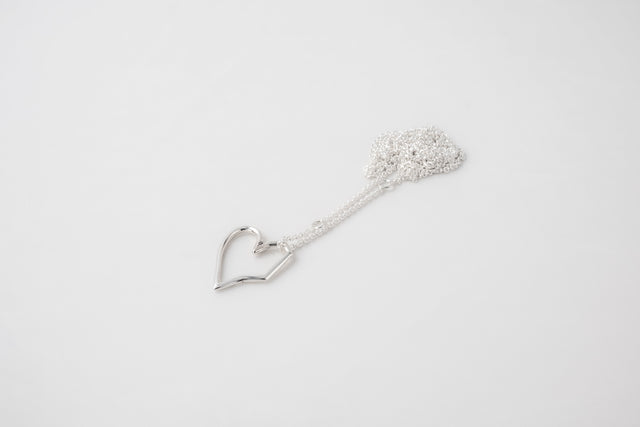
Carbon Fiber & Meteorite Jewelry — Guide 2026 | STRUGA
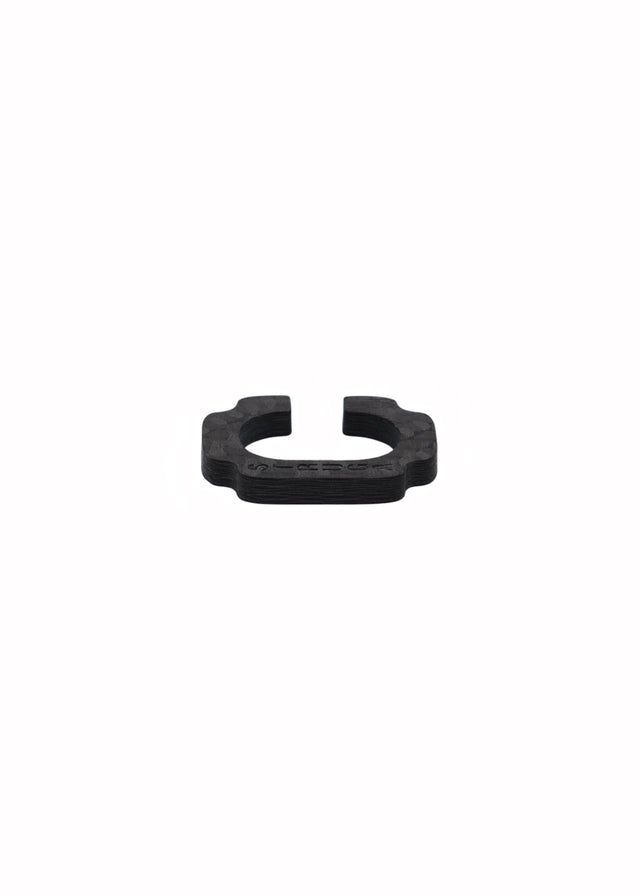
Look closely at Classic Graphite and you can see carbon threads crossing in a woven pattern. An etched Seymchan meteorite slice has a different network of lines, formed within the metal. They can sit beside each other in one piece of jewelry, but they need different care. This guide explains the materials, the evidence to ask for before buying and the precautions that matter when wearing them.
Carbon fiber is a lightweight composite of fibers and resin. Seymchan meteorite is iron-nickel metal that needs protection from moisture. Care for a mixed-material piece has to account for its silver, insert and setting together. STRUGA places carbon pieces and meteorite inserts in RITUAL. An etched pattern or magnetic attraction does not prove origin; provenance documents are needed.
Updated October 16, 2026
Is carbon fiber a stone?
Carbon fiber is manufactured: carbon threads are bonded with resin to make a composite. A natural stone forms through geological processes. A dark panel may resemble a black gem, but its interior is made of fibers rather than a mineral crystal.
A panel is cut from the carbon sheet, then sanded and polished. It is not faceted like a gemstone. A visible edge can reveal the ends of fibers; the surface shows their direction. These details distinguish the material from a flat carbon-look print.
Examples to compare in the catalogue:
- Carbon family — six Graphite palettes, set with silver, alloy or meteorite.
- Meteorite collection — etched Seymchan slices.
- Tourmaline collection — raw stone in green, pink, grey, purple and colourless tones.
- Dark Union for wedding bands, with the guide to dark wedding rings.
Why combine silver with carbon, meteorite and raw stones?
Silver forms the setting; the insert supplies a distinct surface: carbon weave, etched meteorite bands or the natural faces of a crystal. These differences also affect the setting, weight and care. Start by looking at the surface you want, then examine how it joins the silver.
The meteorite reference article explains the origin of iron-nickel structures. To see what those differences mean in jewelry, it helps to consider manufactured carbon sheet and Seymchan metal separately.
What is carbon fiber jewelry?
STRUGA cuts its panels from multi-layer matte sheet on a CNC machine. Resin bonds the threads, while fiber direction affects mechanical behavior. Composite technology is also used in aviation and motorsport, but those specifications are not ratings for a finished piece of jewelry. Panel thickness and the connection to metal matter here too.
There are six Graphite palettes. Compare their colour and weave:
- Classic Graphite — deep graphite black with a readable checkerboard weave
- Bloody Graphite — carbon with a wine-red undertone
- Arctic Graphite — smoky white, almost frost
- Winter Graphite — a cold grey-blue
- Multy Graphite — iridescent, shifting when you turn it under light
- Toxic Graphite — with acid-green veins
A carbon piece may also contain 925 silver, a silver-plated jewellery alloy, copper, brass or meteorite. A pale insert is therefore not necessarily solid silver; the individual product page lists the materials. Compare the smoky-white Signature Asymmetric Arctic necklace with the Blade ear cuff in Classic Graphite.
Is carbon fiber good for jewelry?
A lightweight panel is useful in a large ear cuff or pendant. That does not make the whole piece resistant to water, heat or impact: resin, finish, joins and metal components each impose limits. Care instructions need to cover the assembled piece.
What are the downsides of carbon fiber jewelry?
A cracked panel cannot be re-melted like silver and may need replacement. Carbon also has no precious-metal melt value: design, condition and demand affect resale. Before any repair involving heat, ask about the particular panel. A temperature rating for an aerospace composite does not apply automatically to a jewelry insert.
How do carbon fiber, Seymchan meteorite and gemstones compare?
Use the table to compare origin, surface and practical limits. It is a reference for choosing a material, rather than a specification for every finished piece.
| Aspect | Carbon fiber | Seymchan meteorite | Gemstone |
|---|---|---|---|
| Origin | Manufactured composite: carbon threads bonded with resin | Pallasite with iron-nickel metal and olivine; found in Russia’s Magadan region in 1967 | A natural or laboratory-grown crystal, such as diamond or sapphire |
| Visible surface | Woven panels have visible depth in the weave; colour depends on the palette | Intersecting bands revealed by etching; the pattern varies between slices | Polished or faceted surface; appearance depends on the mineral, colour and cut |
| Weight | Depends on fibers, resin, panel size and metal components | Depends on metal and olivine proportions, slice size and setting | Depends on mineral, stone volume and setting |
| Main care limit | A panel can chip on hard impact; resin and construction determine tolerance of heat and water | Protect the iron-nickel metal from moisture and store it dry | Resistance to scratches, impact and cleaning depends on the particular mineral |
| Joining it to 925 silver | The panel is fitted to a silver form and secured | The slice is installed in a silver setting | A bezel or prongs—the metal points around the insert—hold the stone |
| Checking origin | Fibers are visible in woven panels; compare them with the material description, rather than relying on the surface pattern alone | Records link the insert to the named meteorite; expert examination helps identify the material | Visual inspection is insufficient; a laboratory report may be needed to establish origin and treatment |
| STRUGA examples | Carbon panels in CARBON and MOSAIC, RITUAL ear cuffs and necklaces | Seymchan with carbon and 925 silver; a possible insert in DARK UNION rings | Raw tourmaline, aquamarine and quartz in AMULET earrings and necklaces |
After comparing the materials, look at the particular insert. For meteorite, its name and pattern connect to the history of a find. The next section explains Seymchan and what information to ask for about a slice.
What is the Seymchan meteorite?
Seymchan was found in Russia’s Magadan region in 1967. It is classified as a pallasite; its masses include iron-nickel metal and olivine crystals. The Meteoritical Bulletin Database records its name, find and classification. That identifies the meteorite, while an individual jewelry slice needs its own provenance.
Etching reveals intersecting bands in the metal: the Widmanstätten pattern. The iron-nickel phases developed as the parent body cooled slowly, a process examined by Yang, Goldstein and Scott. The exposed metal can show this structure without gemstone faceting.
The Asymmetric Fused Winter combines a Seymchan slice with Winter Graphite carbon and 925 silver. Two different patterns can be seen together in one piece. For further examples, see the meteorite collection; the Seymchan guide looks more closely at the material.
Is it safe to wear meteorite jewelry?
Iron-nickel meteorite contains nickel. If you have a known sensitivity, ask whether the insert touches skin and avoid exposed nickel-bearing parts. Remove the piece if irritation occurs. The American Academy of Dermatology explains nickel exposure. Moisture is a separate concern for the metal itself because it can cause corrosion.
How to tell if meteorite jewelry is real?
Ask for records linking the slice to its named meteorite. An etched pattern or magnetic attraction can be a clue, but neither establishes origin. Where identification matters, USGS recommends expert assessment. The checks below separate observations you can make from questions that need documentation or specialist advice.
Is a piece of meteorite worth money?
A documented slice can have a market value. Provenance, size, condition and demand influence it; a finished piece also includes design and workmanship. Those costs are not a promise of what it might sell for later.
Can you legally own a meteorite?
Check the rules before purchase or cross-border transport. Ownership, collecting and export requirements differ between the places connected to a find and its movement. Provenance information is part of that enquiry too.
What colour is tourmaline, and which other natural stones does STRUGA use?
Tourmaline offers another kind of pattern: a single crystal can change colour along its length. Black schorl, green verdelite, pink rubellite, blue indicolite and pink-green watermelon tourmaline are examples. Grey, purple and colourless stones add to that range. It is a mineral supergroup sharing a crystal structure, with more than 40 species recognized by the International Mineralogical Association.
Heat or mechanical pressure can produce a weak electric charge in tourmaline. These are its pyroelectric and piezoelectric properties, behind the old name “electric stone.” Some crystals also show a change in apparent colour when turned, known as pleochroism. Such features are useful in examination but do not replace professional identification.
The AMULET family includes raw tourmaline held in silver, with its natural faces retained. The Classic Amulet earring #28 has a green stone. The tourmaline collection also includes pink, grey, purple and colourless inserts in Classic and Thorn designs.
Heliodor, aquamarine and quartz are other natural inserts used by STRUGA. It helps to distinguish the mineral as well as its colour:
Heliodor is yellow beryl, related to green emerald and blue aquamarine. GIA describes the role of ferric iron in its colour. Its hardness is 7.5–8 on the Mohs scale. STRUGA uses raw crystals in amulets and individual commissions.
Aquamarine is blue beryl, ranging from pale to deep blue. In RITUAL amulets, STRUGA uses raw fragments: the visible faces formed naturally rather than under a cutter’s tool.
Quartz can retain crystal terminations and inclusions. Clear, brown and green crystals appear in Classic Amulet necklaces. Their original outline needs room within the design and a suitable setting.
How does STRUGA make a piece with an unusual material?
The silver part is made first, then the insert is fitted and secured. The main stages are:
- Model. The form starts as a wax model made by hand, or as a 3D model printed for casting.
- Silicone mould. A silicone mould is taken from the master model; wax copies are then formed in it.
- Metal. The wax burns out and 925 silver takes its place.
- Setting the material. Tourmaline and quartz are secured, the carbon panel is fitted, and the meteorite slice is installed. This stage is completed by hand.
- Finishing. Polishing, oxidation where needed, final surface work.
With Bloody Graphite, panel dimensions and attachment are part of the construction. The same applies to a crystal’s outline or the shape of a meteorite slice. Silver needs to hold that particular insert, as well as frame it.
Which STRUGA pieces use these materials?
Carbon, meteorite and raw stones are found mainly in RITUAL. Compare that approach with the architectural forms of CODEX and the experiments of LAB. ISLAND ARTIFACTS is a selection shaped by demand on Bali, rather than a separate material. The catalogue and commission routes are outlined below.
- RITUAL — the dark side of the brand: the CARBON and MOSAIC families, meteorite pieces, raw stones in AMULET, silver oxidized from the start.
- CODEX — everyday architectural forms in uncoated 925 silver, without stones or inserts.
- LAB — experiments and prototypes, the EXPERIMENTAL and FUSED families; an experiment here can grow into a new family.
- DARK UNION — wedding and paired rings made to order; a Seymchan slice or a raw stone can go into the band.
- Custom Order — any other commission: a bracelet with your stone, a pendant with meteorite, earrings of a non-standard form.
Living Silver and unusual materials
Living Silver is 925 silver without rhodium plating, so it can darken with wear. Oxidation describes deliberate darkening during finishing. A piece may combine that silver with components requiring different care: meteorite needs to stay dry, while panels and crystals need protection from impact. The Living Silver guide explains changes to the silver surface.
How do you check that carbon, meteorite or a stone is real?
Begin with the materials named on the product page. A 925 stamp applies to the silver, not to its insert. Then compare what is visible with the documentation. These seven checks distinguish observations you can make yourself from matters requiring specialist assessment:
- Carbon fiber: visible weave structure. STRUGA’s woven carbon panels show a regular fiber pattern under magnification. A flat carbon-look print does not show the same depth or exposed fiber ends. Use a 10× loupe for inspection.
- Carbon fiber: edge inspection. At an exposed edge of a STRUGA woven carbon panel, tiny fiber ends may be visible. A surface print does not create those fibers; inspect this together with the material description.
- Meteorite: etched pattern. Iron-nickel meteorite may show the Widmanstätten pattern after etching. Appearance is a clue, not a stand-alone authentication or proof that a slice is Seymchan.
- Meteorite: magnetic attraction. Iron-nickel metal is attracted to a magnet; olivine is not. Ordinary iron can also attract a magnet, so this check does not establish extraterrestrial origin.
- Meteorite: provenance. Ask for documents connecting the particular insert to its named parent meteorite, rather than accepting a generic material label.
- Stone: identification and disclosure. Inclusions and pleochroism help a gemologist examine tourmaline, but visual clues alone cannot identify every stone or treatment. Glass can also have inclusions. Ask for a laboratory report where identity or treatment matters. GIA describes tourmaline micro-features as evidence for expert examination.
- Combined-piece check. When a piece joins silver and an alternative material, check each component separately: the 925 stamp on the silver says nothing about the inlay.
How do you care for jewelry with carbon, meteorite and stones?
- Take it off before showers, sports, cleaning, and contact with chemicals.
- Store pieces separately to limit rubbing and impact; protect composite panels, meteorite and stones from contact with other jewelry.
- Use a dry, soft cloth for pieces with meteorite. Do not soak the whole piece. For other combinations, follow the care instructions for that specific piece and its most sensitive component; ask before using soap, ultrasonic cleaning or steam.
- Use a separate soft cloth on silver areas intended to stay bright. Do not use polishing paste on oxidized surfaces or near an insert unless the model’s care instructions allow it.
- For meteorite, dry storage is essential: chloride trapped in the metal keeps rust going once it starts (Buchwald and Clarke, 1989). Wipe it dry after contact with skin or water and keep it in a dry place.
For the silver component, see the separate guide to caring for sterling silver jewelry.
Can you get a wedding ring with meteorite or carbon?
A wedding band needs a suitable width, profile and place for the insert. Through DARK UNION, a pair is designed together: the rings can share a material or detail without being identical.
The rings are made to individual finger sizes and finished by hand. The usual lead time is 2–4 weeks from approval of the sketch, often sooner. The exact timing is agreed for the chosen design. Material options include:
- 925 silver band with a Seymchan meteorite slice. The thin slice is etched to reveal its Widmanstätten pattern and installed in a silver setting. This option can be discussed through DARK UNION.
- 925 silver band with a raw stone — tourmaline, aquamarine, quartz or another uncut stone selected for the specific design.
- For carbon, the design stage determines whether the chosen width and profile can hold the panel securely.
- Ready-made pieces. The DARK UNION range currently includes one piece, the Thorn Ring.
A commission starts with construction and fit rather than a ready-made pair. The guide to brands like Chrome Hearts places STRUGA within a wider selection of dark silver brands.
Where can you buy STRUGA jewelry with carbon and meteorite?
- strugadesign.com — the full catalog, shipped worldwide.
- On Bali, part of the STRUGA catalog is available at Hedonist Store (Seminyak) and Barefoot Aristocracy (Canggu), to try on and buy when available. Check the particular model before visiting.
- Phuket and Dubai — Soul Mate in Phuket, Poison Drop in Dubai Hills.
- Made to order — through DARK UNION (wedding and paired rings) or Custom Order (everything else).
Further reading on carbon, meteorite and silver
- On meteorite: Seymchan in solid silver — one stone in depth; meteorite jewelry — wearing a piece of outer space; meteorite rings — what to know before you buy; meteorite wedding bands.
- On wedding bands with carbon: dark wedding rings, men's wedding bands 2026, and the Dark Union service.
- On the silver around carbon and meteorite: 925 silver — the base; how silver ages — patina and Living Silver; how STRUGA pieces are made.
- On stones and context: tourmaline colours; how to wear dark jewelry; Bali silver, how to verify it, the Bali workshop, 12 Bali silver brands, and brands like Chrome Hearts.
Compare carbon, meteorite, tourmaline and amulet pieces in the catalogue. For a different construction, use Dark Union for wedding bands or Custom Order for other individual designs.
About STRUGA. Dmitry Strugovshchikov and Ekaterina Strugovshchikova founded the dark silver brand. Silversmiths make the 925 silver pieces by hand; most are left without rhodium plating, while some are darkened during finishing. Light edges, dark recesses and an insert’s pattern can appear together in the same piece.
Carbon pieces to compare:
Sources and further reading
- Seymchan meteorite — overview with Meteoritical Bulletin record
- Pallasite meteorites — Wikipedia
- Yang, Goldstein, Scott (2010) — cooling rates of pallasites and irons
- Buchwald, Clarke (1989) — corrosion of Fe-Ni meteorites
- Toray T300 carbon fiber datasheet
- Carbon fiber — Encyclopedia Britannica
- Tourmaline supergroup — mindat
For another comparison, visit the Archive. Individual pages show the pattern of a particular meteorite slice and its arrangement with silver.
Frequently asked questions
Didn’t find the answer — write to us, we reply personally.
Ask a question →01Is carbon fiber the same as a carbon-look print?+–
STRUGA’s woven panels have carbon threads bonded with resin. A flat carbon-look print does not show the same depth or exposed fiber ends. Weave is a feature of this construction, rather than a universal test for all carbon composites.
02Is meteorite jewelry the same as a regular iron or steel piece?+–
Seymchan is a named meteorite; iron or steel may be manufactured materials. Ask for provenance for the particular insert. A pattern or magnet alone is insufficient.
03Is Living Silver the same as the oxidized finish on these pieces?+–
Living Silver changes with wear because it has no rhodium plating. Oxidation means the surface was deliberately darkened during finishing. The terms describe different things, even when both apply to one piece.
04Is the light insert in STRUGA carbon pieces silver?+–
Not always. It may be 925 silver or a silver-plated jewellery alloy. Check the product’s material list; silver plating does not make an alloy solid silver.
05What are STRUGA's carbon fiber pieces actually made of?+–
Panels are CNC-cut from multi-layer matte carbon sheet. They are combined with 925 silver, silver-plated alloy, copper, brass or meteorite. The Graphite palettes are Classic, Bloody, Arctic, Winter, Multy and Toxic.
06Is carbon fiber good for jewelry?+–
A lightweight panel can work well in a larger shape. Resin, finish and attachment also determine care and tolerance of water or heat. A chipped panel may need replacement.
07What are the downsides of carbon fiber?+–
The main limits are chipping and panel repair. It cannot be re-melted like silver, and carbon has no precious-metal melt value. Keep the piece away from flame and hot surfaces.
08Is Seymchan a real meteorite?+–
Yes. Seymchan was found in 1967 and classified as a pallasite. Its masses include iron-nickel metal and olivine. A particular insert still needs records linking it to that meteorite.
09Is it safe to wear meteorite jewelry?+–
Ask whether the insert touches skin: meteorite contains nickel. With a known sensitivity, avoid exposed nickel-bearing parts; remove the piece if irritation occurs. Keep the meteorite dry to limit corrosion.
10How to tell if meteorite jewelry is real?+–
Ask for provenance documents for the particular insert. Etched patterns and magnetic attraction are clues, not proof. Consult a meteorite identification specialist if confirmation is needed.
11Is a piece of meteorite worth money?+–
A documented slice can have market value. Provenance, size, condition and demand affect it; a finished piece also includes design and workmanship. A future resale price is not guaranteed.
12Can you legally own a meteorite?+–
This depends on the place of discovery and countries involved. Before buying or crossing a border, check ownership, collecting and export rules using the meteorite’s provenance.
13Can carbon jewelry be worn in water?+–
Remove the finished piece before swimming or soaking. It combines materials with different limits, and meteorite needs dry care. Follow the instructions for that model.
14Does meteorite rust?+–
Yes. Iron-nickel metal can corrode in moisture. Wipe the insert dry after water contact and store the piece in a dry place.
15Can I get a wedding ring with carbon or meteorite?+–
Discuss the design through DARK UNION. A pair is made to individual finger sizes; meteorite or a raw stone can be considered, while carbon requires a separate design discussion. The usual lead time is 2–4 weeks from approval of the sketch, often sooner. The exact timing is agreed for the chosen design.
16How can you check that a stone is tourmaline?+–
Home inspection is not a reliable identification method. Glass can have inclusions too, and colour changes on turning do not reveal every treatment. Ask for a gemological report when confirmation matters.
17Where can I see these pieces in person?+–
On Bali, visit Hedonist Store in Seminyak or Barefoot Aristocracy in Canggu. Pieces can also be seen at Soul Mate in Phuket and Poison Drop in Dubai. The international catalogue is at strugadesign.com.