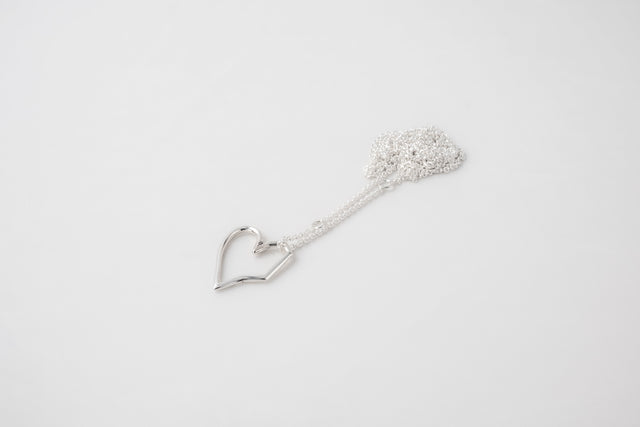
Sterling Silver 925 — Complete Buyer's Guide
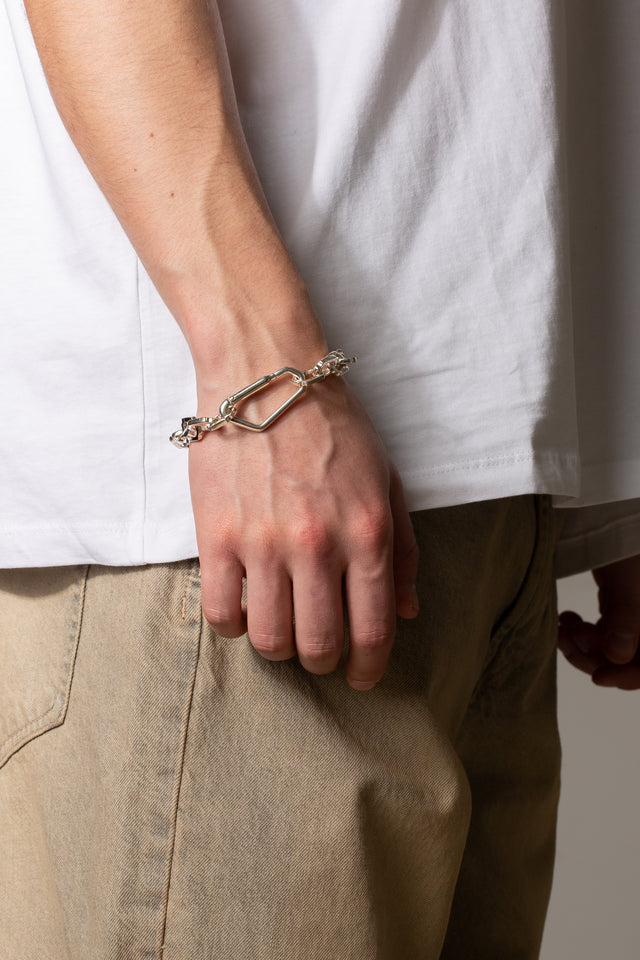
925 sterling silver is an alloy containing 92.5% silver by mass. Other metals, commonly copper, make up the remaining 7.5%. The number describes composition; the way a ring or bracelet is made matters just as much when choosing a piece to wear.
Updated October 15, 2026 · first published May 9, 2026
A buyer usually wants to know three things: whether a piece is silver, how it will wear and what care it needs. We will start with fineness and ways to check it, then move to construction, surface finishes and price. For a material reference, see the sterling silver atlas.
What is 925 sterling silver?
In a 925 alloy, 925 parts out of every thousand by mass are silver. Copper is a common addition, but the number does not identify all the remaining metals. If you need the complete composition, ask for the maker’s specification for that piece.
The Royal Society of Chemistry describes sterling in these terms. The proportion means the same thing in London and Bali. STRUGA makes its international-market pieces in Bali; the Bali silver guide explores the craft context. Place of manufacture and silver content are separate parts of a description.
925 sterling silver — composition and properties
| Property | 925 | 999 |
|---|---|---|
| Silver content | 92.5% by mass | 99.9% by mass |
| Other metals | Not specified by 925 | Remainder of the specification |
| Mechanical properties | Require exact alloy and condition | Require material condition |
| Nickel / sensitivity | Not established by the fineness mark | Check the exact object |
| Authenticity | A mark alone is not proof | A description alone is not proof |
Hardness and melting behaviour require a more detailed specification: the other metals and the alloy’s processing history matter. Even density is difficult to compare with a reference value when a finished piece contains cavities, stones or inserts. Figures for pure silver do not describe every ring stamped 925.
How to check 925 silver — home observations and professional analysis
A close look is a useful first step. Home observations can reveal a mismatch between an object and its description, but they cannot establish an exact silver fineness. These seven checks range from observations you can make yourself to examinations that need a professional.
| Check | What it offers | Limit |
|---|---|---|
| Mark | Claimed fineness | Not independent proof |
| Magnet | Magnetic component check | Non-attraction does not prove silver |
| Weight / density | Construction-dependent observation | Needs suitable mass and volume |
| Ice / cloth | Surface observation | Not a fineness measurement |
| Reagent | Professional examination | May damage or require sampling |
| XRF | Professional composition reading | Sample and calibration limits |
- Marks. Look at the fineness number, maker’s mark and any assay marks together. Their meaning depends on country and period. A stamp can be copied; an absent mark also needs to be considered under the relevant rules.
- A magnet. Attraction reveals a magnetic component in the area tested. A clasp spring may behave differently from the body of the piece. Many metals other than silver do not attract a magnet, so a lack of attraction does not prove sterling.
- Weight and density. A useful calculation needs accurate mass and volume measurements, plus an understanding of the construction. Cavities and inserts make comparison with a solid sample misleading. Heft alone will not identify the alloy.
- Ice. Melting speed depends on contact area, temperature, shape and mass as well as heat conduction. It is not a fineness measurement, and wetting a piece with sensitive inserts is an unnecessary part of the experiment.
- A cloth. A dark trace tells you something about the surface. Freshly cleaned silver may leave little trace; silver plating also contains silver at the surface. Rubbing can alter a matte or deliberately dark finish.
- A reagent test. Let a professional choose the method. Agree on any scratch or sampling beforehand rather than damaging a finished piece for an uncertain result at home.
- XRF, or X-ray fluorescence. Professional analysis can examine composition without destroying the object. The reading needs to account for the area tested, coatings, uneven composition and instrument calibration. Thermo Fisher explains how the sample and calibration affect accuracy.
Before buying, ask for a written material and finish description, the maker’s identity and the seller’s terms. For a disputed piece whose composition matters, arrange suitable independent analysis. Our making guide explains the work behind STRUGA jewellery; testing an individual object still requires examining that object.
Why is silver alloyed at all? Why exactly 92.5%?
Pure silver is relatively soft. Alloying and subsequent working let a maker change its behaviour to suit a design. A fine ring, a substantial bracelet and a clasp all face different loads: they can share a fineness without sharing a service life. Section thickness, joints, heat treatment and use make a difference.
Why 92.5% in particular? Sterling is an established historical standard. The Goldsmiths’ Company Assay Office records that England introduced the higher Britannia standard in 1697 and restored sterling in 1720, keeping Britannia as an alternative. That history explains the standard, rather than providing a durability rating for every modern piece.
After choosing the alloy and form, the maker also chooses how to finish the surface. STRUGA calls its uncovered sterling surface Living Silver. Other pieces combine materials, each of which contributes its own properties and care requirements.
Common silver hallmarks worldwide
A hallmark is read as a group of marks, rather than as an isolated number. Start with where and roughly when the piece was made.
United Kingdom. A full hallmark has three compulsory marks: sponsor, numerical fineness and assay office. The date letter and traditional lion are optional. Silver below 7.78 g is exempt from compulsory hallmarking; the official hallmarking guidance sets out the rules and exceptions.
United States. FTC guidance associates sterling with at least 925 parts silver per thousand, subject to applicable tolerances. Its silver-content rule distinguishes a silver alloy from silver plating.
European markets. Check marking rules and recognition of foreign marks for the particular country and period. A table of one country’s marks will not decode every European piece.
Mexico, Bali and Thailand. A place name describes origin, rather than measuring silver content. Ask about the base metal, coating and separate components. The Bali silver guide provides context for the island’s craft tradition; a product’s material specification provides its composition.
Silver purity standards compared — 800, 875, 900, 925, 950, 999
The simplest comparison uses one scale: silver content by mass. A higher number means more silver, rather than an automatic improvement in the finished object.
| Fineness | Silver by mass | What it does not establish |
|---|---|---|
| 800 | 80% | Hardness, authenticity, workmanship |
| 875 | 87.5% | Hardness, authenticity, workmanship |
| 900 | 90% | Hardness, authenticity, workmanship |
| 925 | 92.5% | Hardness, authenticity, workmanship |
| 950 | 95% | Hardness, authenticity, workmanship |
| 999 | 99.9% | Hardness, authenticity, workmanship |
Fine silver is also used in jewellery when it suits the design and method of making. Accurately described 800 or 900 silver is an alloy of another fineness, rather than a counterfeit. Choose with the object’s purpose, construction and condition in mind.
Is 925 silver the same as sterling silver?
Yes. In a material description, 925 silver and sterling silver refer to the same fineness. The US rule 16 CFR § 23.5 connects the name with silver content. A sterling label or a 925 stamp should be considered alongside the object’s description.
What the sterling label tells you
The historical name has survived alongside the numerical description discussed above. Neither word tells you the thickness of a ring, the quality of a joint or all the remaining metals. If skin sensitivity is a concern, ask for the full composition: fineness alone does not establish that a piece is nickel-free or suitable for your skin.
Sterling silver vs other precious metals
When choosing a ring, sterling may sit alongside gold alloys, white gold, platinum and palladium on your shortlist. Compare finished designs. The hardness of a pure element will not describe every jewellery alloy, and a metal’s name cannot tell you whether a particular construction can be repaired.
| Material | Ask before choosing |
|---|---|
| Sterling | Alloy, section, inserts and finish |
| Gold alloy | Exact alloy and construction |
| White gold | Underlying alloy and any coating |
| Platinum | Construction and available service |
| Palladium | Alloy and care instructions |
For white gold, ask separately about rhodium plating and its care. A coating and the alloy underneath are different parts of the specification. Uncovered sterling, which STRUGA calls Living Silver, changes differently with wear. Compare prices, resizing and service for the actual models: there is no fixed price ratio or universal repair rule for these metals.
Living Silver — why STRUGA doesn't rhodium-plate
Rhodium plating changes the outer surface of a piece. STRUGA leaves sterling uncovered: its Living Silver can darken through contact with sulfur compounds, while friction during wear changes the appearance of exposed areas.
Deliberate oxidation happens earlier, when the maker darkens the surface before the piece is worn. Patina on uncovered silver develops over time. Cleaning either surface starts with deciding what you want to preserve: polishing may remove intentional dark areas as well as tarnish.
The patina guide explains the chemistry, how different forms change with wear and how to approach care. With inserts, a suitable cleaning method needs to account for every material in the piece.
How sterling silver is used at STRUGA
STRUGA uses sterling on its own and in combinations. Blade, Thorn and Signature Asymmetric offer different forms and finishes, with the exact material listed for each piece. Thorn Ring and Big Thorn Bracelet are two examples.
Carbon-based objects have their own specifications. The Graphite palettes include Classic, Bloody, Arctic, Winter, Multy Graphite and Toxic. A light-coloured insert may be a silver-plated jewellery alloy, so it should not be described as sterling. The carbon and meteorite guide explains these combinations.
Seymchan is a separate material; the fineness of a silver component does not describe a meteorite insert. See the meteorite guide for more. STRUGA also works with raw tourmaline, aquamarine, quartz and heliodor. The stone and its setting matter when choosing care or discussing repairs.
Does 925 sterling silver tarnish?
Yes. Contact with sulfur compounds can form dark silver sulfide at the surface. Environment and wear affect the rate, so two pieces of the same fineness can develop differently.
Tarnish and mechanical damage are separate changes. Patina is a surface question; a bend, crack or loose setting needs its own examination. At STRUGA, natural darkening is part of Living Silver. Keeping it or returning to a lighter surface is the owner’s choice, taking the original finish into account.
Care, maintenance, longevity
Start with the instructions for your model. They account for stones, carbon, meteorite, joints and finish as well as silver. A few habits help with everyday care:
- Remove jewellery before swimming or using household chemicals, and follow any additional restrictions in the maker’s instructions.
- Take rings off for heavy work and loads that could catch, compress or strike the metal. Thin sections and settings may be especially vulnerable.
- Store pieces separately to prevent scratches. A fabric pouch or the original STRUGA box will do.
- Before restoring a surface or changing a size, show the piece to a suitable jeweller and agree on feasibility, cost and timing. Some forms cannot be resized.
A soft cloth is a starting point when suitable for the finish. Choose a polishing product only after checking the surface and inserts: a cleaner for plain silver may not suit the whole piece. Abrasives, acids, alkalis and hot water can change a finish or affect another material.
If you want to lighten Living Silver or restore a dark finish, contact STRUGA with a photograph. Repair options and warranty terms are confirmed for the particular order. The patina guide linked above covers surface changes in more detail.
Sterling silver wedding rings
Sterling is used for wedding rings too. Fit, width and thickness matter during a fitting; inserts, finish and future service belong in the discussion before ordering. Some STRUGA forms cannot be resized, which is worth establishing before choosing a pair.
Dark Union is the route for custom wedding and paired rings. It is separate from the ready-to-buy DARK UNION family. The estimated making time is 2–4 weeks from sketch approval. Confirm the final schedule, delivery, design, price and service terms before ordering.
An agreed design may combine silver, carbon, meteorite or raw stones. The dark wedding rings guide sets out questions for a pair. For a single commissioned object, use Custom Order, where materials, construction and timing are also agreed before work begins.
What affects the price of 925 silver jewellery
There is no price that proves sterling. Retail pricing includes material, design, making, finishing and the terms of sale. Two rings of the same mass can therefore have different prices.
Silver as a raw material is a separate calculation. It needs the mass of the silver-bearing alloy, its fineness and a quotation for a particular date. The total weight of a ring with a stone will not do. Buying or refining deductions also affect what a seller receives. This calculation does not promise recovery of the retail price or an investment return.
Before you buy 925 — a seven-point check
- Read the material description.
- Identify the maker and relevant marks.
- Check dimensions and the chosen size.
- Look at the joints, setting and finish.
- Ask about inserts and their care.
- Confirm available repair or resizing options.
- Read the seller’s price, delivery and order terms.
Materials that resemble 925 silver
A silver colour can come from several materials. A few names help clarify what a seller is offering:
- Nickel silver or German silver: the name does not denote sterling; ask for the composition.
- Silver tone: a description of appearance, rather than silver content.
- Silver-plated: a silver layer over another base material.
- 800 or 900 silver: other finenesses, not counterfeits when accurately described.
Steel, titanium, pewter and aluminium can also resemble silver. Colour, softness, heft and a magnet response cannot reliably identify them one at a time. Scratching a finished piece damages the surface without establishing an exact fineness. Compare it with its description first, then arrange suitable professional analysis if needed.
STRUGA in dark silver jewellery
Dark silver can be compared through silhouette, surface and construction. At STRUGA, start with the everyday forms of CODEX, symbolic objects in RITUAL, or experimental work in LAB. ISLAND ARTIFACTS offers a separate selection for choosing a gift.
The comparison guide helps explore related approaches. For a particular piece, look at construction and finishing; useful owner reviews describe fit, wear and service. Fineness and a brand name alone cannot answer those questions.
925 sterling silver — the numbers that matter
Reading a fineness mark takes one division: 925/1000 = 0.925, or 92.5% silver by mass. A raw-material estimate applies that proportion to the silver alloy alone, separating stones and other materials. When choosing a piece, check its dimensions and weight, then look at the available sizes.
See the individual specifications for Thorn Ring, Big Thorn Bracelet, Blade Big Links Bracelet and Carabiner #2 Big Cross Bracelet. They describe those pieces, rather than an average for the catalogue. Continue through the catalogue or take a closer look at Big Thorn Bracelet.
Sources and further reading
- Royal Society of Chemistry — silver
- GOV.UK — hallmarking
- FTC — silver content
- Thermo Fisher — XRF limits
Further reading from STRUGA Journal
Frequently asked questions
Didn’t find the answer — write to us, we reply personally.
Ask a question →01Is 925 sterling silver the same as silver-plated?+–
No. Sterling is a silver alloy throughout; silver plating is a silver layer over another material. A stamp and magnet cannot distinguish every example. A disputed object may need suitable professional analysis.
02Is Living Silver the same as oxidised silver?+–
No. STRUGA leaves Living Silver without rhodium plating, allowing patina to develop with wear. Deliberate oxidation darkens the surface before the piece is worn. Cleaning depends on which finish you want to preserve.
03Is 925 silver lower quality than 999?+–
The numbers describe silver content, rather than a general quality ranking: 92.5% for 925 and 99.9% for 999. Both are used in jewellery. The other metals, processing and construction also matter for a particular design.
04Does the 925 hallmark alone prove a piece is real silver?+–
No. A stamp states the claimed fineness. Home observations may reveal inconsistencies, while professional analysis examines composition. With XRF, coatings, the area tested, uniformity and calibration still affect the conclusion.
05Is 925 silver good quality?+–
It is a recognised jewellery fineness, but it does not assess workmanship. Look at casting, joints, finish and fit. Ask separately about full composition: 925 does not establish that the piece is nickel-free or suitable for your skin.
06Is 925 sterling silver fake silver?+–
No. Sterling is a real silver alloy containing 92.5% silver by mass. An individual piece still needs to match that description. A plated object accurately sold as plated is not a counterfeit either.
07Is 925 silver worth anything?+–
Its silver content has material value. A rough estimate needs the mass of the silver-bearing part, its fineness and a dated quotation, with buying or refining terms considered separately. That amount is not the retail price and does not promise an investment return.
08Is 925 sterling silver good for a ring?+–
Yes, sterling is used for rings. Comfort and resistance to loads depend on the alloy, thickness, shape and fit. Ask about care and future service before buying: some constructions cannot be resized.
09Will 925 sterling silver tarnish?+–
Yes. Sulfur compounds form dark silver sulfide at the surface. This differs from mechanical damage. Whether to remove it depends on the finish: polishing can change intentionally dark or matte areas.
10Can I shower with 925 silver?+–
Remove it unless the maker has specifically confirmed that this is suitable. Water and washing products reach inserts, joints and finishes as well as silver. Fineness alone cannot tell you how the whole piece will withstand showering or swimming.
11What's the difference between 925 and 999 silver?+–
Their silver content is 92.5% and 99.9% by mass respectively. Other metals and processing also affect their properties. Choose fineness alongside the design and intended use, rather than as a stand-alone prediction of durability.