

Frequently asked questions
Do STRUGA ear cuffs require a piercing?
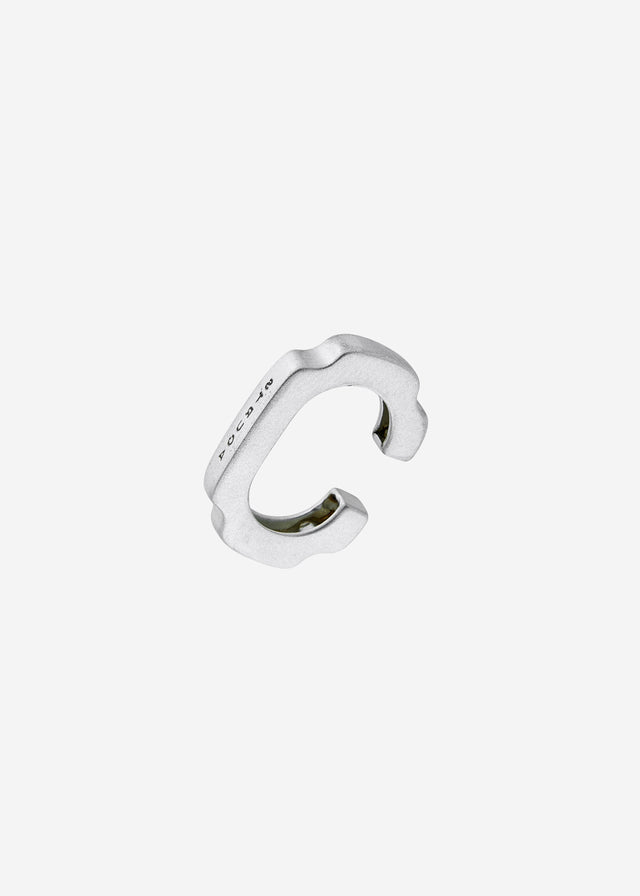
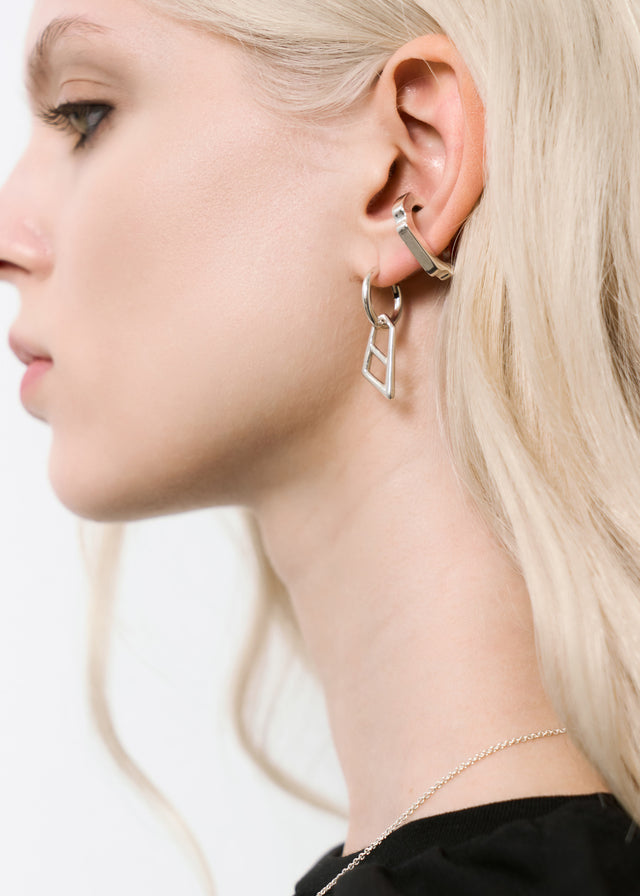
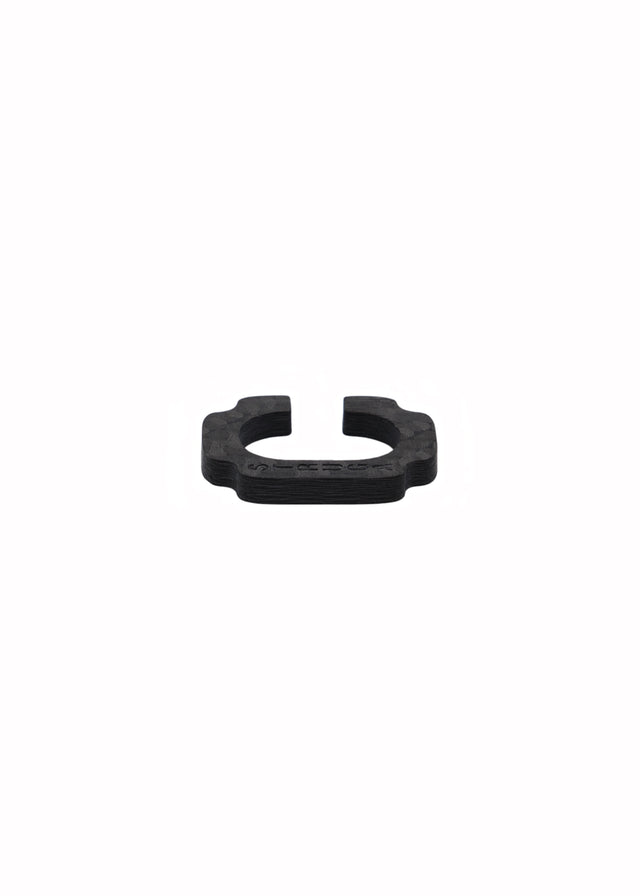
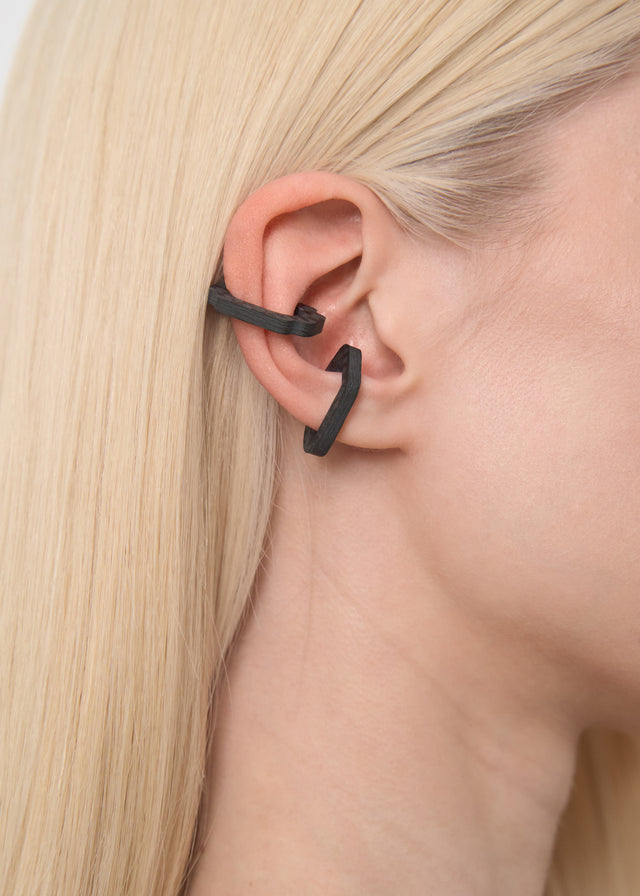
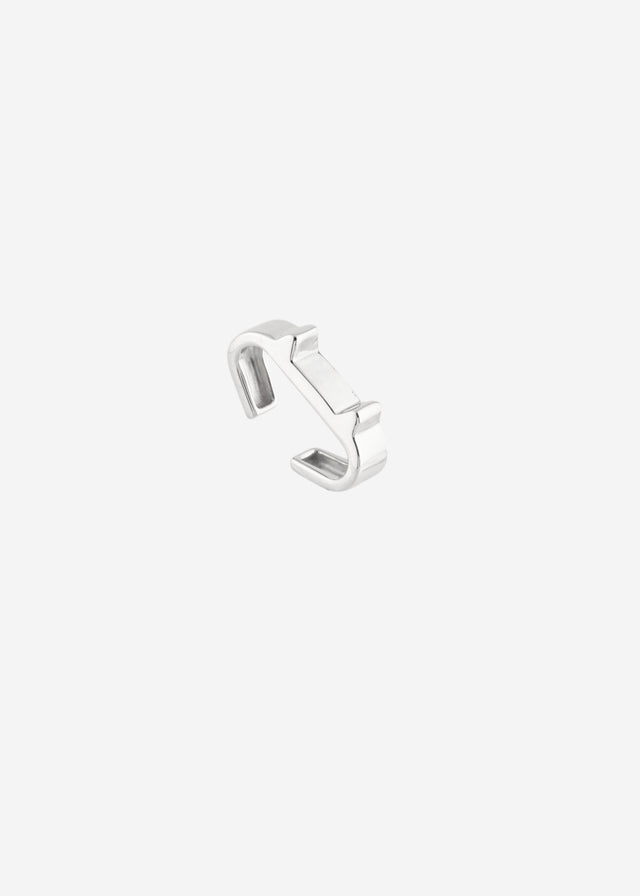
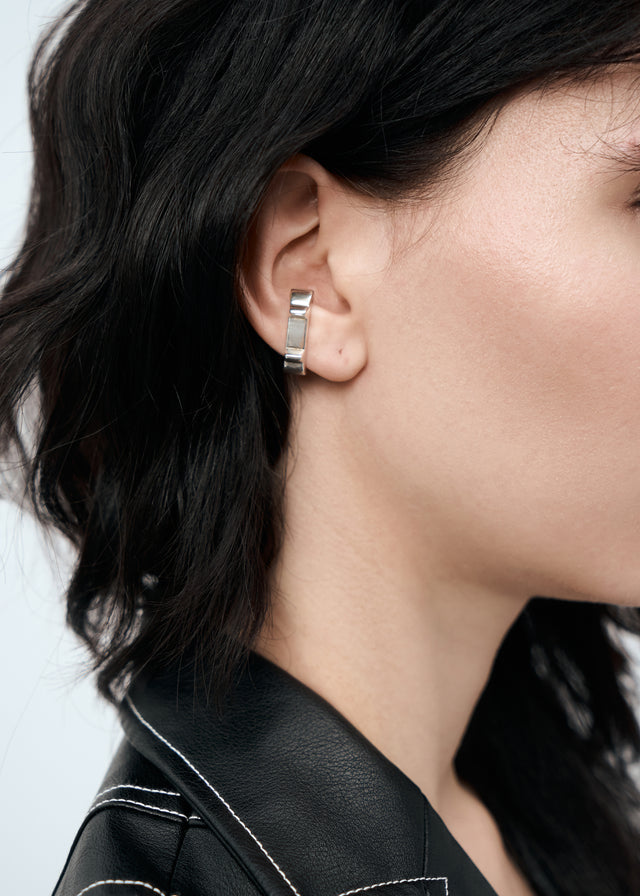
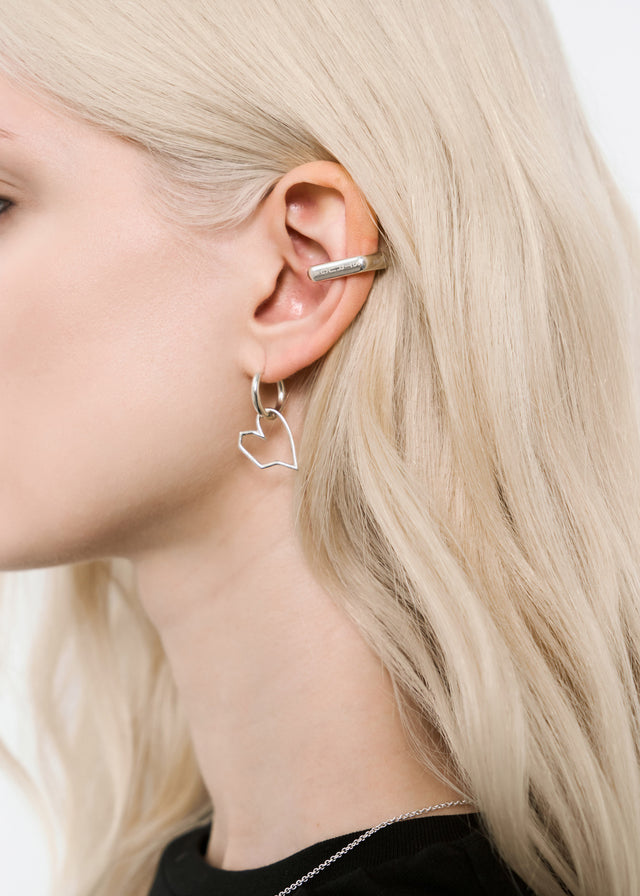
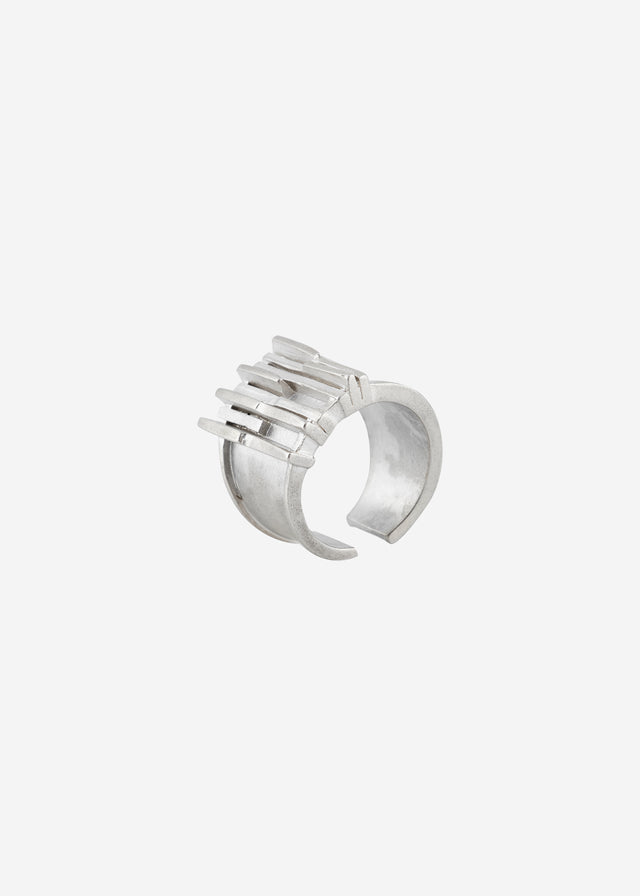
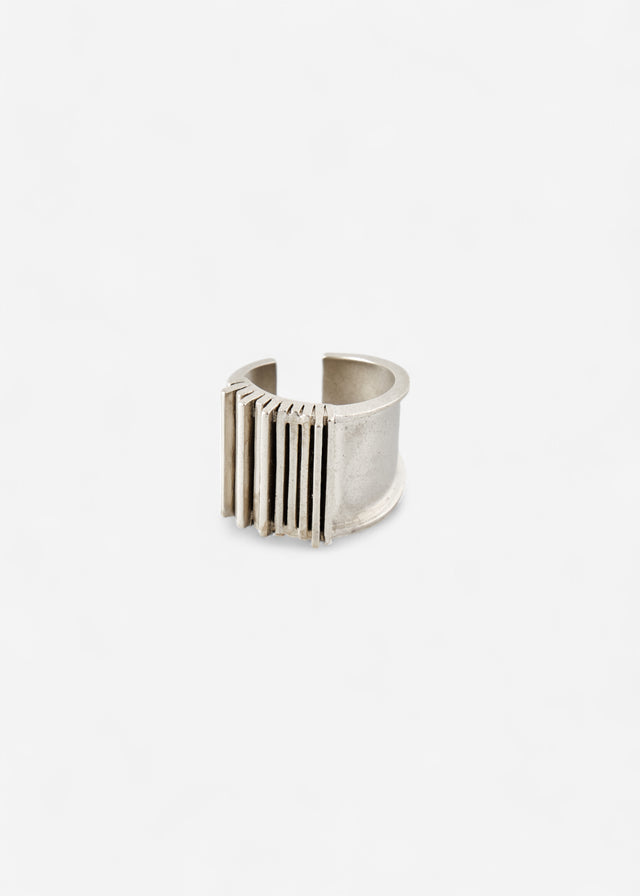
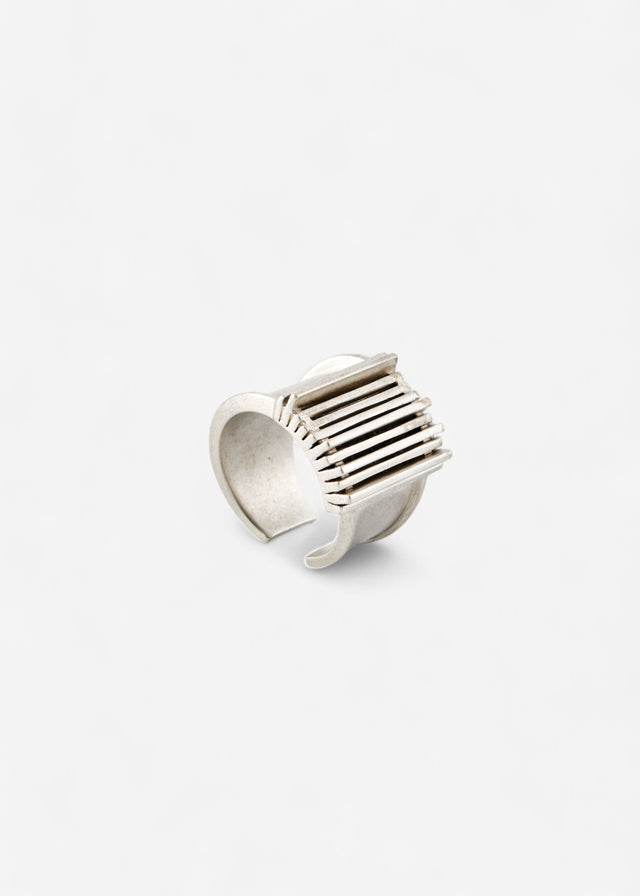
No. Every cuff in this category is worn without a piercing — it wraps around the edge of the ear or grips onto it. Five families: BLADE, THORN, BRUTALISM, Signature Asymmetric and CARBON — 925 sterling silver or carbon, depending on the family.
Is Living Silver the same thing as oxidation?
No. Living Silver is a property: 925 sterling silver without rhodium plating lives and darkens on its own over time. Oxidation is a technique: the metal is darkened deliberately, in the making. STRUGA's silver cuffs are 925 sterling silver; the patina that builds is a map of how the piece is worn, not a defect.
Is the THORN cuff family the same as the Thorn Amulet?
No. THORN here is a family of the CODEX world: cuffs with sharp edges, CNC geometry in silver. The Thorn Amulet is a separate type within the AMULET family of the RITUAL world. One word, two different entities — the cuff belongs to the THORN family of CODEX.
Which STRUGA ear cuff is the heaviest?
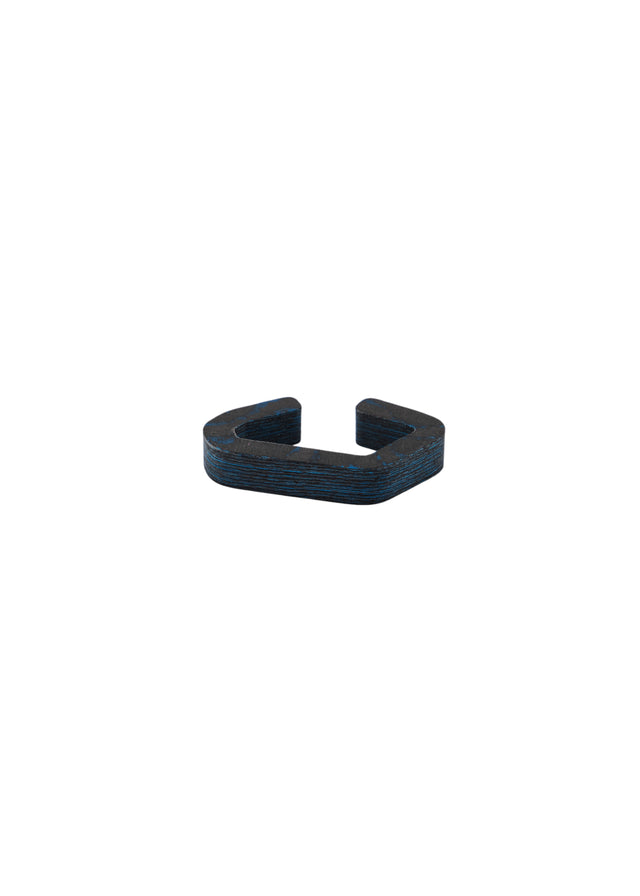
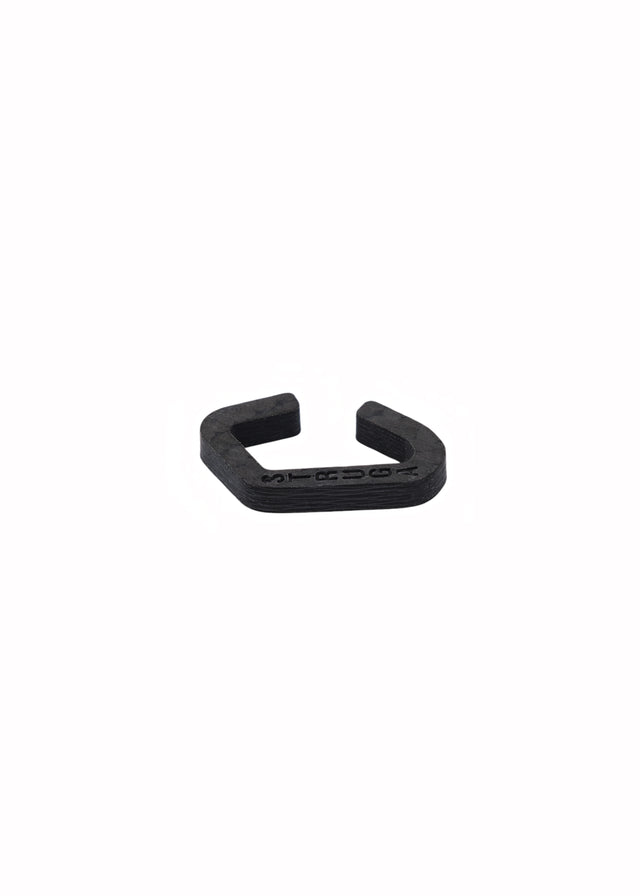
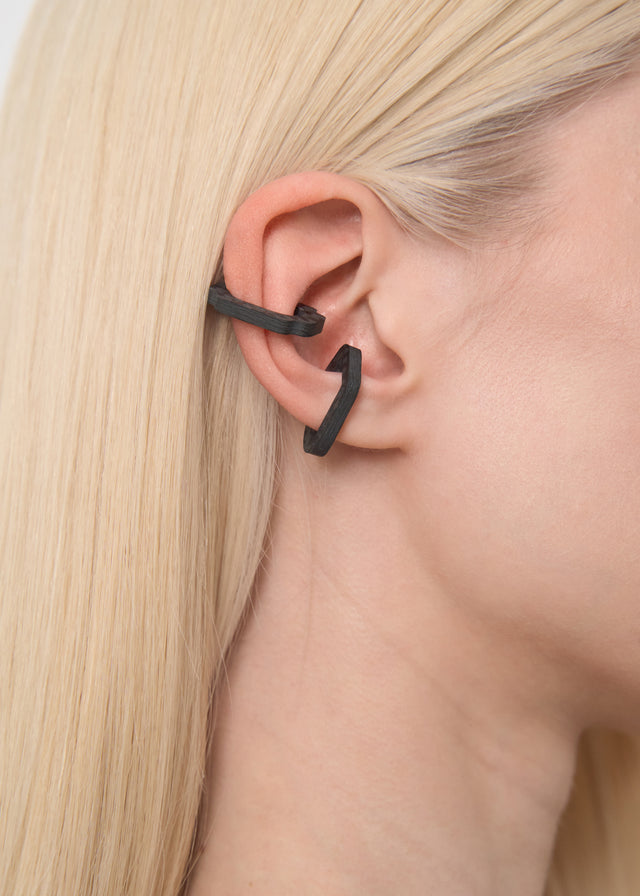
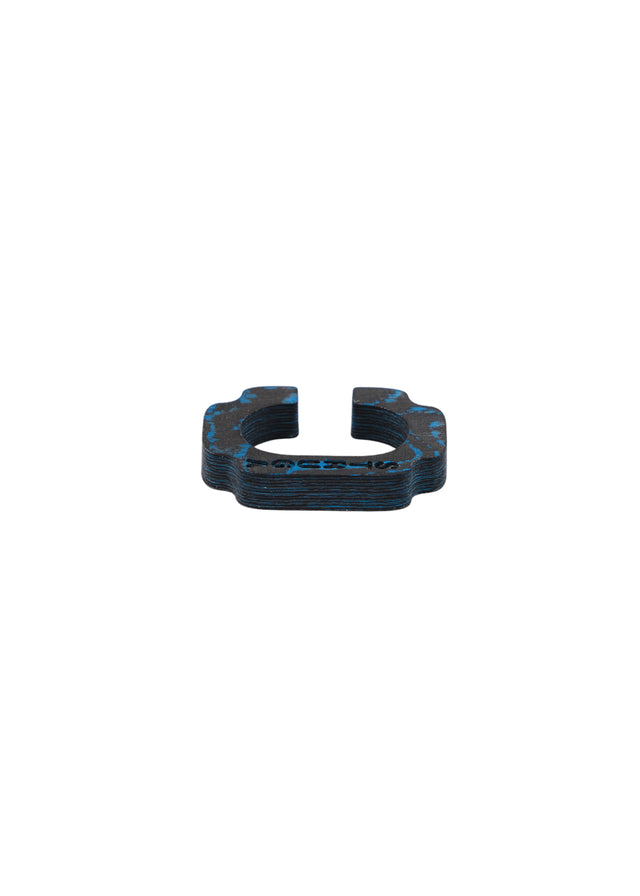
BRUTALISM. It is architecture in silver for the upper ear — the heaviest cuffs the brand makes. If you want the opposite, CARBON cuffs are ultralight: almost absent by weight, fully present by form, in six in-house palettes — Classic, Bloody, Toxic, Arctic, Winter and Fused Graphite.
What is the Signature Asymmetric cuff?
It is the brand's DNA silhouette resolved as a cuff: the asymmetric line carried onto the ear — not a ring, not a pendant. The family lives in the CODEX world; the cuff is worn without a piercing and stands alongside BLADE, the link cuff that brings the brand's design code to the ear.
What an ear cuff is
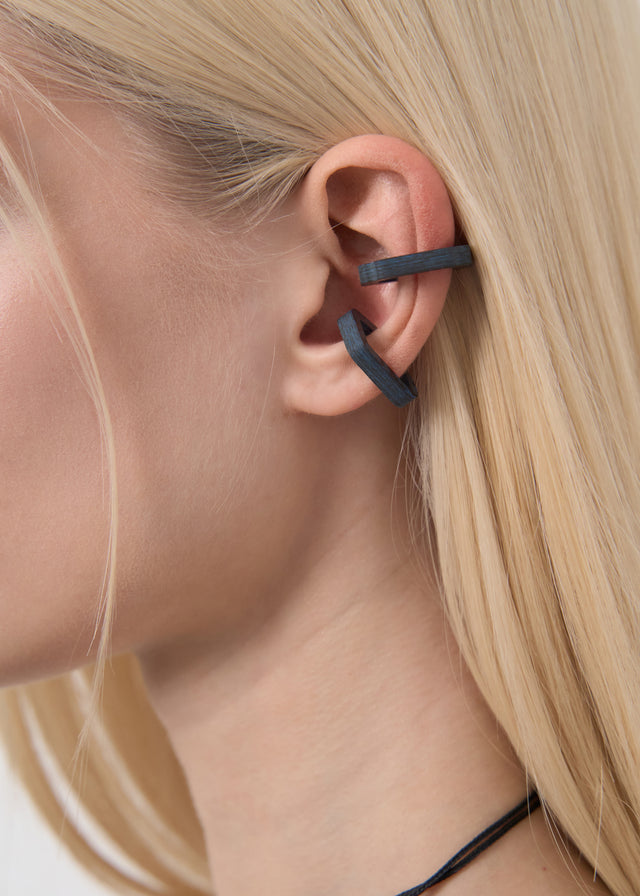
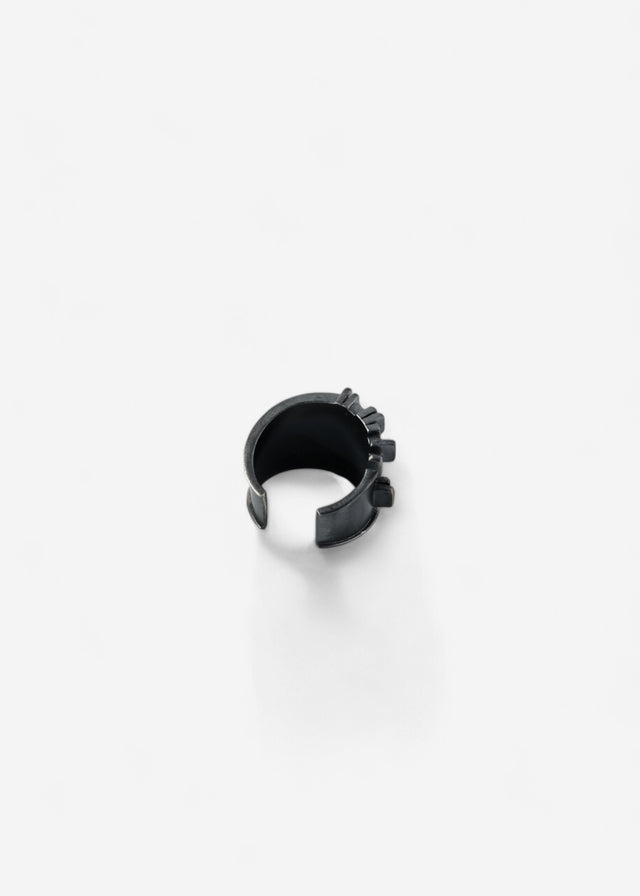
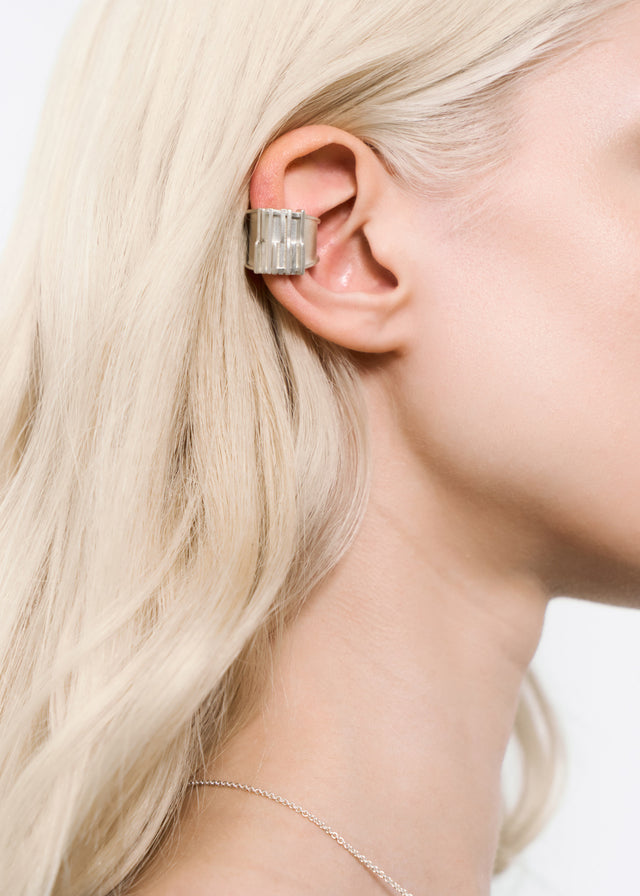
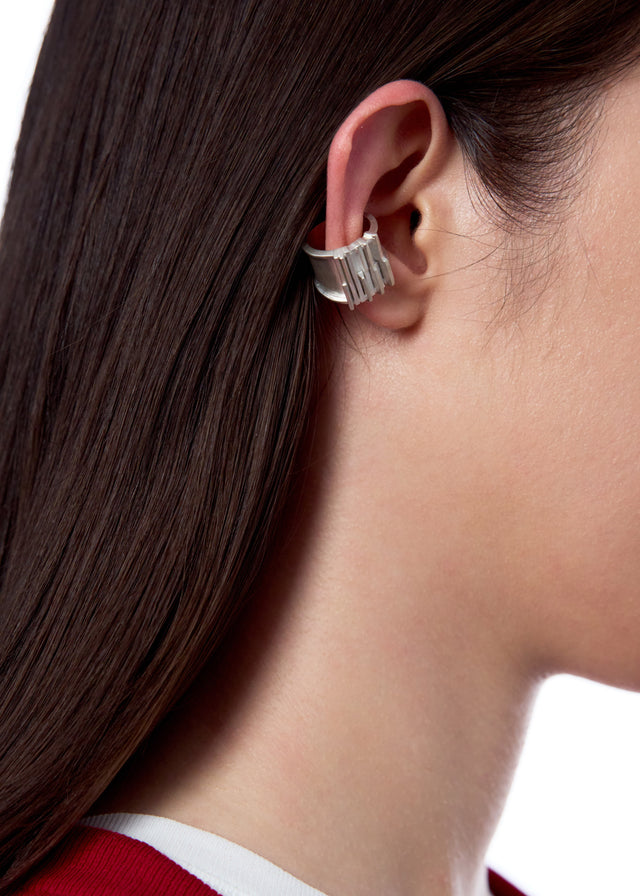
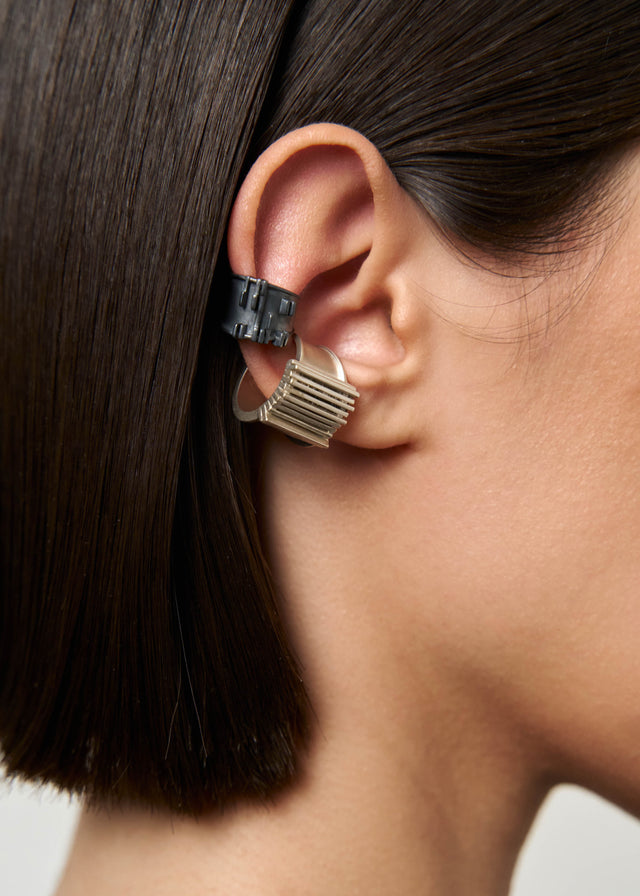
An ear cuff grips the edge of the ear. No piercing, no post, no back — the metal holds by its own tension, closing around cartilage the way a clip closes around paper.
A stud needs a hole and a fastening. A cuff needs a shape bent to a specific radius and then hardened, so it opens under your fingers and closes again on the ear. Get the tension wrong and it either slides off or bites. Get it right and you forget it is there by lunchtime.
How it stays on without a piercing
Sterling silver is soft enough to bend and hard enough to remember. These cuffs are formed around a mandrel, then work-hardened — the metal is compressed until it springs back to the shape it was given.
You open the cuff slightly with two fingers, slide it onto the outer edge of the ear, and release. It closes on cartilage, not on the lobe. If it feels tight, open it a fraction more and try again; silver takes the correction. If it feels loose, press it closed by the same fraction.
The ear is not symmetrical, and neither are most people's two ears. A cuff adjusted for the left rarely sits identically on the right.
Choosing a size: read the weight, not the label
Three sizes, and the difference between them is not subtle — the largest weighs more than seven times the smallest.
- S — 0.5 g. A thin line on the upper edge. Barely registers. Works as a second or third element in a stack, or as a first cuff if you have never worn one.
- M — 1.6 g. The working size. Visible from across a room, still light enough to forget. If you are buying one cuff and cannot try it on, buy this.
- L — 3.8 g. A statement worn alone. Wide contact with the cartilage, real presence. You feel it for the first day, then you stop.
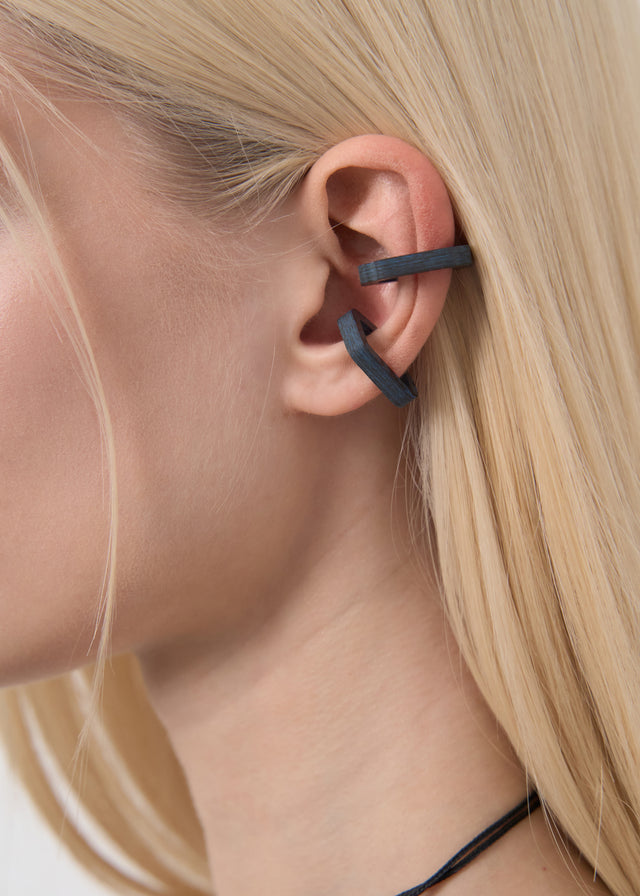
- Carbon versions — 0.3 g. The lightest thing made here for the ear. Carbon fiber over a silver plate: the form of a large cuff at a fraction of the mass.
Weight, not width, is what your ear registers after an hour. That is why the grams are published.
Silver, carbon, and the difference on your ear
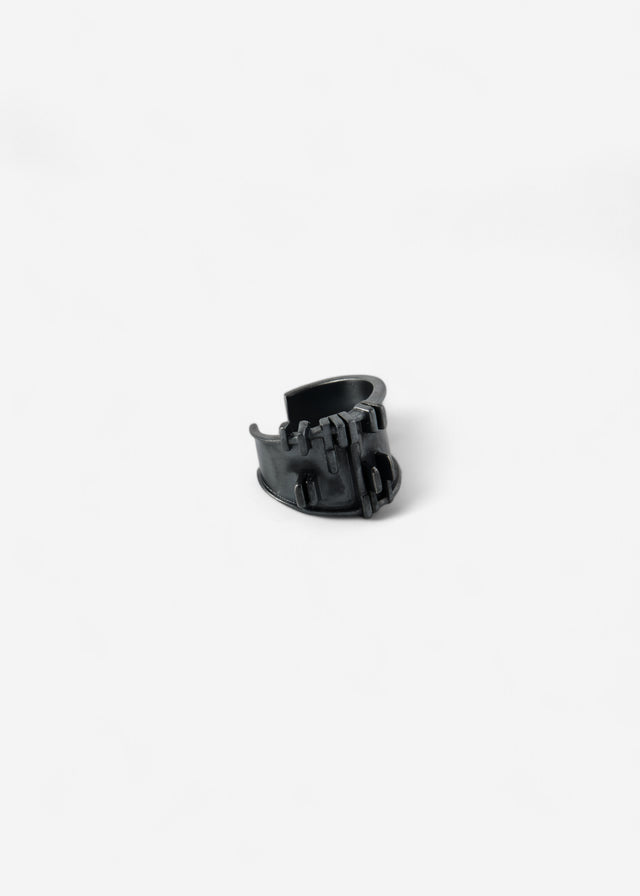
Twelve of these cuffs are oxidised: the silver is darkened at the workbench, black sinking into every recess and rising off every raised edge. Four are carbon fiber on a silver plate.
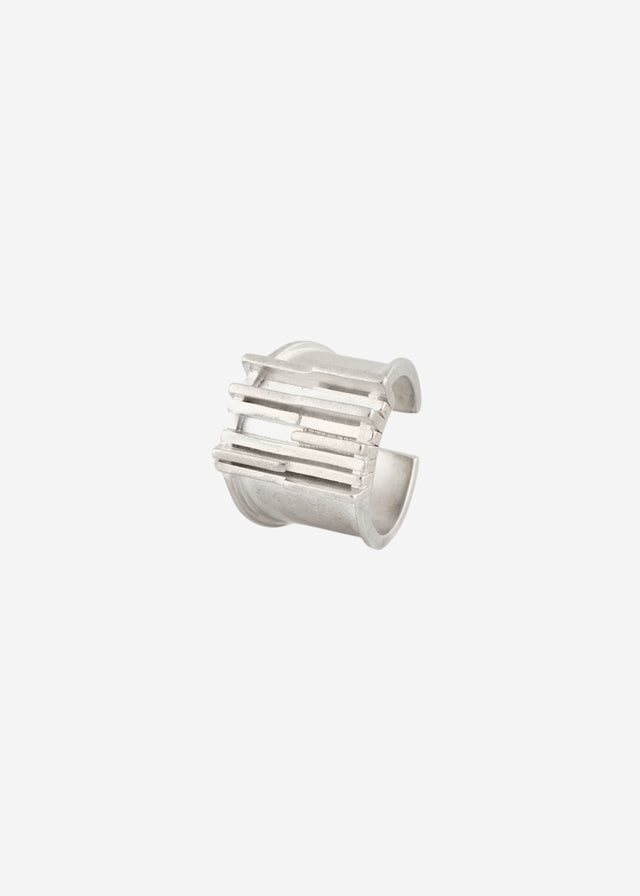
Silver lives. It is 925 without rhodium plating, so it reacts to air and to your skin — the raised edges stay bright where the ear rubs them, the recesses go dark. After a year the piece reads as a map of how you wore it.
Carbon does the opposite. It is unaffected by water, unchanged by time, and stays exactly as it left the bench. On the ear it disappears in weight — 0.3 grams — while keeping the size of a large cuff.
One material records you. The other refuses to.
Which ear, and how many
There is no rule, and we are not going to invent one. Two things are worth knowing.
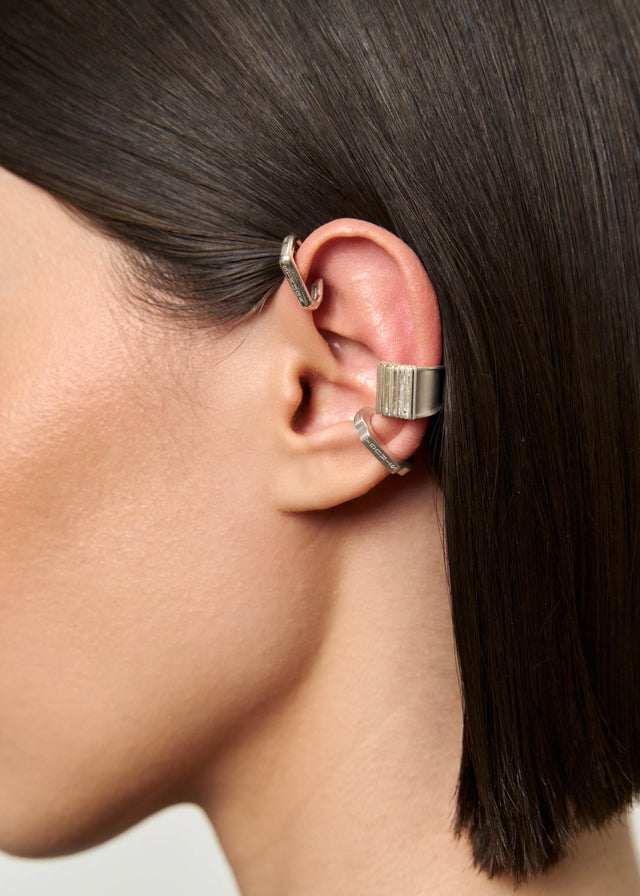
A cuff worn alone reads as a decision. A cuff worn as part of a stack — two or three elements at different heights — reads as a habit. Both are correct; they say different things.
If you wear studs, the cuff sits above them on the outer edge and does not compete for the same space. If you wear nothing else, an L cuff on one ear is a complete statement.
Living with an oxidised cuff
Do nothing, and the piece darkens further where the ear touches it and brightens where your fingers do. That is the intended behaviour.
If you want the metal lighter, silver cleaner returns it. If the surface is matte, a scotch pad takes off the top layer and sets a new matte at the same time. Both are reversible; you are choosing a state, not repairing a defect.
Take it off before the pool. Chlorine is the one thing that darkens silver in a way you did not choose.
What it is made of
Sterling silver 925 — 92.5% pure silver, the international standard, alloyed for hardness because pure silver is too soft to hold a spring. Carbon versions add multi-layered matte carbon fiber over a silver plate.
Wax model, silicone mould, 925 silver, finishing by hand. Every piece is worked to final shape by a silversmith, which is why no two are identical under close light.
More questions
Will it fall off?
Not if the tension is right. Open it slightly to loosen, press to tighten — sterling silver takes the adjustment and holds it.
Which size should I buy first?
M, at 1.6 grams — over three times the S and under half the L. Visible, and light enough to forget by lunchtime.
Does it hurt?
It should not. A cuff sits on cartilage with even pressure. If one spot bites, the cuff needs opening by a fraction.
Can I wear it every day?
Yes. Sterling silver is alloyed precisely so it can be worn daily without deforming.
Read further
- How to wear ear cuffs without a piercing — placement, tension, common mistakes.
- Cartilage cuff sizing, fit and comfort — where the pressure should sit.
- Ear cuff materials: 925 silver, oxidised, gold — what each material does over time.
- Cuffs, studs and hoops compared — which does what.
- Building an ear stack — heights, spacing, mixing metals.
- Men's ear cuffs — placement and occasions.