Best Handmade Silver Jewelry from Bali — 12 Brands Insider Guide 2026
Bali is one of the world's centers of handmade silver. The tradition runs through Celuk village, where families have been working silver for generations. Today the island makes everything from classical ornamental pieces to contemporary author design. This is a 2026 map of 12 Bali silver brands — from expensive John Hardy to dark STRUGA and the cultural heritage of Sunaka. With prices, styles, showroom locations, and how to pick yours.
Updated August 22, 2026
- Handmade Bali silver jewelry is 925 sterling (92.5% silver, 7.5% copper) made by hand on Bali: a wax or 3D-printed model, a silicone mold, cast 925 silver, hand finishing.
- This 2026 guide covers 12 Bali silver brands: 8 in depth (John Hardy, STRUGA, Sunaka, Bits of Bali, JewelryLab, UC Silver & Gold, Samuel B., Novica) plus 4 shorter cards (Kapal-Laut, Bambu Silver, Annabeck, Indarti Silver).
- Prices range from $30 for classic Sunaka silver to $5,000+ for John Hardy; the STRUGA range runs $40–$2,500, from an everyday ring to a sculptural amulet with Seymchan meteorite.
- STRUGA is a dark, architectural, industrial Bali brand built across five worlds — CODEX, RITUAL, LAB, DARK UNION, ISLAND ARTIFACTS — with eleven form-families and materials including carbon (the Graphite palette) and the Seymchan meteorite, a pallasite found in 1967.
- Living Silver is a property of the metal: uncoated 925 that develops patina with wear; oxidation is a deliberate darkening done at the work stage — they are not the same thing.
- To verify real Bali silver: the stamped 925 hallmark plus visible signs of handwork; weight is not a criterion. On the island, buy in Celuk workshops, Ubud galleries, and Seminyak/Canggu concept stores (STRUGA — Hedonist Store and Barefoot Aristocracy).
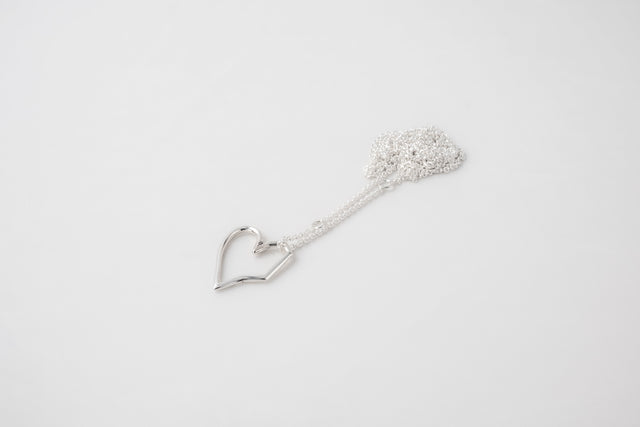
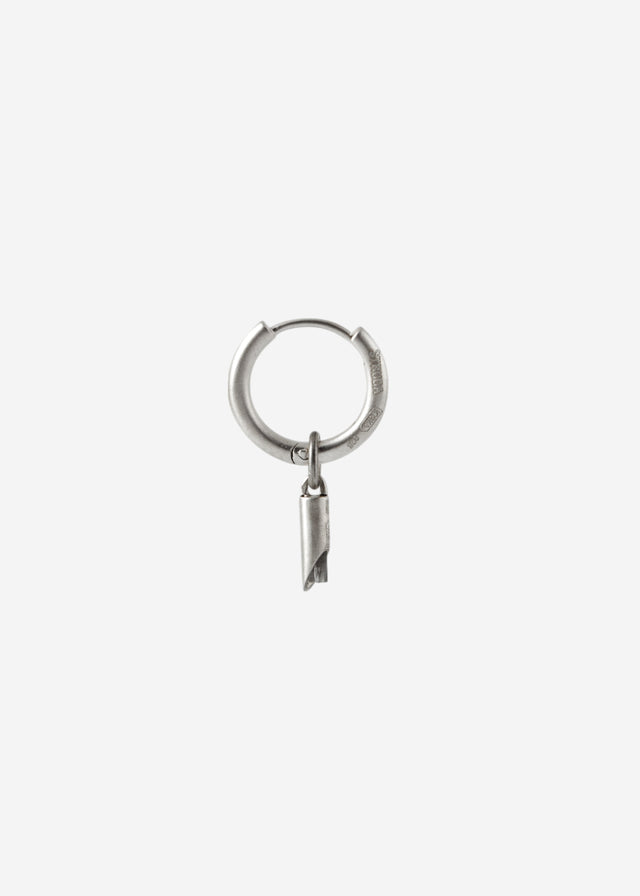
In the catalogue: Blade Mini Links Bracelet — $800 · Signature Link Medium Earring — $127 · Mini Line Classic — $190
Key takeaways
- 12 brands in this guide: 8 covered in depth (John Hardy, STRUGA, Sunaka, Bits of Bali, JewelryLab, UC Silver & Gold, Samuel B., Novica) plus 4 in shorter cards (Kapal-Laut, Bambu Silver, Annabeck, Indarti).
- Price range: from $30 for classic Sunaka silver to $5,000+ for John Hardy at the high end. Author brands run $40 (CODEX STRUGA) to $3,000+.
- Where to buy on Bali: Ubud (galleries), Celuk (workshops), Seminyak/Canggu (concept stores Hedonist and Barefoot Aristocracy), Mambal (John Hardy flagship).
- STRUGA — our brand: 5 worlds (CODEX, RITUAL, STRUGA's lab, DARK UNION, island artifacts notes), 11 families (the blade collection, Thorn, Signature Asymmetric, Signature Heart, Brutalism, Mosaic, Carbon, Amulet, Fused, Experimental, Dark Union) plus the Living Silver philosophy, Seymchan meteorite, and the Graphite carbon palette.
- How to verify the real thing: the 925 hallmark plus visible signs of handwork. Weight is not a criterion.
Short answer: handmade Bali silver is 925 sterling (92.5% silver) cast and finished by hand on the island. The twelve brands below differ not in metal but in intent — from ornamental John Hardy to dark STRUGA. A 925 hallmark is required, but on its own it proves nothing: look for visible handwork and for a name that stands behind the piece.
Bali Designer Jewelry: Where Craft Meets Vision
Search bali designer jewelry and you land in a strange split. On one side, tables of mass-cut souvenir silver sold by the gram in tourist markets. On the other, a small layer of author studios where a designer's vision drives the form and a master's hand finishes it. This guide lives entirely on that second side — and understanding the difference is the first thing any serious buyer needs.
Why Bali became a design hub. The island is one of the few places on earth where a deep silver-craft tradition and a modern design economy sit in the same square kilometre. The craft is centred on Celuk village in Gianyar, where families have worked silver for generations, and it spreads up through the Ubud goldsmith community of carvers, casters, and stone-setters. That density is rare. A designer here can move from sketch to finished 925 piece without leaving the region — and can draw on skills that took decades to build, not a factory line that took a week to install. This is what separates a Balinese jewelry designer from a brand that simply orders from a catalogue overseas.
Why STRUGA is based here. We chose Bali for the same reason the craft endures: access. Access to master silversmiths who can read a difficult form and execute it cleanly. Access to the Balinese metalwork tradition — the surface texture, the oxidation, the patience with detail — without inheriting its decorative defaults. And proximity to the Ubud network of makers, so an experimental object can be tried, corrected, and finished in days rather than shipped across the world for each revision. The result is made by hand in Bali, but the design language is our own: dark, architectural, industrial.
What makes a piece "designer," not just "Bali silver." Tourist-market silver answers one question — what sells fast and cheap. Designer jewelry answers a harder one: what does this object mean, and how should it sit on the body. The tells are concrete. A designer piece carries an author's signature in its form, a coherent body of work behind it, and an honest 925 hallmark with visible signs of handwork. It is sold under a name that stands behind it, not anonymously off a tray. (Weight, by the way, is not the test — a heavy ring can still be soulless.) When you search designer jewelry bali or handmade designer jewelry bali, this is the line you are really trying to find.
STRUGA is built across five worlds, and the split is what lets a single design vision stay coherent without going flat. CODEX holds the brand DNA — asymmetric pendants, blades, the core rings and chains. RITUAL is the darker, stone-set line. LAB is where experimental objects live: carbon, Seymchan meteorite, alloys that have no place in classical jewelry. DARK UNION is wedding and matching rings made to order. ISLAND ARTIFACTS is the gift line — a piece carried home from Bali that actually means something. Eleven form-families thread across them, and the metal itself is left to age and darken with wear rather than sealed under plating.
If you want to see what designer-level Bali silver looks like when the vision is dark rather than decorative, start with the full STRUGA range. Explore the STRUGA collections →
What makes Bali silver different?
Craft. Bali silver is concentrated around Celuk village in Gianyar regency — makers have been working the metal here for generations. The base principle is handwork: a model from wax or 3D print, a silicone mold, 925 silver cast, hand finishing. A conveyor does not replicate that path.
Standard. Quality Bali silver is 925 (92.5% pure silver, 7.5% copper for durability). The 925 hallmark on a piece is a formal guarantee of metal. Serious brands state the alloy openly.
Price range. Bali silver runs from mass tourist pieces ($5–$20) through mid-range ($50–$300) up to the high end ($500+). The difference is craft hours, design originality, and finishing quality. This guide is about mid-range and above — where you pay for craft, not only raw material.
Living silver. Most author Bali brands work with 925 without rhodium plating — the metal breathes, develops patina with wear, and each piece grows its own character over time. STRUGA calls this philosophy Living Silver: not preserving the metal, but letting it live.
How we picked these brands
Only brands with real production on Bali made the list — no «Bali-inspired», no style imitations. Criteria:
- Real Bali production. Casting, finishing, assembly happen on the island.
- Open about composition and approach. 925 declared, technique clear.
- Accessible to international buyers. Showroom, online shop, or partner retail.
- Recognition — in the industry, among customers, or in the local craft community.
Eight brands get full coverage (Tier 1) — these set the format of Bali silver in 2026. Four more (Tier 2) get short cards for completeness. A separate block covers international designers who use Bali workshops but do not position themselves as Bali brands.
Bali silver brands at a glance
Twelve brands side by side — price, style, and where to buy. Full write-ups follow below.
| Brand | Price | Style | Where to buy |
|---|---|---|---|
| John Hardy | $500–5,000+ | Upper-price artisan, ornamental | Boutiques, Saks/Nordstrom, Mambal flagship |
| STRUGA | $40–2,500 | Dark minimalism, industrial brutalism | strugadesign.com (worldwide), Hedonist & Barefoot (Bali) |
| Sunaka | $30–200 | Bali heritage, cultural | Celuk & Ubud showrooms |
| Bits of Bali | $80–800 | Contemporary Bali classic | bitsofbali.com, Seminyak |
| JewelryLab | $60–400 | Author capsules, textures | Ubud showroom, DTC |
| UC Silver & Gold | $40–300 | Balanced Bali classic | Celuk showroom |
| Samuel B. | $80–800 | Royal Bali, silver + gold | JTV/QVC/ShopHQ (US) |
| Novica | $20–300 | Artisan marketplace | novica.com |
| Kapal-Laut | $40–250 | Traditional, oxidized contrast | Kuta |
| Bambu Silver | $30–200 | Natural motifs | Celuk showroom |
| Annabeck | $60–300 | Minimalist, pearl/opal/moonstone | Ubud |
| Indarti Silver | $25–150 | Traditional fine wirework | Celuk |
Prices are indicative 2026 ranges for 925 silver pieces; author and stone-set work runs higher.
Tier 1 — main Bali silver brands
1. John Hardy
Founded: 1975 | Price: $500–$5,000+ | Style: Upper-price artisan, sustainability | Location: Mambal (flagship), worldwide boutiques
John Hardy is the most Western-recognized Bali jewelry brand. Founded in 1975, now owned by the L Catterton fund. The brand builds identity around sustainable upper-price craft: bamboo planting, reclaimed silver, transparent supply chains.
The design language is decorative and ornamental: signature chain-weaving techniques, nature motifs, detailed surface texture. Substantial, well-made, recognizably expensive. Sold through their own boutiques, major department stores (Saks, Neiman Marcus, Nordstrom), and full e-commerce.
On Bali you can visit the flagship complex in Mambal — a workshop-garden with a production tour, master classes, and a shop.
Strengths: exceptional craft, sustainability certifications, wide availability, brand trust.
Considerations: corporate upper-price position. Prices reflect brand markup and fund overhead. Aesthetic is mainstream upper-price — beautiful, but without a distinctive character in the Bali landscape.
Fits: buyers who want known upper-price Bali silver with sustainability certifications and easy purchase.
2. STRUGA
Price: $40–$2,500 | Style: Dark minimalism, industrial brutalism | Location: online strugadesign.com, showrooms Hedonist (Seminyak) and Barefoot Aristocracy (Canggu), worldwide shipping
STRUGA works in a dark niche adjacent to Parts of Four, but moves in a different direction. Where Parts of Four is ritual and sculptural, STRUGA is minimalist, architectural, industrial. The aesthetic references are brutalist architecture, techno culture, and industrial design — not shamanism.
Founder — Dmitry Strugovshchikov, a designer with an engineering background. Every piece is 925 silver, assembled by hand. The lineup works with carbon (the Graphite palette: Bloody, Arctic, Winter, Fused Graphite, Toxic, Classic), natural stones (aquamarine, tourmaline, quartz), and the Seymchan meteorite — a pallasite found in 1967.
Design splits into five worlds:
- CODEX — brand DNA: asymmetric pendants, «blades», classical rings and chains.
- RITUAL — the dark spiritual line with natural stones and oxidized silver.
- LAB — experimental objects that don't exist in classical jewelry: carbon, Seymchan meteorite, non-standard alloys.
- DARK UNION — wedding and matching rings on order.
- ISLAND ARTIFACTS — the gift collection: pieces taken from Bali as a meaningful souvenir.
Eleven form-families cross the worlds: Blade, Thorn, Signature Asymmetric, Signature Heart, Brutalism, Mosaic, Carbon, Amulet, Fused, Experimental, Dark Union.
Plus the Custom Order service — any individual forms. Direct sales through strugadesign.com with worldwide shipping. On Bali — at the concept stores Hedonist Store (Seminyak) and Barefoot Aristocracy (Canggu), where you can try on and take home.
Strengths: wide price range from $40 to $2,500 — from everyday wear to sculptural amulets with natural stones. Direct purchase via DTC without retailer markups. Strong editorial content and brand narrative. Living Silver philosophy: 925 with no rhodium, develops patina through wear. Unique materials — Seymchan and the Graphite palette — that no other Bali brand carries.
Considerations: younger brand than John Hardy or Sunaka. The dark aesthetic is specific — not for everyone.
Fits: those drawn to the dark avant-garde niche but who prefer minimalism and an industrial language over ritual-sculptural. A range from a $40 everyday ring to a $2,500 sculptural amulet with meteorite.
3. Sunaka Jewelry
Founded: 1979 | Price: $30–$200 | Style: Bali heritage, cultural storytelling | Location: Celuk, Ubud
Sunaka Jewelry carries the deep heritage of Celuk silver craft. Founded by I Ketut Sunaka, a third-generation silversmith, working for over 45 years. Collections draw directly from Balinese culture and nature — the Songket Collection, for example, translates traditional Balinese Songket fabric into silver and gold.
This is the most authentically traditional brand on the list. If you want jewelry that carries the DNA of Bali cultural heritage in every detail — Sunaka delivers that with real authority. On Bali the brand keeps a showroom in Celuk where you can watch makers at work.
Strengths: deepest roots among Bali silver brands. Multi-generational workshop. Cultural authenticity. Accessible prices.
Considerations: design focuses on tradition — less contemporary than other options. Online presence and brand narrative could be stronger.
Fits: those for whom cultural authenticity and classical Bali design matter most.
4. Bits of Bali
Price: $80–$800 | Style: Contemporary Bali classic with a wide stylistic palette | Location: online bitsofbali.com, Seminyak showroom
Bits of Bali is one of the brands shaping the international image of Bali silver in the handmade niche. The strength is breadth: refined women's collections, bolder men's pieces, classical ornaments, contemporary minimalist forms. The brand actively runs its own blog and listicles — a heavy player in SEO results for «best Bali brands», which reflects editorial authority.
Silver 925, handmade on Bali, transparent on composition. Production rooted in Celuk, distribution global DTC.
Strengths: breadth of range, balanced price-to-quality, strong online narrative, smooth international shipping.
Considerations: no single sharp author voice — the brand bets on variety, not a narrow aesthetic.
Fits: buyers looking for beautiful Bali silver without committing to one strict style.
5. JewelryLab Bali
Price: $60–$400 | Style: Contemporary Bali craft, small author capsules | Location: Ubud
JewelryLab is a small author workshop in Ubud. They make 925 silver by hand, focused on mid-sized collections with an accent on textures and non-standard forms — small capsules over mass production. The kind of brand that runs little loud marketing but holds a dense base of loyal customers via the local showroom and DTC.
Strengths: human-scale workshop, direct connection to authors, mid-tier prices with author voice.
Considerations: limited online catalog, small runs — what you like today may be gone tomorrow.
Fits: those who value author capsules and want a piece nobody else will be wearing.
6. UC Silver & Gold
Price: $40–$300 | Style: Balanced Bali classic, tradition meets contemporary | Location: Celuk
UC Silver & Gold is one of the oldest and most stable showrooms in Celuk. They sell 925 silver across a wide range — classical pendants and earrings up to larger forms. A solid first stop if you are on Bali for the first time and want to see what classical Bali silver actually looks like.
The showroom is large, with a working demonstration area where you can watch makers forge pieces. On-site purchase, fair prices, consistent quality.
Strengths: Celuk reputation, consistent quality, convenient showroom format with craft demo.
Considerations: online catalog is heavily limited — main purchase is via the Bali showroom.
Fits: Bali travelers who want to buy reliable Bali classics in one place.
7. Samuel B.
Founded: 1990s | Price: $80–$800 | Style: Royal Bali Collection — Bali decorativeness with US distribution | Location: production Bali, headquarters US
Samuel B. was founded by American designer Samuel Begrachev, who has worked with Bali makers for over 25 years. Best known for the Royal Bali Collection — lines of 925 silver with 18K gold accents, signature decorative motifs, natural stone settings. Production happens on Bali; distribution runs through major US retailers (JTV, QVC, ShopHQ).
This is a «hybrid» brand example: design direction and sales in the US, handwork on Bali. On one hand — real Bali craft. On the other — the format is built for the American jewelry market: decorativeness, natural stones, gold accents.
Strengths: wide US distribution, recognizable Royal Bali style, silver-and-gold combination.
Considerations: positioned more as an American designer with Bali production than as a Bali brand. Decorative style can feel loud for those looking for minimalism.
Fits: American buyers who care about local distribution and a decorative style with Bali roots.
8. Novica (Bali artisan platform)
Price: $20–$300 | Style: Marketplace — dozens of independent Bali makers | Location: online novica.com, supported by National Geographic
Strictly speaking, Novica is not a brand but an online marketplace of artisan jewelry from around the world, with a large Bali section. National Geographic backs it as a platform for direct maker-to-buyer trade with fair compensation for craft.
On Novica, dozens of Bali silversmiths sell their work directly: you can see the maker's name, story, and workshop photos. A good entry if you want to back a specific maker rather than buying from a brand aggregator.
Strengths: diversity, direct connection to a maker, transparent provenance, accessible prices.
Considerations: quality varies between makers — read reviews and check portfolios. Not a single coherent brand, more a roster.
Fits: those who want to buy Bali silver with a specific maker's story and back the craft economy directly.
Tier 2 — four more notable brands
Kapal-Laut
Bali silver brand 925 headquartered in Kuta. Style — traditional Balinese with light author touches. Price $40–$250. Strong on black-and-silver contrasts and oxidized surfaces.
Bambu Silver
Brand focused on natural motifs — leaves, bamboo, flowers — translated into 925 silver. Price $30–$200. Solid handwork quality, Celuk showroom, comfortable for gifts.
Annabeck
Small author brand from Ubud. 925 silver, accent on minimalist forms with pearl, opal, moonstone. Price $60–$300. Thin, feminine lines — counterpoint to the heavier style of Bits of Bali or STRUGA.
Indarti Silver
Celuk workshop with a long history, specialized in fine wirework in the traditional Balinese key. Price $25–$150. A good pick if you are after the classical craft technique without contemporary interpretation.
International designers using Bali workshops
A separate category — international jewelry brands that do part of production on Bali but do not position themselves as Bali brands.
Parts of Four — avant-garde brand founded by Evan Sugerman in 2011. Aesthetic — ritualistic, sculptural, at the intersection of shamanism, industrial, and occult. Part of production runs on Bali. The brand sells through SSENSE, Matches Fashion, Dover Street Market — major avant-garde retailers. Price $300–$3,000+. If you want avant-garde with serious conceptual depth, Parts of Four is in focus. But it is American-European by roots, not Balinese.
Kerianne Quick — niche California jewelry designer who uses Bali workshops for select collections. Micro-volume, author capsules.
Worth knowing these names so you don't conflate them with Bali brands proper — they work with the island, but position themselves on other markets.
What Bali silver actually costs in 2026
Silver spiked at the start of the year and has been sliding back ever since. In January 2026 Bali workshops were buying silver at 50,000–65,000 rupiah per gram, with the Antam reference setting a record of 65,600. By the third week of August 2026 that same reference traded between 41,950 and 45,300 rupiah per gram — roughly a quarter below the January peak.
The squeeze left marks on the trade that have not gone away with the price. Local media reported 538 registered craftspeople affected, some of whom stopped production, and a third straight year of falling exports of silver goods: $25.8M in 2023, $19.1M in 2024, $18.2M in 2025.
| Layer of the market | What you pay | What stands behind it |
|---|---|---|
| Metal reference (Antam) | 41,950–45,300 rupiah per gram, August 2026 | The floor every other number is built on |
| Tourist stall | $5–20 a piece | Cast blanks sold by weight, no name behind them |
| Workshop wholesale | $1.20–6.00 per gram | Export workshops, simple forms to soldered granules |
| Author brands | $50–300 a piece | A signed form, honest 925, small runs |
| High end (John Hardy) | $500–5,000 and up | A recognisable house style and retail distribution |
Wholesale prices from export workshops sit at $1.20–6.00 per gram: simple forms at the bottom of the range, intricate handwork with soldered granules at the top. Which gives a practical benchmark: a ten-gram piece cannot cost five dollars. If it does, the question is not about the seller's generosity — it is about the metal.
Workshop or tourist stall — how to tell
The difference shows before price is discussed. A production workshop holds a fixed price and discounts only on volume. At a market, bargaining is the norm: the counter-offer starts at roughly half the asking price, and the real deal often lands 40–56% below the start. Bargaining is not a flaw in itself, but it says the price was never tied to metal weight or labour.
The second marker is repetition. Identical pieces across several stalls mean mass production — a working silversmith rarely has ten identical items on the table. The third is the route: drivers and guides bring visitors to "their" shops for a commission, and that commission already sits in the price. Celuk workshops, Ubud galleries and the Seminyak and Canggu concept stores work differently: the piece is shown with the maker's name, and what it is made of is stated.
How to check the metal without damaging the piece
A 925 hallmark is necessary but not proof: the stamp is reproducible, and it gets struck on things that are not silver. The magnet test works in one direction only — if it sticks, the piece is not solid silver; if it does not stick, that proves nothing, because copper, brass and nickel silver are not magnetic either, and a steel clasp spring can pull on a genuine piece.
Density is more honest: silver is 10.49 g/cm³, nickel silver about 8.57 — roughly 20% apart. At home that is measured with a scale and water displacement, with no harm to the piece. Nickel silver (alpaca, German silver) contains no silver at all and usually carries no hallmark whatsoever. Silver plating over brass is its own case: the colour matches, but wear shows on the edges. And the country context: Indonesia has no state assay office; a national standard for silver goods exists — SNI 319:2023 — but marking under it is voluntary. Here a "925" stamp is the maker's mark, not the state's.
About STRUGA. STRUGA is a dark silver jewelry brand founded by Dmitry Strugovshchikov and Ekaterina Strugovshchikova, handcrafted with Balinese and international silversmiths. Every piece is 925 sterling silver, naturally oxidized or hand-patinated. The darkening is part of the design. It is a brutalist object that reacts and changes through contact with the environment and the wearer.
Are Living Silver and oxidized silver the same thing?
No. Living Silver is uncoated 925 sterling left to breathe and gather patina with wear — a property of the metal, reversible with care. Oxidizing is deliberate darkening done during the work. STRUGA uses both, but they are not the same thing.
Does heavier Bali silver mean better quality?
No. Weight is not the test. The real signs are a struck 925 hallmark, visible handwork — slight asymmetries, hand-finished surfaces, stones set by hand — and a name that stands behind the piece. A heavy ring can still be hollow.
Is STRUGA a Bali brand, or an international brand working with Bali workshops?
STRUGA is Bali-born: the design language is its own — dark, architectural, industrial — and the pieces are made by hand in Bali by master silversmiths. The island is the brand's origin and craft context, not a marketing label.
Sources for the figures: island silver prices and the state of the workshops — Bali Post, 28 Jan 2026; the August 2026 metal reference — Liputan6, 20 Aug 2026; wholesale price per gram — Bali Silver Export, Jun 2026; bargaining practice — Sunshine Seeker, May 2026; density of silver and nickel silver — SD Bullion; the SNI 319:2023 standard — BSN record. Figures as of August 2026.
Frequently asked questions
Didn’t find the answer — write to us, we reply personally.
Ask a question →01What separates designer jewelry from tourist-market Bali silver?+–
A designer piece carries an author's signature in its form, a coherent body of work behind it, and an honest 925 hallmark with visible handwork. It is sold under a name that stands behind it — not anonymously by the gram off a market tray. Weight is not the test.
02How do I verify real 925 Bali silver?+–
Look for the 925 hallmark stamped on the piece plus visible signs of handwork — slight asymmetries, hand-finished surfaces, set stones held by hand. Serious brands state the alloy openly (92.5% silver, 7.5% copper). A heavy piece is not proof of quality.
03Is Bali sterling silver good quality?+–
Yes, when it is actually 925. Island workshops cast and finish sterling by hand, and export workshops sell at $1.20–6.00 per gram depending on how much handwork the form takes. The variable is the seller, not the island: a stamped 925 hallmark plus visible signs of handwork separate real sterling from a tray piece. Indonesia has no state assay office, so that stamp is the maker's word.
04Does heavier Bali silver mean better quality?+–
No. Weight is not the test. The real tells are the stamped 925 hallmark, visible signs of handwork — slight asymmetries, hand-finished surfaces, stones set by hand — and a name that stands behind the piece. A heavy ring can still be soulless.
05How much does Bali designer jewelry cost?+–
Mass tourist silver runs $5–20. Mid-range author pieces sit at $50–300. The high end (John Hardy) reaches $500–5,000+. Author brands like STRUGA span $40–2,500, so the range covers both everyday wear and collectible objects.
06Is it cheaper to buy silver in Bali?+–
For simple pieces, yes — the labour is local and no retail chain sits between the bench and you. The metal is not cheaper: Bali workshops buy against the same global reference, 41,950–45,300 rupiah per gram in August 2026. The saving is on making, not on material, and it thins out at the top of the market, where an author piece costs what an author piece costs anywhere.
07Which Bali brand fits a dark or minimalist style?+–
STRUGA works the dark, architectural, industrial niche — oxidized 925, carbon, and Seymchan meteorite, from $40 everyday rings to $2,500 sculptural amulets. For ritual-sculptural avant-garde, Parts of Four is the reference, though it is American-European by roots rather than a Bali brand.
08Is Bali a good place to buy jewelry?+–
It is one of the few places where you can buy silver in the room where it was made. Celuk village has worked silver for generations, Ubud galleries carry author work, and Seminyak and Canggu concept stores carry contemporary brands. The catch is the tourist layer: market trays sell cast blanks by weight at $5–20, and those are not the same objects.
09Can I buy Bali silver online with worldwide shipping?+–
Yes. STRUGA ships worldwide direct from strugadesign.com, and Novica, Bits of Bali, and John Hardy all run international e-commerce. On the island you can also buy in person — Celuk workshops, Ubud galleries, and Seminyak/Canggu concept stores.
10Where is STRUGA sold on Bali?+–
At two concept stores: Hedonist Store in Seminyak and Barefoot Aristocracy in Canggu, where you can try pieces on and take them home. Online, the full range is at strugadesign.com with worldwide shipping.
11Are Living Silver and oxidized silver the same thing?+–
No. Living Silver is uncoated 925 left to breathe and develop patina with wear over time — a property of the metal, reversible with care. Oxidation is the deliberate darkening done at the work stage. STRUGA uses both, but they are not the same thing.
12Is STRUGA a Bali brand, or an international brand working with Bali workshops?+–
STRUGA is a Bali silver brand — designed and made by hand on the island, sold direct from strugadesign.com with worldwide shipping. That is different from Parts of Four and Kerianne Quick, who use Bali workshops for part of their production but are international by roots and position on other markets.