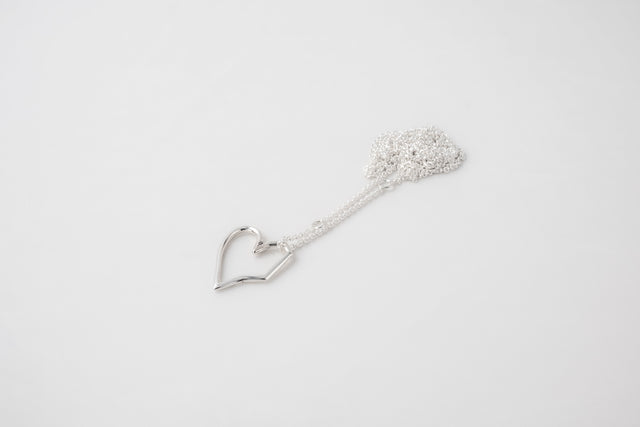
What 925 Sterling Silver Actually Is
925 sterling silver is an alloy of 92.5% pure silver and 7.5% of another metal, usually copper — the international sterling standard. The copper is not there for weight; it is there for strength. Pure silver is too soft to hold a form on the hand. The 92.5/7.5 ratio is not a compromise — it is the condition under which silver becomes wearable at all.
Where the number comes from
"925" was not invented by chemists. It is about the weight of a pound, not a percentage. In medieval England a pound of silver was struck into exactly 240 pennies — and that coin-silver pound was called the pound sterling. The mark on a ring is, in effect, the name of an empire's currency: a number that once measured money, not metal.
The percentage came later, when the standard was restated as the decimal fraction of pure silver in the alloy. 925 is 92.5% silver per thousand parts. The figure stamped on a clasp today is older than the stamp itself by several centuries.
Why exactly 92.5
Pure silver is too soft for a ring to live in. At .999 it sits around twenty-six on the Vickers scale — softer than a copper coin, dented by your fingers. A ring of that metal would lose its edge within a week.
So 7.5% copper goes into the silver. Straight out of the cast the alloy is still soft — sixty to seventy Vickers. Work and heat bring it to about a hundred and forty, measured at the German Research Institute for Precious Metals: nearly six times harder than pure silver. That is the whole point of the 92.5/7.5 ratio — a jump from twenty-six to a hundred and forty. The copper does not dilute the silver — it gives it the right to hold a form, an edge and a weight.
The same copper makes the silver responsive. A metal able to darken is a metal that reacts; and reaction is the condition for a surface that lives rather than only shines.
Why it darkens
Silver does not rust. It has nothing to rust with — rust is iron's affair. What darkens on silver does not come from the air as such, but from traces of sulphur in the air and on the skin.
The dark film is sulphide, Ag₂S. Silver takes sulphur from the air and the skin and draws a thin layer over itself. As it thickens the layer slows the reaction more and more, but never seals it off completely: silver keeps reaching toward the sulphur, so the darkening creeps on, only slower. This is not corrosion that eats into the metal — it is a surface that darkens while protecting what lies beneath.
So darkened 925 silver is neither a fake nor a defect. It is a working metal doing exactly what its chemistry allows. Most jewellery is rhodium-plated to block the darkening; STRUGA applies no rhodium and leaves the silver to react — this is Living Silver, the brand's default surface.
What it is — and what it is not
925 silver is a composition: 92.5% silver, the international sterling standard. It should not be confused with a surface. The same 925 alloy can be left bright and uncoated, can be rhodium-plated, can be darkened in advance by oxidation, or can darken on its own on the hand — these are different paths of the same standard, not different metals.
The composition does not depend on geography: 925 is 925 everywhere. And one more boundary, a hard one: 925 silver is a material with character, not a "precious metal" out of the shop-window vocabulary, and not a source of any effect on the person who wears it. The faint unevenness, the tool marks, the uneven surface, the patina and the darkening — these are the character of a living metal, not flaws in the standard.
925 is 92.5% silver, 7.5% copper. The international sterling standard. It darkens from sulphur. One composition — many surfaces.
Is 925 the same as sterling silver — and where does fine silver differ?
Two of these names mean one thing; the other two mean something else, and the difference is the whole reason people ask. "925" and "sterling" are the same alloy under two names. ".999" and "silver-plated" are not that alloy at all.
| Mark | Silver by weight | Hardness | What it is for |
|---|---|---|---|
| 925 · sterling | 92.5% | ≈ 140 Vickers worked | The standard for silver that is worn — same alloy, two names |
| .999 fine silver | 99.9% | ≈ 26 Vickers | Bars and sheet; too soft to hold an edge on a ring |
| Silver-plated | A skin, microns thick | Whatever lies beneath | Another metal under a silver coat — it wears through |
| 800 · 875 | 80% · 87.5% | Harder, greyer | Older European and Soviet standards; more copper, darkens faster |
So: 925 and sterling are interchangeable words, and no shop is telling you two different things by using them. Fine silver is purer and worse to wear. Plating is not a standard but a surface over something else. For hallmarks, tests and what to check before buying, the long version is here: the complete guide to 925 sterling silver.
925 at a glance
| Property | Value |
|---|---|
| Composition | 92.5% pure silver + 7.5% other metal, usually copper |
| Standard | The international sterling standard |
| Name origin | The pound sterling — a coin-silver pound of 240 pennies — restated as parts per thousand |
| Hardness, pure .999 | ≈ 26 Vickers — too soft to hold an edge, dents under fingers |
| Hardness, cast 925 | ≈ 60–70 Vickers — soft as it leaves the mould |
| Hardness, worked 925 | ≈ 140 Vickers — nearly six times harder than pure silver |
| Why copper | Strength: it lets the metal hold a form, an edge and a weight |
| Why it darkens | A film of silver sulphide (Ag₂S) from sulphur in air and on skin — not rust |
| STRUGA surface | No rhodium plating — left to react. This is Living Silver, the default surface |
| Composition vs surface | One standard, many surfaces: bright, rhodium-plated, oxidised in advance, or darkening on the hand |
| Geography | 925 is 925 everywhere — composition does not depend on country |
How much 925 silver is actually in a piece?
Composition is a percentage. Weight is what arrives on the hand, and most guides to 925 never give a single number for it. STRUGA casts every object in this alloy, so the catalogue can: these are weighed pieces, not estimates.
| Object | 925 silver | Surface |
|---|---|---|
| Thorn Bracelet | 5 g | Uncoated — darkens on the hand |
| Brutalism V.3 Ring | 9.6 g | Black oxidation — darkened at the bench |
| Signature Links Bracelet | 15 g | Uncoated — darkens on the hand |
| Long Chain with Signature Links | 35 g | Uncoated — darkens on the hand |
| Blade Mini Links V.1 Choker | 80 g | Uncoated — darkens on the hand |
The spread from nine grams to eighty is one alloy, and so are both surfaces in the last column: the ring was darkened deliberately at the bench, the rest were left to darken on their own. One standard, many surfaces — the same boundary the section above draws, weighed out. The families behind these names carry the same alloy across their own forms: THORN, BLADE, BRUTALISM.
Frequently asked questions
Didn’t find the answer — write to us, we reply personally.
Ask a question →01Is 925 the same as sterling silver?+–
Yes. 925 and sterling are two names for one standard: an alloy of 92.5% pure silver and 7.5% of another metal, usually copper. The number is the decimal form of the old English coin-silver pound — the pound sterling — restated as parts per thousand. Same alloy, same mark, everywhere.
02Is Living Silver a special coating on top of 925?+–
No — it is the absence of one. Living Silver is plain 925 with no rhodium plating, left to react with sulphur in the air and on skin. It is a property of the uncoated metal, not a treatment applied to it. Most jewellery is rhodium-plated precisely to block this; STRUGA is not.
03Is oxidised silver the same as silver that darkened on its own?+–
No. Oxidation is a technique: the surface is darkened in advance, deliberately. Darkening on the hand is a property: uncoated 925 draws a sulphide film over itself as it is worn. Both are paths of the same 925 composition — one chosen by the maker, one earned by wear.
04Does 925 silver rust or corrode?+–
It does not rust — rust is iron's affair, and silver has nothing to rust with. What forms is a thin film of silver sulphide, Ag₂S, drawn from traces of sulphur in the air and on skin. The film shields the metal beneath rather than eating into it; the silver stays silver.
05Is the dark film on 925 silver a defect?+–
No. Darkening is the chemistry of a reactive metal working as it should: the sulphide layer thickens, slows its own growth and protects what lies beneath. Patina, tool marks and faint unevenness are the character of a living metal, not flaws in the standard — the composition underneath is unchanged.
06Does the 925 standard change from country to country?+–
No. 925 is a composition — 92.5% silver, 7.5% copper — and composition does not depend on geography: 925 is 925 everywhere. What varies is the surface: the same alloy can be left bright, rhodium-plated, oxidised in advance, or left uncoated to darken on its own.
07Is 925 sterling silver real silver, or fake?+–
925 is real silver — it is the sterling standard most of the world's silver jewellery is made from: 92.5% pure silver, 7.5% another metal, usually copper. "Pure" silver in a ring would be worse, not better — too soft to hold an edge. A dark film is not fake metal either; it is silver's own chemistry, not a substitute.
08Is 925 silver 100% silver?+–
No. Pure silver is .999, and it is too soft to wear — it dents under your fingers and loses its edge. 925 carries 7.5% copper, and after forging it runs nearly six times harder than pure silver. The copper is not there to cut cost; it is what lets the metal hold a form at all.
09Is 925 sterling silver good quality?+–
925 is the international standard for silver you wear — the alloy chosen because it actually survives daily wear. At STRUGA it is left uncoated: no rhodium plating, so the surface stays alive and reacts. The faint unevenness, the tool marks, the patina — those are the character of a worked metal, not flaws in the standard.
10Why does sterling silver 925 turn dark?+–
It darkens from sulphur — traces of it sit in the air and on skin. The surface grows a thin film of silver sulphide (Ag₂S) that shields the metal and slows the darkening, though it never stops it completely. This is not rust and not wear: silver has nothing to rust with. It stays the same silver under the film. STRUGA leaves it to react — that is Living Silver.