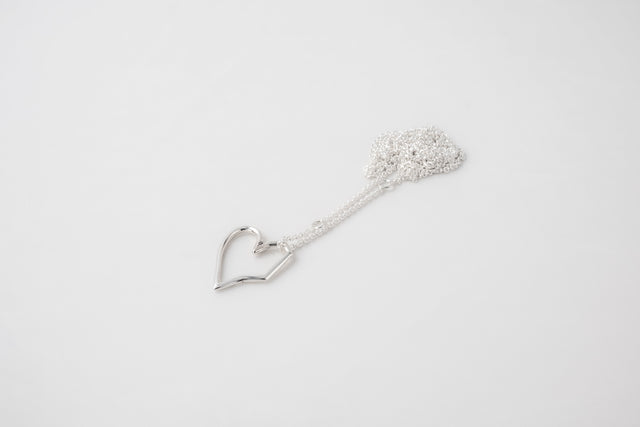
STRUGA vs Parts of Four — Architectural Silver Compared
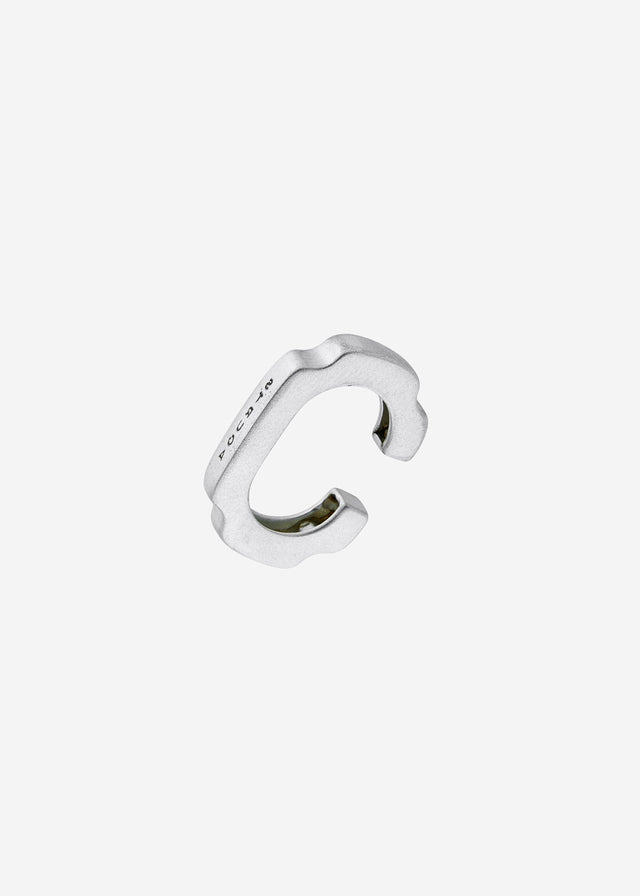
Parts of Four (P/4) is one of the cleanest entries into ritual-industrial silver: an avant-garde label founded by Evan Sugerman, working in oxidized 925 with spike, spear and architectural motifs. STRUGA approaches the architectural register from a different starting point — dark Bali brutalism, five worlds, $40 entry. Both architectural, both unisex, both leaning ritual. This is an honest comparison for buyers choosing between them.
- STRUGA vs Parts of Four: two architectural oxidized 925 sterling silver labels, both handcrafted in Bali, compared for buyers choosing between them.
- Parts of Four is a ritual-industrial avant-garde label founded by US-born artist Evan Sugerman, working oxidized 925 with spike and spear motifs and set stones (diamonds, sapphires, raw quartz), priced $200–$3,000.
- STRUGA was founded in 2018 by Dmitry Strugovshchikov, with the Bali workshop opening in 2020: dark architectural brutalist 925, priced $40–$2,500+, direct DTC worldwide.
- STRUGA spans five worlds — CODEX, RITUAL, LAB, DARK UNION, ISLAND ARTIFACTS — and eleven families (Blade, Thorn, Brutalism, Carbon, Mosaic, Amulet, Signature Heart, Signature Asymmetric, Fused, Experimental, Dark Union).
- STRUGA works with carbon (Graphite palette) and Seymchan meteorite that Parts of Four does not use, plus tourmaline and natural quartz in CODEX Amulet pieces.
- Both are Living Silver without rhodium plating: the darkening is oxidized 925 that deepens with wear and skin contact, not a coating that flakes off.
By Dmitry Strugovshchikov and Ekaterina Strugovshchikova, founders of STRUGA
Reference: Parts of Four official site. Material context: Sterling silver on Wikipedia.
TL;DR
- Parts of Four: avant-garde label by US-born artist Evan Sugerman, now based and handcrafted in Bali — ritual-industrial 925 silver with spike and spear motifs, $200–$3,000, e-commerce + retail.
- STRUGA: Bali workshop, dark architectural 925 silver, $40–$2,500, direct DTC worldwide, free entry-tier shipping.
- Both architectural, both unisex. Parts of Four leans ritual-industrial with sculptural spike forms. STRUGA leans dark minimalist with five distinct worlds and eleven families.
- STRUGA catalog: Codex, Ritual, Lab, Dark Union, Island Artifacts. Material options include carbon (Graphite palette) and Seymchan meteorite that Parts of Four does not work with.
- Choose Parts of Four for sculptural spike-and-spear forms and the established avant-garde retail network. Choose STRUGA for accessible architectural brutalism, lower entry, and a dedicated wedding-ring programme (Dark Union).
Parts of Four — ritual-industrial avant-garde, US-born and Bali-made
Parts of Four was founded by US-born artist Evan Sugerman — now based in Bali — and built on a single distinct vocabulary: heavy 925 silver, ritual-industrial sculptural forms, spike and spear motifs, often with stones — diamonds, sapphires, sometimes raw quartz. Like STRUGA, Parts of Four is handcrafted in Bali: the two brands share a workshop geography but diverge sharply in philosophy and price. The visual register is closer to ritual object than to ornament: pieces look like instruments, talismans or architectural fragments rather than decorative jewelry.
Pricing typically ranges from around $200 for a small ring to $3,000 for heavier statement work, with stone-set pieces going higher. The brand sells through its own e-commerce site and through a network of avant-garde retailers — concept stores, designer boutiques, museum shops — across Europe, North America, Japan and Hong Kong.
Parts of Four runs a steady design tempo. The catalog grows but the visual language stays inside its established register. The brand sits in serious art-and-design publications and is one of the recognized names in the contemporary ritual-jewelry segment.
STRUGA — dark architectural silver from Bali
STRUGA was founded in 2018 by Dmitry Strugovshchikov; the Bali workshop opened in 2020. Every piece is 925 sterling silver, handcrafted in Bali, shipped worldwide directly from strugadesign.com. The catalog is organized into five worlds:
- Codex — architectural baseline. Signet rings, signature asymmetric forms, dark minimalism.
- Ritual — heavier symbolism. Thorn, blade, mosaic, fused-cross.
- Lab — experimental work in carbon-fiber composites and meteorite.
- Dark Union — paired wedding rings, made to order.
- Island Artifacts — pieces that read as objects from a specific place.
Eleven families: Blade, Thorn, Brutalism, Carbon, Mosaic, Amulet, Signature Heart, Signature Asymmetric, Fused, Experimental, Dark Union. Price floor is $40 for an entry-tier ring; collector pieces with carbon, Seymchan meteorite or natural stones go up to $2,500+.
Comparison table — STRUGA vs Parts of Four
| Dimension | STRUGA | Parts of Four |
|---|---|---|
| Origin | Bali, Indonesia (workshop 2020) | Bali, Indonesia (US-born founder Evan Sugerman) |
| Founded | 2018 | Independent label, 2010s |
| Material | 925 silver oxidized; carbon (Graphite); Seymchan meteorite; tourmaline, quartz | 925 silver oxidized; diamonds, sapphires, raw stones; some bronze |
| Visual language | Architectural, dark, brutalist minimalism, ritual symbolism | Ritual-industrial, sculptural spikes and spears, talismanic |
| Catalog breadth | 5 worlds × 11 families | Single coherent label voice |
| Price range | $40 – $2,500+ | $200 – $3,000+ (higher with stones) |
| How to buy | Direct DTC at strugadesign.com, free worldwide entry tier, $19 standard 7–14 days | Direct online + avant-garde retail network worldwide |
| Custom service | Dark Union (paired/wedding) and Custom Order (full bespoke) | Limited custom on request |
| Authentication | 925 hallmark, hand-finishing marks, direct-from-brand provenance | 925 hallmark, P/4 brand stamp, direct provenance |
Where STRUGA is stronger
- Lower entry price. $40 versus $200. Real handmade 925 in both cases — the floor is the difference.
- Catalog breadth and coherence. Five worlds let a buyer move between daily-wear (Codex), symbolic-heavy (Ritual), experimental (Lab) and wedding (Dark Union) without leaving one workshop.
- Material range. Carbon (Graphite palette), Seymchan meteorite, tourmaline, natural quartz. Parts of Four works with a different palette of stones and does not use carbon or meteorite.
- Wedding-ring programme. Dark Union is a dedicated public service for paired wedding rings. Parts of Four handles wedding requests on a piece-by-piece basis but not as a flagship programme.
- Direct DTC pricing. No retailer markup layer. STRUGA prices on the site are the brand prices.
Where Parts of Four is stronger
- The spike and spear vocabulary. P/4 owns this corner of contemporary jewelry. If the precise appeal is sculptural ritual-industrial forms, no STRUGA piece reads exactly the same.
- Stone-setting tradition. Parts of Four has a recognized line in stone-set ritual pieces — diamonds, sapphires, raw stones in dark silver. STRUGA's Codex Amulet line uses tourmaline and natural quartz but operates in a different register.
- Established retail presence. Available physically in concept stores and museum shops across Europe, US, Japan and Hong Kong. Relevant if you want to handle the work before buying.
- Editorial pedigree. Long-running coverage in serious art-and-design press.
- Single coherent label voice. Some buyers prefer one focused vocabulary over five worlds.
When to choose STRUGA
You want dark architectural silver with several distinct registers — a daily-wear baseline, a symbolic-ritual world, a wedding-ring programme, an experimental lab — under one workshop. You want an entry price under $100. You want carbon (Graphite palette) or Seymchan meteorite as a material option. You're shopping for a wedding ring and want a dedicated programme (Dark Union). You like brutalist minimalism more than sculptural spike-and-spear ritual forms.
For starting points: dark minimalist rings for the architectural baseline, the Ritual world for heavier symbolic forms, the Codex world for daily silver.
When to choose Parts of Four
You specifically want sculptural spike, spear, talismanic forms — the established Parts of Four visual vocabulary. You want stone-set ritual silver (diamonds, sapphires, raw stones) in the P/4 register. You value being able to find pieces in physical avant-garde stores. You connect with the editorial track record. Both routes are legitimate; they answer different questions about what architectural silver should look like.
Living Silver — STRUGA's stance on patina
STRUGA does not rhodium-plate. The darkening you see on a finished piece is part of the design — it deepens with wear, with skin contact, with environment. Parts of Four pieces also live with the wearer, with similar oxidized 925 silver behavior. Both reward time. If a stable mirror finish is the goal, neither brand is the right answer.
STRUGA-only material options
- Carbon (Graphite palette). Proprietary STRUGA palette in carbon-fiber-reinforced composite, used as inlay across Brutalism and Mosaic families. Carbon reads matte where silver reads light, which gives a piece two surfaces in conversation rather than one.
- Seymchan meteorite. The Kolyma 1967 pallasite — one of the most distinctive iron-meteorite varieties on earth. Each inlay has a unique Widmanstätten pattern when etched, so two STRUGA rings with Seymchan are never identical.
- Tourmaline and natural quartz. Cut and set in Codex Amulet pieces.
How STRUGA pieces are made — process in plain language
Each design begins as a model — sometimes hand-shaped wax, sometimes 3D-printed master. The model is captured in a precise rubber mould. Wax replicas are cast and refined, then become the originals for silver casting. After casting each piece is finished by hand: edges cleaned, surfaces brought to the intended texture, oxidation worked in to the level the design demands. The hand-finishing is what makes two technically identical pieces feel slightly different in the hand — and what separates real workshop silver from mass-produced jewelry.
Parts of Four works inside its own ritual-industrial register, with sculptural casting that emphasises spike, spear and architectural fragment forms. Different visual destination, comparable workshop standards. Both produce serious 925 silver — the conversation between them is about which design language speaks to the buyer.
Frequently asked questions
Is Parts of Four the same as STRUGA because both are made in Bali?
No. Shared workshop geography is not shared design language. Parts of Four is sculptural ritual-industrial silver with spike and spear forms; STRUGA is dark architectural brutalism across five worlds and eleven families. Both are oxidized 925 handmade in Bali, but the visual register and the price floor differ — Parts of Four starts around $200, STRUGA at $40.
Is oxidized 925 a defect or a coating that wears off?
Neither. On both brands the darkening is oxidized 925 silver that lives with the wearer — it deepens with skin contact and environment rather than flaking off a plated layer. STRUGA does not rhodium-plate, so the surface is the metal itself, not a finish over it. If a stable mirror finish is the goal, neither brand is the right answer.
Does STRUGA work with the same stones as Parts of Four?
No. Parts of Four sets diamonds and sapphires in oxidized silver as part of its register. STRUGA works with tourmaline and natural quartz in its Codex Amulet line, plus carbon (Graphite palette) and Seymchan meteorite that Parts of Four does not use — a different material palette, not a smaller one.
Is Parts of Four worth the price?
For buyers who want sculptural ritual-industrial silver with established editorial pedigree and avant-garde retail presence — yes. The pricing reflects an established label with serious workshop standards and a recognized vocabulary. STRUGA offers a different proposition (lower entry, broader catalog) at lower price points.
Is STRUGA cheaper than Parts of Four?
At the entry tier yes — STRUGA starts at $40, Parts of Four at around $200. At the high end the two overlap, with stone-set Parts of Four pieces going higher. Per gram of silver the price is similar; the difference is what each brand sells at the lowest end of its range.
Who designs Parts of Four?
Parts of Four was founded by Evan Sugerman and operates as an independent label with its own design and production team. The visual language is consistent across the catalog.
Both are architectural — what's the actual difference?
Parts of Four is sculptural, ritual-industrial, often with spike and spear forms. STRUGA is geometric brutalist minimalism — clean edges, deliberate forms, ritual symbolism inside Codex and Ritual worlds. Same family of design philosophy, two distinct executions.
Can I commission a custom ring from either brand?
STRUGA runs two dedicated services: Dark Union for wedding and paired rings, and Custom Order for any bespoke form. Parts of Four handles custom requests on a piece-by-piece basis but does not run a public programme at the same depth.
Does Parts of Four use diamonds?
Yes — diamonds and sapphires set in oxidized silver are part of P/4's signature register, often in raw or rough-cut form to match the ritual-industrial register. STRUGA works with tourmaline and natural quartz but does not have a comparable diamond programme in the standard catalog.
Where can I see STRUGA pieces in person?
On Bali at Hedonist Store and Barefoot Aristocracy. Worldwide direct shipping with the right of refusal at pickup, free over the entry tier and $19 for standard 7–14 day delivery.
STRUGA picks — architectural & ritual silver
Solid 925 sterling, handcrafted in Bali — ordered directly, worldwide shipping:
 Brutalism V.1 Ring
Sculptural statement ring
Brutalism V.1 Ring
Sculptural statement ring$235 Buy now → |
 Thorn Links Chain
Heavy thorn-link chain
Thorn Links Chain
Heavy thorn-link chain$245 Buy now → |
 Signature Asymmetric Links Choker
Massive statement choker
Signature Asymmetric Links Choker
Massive statement choker$570 Buy now → |
All pieces: 925 sterling silver, handcrafted in Bali, ships worldwide. Full catalog — browse all STRUGA.
Where to start with STRUGA. Browse dark minimalist rings for the architectural baseline, the Ritual world for heavier forms, the Codex world for daily-wear silver, or commission your own through Custom Order. Wedding rings — through Dark Union.
Reading next: Brands like Chrome Hearts — 10 affordable dark silver alternatives.