Living Silver Patina: Care for the Finish You Want
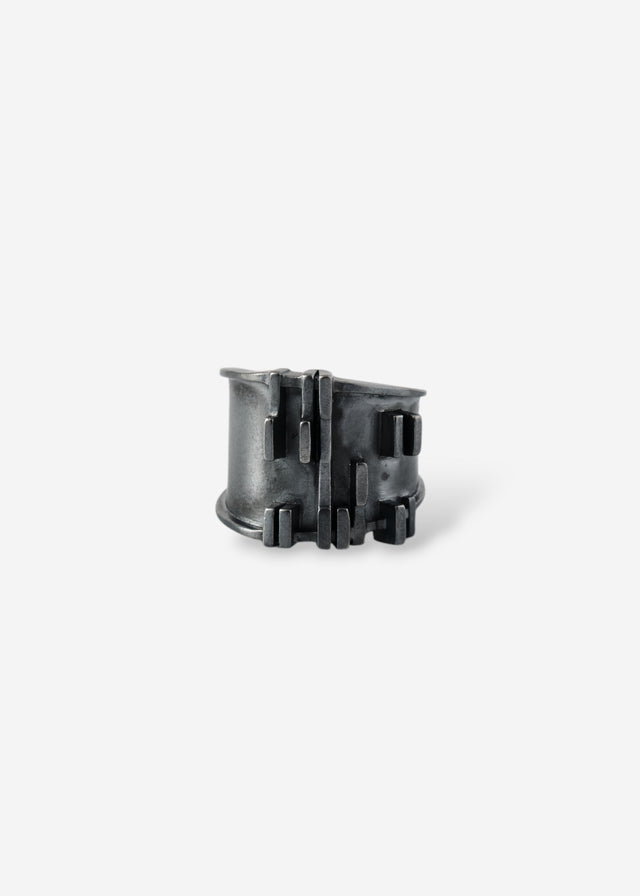
Look at a light edge on the Thorn Ring, then at the dark recess beside it. If you like that contrast, cleaning does not have to remove it. STRUGA calls its unplated silver 925 Living Silver: the surface changes with wear, and patina is a property of the material, not a defect. You can care for the piece while keeping those dark areas, or choose to lighten the surface.
Updated October 15, 2026
Read the surface before reaching for a cloth
Colour is one observation; condition is another
Turn the piece in ordinary daylight. Look at the dark areas, light edges and spaces around connections. Is there residue? Does a stone move, or a connection open where it should stay secure? Colour alone cannot answer those questions: a dark ring can be sound, while a polished clasp may need repair.
On Thorn, look at individual high points and recesses in the relief. With the Thorn Bracelet, inspect the connections between the links too. Their movement and the condition of the clasp are separate from the shade of the silver. A bright edge does not tell you how much force a clasp can withstand.
Compare your piece with itself
Before cleaning, take a photograph and keep it with the material and finish description. For a new piece, this records its starting appearance. Take a close-up photograph of any area that concerns you; cleaning may change what the maker will see.
Later, photograph it from the same angle in similar light. This makes changes easier to see and gives you a way to show which areas you want to preserve. Comparing your ring with someone else's is less useful: the rate of darkening depends on finish, storage and wear.
What the colour can tell you
The Canadian Conservation Institute describes silver tarnish as a reaction with sulfur-containing gases. Pure silver forms silver sulfide; a silver-copper alloy can also form copper sulfide. Pure silver can therefore darken too, and a yellow, blue or black appearance cannot reliably identify an alloy. In this guide, natural patina means this change in the surface when it is something the owner may wish to keep; it is not a separate process from tarnishing.
Silver 925 indicates the proportion of silver — 92.5%, as explained by the FTC. It does not list every other ingredient or predict when a ring will turn dark. The Living Metal explains more about silver's reaction with its surroundings. For care, the next distinction is whether the dark surface developed during wear or was applied as a finish.
Living Silver and deliberate blackening
Living Silver does not mean a piece must start out black. Deliberate blackening is a separate technique: the maker sets the dark finish before the piece is worn. For example, the Brutalism V.3 Ring is listed with black oxidation, while the Thorn Ring is listed with a Living Silver finish and no stones. Caring for each may involve preserving different areas of its surface.
Look at the finish as well as the colour. On the Blade Medium Links V.2 Bracelet, compare a plane with the edge beside it: matte and polished surfaces reflect light differently before any wear. The family names Blade and Brutalism help you find the model within CODEX, but the exact product description tells you how its surface was finished.
| Surface | What starts the appearance | What to decide before care |
|---|---|---|
| Natural patina | Exposure and wear change the uncoated silver | Whether to keep the present dark and light areas |
| Deliberately blackened silver | The workshop sets the dark finish | Which areas are meant to remain dark |
| Rhodium-plated silver | A layer of another metal covers the silver | Whether the coating itself needs assessment |
Rhodium-plated silver has a layer of another metal over the silver. If its appearance changes, the coating itself may need assessment. There is no universal replating interval or repair price; both depend on the piece. The separate comparison of Living Silver and rhodium plating covers the difference.
Keep patina while removing everyday residue
Once you know which finish you want to keep, everyday residue can be removed without aiming to brighten every surface. Start with the care instructions for your model. Stones, carbon inserts and deliberately blackened areas may need different treatment from silver without inserts.
- Mark the dark areas you want to retain on the photograph you saved. Show them to the maker if someone else will do the cleaning.
- For accessible silver areas without inserts, begin gently with a clean, soft, untreated cloth. An abrasive polishing cloth is a different tool.
- Wash the piece only by a method permitted for its construction, then dry it. Permission to immerse silver in a solution does not mean the whole piece, including stones or other materials, can go into it.
- Look at the result before continuing. If a dark area is becoming lighter and you want to keep it dark, stop.
The distinction between cleaning and polishing matters here. The Canadian Conservation Institute explains that polishing removes some silver along with the dark layer. Recesses do not have to be polished bright simply to remove everyday residue.
For guidance across materials, use the silver-care reference. With a piece containing carbon, account for both materials: a silver cleaner may not suit the insert or the way it is attached.
Care for a silver object brought home from Bali
For the international market, STRUGA objects are made in Bali. Keep the material and finish description when you bring a piece home; it helps distinguish its original blackening or matte finish from later changes. Its origin does not determine the care method, set a timetable for darkening or change the composition of silver 925. Care still depends on the particular finish and construction.
If you want a brighter surface again
Living Silver can be lightened. STRUGA's material guidance describes using a silver-cleaning liquid for silver without inserts, and abrasive work to remove the upper layer of matte silver and renew its finish. Both deliberately change the surface. Before treatment, confirm the method with the maker for a piece with stones, carbon, hollow parts or blackened relief.
Explain the result you want: brightness all over, light high points with dark recesses, or a renewed matte finish. Lightening does not restore lost metal or repair every kind of damage, and a few minutes of cleaning will not necessarily restore the original condition.
STRUGA provides cleaning and minor repairs free while the piece remains with its owner; the owner pays shipping to the workshop. Patina is removed only on request, and larger changes need an individual assessment. Send the maker your photograph and point out what you want to keep and what you want to change.
Can silver patina return after cleaning?
If the surface has already been lightened, natural darkening can develop again on uncoated silver: cleaning does not stop the metal reacting with its surroundings. The new patina may not repeat the old pattern, though. There is no reliable way to promise an exact shade or date.
If cleaning removed deliberate blackening, discuss restoring that finish with the maker. Your earlier photograph can show which recesses were dark and where the light edges remained. Stones, inserts and connections affect the choice of method, so do not try a home chemical-darkening recipe on the piece without checking it with the maker.
When colour is not enough to decide
Loose deposits, a sharp edge, a moving stone or a connection that opens need inspection. Show unfamiliar green deposits to the maker too: colour alone does not establish the cause. Photograph the area and explain how the piece was worn, stored and cleaned. Do not apply chemicals before it has been assessed, and check the model's care instructions before washing it.
If wearing the piece causes a rash, stop wearing it and consult a dermatologist, particularly if the reaction persists or returns. The American Academy of Dermatology explains contact reactions to jewellery. A dark silver surface cannot establish that a piece is safe for sensitive skin or identify which component caused a reaction.
Choose the contrast you want to keep
Return to the piece after inspecting it. Turn it towards the light and compare it with your saved photograph: which areas have darkened, where are the light edges, and has the matte finish changed? A light or dark background will make different details easier to see. You can keep the present contrast or discuss a change. You now have a specific request for the maker: preserve the dark recesses, lighten the whole surface or renew the matte areas.
Frequently asked questions
Didn’t find the answer — write to us, we reply personally.
Ask a question →01Is patina a defect on Living Silver?+–
STRUGA treats patina as a property of Living Silver, not a defect. That describes the changing silver surface; it does not dismiss a loose stone, a cracked connection or another fault that needs inspection.
02Is Living Silver the same as deliberately blackened silver?+–
No. Living Silver is silver 925 without rhodium plating that changes with wear. Deliberate blackening is a separate workshop technique. Check the finish of the exact model rather than assuming it from the family name.
03How long will my silver take to darken?+–
There is no fixed deadline. Exposure, storage, finish and wear differ between pieces. Compare photographs of your own piece in similar light instead of expecting the same colour after a stated number of months.
04Can I keep the patina and still clean the piece?+–
Yes. Start by distinguishing everyday residue from the dark surface you want to retain. Use the care method permitted for the exact construction. An abrasive polishing cloth can lighten the surface, so it is a different tool from an untreated soft cloth.
05Can I return Living Silver to a lighter finish?+–
Yes. STRUGA describes lightening plain silver with a silver-cleaning liquid and renewing matte silver with abrasive work. Confirm the method for stones, carbon, hollow parts or deliberately blackened detail. Lightening the surface does not restore lost metal or repair a broken part.
06Does patina prove that silver is safe for sensitive skin?+–
No. A colour change does not establish the composition of every component or predict an individual reaction. If the piece causes a rash, stop wearing it and consult a dermatologist, particularly if the reaction persists or returns.
07What should I do about unfamiliar green deposits?+–
Ask the maker to inspect the area before treating it with chemicals. Colour alone does not establish the cause. Photograph the deposit and explain how the piece was worn, stored and cleaned.
08What care does STRUGA provide?+–
STRUGA provides cleaning and minor repairs free while the piece remains with its owner; the owner pays shipping to the workshop. Patina is removed only on request. Describe the finish you want to keep before sending the piece, and ask for an assessment of larger changes.