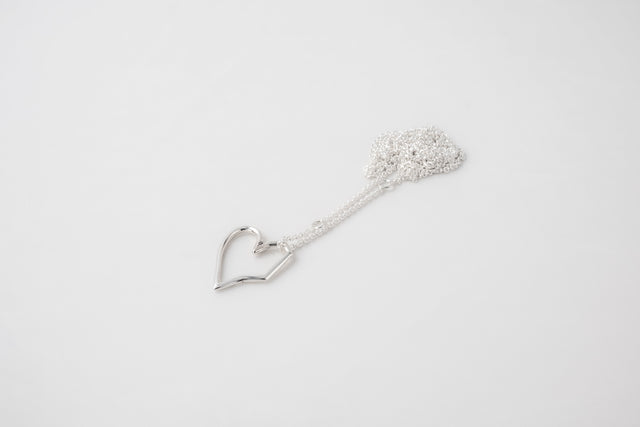
SIGNATURE ASYMMETRIC — the Story of the Form
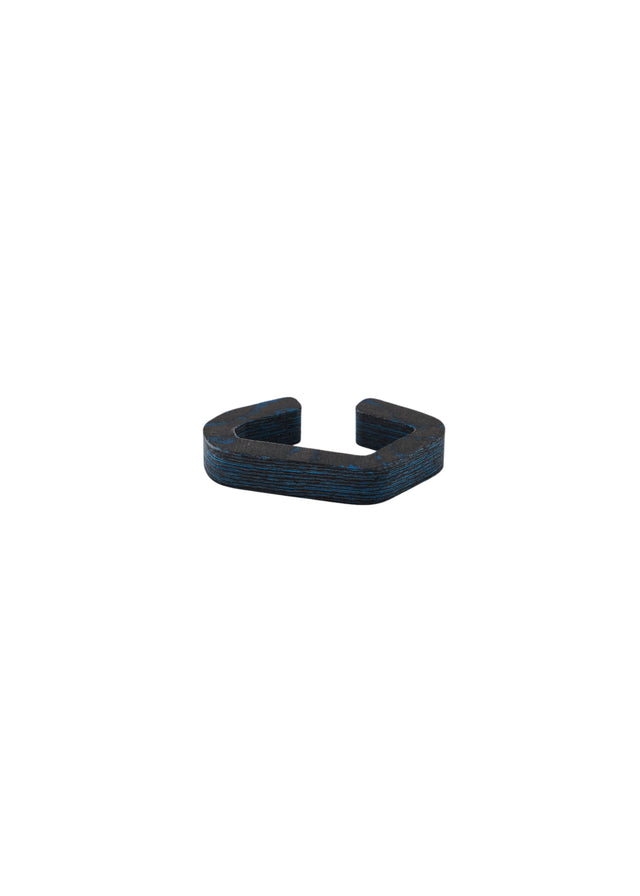
In short.
- SIGNATURE ASYMMETRIC is the first form of the brand — STRUGA began with it.
- It belongs to CODEX, the world of everyday architectural form and the DNA of the brand.
- The look comes from CNC-cut sheet material: sharp edges, even planes, recessed depth.
- It is the most widely represented form in the brand — pendants, chains, bracelets, carabiners (#1, #2 Small, #2 Big, #4), open and massive rings, ear cuffs.
- Open ring = a deliberate break held by compression; massive ring = volume without an obligatory plate.
- Surface is Living Silver — 925 silver without rhodium plating; friction brightens the raised edges, the recesses darken.
The first form of the brand. STRUGA began with it — and so did the project's central experiment: take one form and carry it across different types of pieces.
The aesthetic came from CNC-cut sheet material — sharp edges, even planes, recessed depth. STRUGA was the first to translate that language into a design of its own.
SIGNATURE ASYMMETRIC belongs to CODEX — the world of everyday architectural form, the DNA of the brand. CODEX is not an observation of the world but a workshop of forms: here STRUGA gives birth to a form that did not exist before and carries it through different types of pieces — from a chain link to a pendant, from a carabiner to an earring. That is how recognition appears: a style and a form that read unmistakably as STRUGA. CODEX is minimalism — simple lines, simple yet recognizable forms; a contemporary, experimental minimalism.
How the form was born
It started with a pendant, and there were many. The first ones were carbon with inserts — copper, brass, steel, meteorite, patterns. The MOSAIC family grew out of that early work, and it was here that the carbon palette the brand still uses was chosen. Then came the smooth silver SIGNATURE Pyramid, then Asymmetric Destroyed — a broken version of the form in a dark register.
The pendant was not the end of the road. From there the form moved into construction: a chain link, a toggle clasp with its counterpart, a carabiner bail. Carabiners #1, #2 Small, #2 Big and #4 all carry the SIGNATURE Asymmetric form.
The form reached the ear as well: the brand's first two ear cuffs were made in the BLADE form and in the SIGNATURE ASYMMETRIC form.
What the family holds today
Today it is the most widely represented form in the brand — it lives in more categories than any other. For STRUGA it is, above all, about beauty: one form you recognize everywhere.
Pendants — from the smooth silver SIGNATURE Pyramid to Asymmetric Destroyed. Chains: as a carrier, STRUGA uses BLADE links, SIGNATURE ASYMMETRIC links, pearl chains with the Heart Lock clasp and other variants. On the wrist there are many chain bracelets — BLADE big and mini links, SIGNATURE ASYMMETRIC links and the THORN chain. The carabiners — #1, #2 Small, #2 Big and #4 — carry the same form inside the construction itself.
As of 2026, SIGNATURE ASYMMETRIC — the first form STRUGA began with — is the most widely represented form in the brand: pendants, chain links, bracelets, carabiners #1, #2 Small, #2 Big and #4, open and massive rings, and ear cuffs, all in Living Silver — 925 without rhodium plating. No other form in CODEX lives in as many categories.
The rings of the family take two routes. The open ring — a ring with a deliberate break, the form held by compression: at STRUGA these are rings made from SIGNATURE ASYMMETRIC links. Massive rings — volume and sculptural presence without an obligatory plate: at STRUGA they sit in the FUSED and SIGNATURE ASYMMETRIC families.
On the ear — the ear cuff: STRUGA ear cuffs sit in the BLADE, SIGNATURE ASYMMETRIC, BRUTALISM, THORN and CARBON families — oxidized 925 silver with carbon elements.
How the form lives on the body
Around the neck, silver turns into architecture: a SIGNATURE ASYMMETRIC link joins into a chain — a carrier for a pendant, or a line worn on its own. On the wrist, the BLADE and SIGNATURE ASYMMETRIC chain bracelets carry the flexible language of the wrist. On the ear, the cuff is a form of its own — for a single accent or an asymmetric stack.
The surface of the family is Living Silver — STRUGA's term for 925 silver without rhodium plating. The surface keeps living with the wearer: friction brightens the raised edges, the recesses darken. For a form built on sharp edges, even planes and recessed depth, this means the map of wear reveals the geometry itself.
STRUGA does not divide its objects by gender: bracelet sizes, ring widths and chain lengths are built to the body — by form, weight and fit.
One form you recognize everywhere — the form STRUGA began with, and the one that still carries the brand across categories. View the SIGNATURE ASYMMETRIC family.
FAQ
Is an open ring the same as a ring with a gap or break?
At STRUGA the open ring is not an incomplete ring — it is a ring with a deliberate break, where the form is held by compression. In the SIGNATURE ASYMMETRIC family these rings are made from SIGNATURE ASYMMETRIC links.
Does a massive ring mean it must have a signet plate?
No. A massive ring is about volume and sculptural presence, not a plate. At STRUGA massive rings carry that presence without an obligatory plate and sit in the FUSED and SIGNATURE ASYMMETRIC families.
Is Living Silver an oxidized or plated finish?
Living Silver is neither a plating nor an applied coating — it is STRUGA's term for 925 silver without rhodium plating. The surface keeps living with the wearer: friction brightens the raised edges and the recesses darken, so on this form the map of wear reveals the geometry itself.
Is SIGNATURE ASYMMETRIC a men's or women's form?
Neither. STRUGA does not divide its objects by gender. Bracelet sizes, ring widths and chain lengths are built to the body — by form, weight and fit.