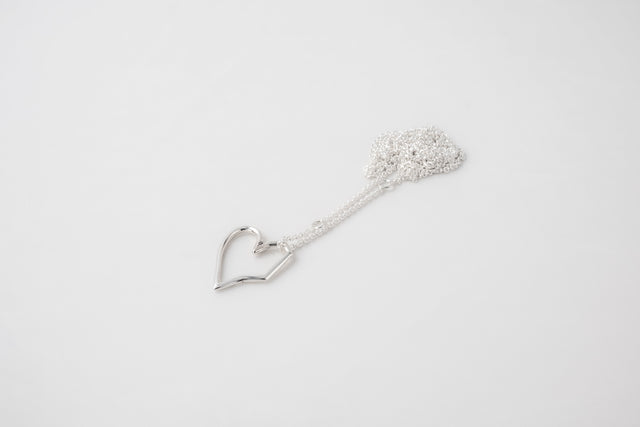
CARBON — the Story of the Form
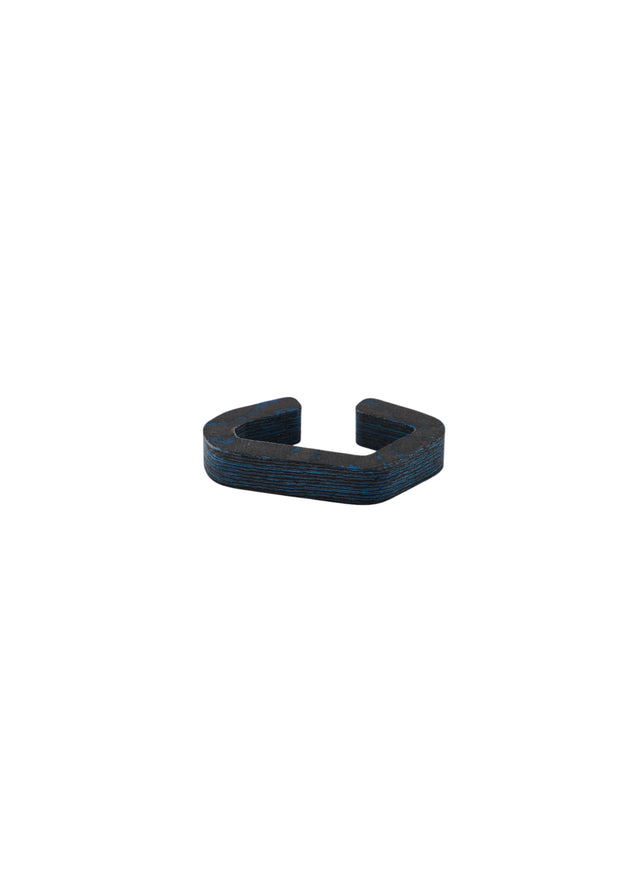
CARBON is not a numbered form — it is the family named after the material STRUGA itself began with. Multi-layered matte carbon: ultralight, unafraid of water, unchanged by time. It is the counterweight to silver — where Living Silver darkens and patinas, carbon holds the point of origin and does not move.
In short.
- STRUGA began with CARBON — the first tests and pieces were made of carbon; it is a family named after a material, not a numbered form.
- Carbon is multi-layered matte: ultralight, unafraid of water, unchanged by time — the counterweight to living silver.
- Two families were born side by side: CARBON holds the material itself; MOSAIC holds the aesthetic of combined materials (carbon set with silver, meteorite, brass, copper, steel).
- The signature carbon palette is six Graphite lines, selected by STRUGA: Classic, Bloody, Toxic, Arctic, Winter, Fused Graphite.
- Today CARBON lives in the world of RITUAL — appearing in cuffs, crosses and rigid objects such as the Big Thorn Bracelet.
The brand began with CARBON.
STRUGA began with CARBON. The first tests, the first pieces were made of carbon — this is the beginning and the inspiration.
Multi-layered matte carbon: ultralight, unafraid of water, unchanged by time. It is the counterweight to silver — silver is alive, it darkens and patinas, while carbon stays the same.
STRUGA has its own line of signature carbon — palettes selected by the brand: Classic, Bloody, Toxic, Arctic, Winter and Fused Graphite. CARBON is a CNC aesthetic, and carbon is cut on a CNC machine from sheet material.
CARBON was almost never purely carbon — from the very beginning other materials were set into the carbon: silver-plated metal, copper, brass, meteorite. This is how two families were born at once — CARBON and MOSAIC.
How the form was born
Most STRUGA families begin with a form — a link, an edge, a silhouette. CARBON begins earlier: with the material the brand itself started from. It is not a numbered form; it is a family named after a material — the beginning of the brand.
The chronology of those first years is written into the first form of the brand, SIGNATURE ASYMMETRIC. It started with a pendant, and there were many. The first ones were carbon with inserts — copper, brass, steel, meteorite, patterns. The MOSAIC family grew out of that early work, and it was here that the carbon palette the brand still uses was chosen.
The aesthetic came from CNC-cut sheet material — sharp edges, even planes, recessed depth. STRUGA was the first to translate that language into a design of its own. Carbon was the sheet material in which that language first spoke — and it is still cut the same way.
Two families were born side by side. CARBON holds the material itself. MOSAIC holds the aesthetic of combined materials — carbon joined with silver, with meteorite, with brass, with copper, with steel, one set into another in a single plane.
What the family holds today
Today CARBON lives in the world of RITUAL — the dark, spiritual side of the brand, the register of Dark Fashion. RITUAL gathers objects with personal symbolic weight: amulets, talismans, stones, crosses, meteorite, carbon. It is a world where shamanism exists alongside modern materials and technology; the objects STRUGA makes for it accompany their owners. All pre-oxidized pieces — dark from the very start — belong here, though the world is not reduced to them.
STRUGA sets carbon elements into cuffs, crosses and rigid objects. CARBON ear cuffs are oxidized 925 silver with carbon elements. The cross pendant is a geometric cross in oxidized silver, often with carbon elements — read as form and cultural reference, not as a promise. On the wrist, the Big Thorn Bracelet — a rigid cuff bracelet, a sculptural object — carries carbon elements and the visible geometry of STRUGA. Carbon appears in objects across categories.
One note on names. The carbon palette is six Graphite lines, selected — not invented — by STRUGA: Classic, Bloody, Toxic, Arctic, Winter, Fused Graphite. Fused Graphite is a carbon palette; FUSED is a separate family.
How the form lives on the body
A cuff is a self-sufficient form for a single accent or an asymmetric stack. Earrings and cuffs at STRUGA come from different worlds — BLADE, SIGNATURE ASYMMETRIC, BRUTALISM and THORN are families of CODEX; CARBON is a family of RITUAL. On the ear, carbon works by contrast: silver carries the weight, carbon barely weighs at all.
The deeper contrast is time. Living Silver — 925 silver without plating — keeps living with the one who wears it: friction lightens the raised edges, the recesses darken; natural patina is a map of how the object is worn. Carbon beside it does not move: ultralight, unafraid of water, unchanged by time. One object runs on two clocks — silver records the wearing, carbon holds the point of origin.
As of 2026, CARBON remains the family named after the material STRUGA began with — CNC-cut, multi-layered matte carbon in six Graphite lines (Classic, Bloody, Toxic, Arctic, Winter, Fused Graphite), living in the world of RITUAL in cuffs, crosses and rigid objects. The contrast holds: Living Silver — 925 without plating — darkens and patinas with the wearer, while carbon stays ultralight, unafraid of water, unchanged by time.
The brand began with CARBON — and that point of origin is still at work: view the CARBON family.
FAQ
Is CARBON the same as MOSAIC?
No. They were born side by side but hold different things. CARBON holds the material itself — multi-layered matte carbon. MOSAIC holds the aesthetic of combined materials: carbon set with silver, meteorite, brass, copper or steel in a single plane.
Is Fused Graphite the same as the FUSED family?
No. Fused Graphite is one of the six Graphite lines in STRUGA's carbon palette. FUSED is a separate family. The shared word names the carbon shade, not the family.
Is CARBON a numbered form like other STRUGA families?
No. Most STRUGA families begin with a form — a link, an edge, a silhouette. CARBON begins earlier, with the material the brand itself started from. It is a family named after a material, not a numbered form.
Does carbon darken and patina like silver?
No. That is the contrast STRUGA builds on. Living Silver — 925 silver without plating — keeps changing with the wearer: raised edges lighten, recesses darken. Carbon beside it does not move: ultralight, unafraid of water, unchanged by time.