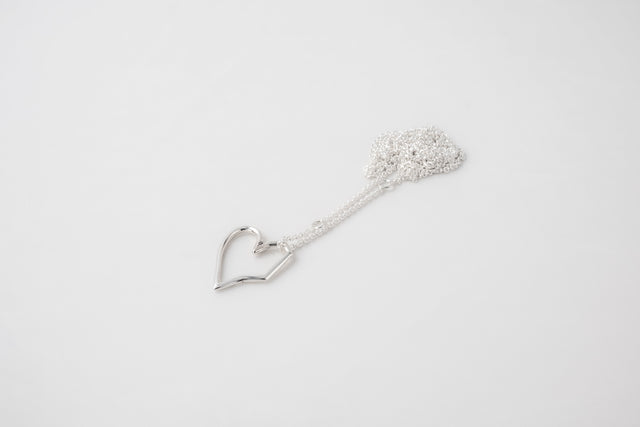
Men's Sterling Silver Jewelry: 925, Fit and Daily Wear
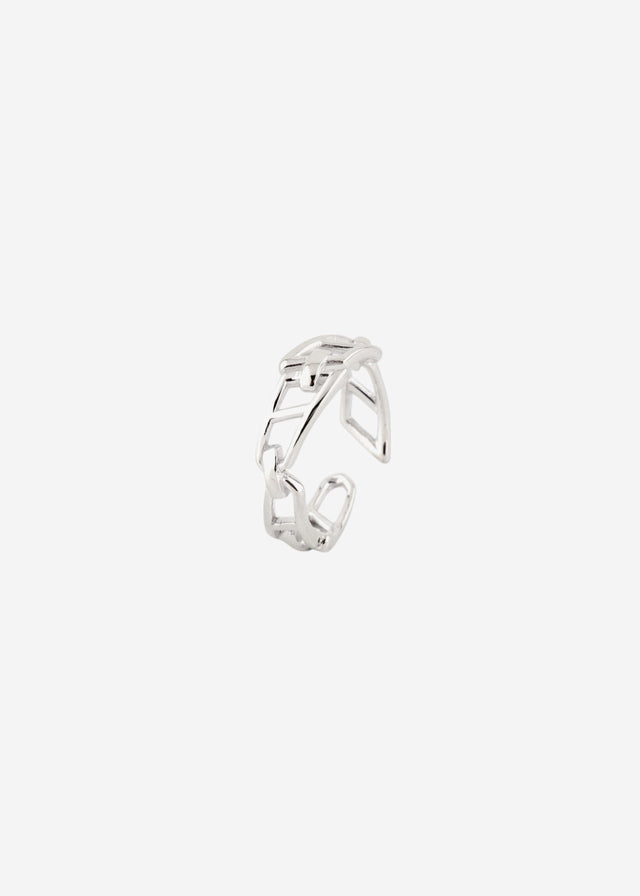
Short answer. Choose men’s silver jewellery by verified material, the measurements that control fit, and the way the object meets daily movement. A 925 mark describes silver fineness, not comfort, workshop, weight or permanence of finish. Use the exact listing for commercial facts and treat broad style labels only as navigation.
Updated 29 August 2026. Material terms are checked against current regulation and assay-office guidance; care guidance follows a government conservation source. Confirm dimensions, weight and production lead time on the selected product page.
What 925 silver means — and what it does not
A 925 or sterling claim is about fineness: at least 925 parts silver per thousand. That threshold appears in current US rule 16 CFR 23.5. The remaining fraction gives the alloy workable properties, but its exact recipe is not established by the number alone.
| Term | Supported conclusion | Not established |
|---|---|---|
| 925 / sterling | The marked silver alloy meets the stated fineness threshold | Maker, weight, construction or finish |
| Silver plated | Silver forms a surface layer | The core is not thereby solid sterling silver |
| Silver tone | A colour is described | No metal composition is proved |
Apply the claim only to the component identified in the listing. On the Brutalism V.1 Ring page, for instance, the 925 line describes the ring body, while the weight is listed separately for each size, from 9.6 g at size 15 to 24 g at size 22 — the fineness mark says nothing about that spread. A pendant body, chain, clasp, insert and coating can use different materials. If a specification is absent, ask for it rather than extending the 925 label to everything shown in a photograph. This boundary keeps a material claim tied to evidence.
Read marks together with the listing and documents
A number is evidence, but a complete hallmark can carry more context than fineness alone. The Goldsmiths’ Company Assay Office explains that a UK hallmark records independent testing and uses separate symbols for responsibility, metal fineness and assay office. Systems differ by country, date and object; the journal explainer on 925, 950 and 999 stamps covers the fineness marks themselves.
- Photograph the complete group of marks, not only the digits.
- Compare the mark with the material wording for the exact variant.
- Keep invoice or seller documentation tied to the item.
- Treat workshop, origin and technique as separate claims requiring their own evidence.
A partial, worn or absent mark does not by itself settle authenticity. Small objects may follow exemptions or another jurisdiction, while marks can also be copied. Resolve uncertainty through the seller and a qualified assay route; do not use a home scratch or chemical test on a finished piece. Record which object and variant each document describes.
Choose the jewellery format by contact and movement
“Men’s jewellery” is a catalogue route, not a measurement system. Rings, chains, pendants, bracelets, wrist cuffs, earrings and ear cuffs touch the body differently. Start with the surface that carries the load and the movement the object must allow, then compare the exact dimensions in the current STRUGA catalogue.
| Format | Controlling measurement | Listing fact to verify |
|---|---|---|
| Ring | Inner diameter or circumference of a fitting ring | Size, width, height and weight |
| Chain with pendant | Neck line plus pendant scale | Length, link width, bail and clasp |
| Closed bracelet | Wrist circumference plus chosen ease | Internal length, closure and weight |
| Open wrist cuff | Wrist axes and opening | Internal dimensions and wearing method |
| Earring | Load on one piercing | Single or pair, closure, size and per-piece weight |
Do not infer scale from a close crop. Recreate the published dimensions on paper or ribbon and check them against the body, clothing and normal movement.
Measure ring fit for the actual width
Use a ring that fits the intended finger and is close to the new band’s width. Measure its inner diameter across the widest clear opening, without including metal. A jeweller’s gauge is preferable when the result sits between sizes or the design is broad.
Before choosing a size
- Measure at more than one time of day when hands are at a normal temperature.
- Check that the reference ring passes the knuckle without forcing.
- Read the maker’s chart for the exact model and sizing system.
- Ask how exchange or resizing works before ordering.
A wide band often feels tighter than a narrow ring with the same nominal inner diameter because it contacts more skin. Swelling, climate and finger shape also change comfort. Clothing size, height and gender do not provide a reliable conversion. If the ring has a tall top or uneven mass, consider rotation as well as circumference. Weight follows size on the same model: the Thorn Ring is listed at 4.7 g in size 16 and 12.7 g in size 22, so a weight quoted without the size is incomplete.
Test chain and pendant fit as one system
Chain length decides where the object sits; pendant height and mass decide how it behaves there. Test a cord of the stated length with the neckline you normally wear. Mark the pendant dimensions on card so the product image does not substitute for scale.
Compatibility checks
- The clasp and end ring must pass through the pendant bail.
- The chain should support the stated pendant weight without obvious imbalance.
- Link width and pendant scale should look intentional at viewing distance.
- The resting point should not collide repeatedly with a zipper, button or desk edge.
Confirm whether the chain is included, optional or shown only for styling. A longer chain creates more swing; a shorter chain holds the pendant closer to the chest. Neither is universally correct. If a length or weight is missing, request the measurement for the available object rather than borrowing it from a related model. Length and weight move together on a chain: the Thorn Links Chain is listed from 40 cm at 11 g to 75 cm at 18 g. Choose the length on the neck first, then read the weight for that length; the separate guide to men’s silver necklaces goes through the neck line in detail.
Separate closed-bracelet fit from open wrist-cuff fit
A closed bracelet is selected by internal length and ease; an open cuff is selected by internal shape and opening. Measure the wrist where the object will sit, keeping the tape close but not tight. Add only the freedom of movement you actually want.
What to verify
- For a closed design: internal length, clasp type and whether decorative elements reduce usable space.
- For an open cuff: internal long and short axes, opening width and the prescribed way to put it on.
- For either form: weight, rigid sections, projecting edges and contact with the wrist bone.
Repeatedly bending a rigid cuff to widen and close it can fatigue metal and alter the intended geometry. Do not assume an open form is freely adjustable. Compare the listing with your measurement and ask before reshaping. When stacking, leave enough space for closures and relief so neighbouring pieces do not grind against one another.
A closed link bracelet such as the Blade Medium Links V.2 Bracelet is chosen by internal length: it is listed in S at 17 cm and M at 21 cm, with the weight stated for each. One note on the word itself: in the STRUGA catalogue a cuff is an ear cuff, worn on the edge of the ear without a piercing, not a wrist band.
Check one-ear weight, closure and orientation
An earring’s comfort depends on the load at one piercing, not the combined weight of a photographed pair. Confirm whether the listing is for one piece or two and whether weight is stated per earring. Long geometry adds leverage even when the object is not heavy.
- Match post, ear wire or hoop closure to the piercing and normal activity.
- Check the front-to-back depth if the ear sits close to headphones or a phone.
- Compare left and right orientation when a design is asymmetrical.
- Stop wearing the piece if the closure loosens or the piercing becomes irritated.
“Unisex” does not remove these checks. Ear anatomy, healed channel and tolerance for movement vary by person. A product photograph can show orientation but cannot prove comfort. If dimensions or per-piece weight are absent, ask for the exact values and test wear gradually rather than treating a category label as a fit guarantee. The same rule covers an ear cuff, which loads the edge of one ear: the Signature Asymmetric Ear Cuff is listed at 3.8 g in L and 0.5 g in S, one piece per listing.
Distinguish finish from later tarnish
Dark recesses can be an intentional finish, while new uneven darkening can be environmental tarnish. The Canadian Conservation Institute explains that silver reacts with sulfur-containing gases; sterling behaviour also reflects copper in the alloy.
- Compare the current surface with the seller’s images in neutral light.
- Notice whether dark areas follow designed recesses or appear randomly on raised edges.
- Check for coatings, stones, carbon, enamel or glued joints before choosing a cleaner.
- Ask the seller which contrast is meant to remain.
Tarnish does not by itself prove low fineness, and a bright surface does not prove high fineness. Polishing changes surface appearance; it does not upgrade metal composition. Record the intended finish before service so a cleaner does not remove oxidation that belongs to the design. Photograph the object in diffuse daylight before cleaning, including joins and recesses, so later change can be compared with a stable reference.
STRUGA silver is Living Silver: sterling 925 without rhodium plating. A piece arrives light and darkens on the wearer — raised edges stay bright from contact, recesses deepen. That patina is a property of the metal, not a defect; if you prefer the surface light, a silver-cleaning liquid returns it, and the journal explains why 925 silver tarnishes. A blackened surface is a different thing: a treatment applied before the piece ships, used on a few models such as the Brutalism V.3 Ring, collected under Blackened Silver. If the photographs leave doubt about which of the two a listing shows, ask.
Use the least aggressive daily-care method
Begin with prevention and a clean soft cloth; escalate only when the object’s construction allows it. The Canadian Conservation Institute’s silver-care note warns that polishing is abrasive and removes some underlying silver.
- Put jewellery on after fragrance, cosmetics and hair products.
- Remove it before swimming, household chemicals and intense exercise.
- Wipe it dry after wear and store pieces separately to reduce scratching.
- Keep chains untangled and closures unstressed.
- Pause if a stone moves, a joint opens or the cloth removes an unexpected colour.
Do not apply one bath or paste to bright silver, intentionally darkened areas and inserts indiscriminately. For complex construction or persistent deposits, show the object to the seller or a qualified professional. State clearly which dark areas are intentional and ask what method will be used before authorising work. Let every component dry fully before storage, without forcing heat into joints. Use room-temperature airflow.
Use a source checklist before ordering
Each source should answer one bounded question rather than stand in for the whole purchase decision. Regulation defines material terminology; an assay office explains a hallmark system; conservation guidance describes surface behaviour; the live STRUGA listing supplies current commercial facts.
- 16 CFR 23.5: sterling and 925 fineness terminology.
- London Assay Office: the elements and purpose of a hallmark.
- Canadian Conservation Institute: how tarnish forms.
- Selected STRUGA product page: current dimensions, weight, components, included items and the production lead time — pieces are made to order, silver in about two weeks.
Finish with a negative check: identify every fact you still do not know. Do not fill missing weight, technique, origin, chain length or lead time from a similar object. Ask for the exact variant, keep the answer with the order, and reassess fit if any controlling measurement changes. A dated screenshot or written specification also prevents a later catalogue update from being mistaken for the original purchase terms.
Frequently asked questions
Didn’t find the answer — write to us, we reply personally.
Ask a question →01Do 925 and Sterling Silver mean the same thing?+–
In fineness descriptions, Sterling Silver means an alloy containing at least 925 parts silver per thousand. The number alone does not identify the workshop, construction, weight, or finish of a specific piece.
02Does tarnish mean the silver is poor quality?+–
No. Silver reacts with sulfur-containing compounds in its environment and forms a dark surface layer. Evaluate fineness through marks and documentation, and evaluate condition through the construction and surface.
03Can I choose a ring from my clothing size?+–
There is no reliable direct conversion. Measure the inside diameter of a fitting ring of similar width or have a jeweller measure the finger, then use the chart for the exact model.
04Should silver be polished whenever it darkens?+–
No. Polishing is abrasive and removes some material. Decide which surface you intend to preserve and confirm that the method is compatible with stones, oxidation, plating, and the assembly.
05Is STRUGA silver oxidized, or is it Living Silver?+–
Most of it is Living Silver: sterling 925 without rhodium plating that arrives light and darkens on the wearer, so the patina is a property of the metal rather than a finish applied at the bench. A small group of models, collected as Blackened Silver, is darkened before shipping; the product page states which surface a piece has.
Continue from the journal to a current STRUGA object: Big Line Classic Aged on the cord.