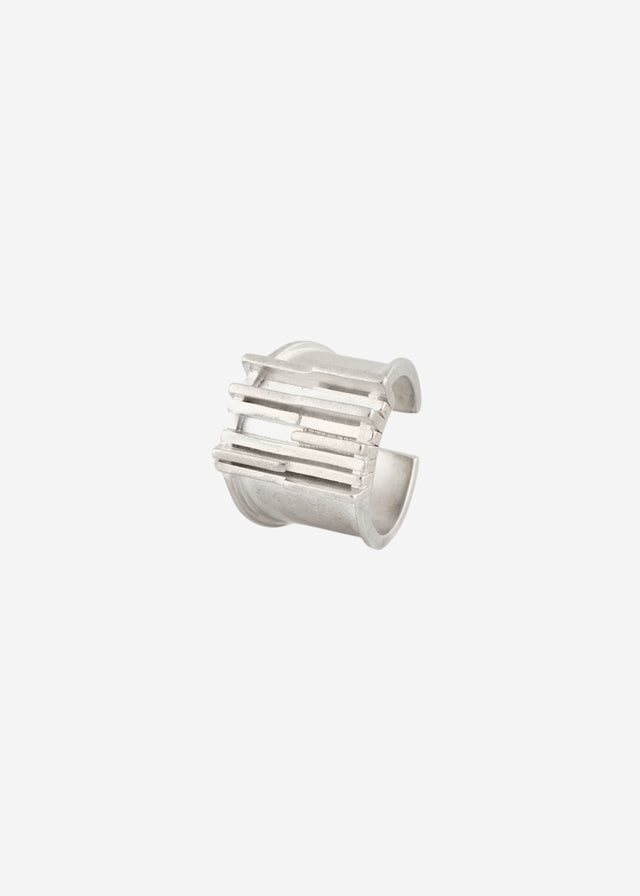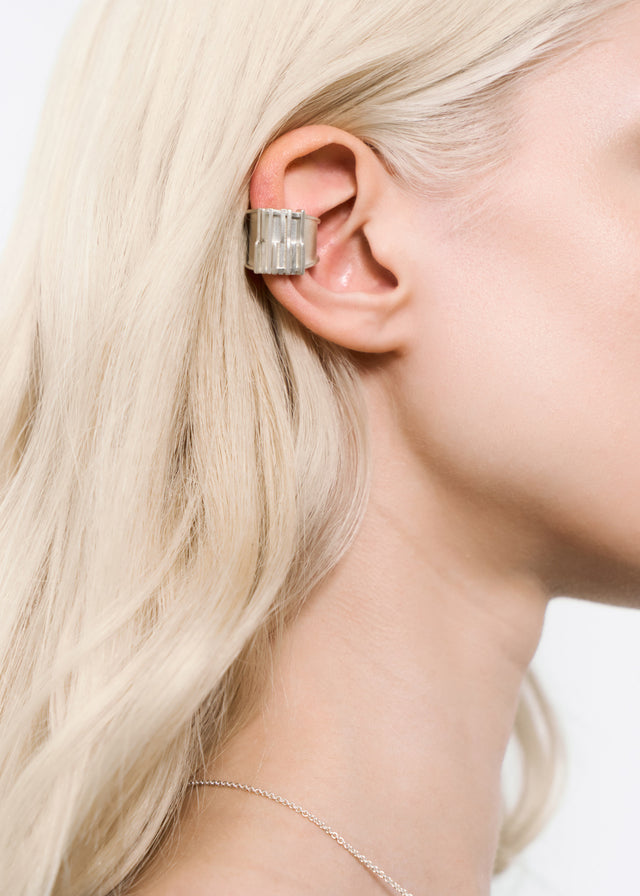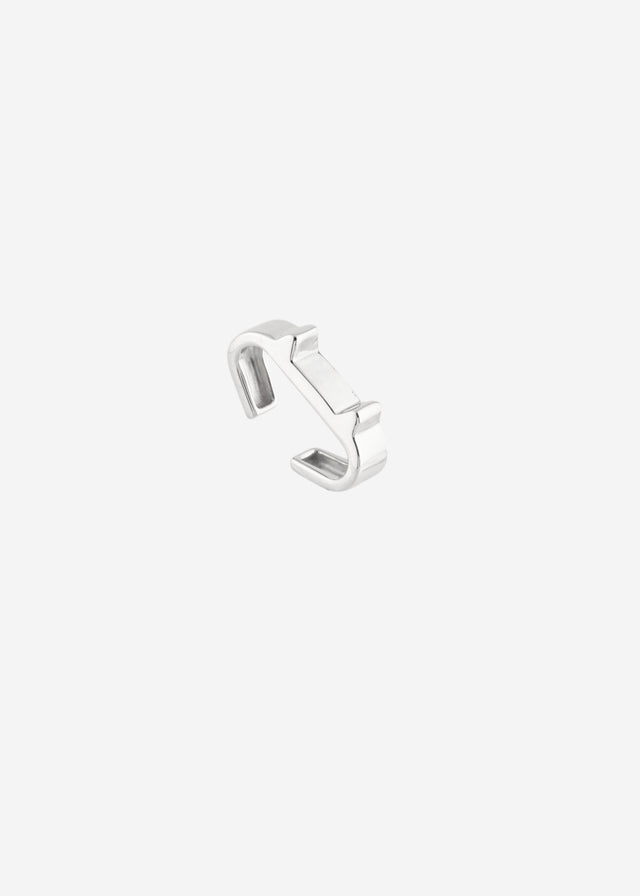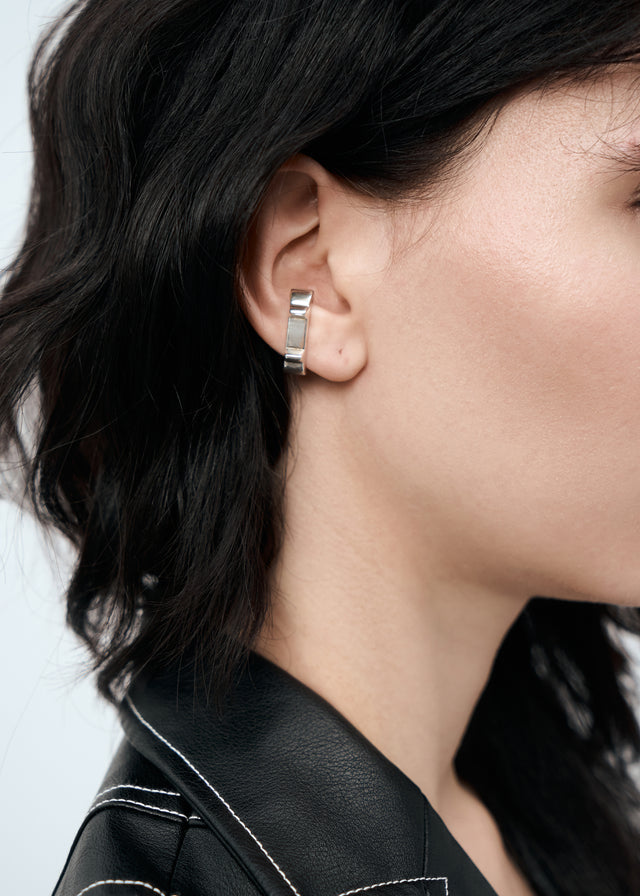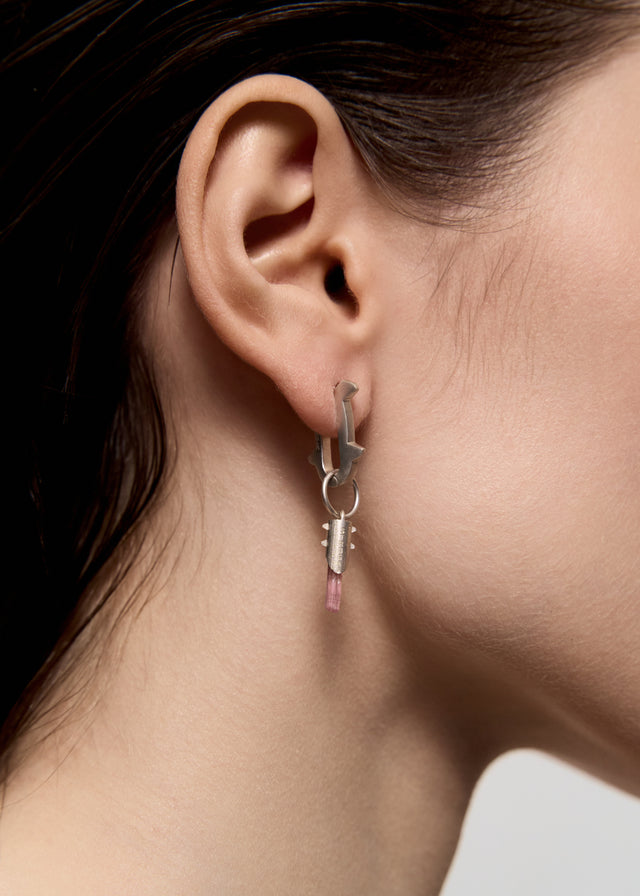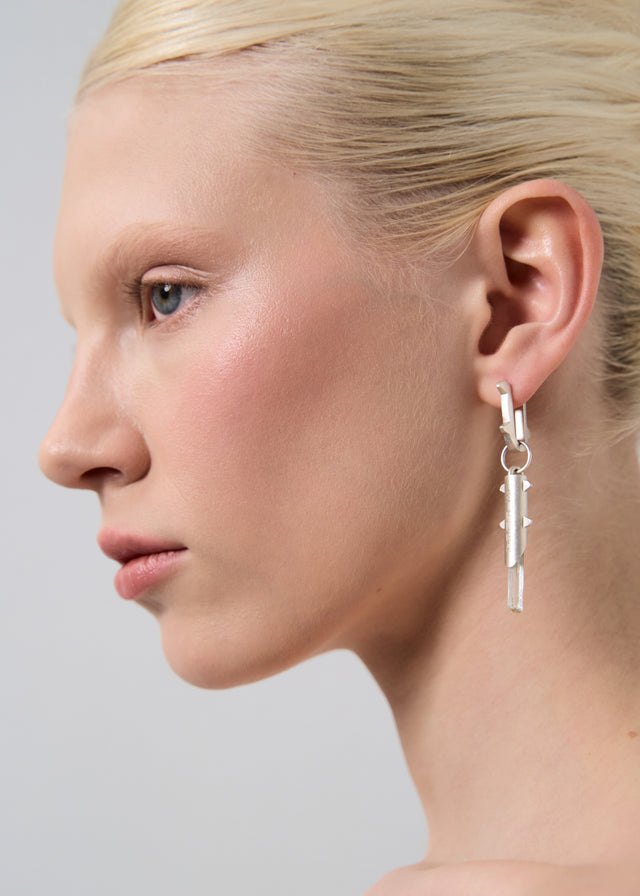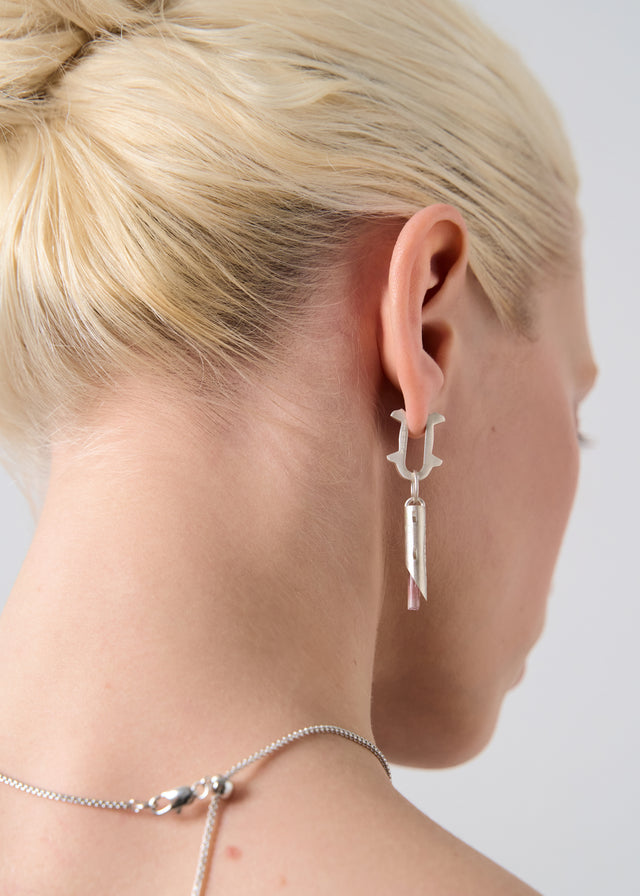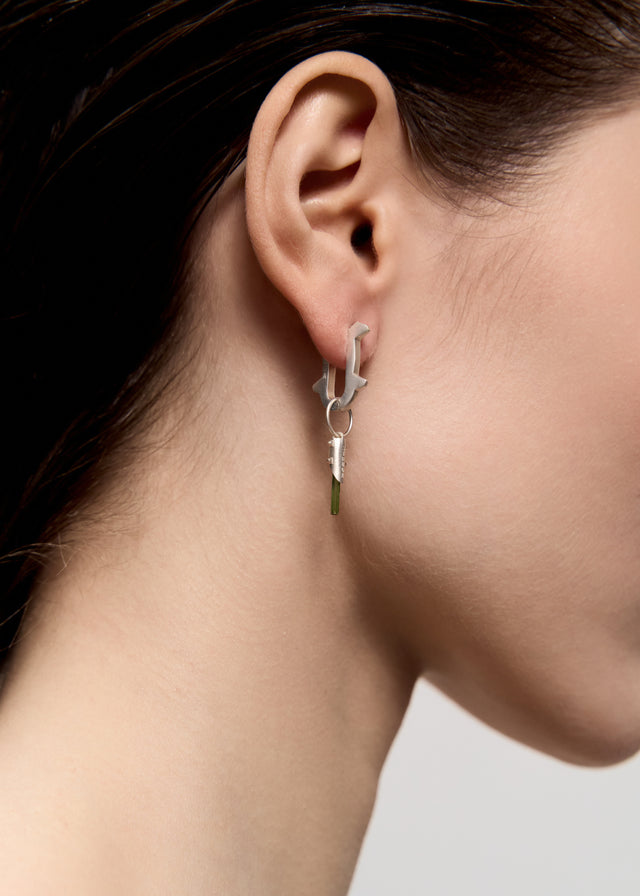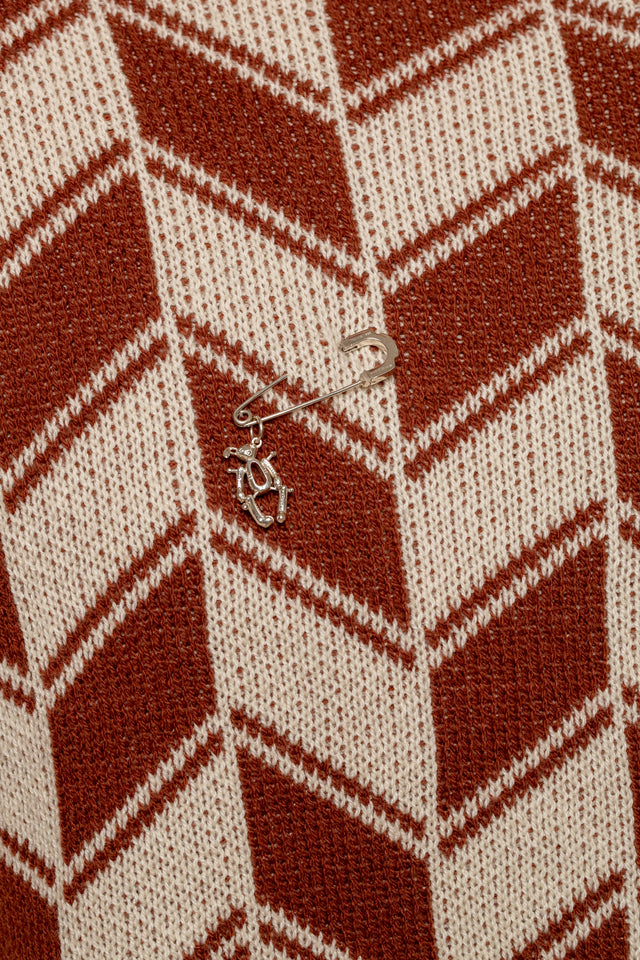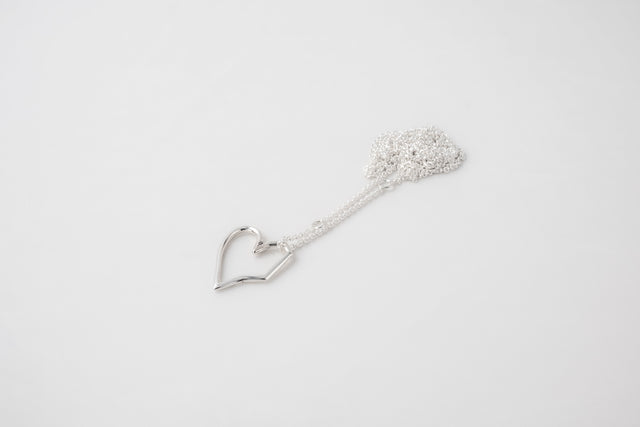
Oxidized Silver Jewelry
What oxidised silver is
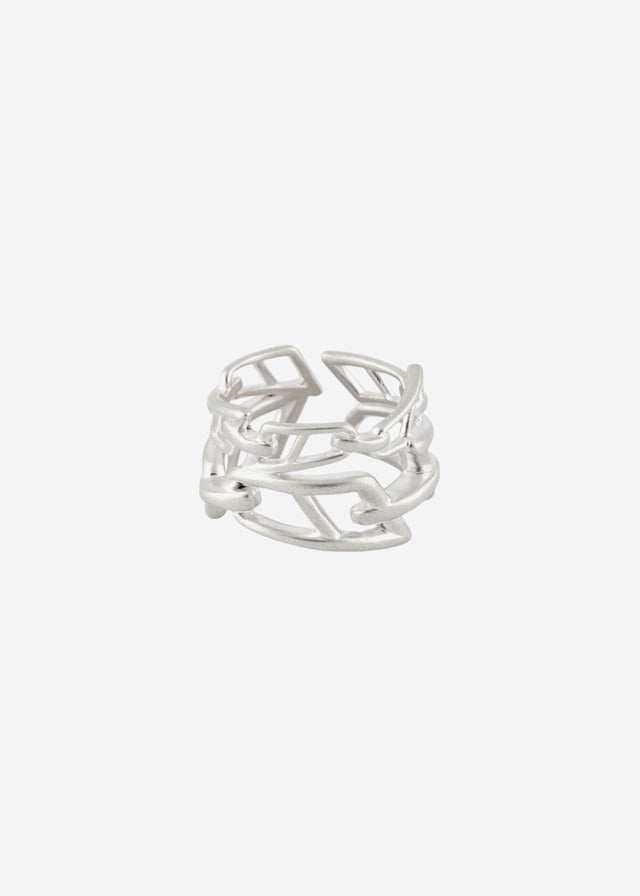
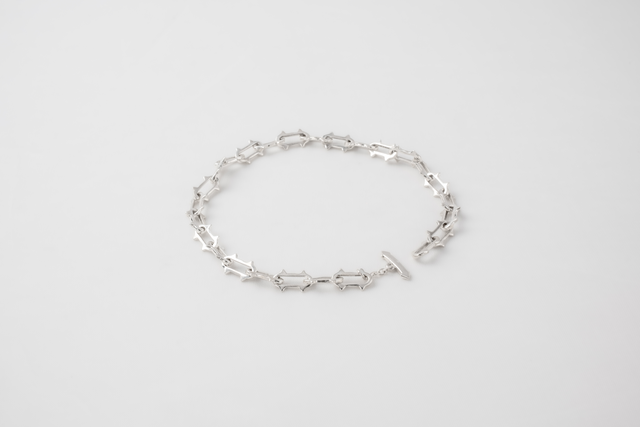
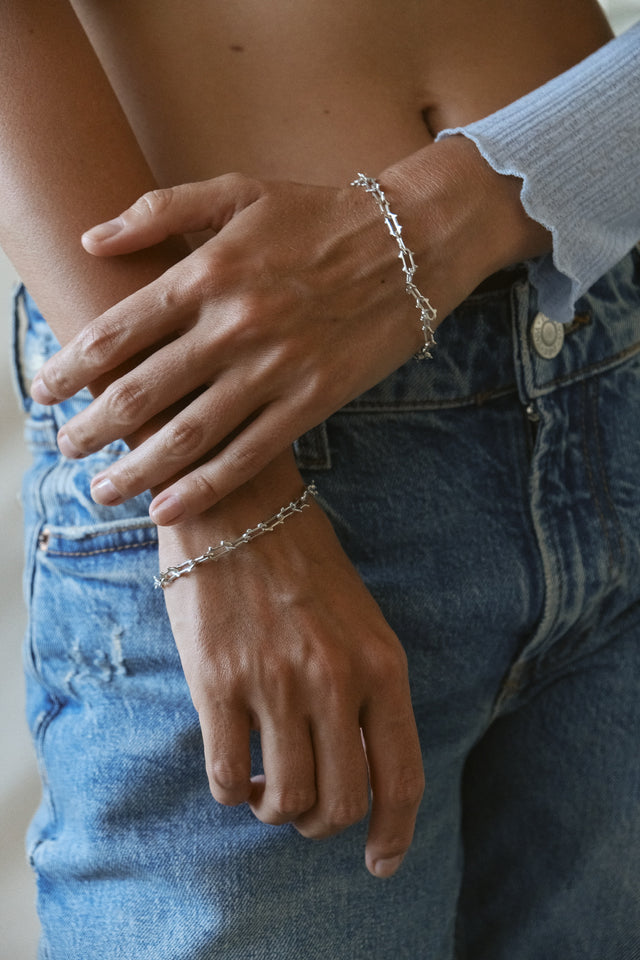
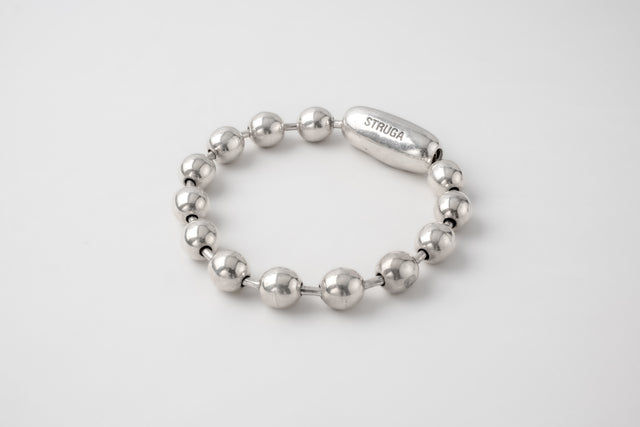
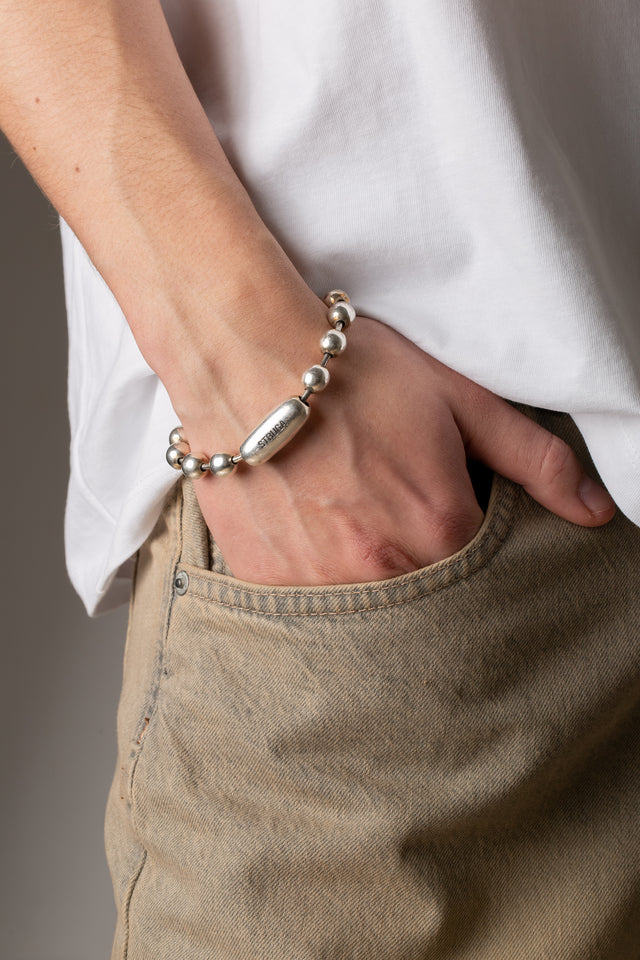
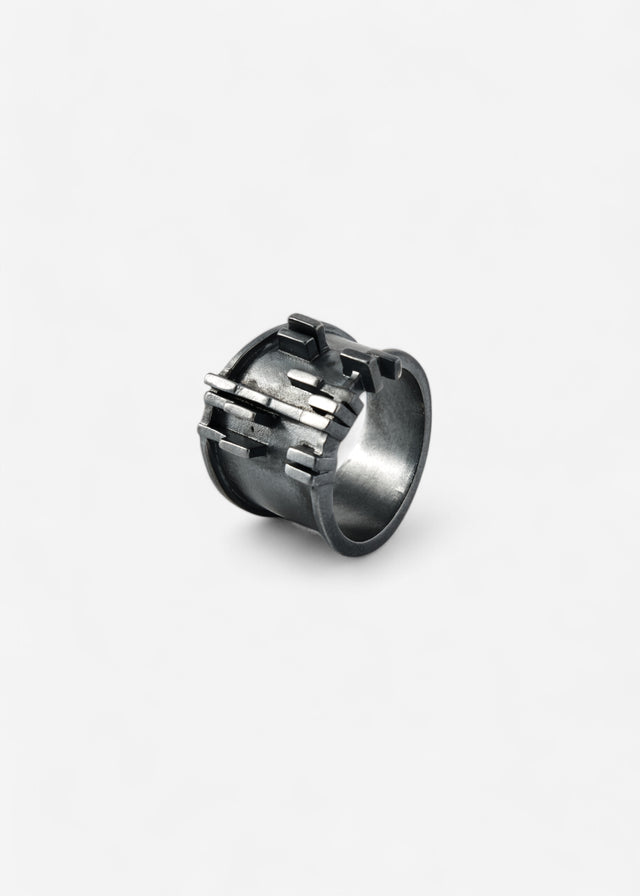
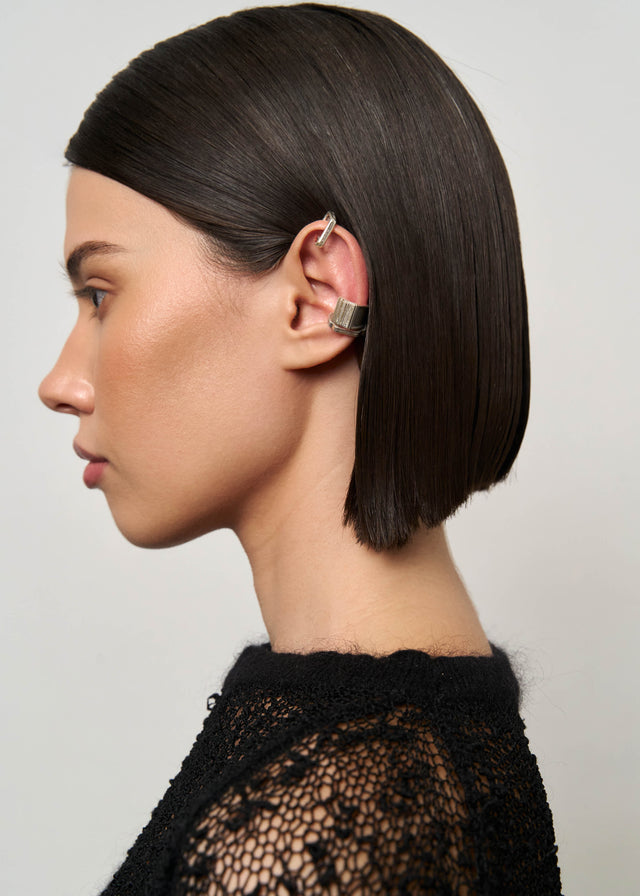
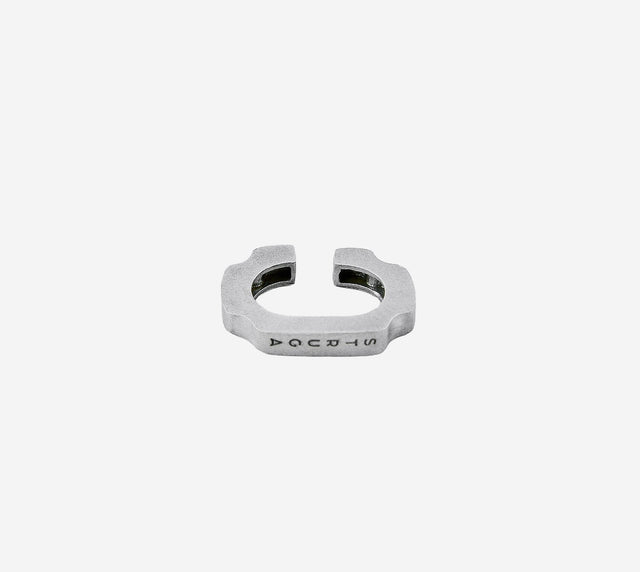
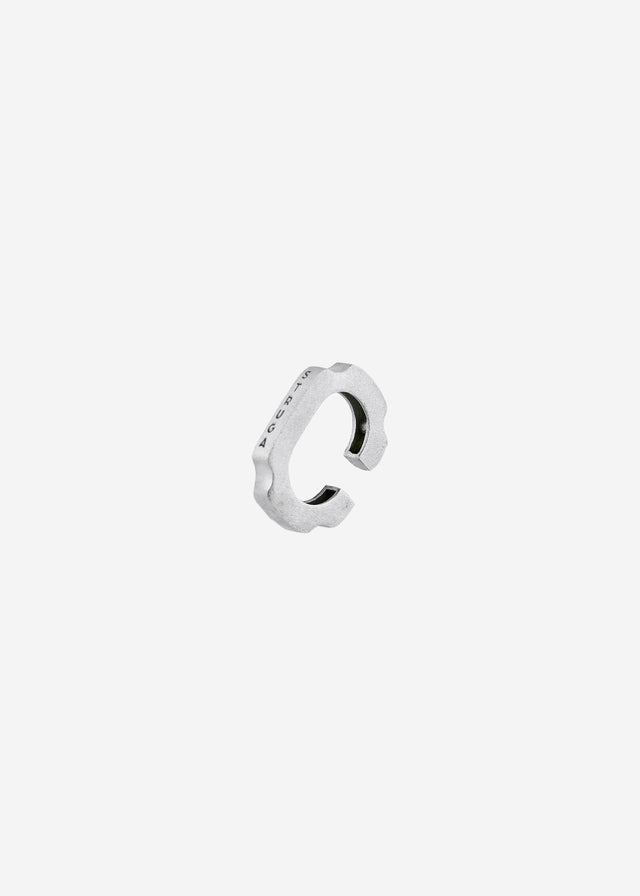
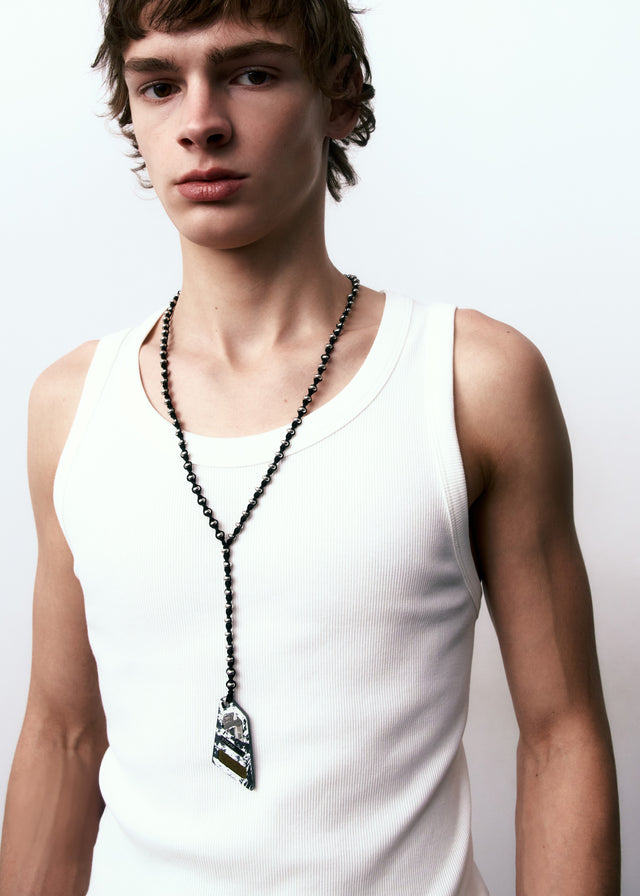
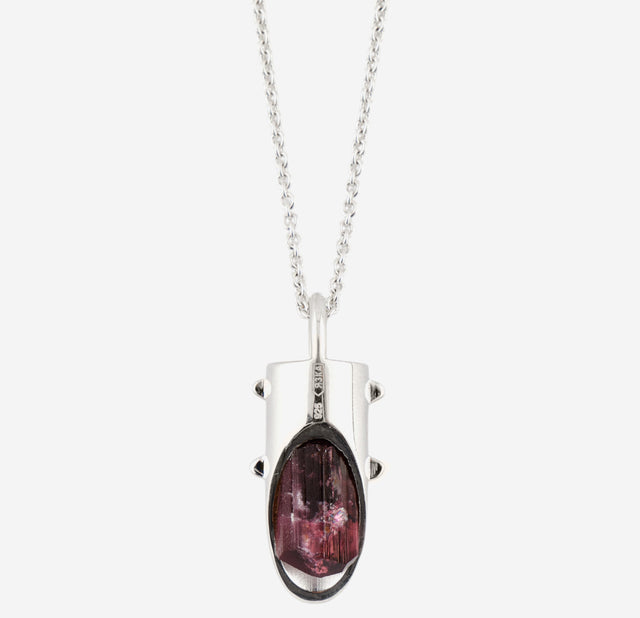
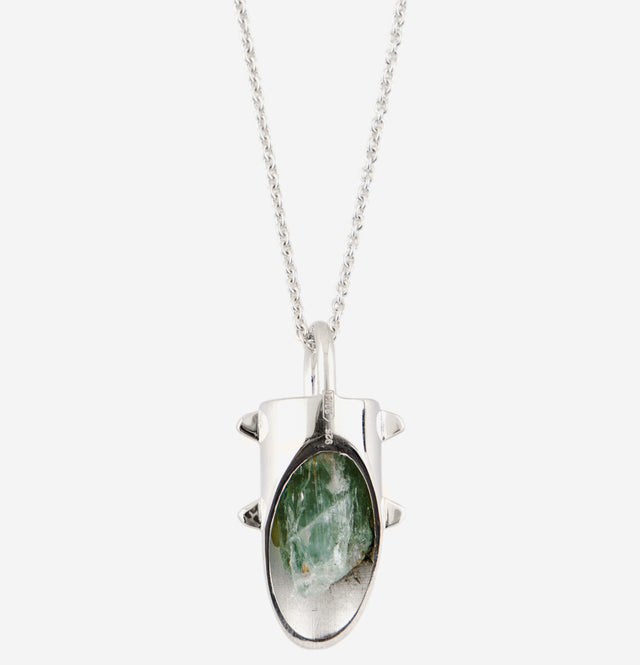
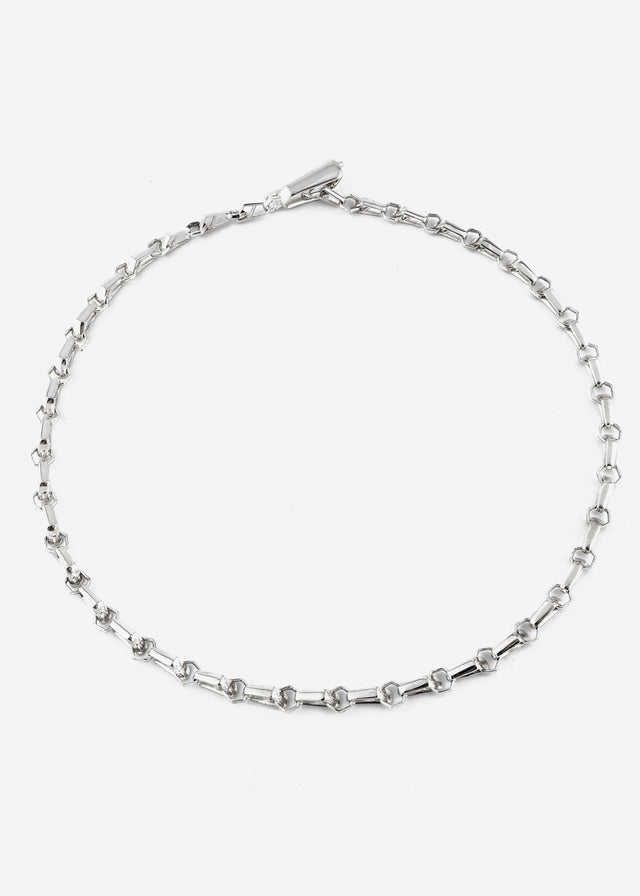
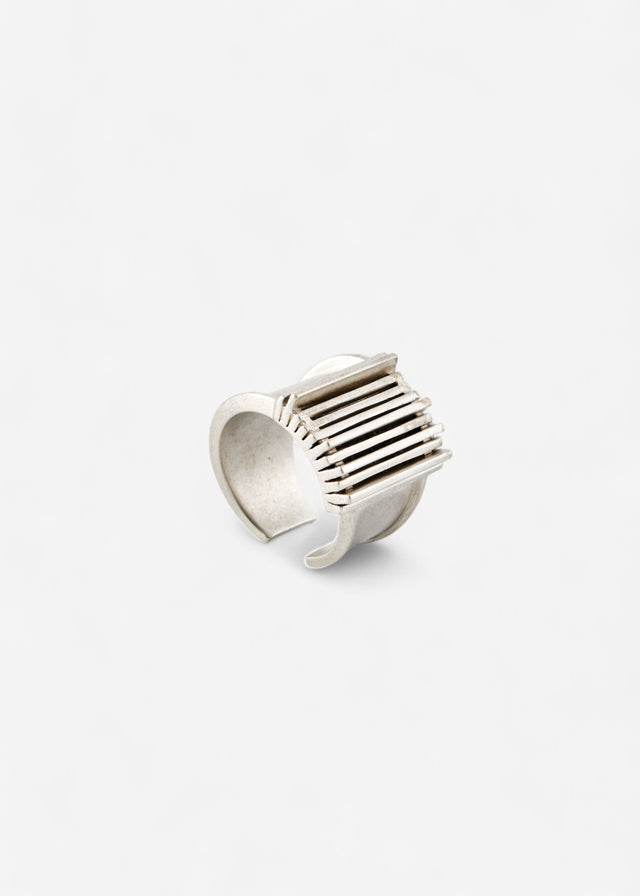
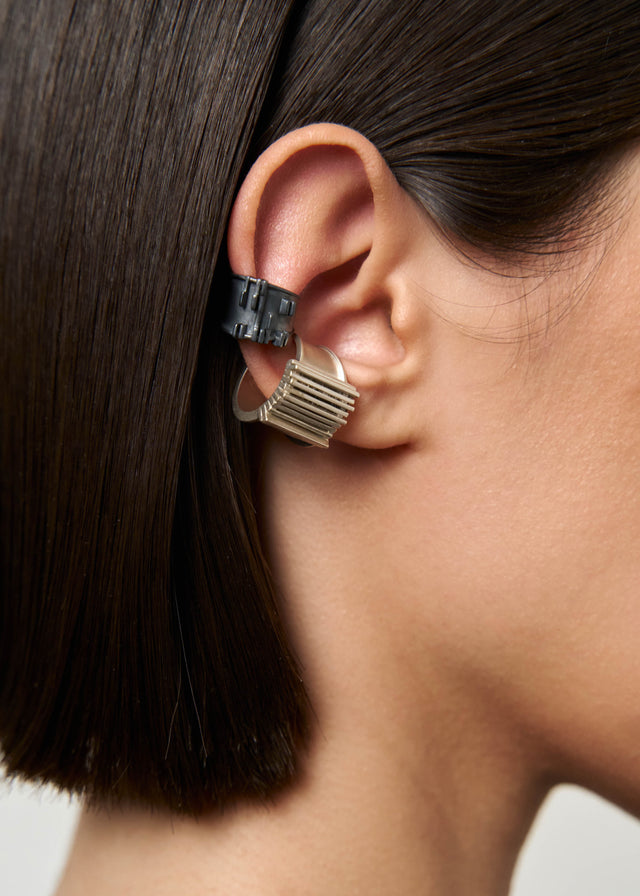
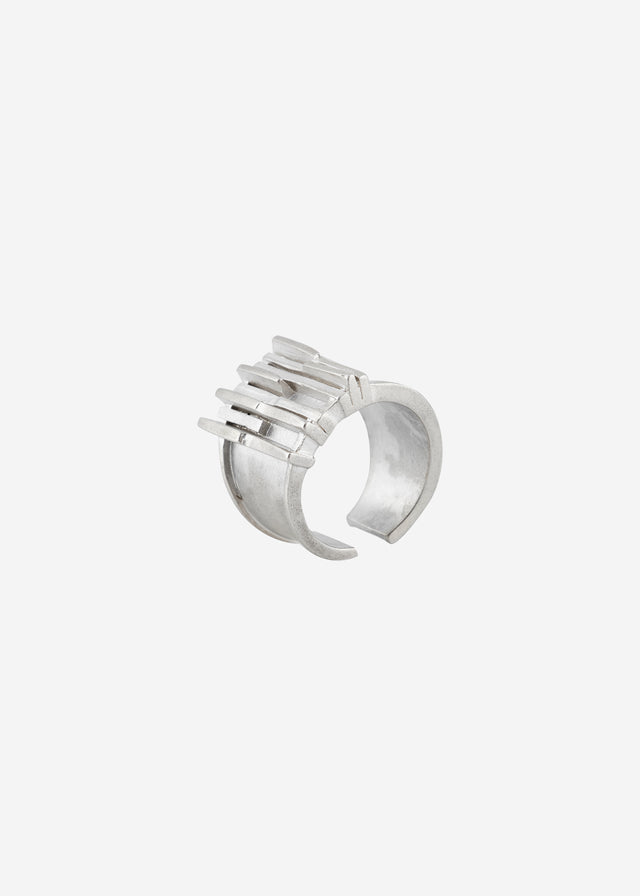
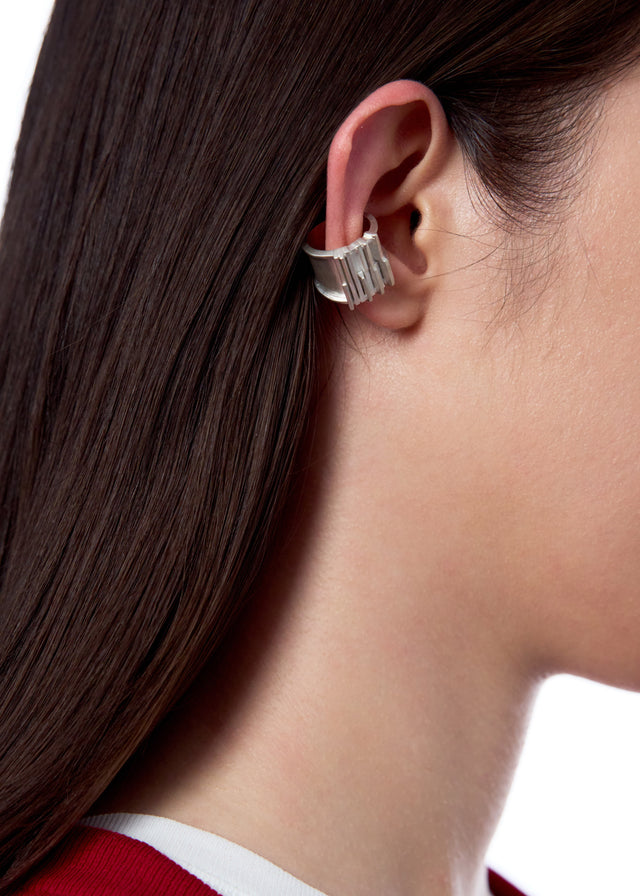
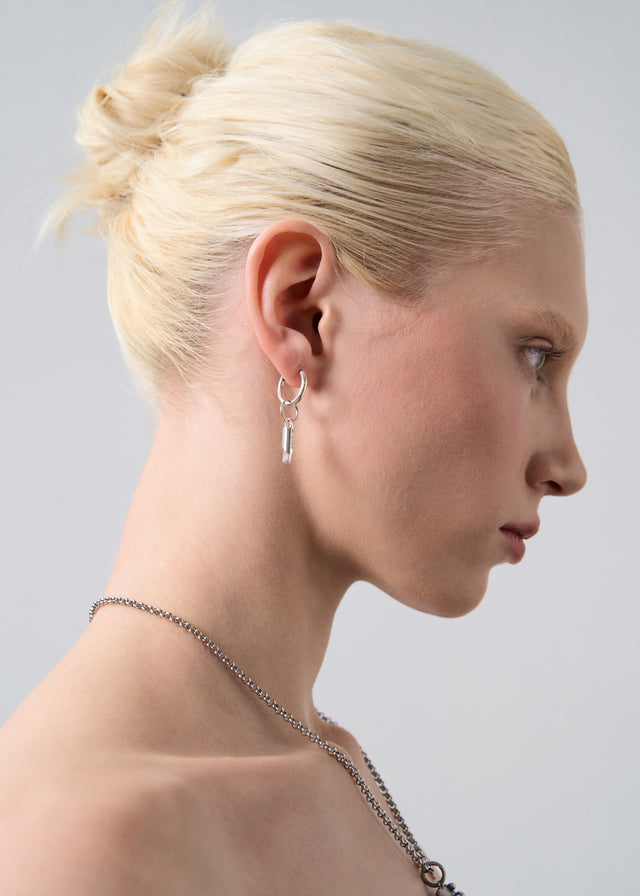
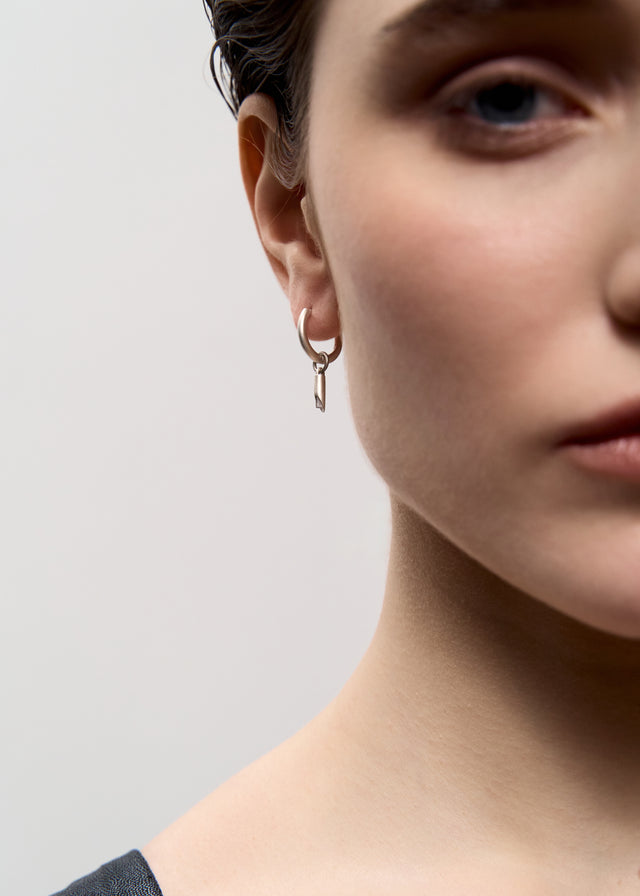
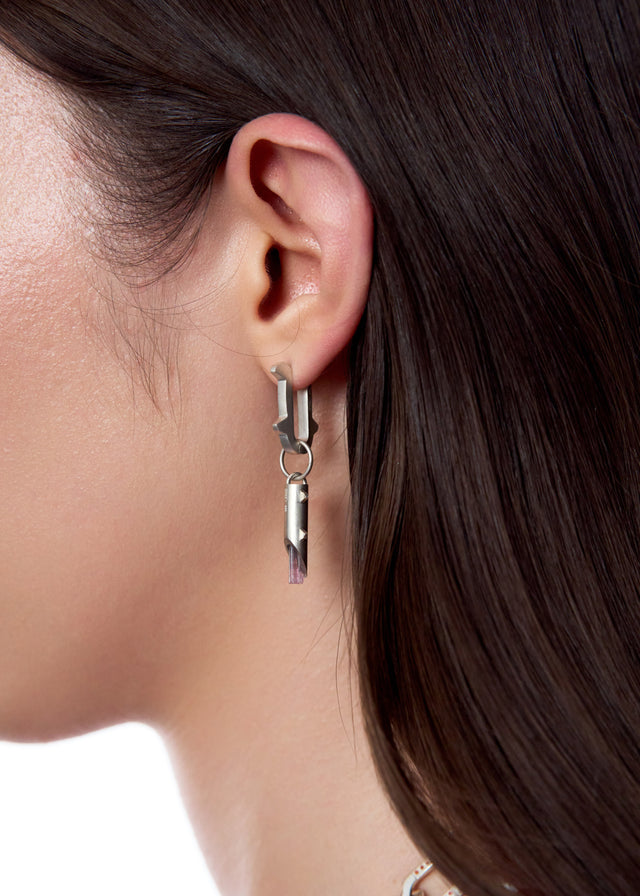
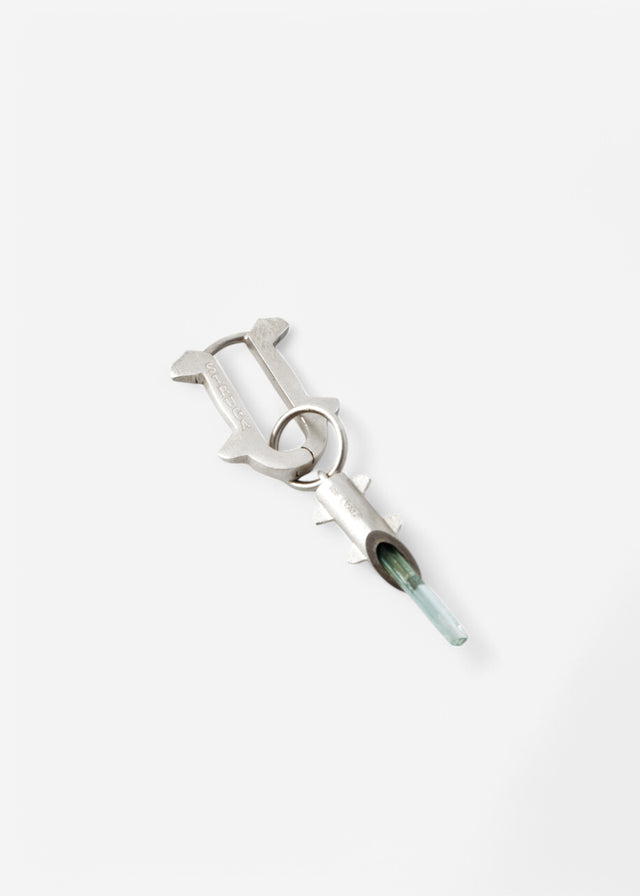
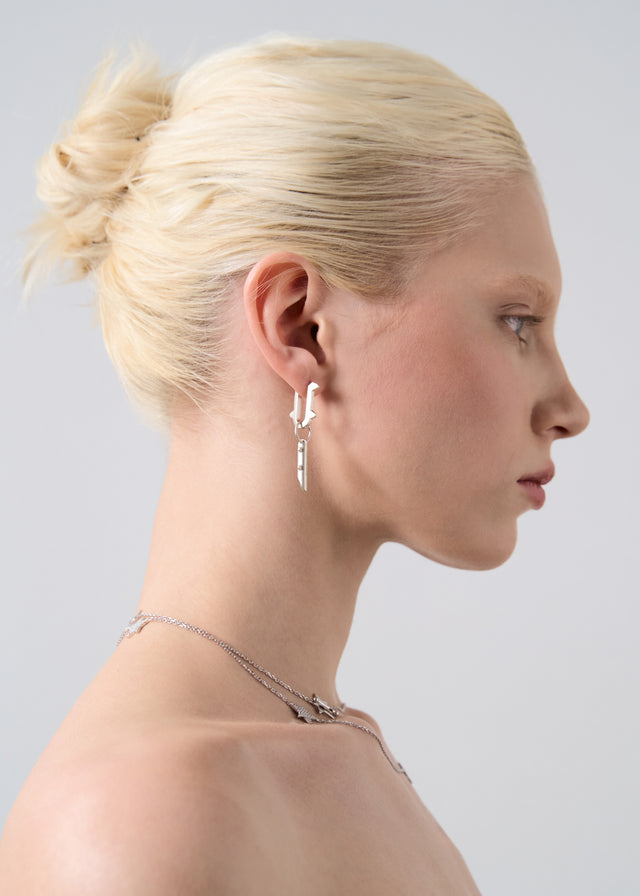
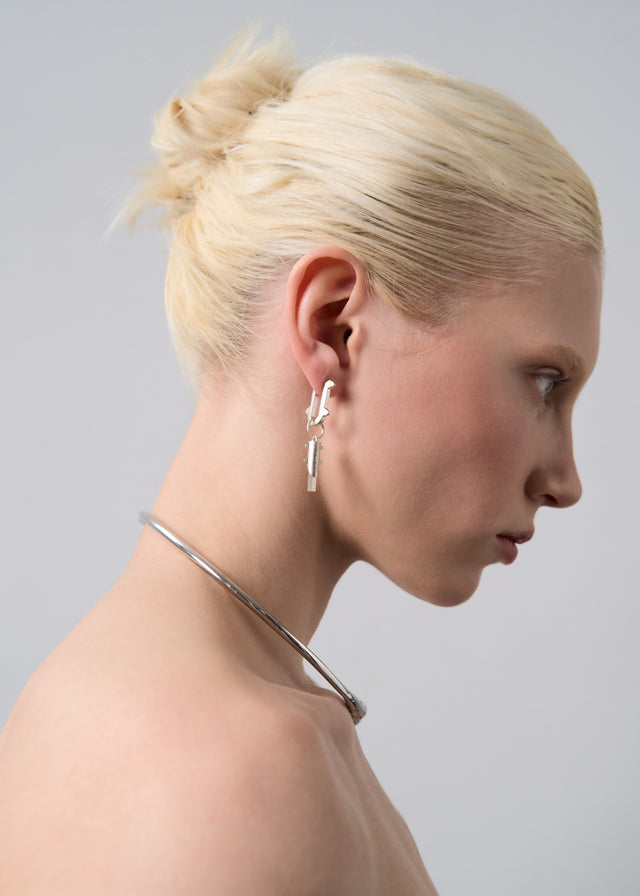
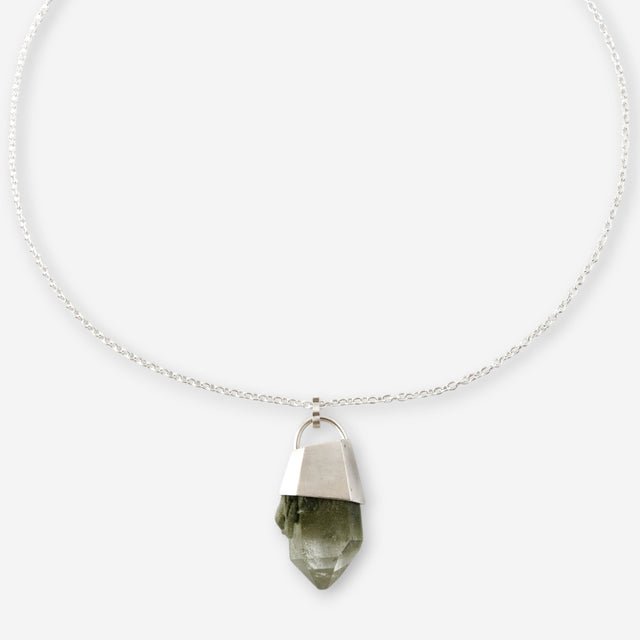
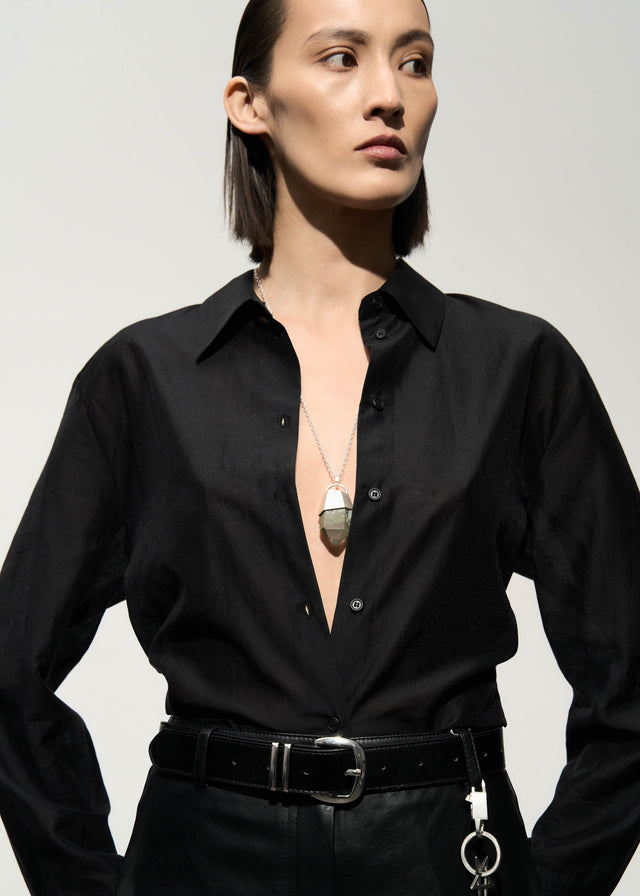
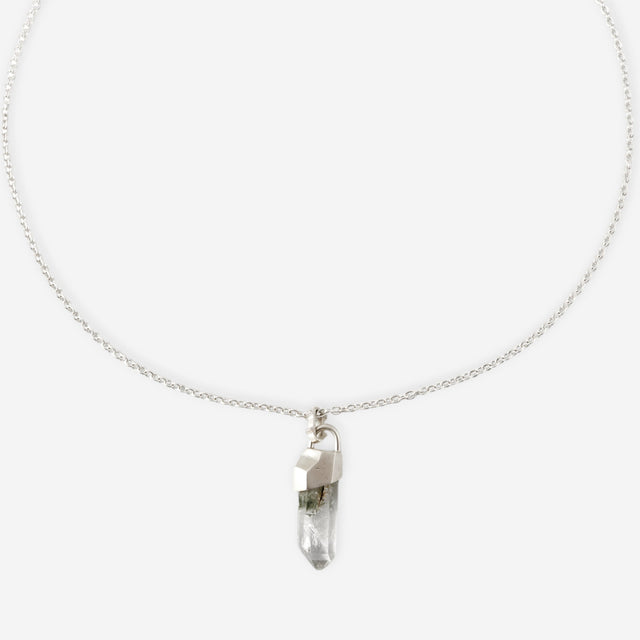
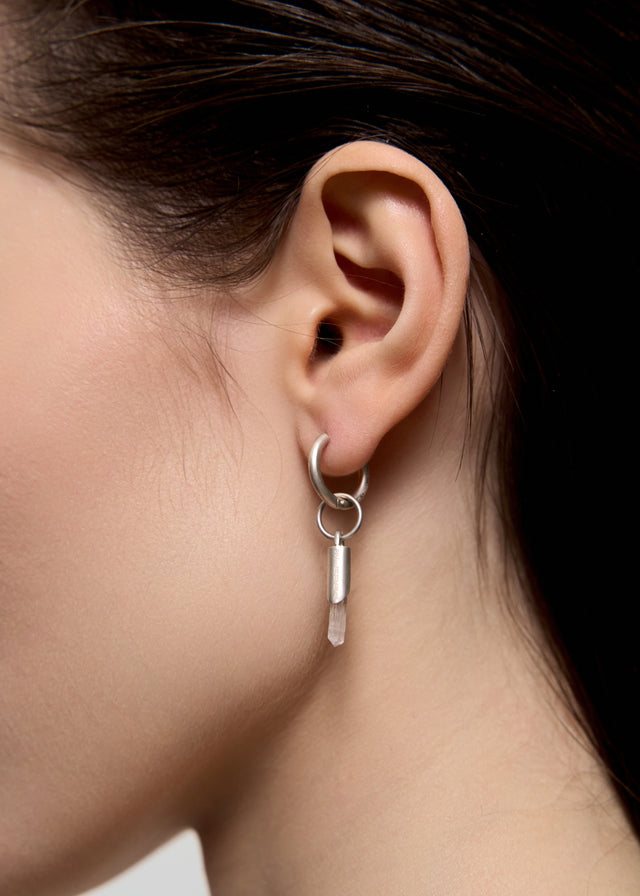
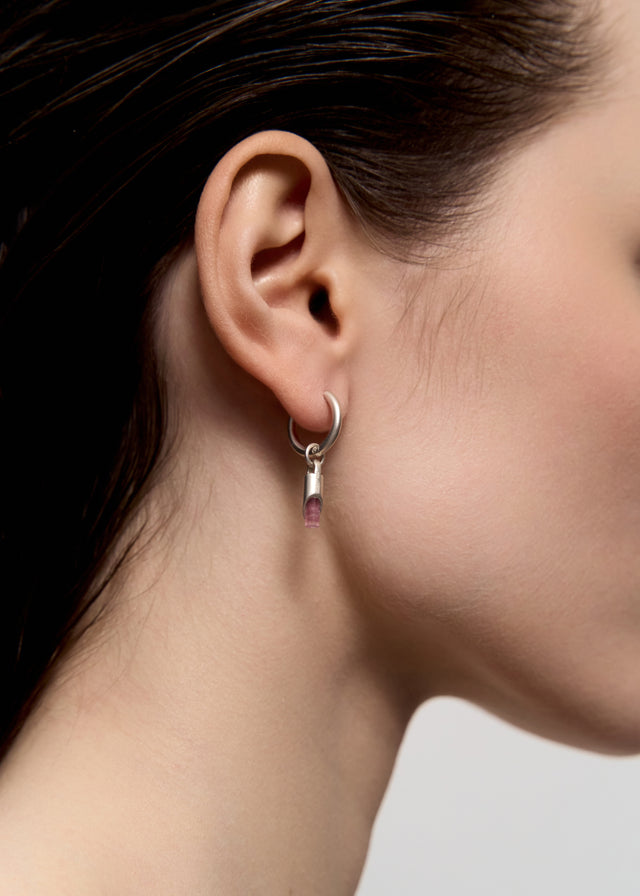
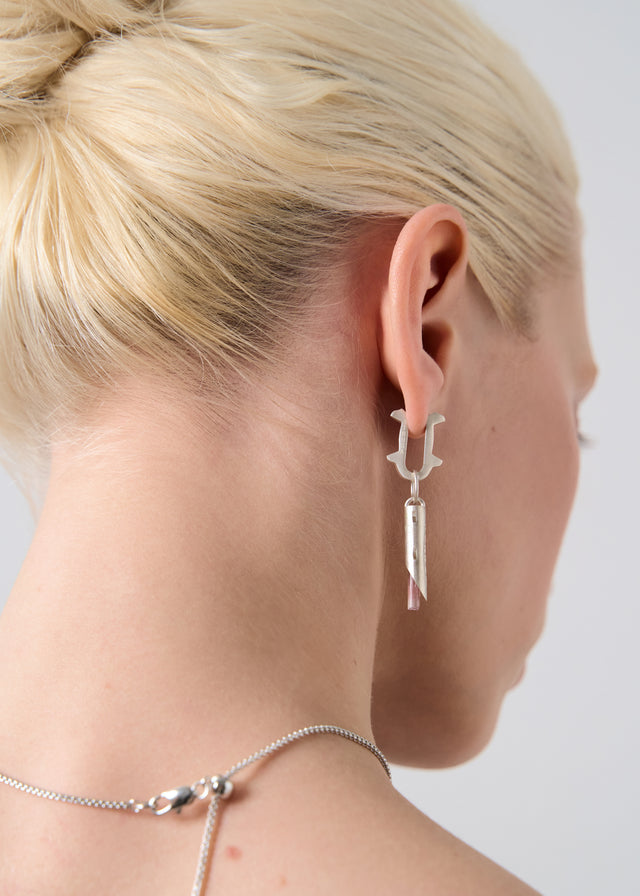
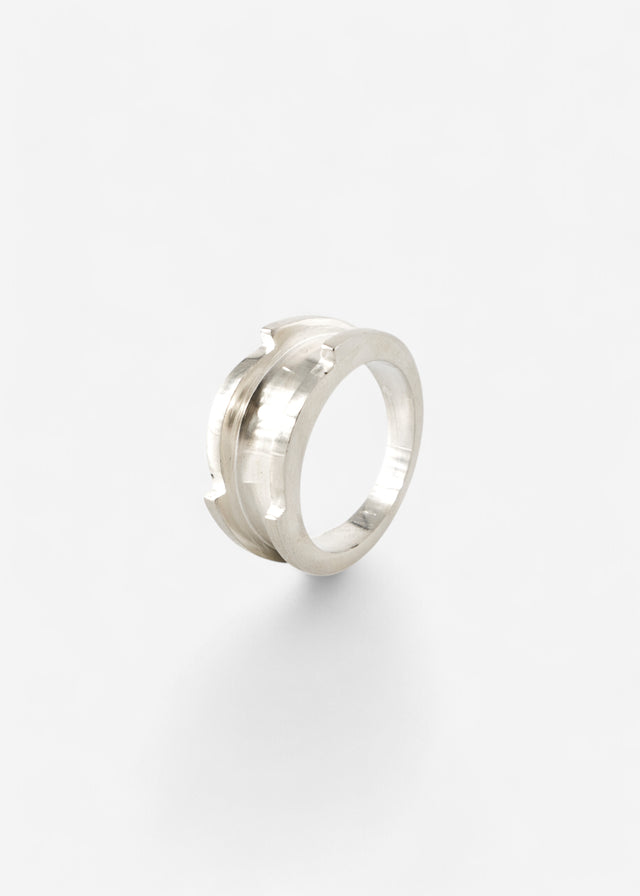
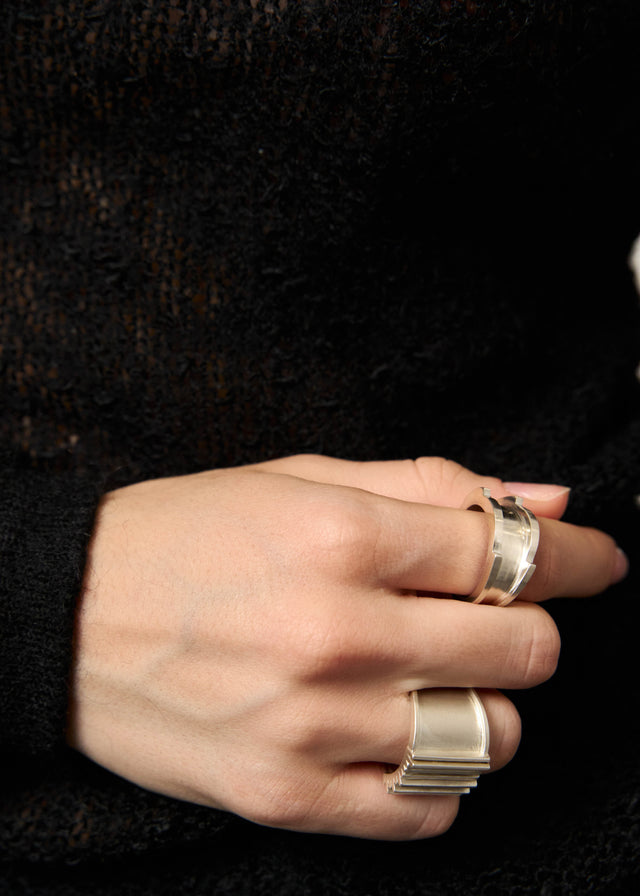
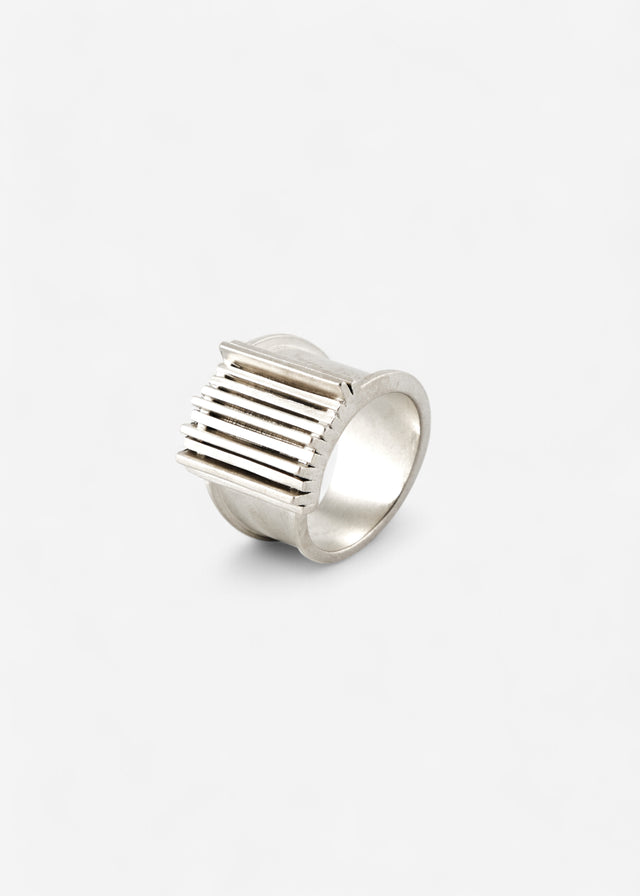
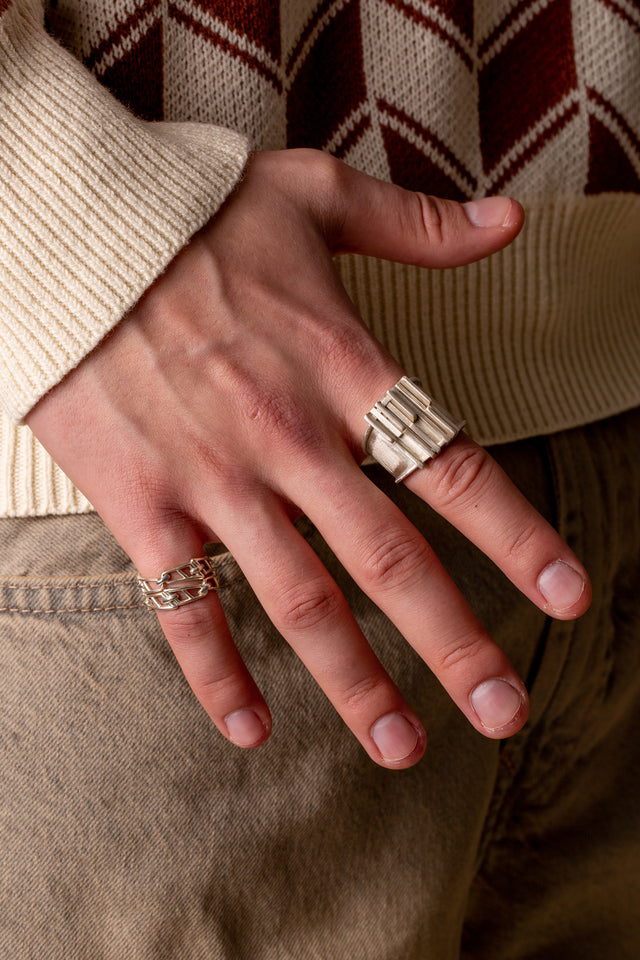
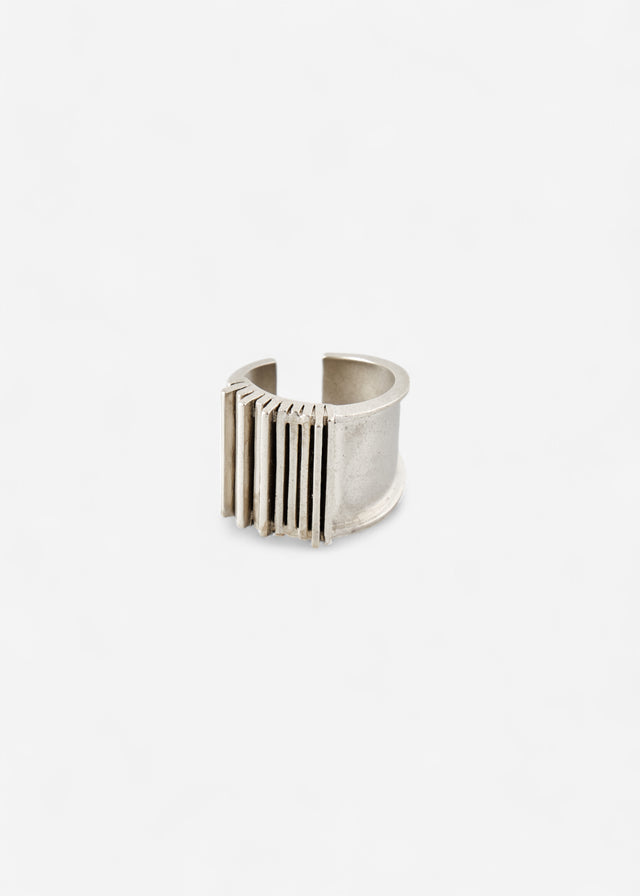
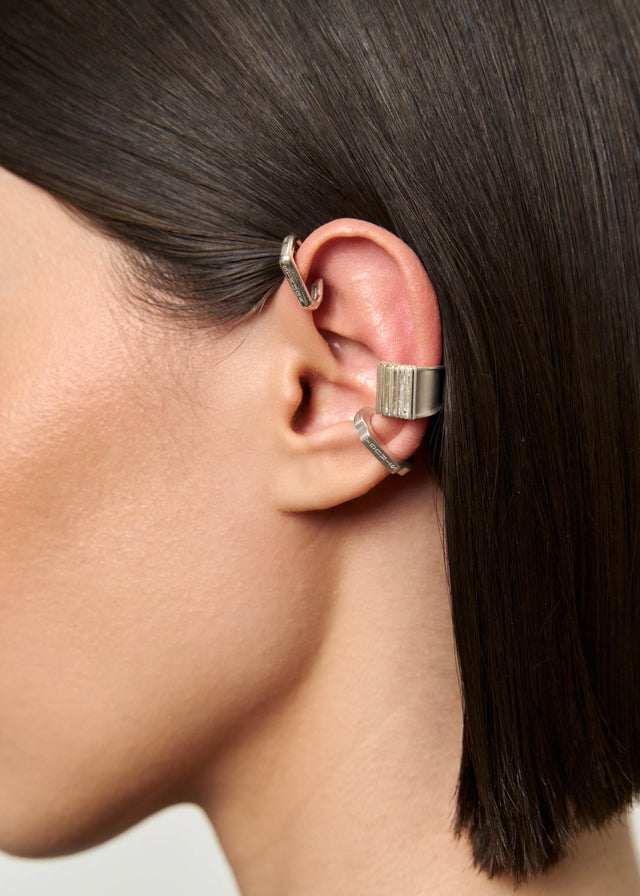
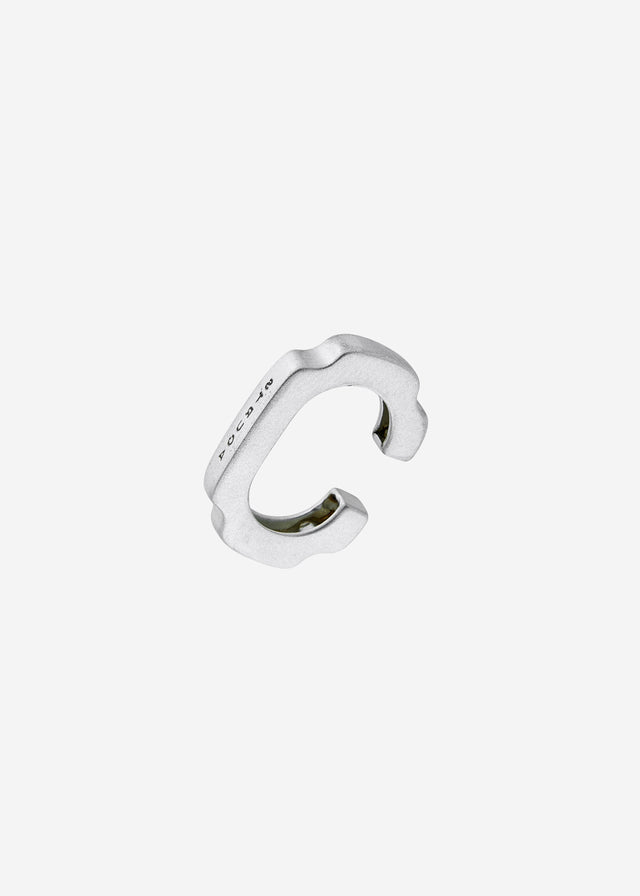
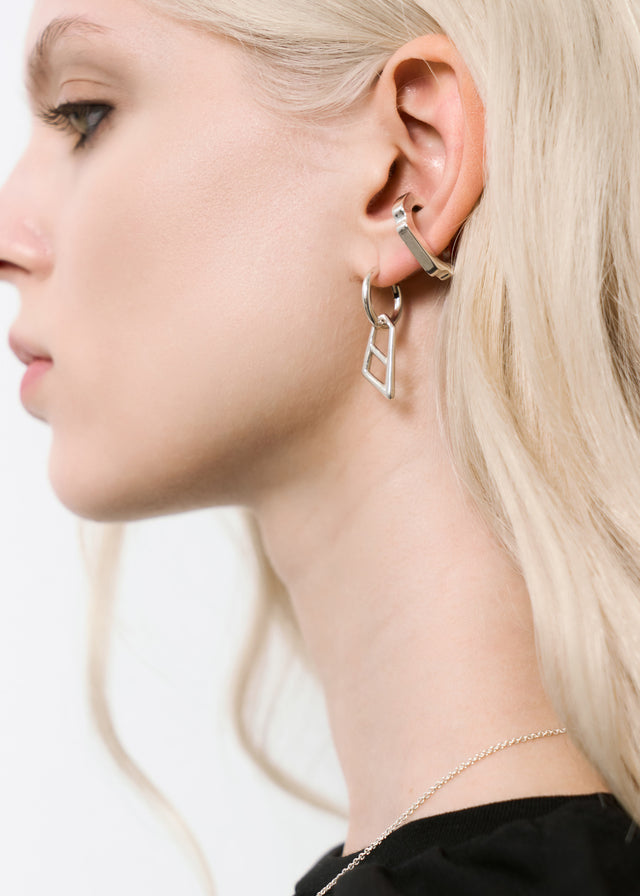
Oxidised silver is sterling silver deliberately darkened at the bench — black driven into every recess, raised edges left to catch light. It is a technique applied before the piece ships, not a condition it fell into.
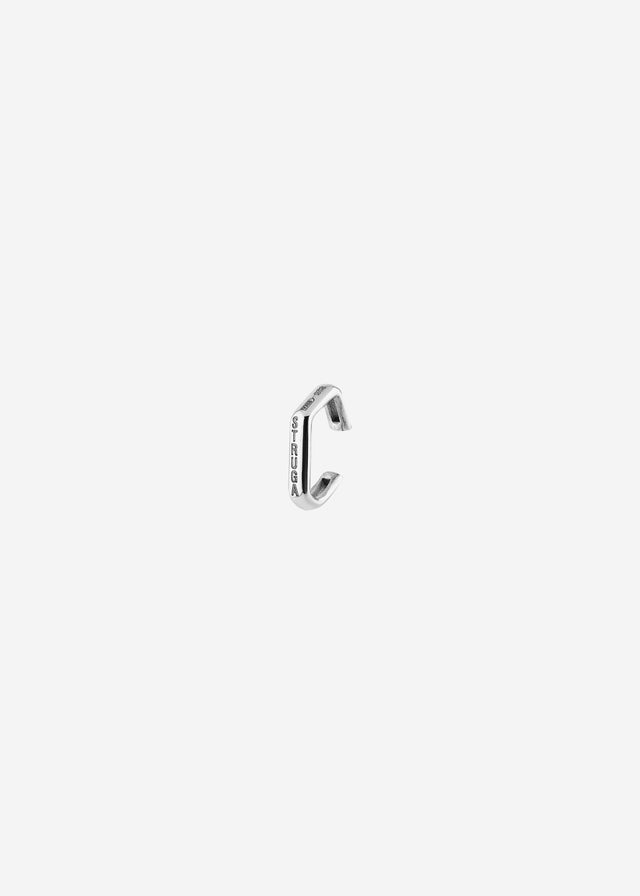
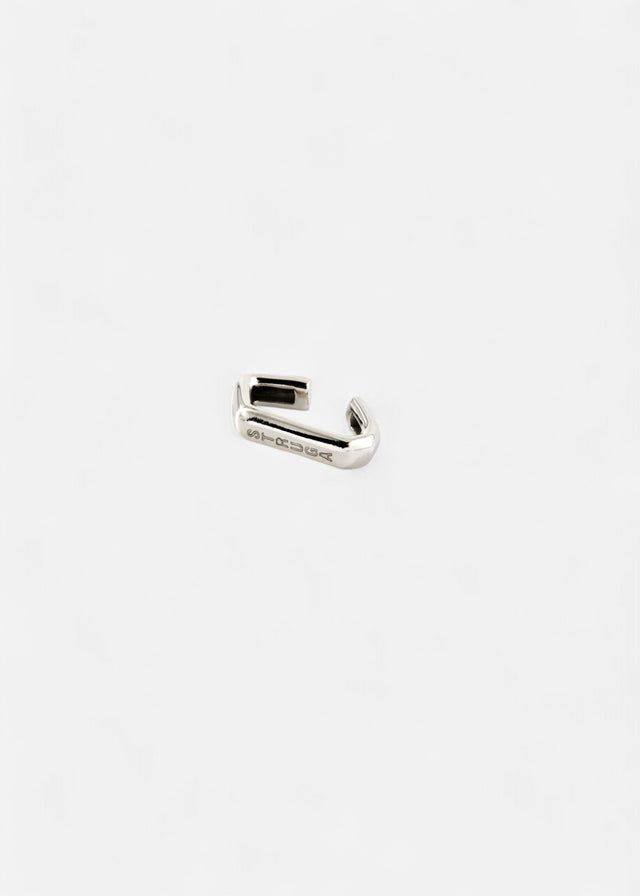
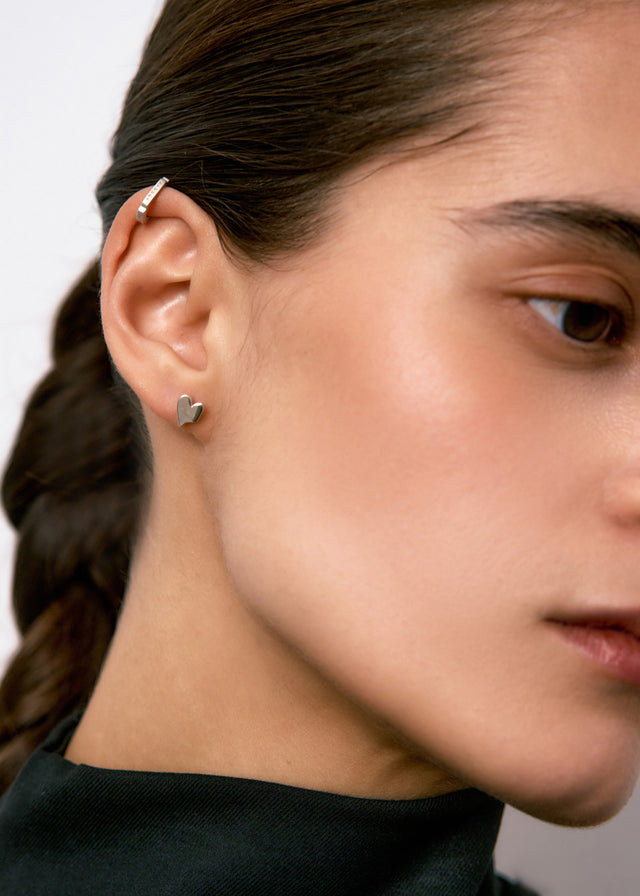
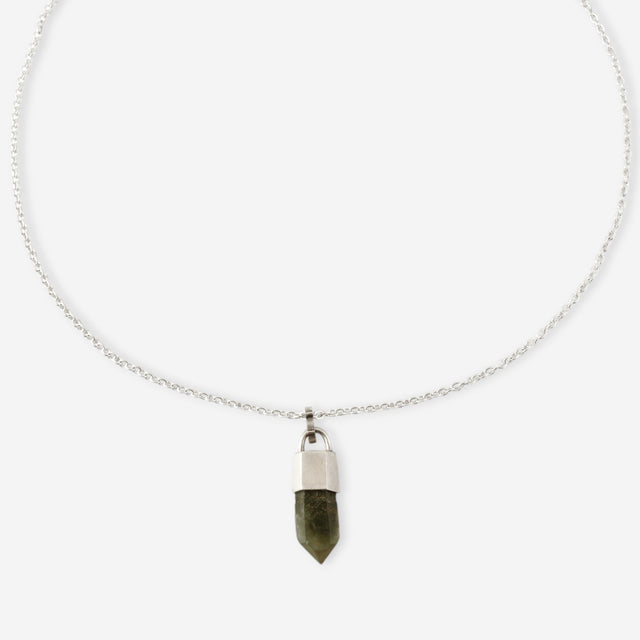
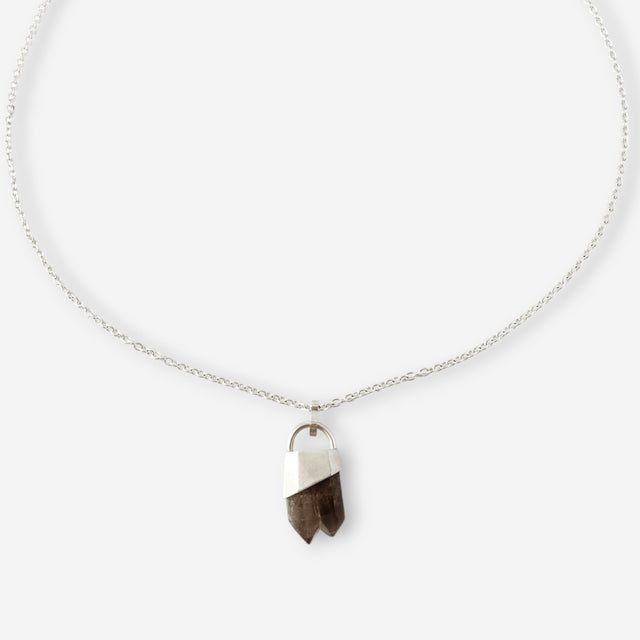
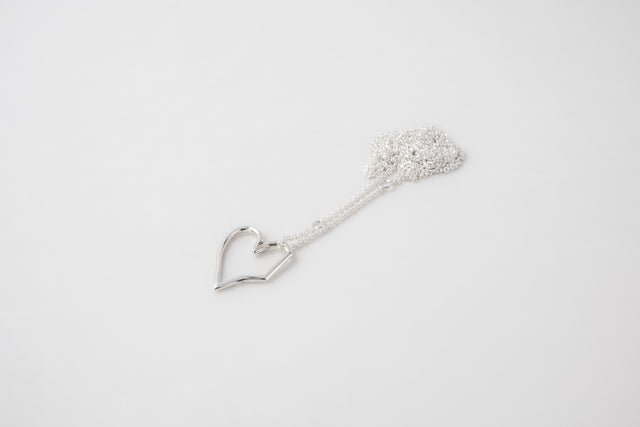
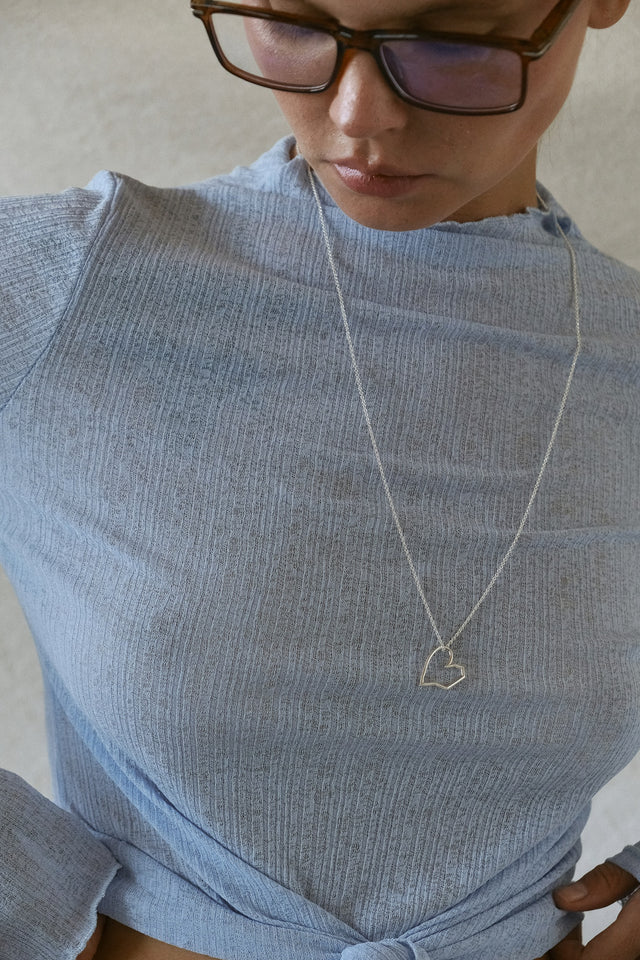
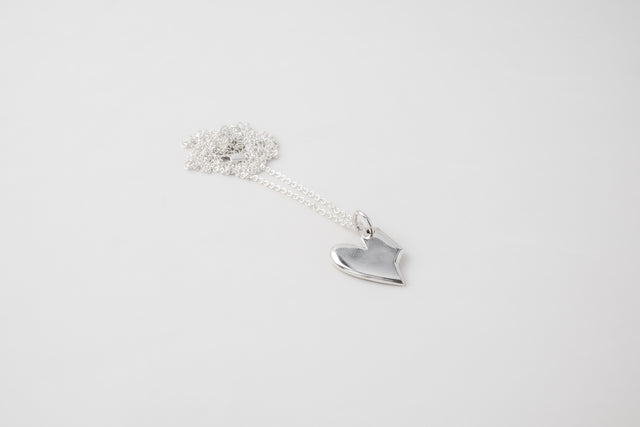
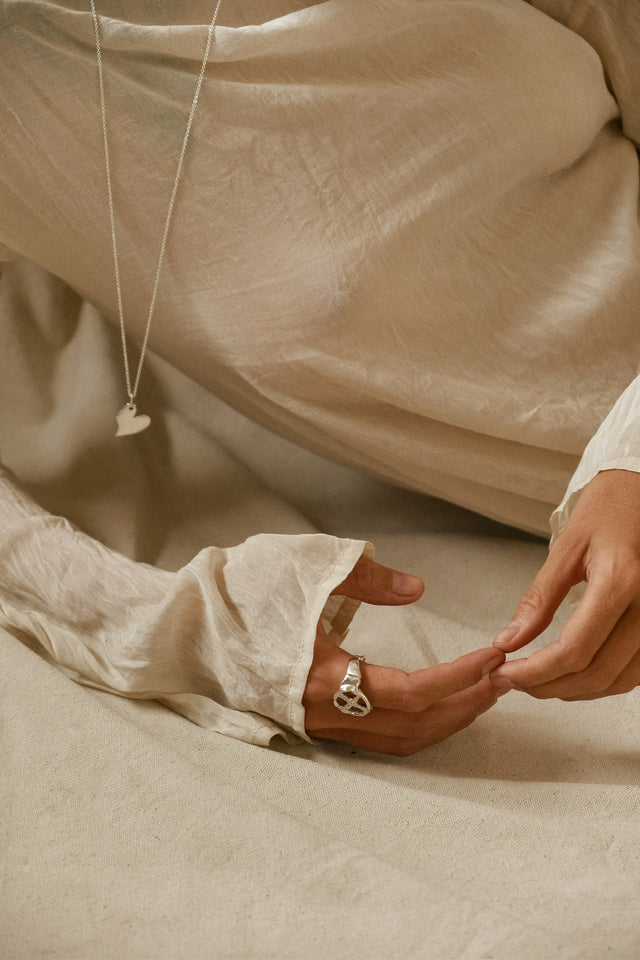
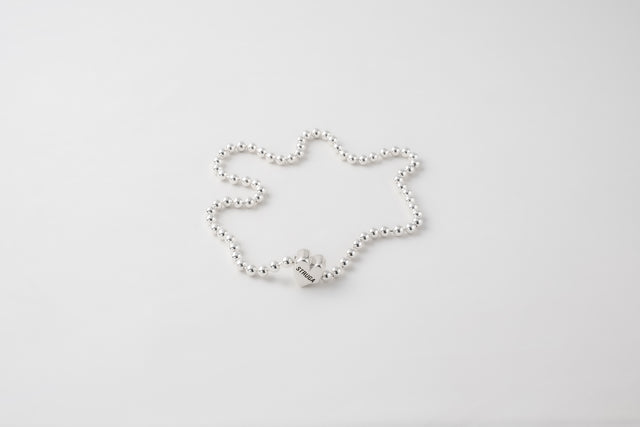
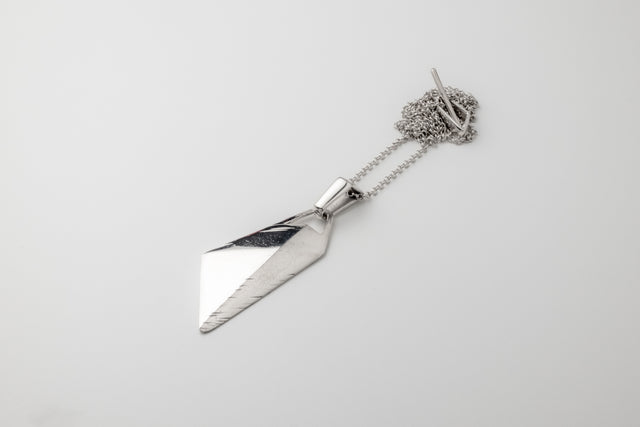
This is most of what STRUGA makes: 108 pieces here, across rings, cuffs, earrings, bracelets, chains and necklaces.
Oxidation and patina are not the same thing
Two processes darken silver and they are worth separating.
Oxidation is deliberate: the metal is blackened in the workshop, evenly and under control, before you ever see it.
Patina is what happens afterwards. STRUGA does not plate with rhodium, so the silver keeps reacting to air and to your skin — raised surfaces polish bright from contact while recesses go darker still.
The result is that an oxidised piece does not stay as it arrived. It separates: the parts you touch brighten, the parts you do not deepen.
Why darken silver at all
Polished silver flattens form. Light bounces off every surface equally, and cut geometry disappears into shine. Darkened silver does the opposite — black in the recesses reads as depth, so the shape becomes legible.
For a brand built on CNC-cut planes and architectural form, that is not decoration. It is what makes the object readable at all.
What is in this collection
108 pieces of 925 sterling silver. Weights run from under a gram for the lightest ear pieces to 110 grams for a full link bracelet.
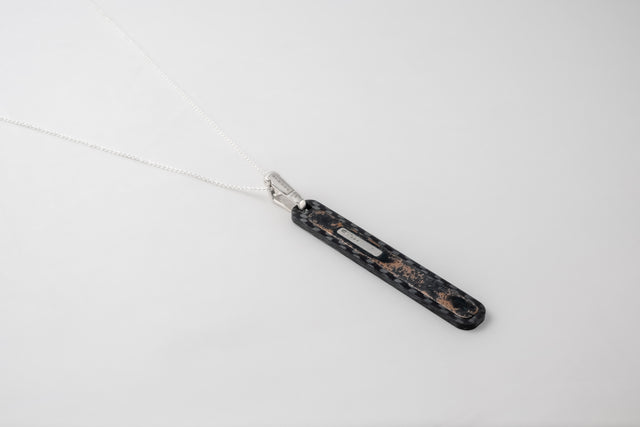
Carbon pieces are excluded from this page: carbon is a different material with different behaviour, and its palettes — Classic, Bloody, Toxic, Arctic, Winter, Fused Graphite — are not silver finishes.
Can it be undone
Yes. Silver cleaner lifts oxidation as readily as natural tarnish, and a scotch pad resets a matte surface. You are choosing a state, not repairing a defect.
Most people leave it alone. But nothing here is permanent, and that is worth knowing before you buy rather than after.
Care
Do nothing and the piece keeps developing. Take it off before the pool — chlorine darkens silver unevenly and in a way you did not choose. For a deep clean use a cloth or silver cleaner on the raised surfaces only, leaving the recesses dark.
Frequently asked questions
What is oxidised silver?
Sterling silver deliberately darkened at the bench - black driven into every recess, raised edges left to catch light. A technique, not a condition.
Is oxidation the same as patina?
No. Oxidation is deliberate and done in the workshop. Patina is what happens afterwards, because unplated silver keeps reacting to air and skin.
Why darken silver at all?
Polished silver flattens form - light bounces off everything equally. Black in the recesses reads as depth, so the shape becomes legible.
Will the black wear off?
The raised surfaces polish bright with contact while the recesses go darker. The piece separates rather than fading.
Can I remove the oxidation?
Yes. Silver cleaner lifts it as readily as natural tarnish. You are choosing a state, not repairing a defect.
Why are carbon pieces not on this page?
Carbon is a different material with different behaviour. Its palettes - Classic, Bloody, Toxic, Arctic, Winter, Fused Graphite - are not silver finishes.
Read further
- How silver patinates — what the darkening actually is.
- Unplated versus rhodium — why the plating decides everything.
- Sterling silver 925 — the alloy and why it is alloyed.
- Cleaning silver without damage — what to use and what to avoid.