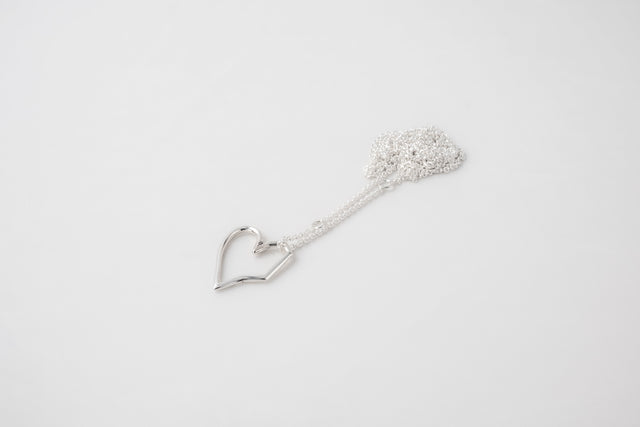
How to Prevent Silver from Tarnishing — A Sterling Silver Care Guide That Actually Works
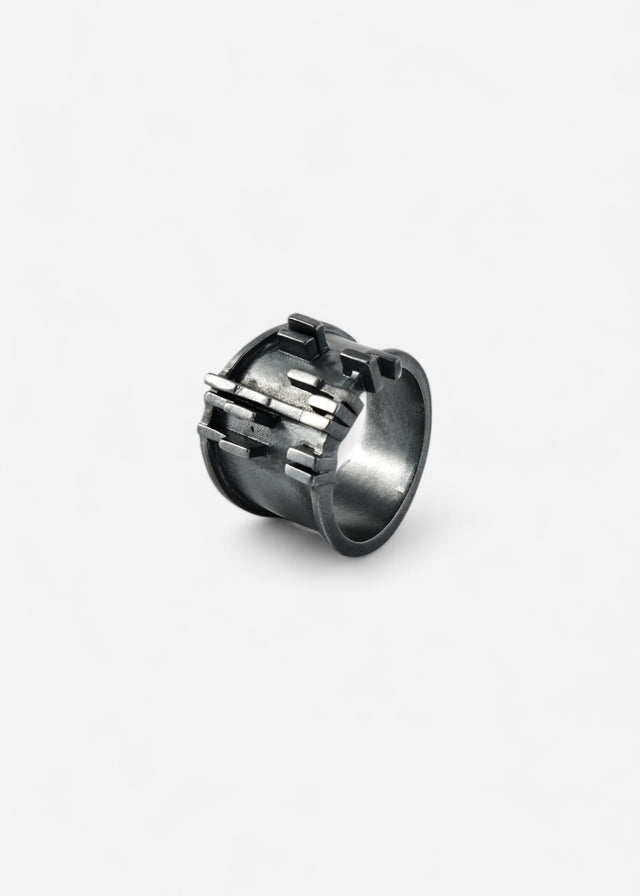
Sterling silver tarnishes. So does pure silver. The black is silver sulphide, and it forms because sulphide is the most stable thing silver can become in ordinary air — the sulphur gas needed to start it is below what any instrument in a room could read. Nothing prevents that reaction. What you control is its speed: whether the piece is worn, what it is sealed in, and how it gets cleaned.
- The black on silver is silver sulphide (Ag₂S): the invisible oxide film on silver converts to sulphide on contact with hydrogen sulphide and carbonyl sulphide (G. T. Burstein, University of Cambridge, for the Assay Office London).
- The film is protective — it consumes a little surface and then slows its own growth, though in humid air it keeps building, slowly. Patina is armour, not wear.
- The 7.5% copper in 925 does not create tarnish. Copper tarnishes as readily as silver and is the more base metal, so the alloy darkens faster than fine silver. That is the price of hardness: under the Russian standard GOST 30649-99, fine silver is 50 HV annealed, while 925 is 77 HV annealed and up to 170 HV once worked.
- A sealed bag beats every spray, and for a reason spray cannot copy: a small closed volume holds only a little sulphur gas, and once it has reacted there is no more.
- Tarnish and patina are the same reaction. The difference is where it sits and how it got there.
- Of 134 pieces in this catalogue, 17 are darkened at the bench — 13 of those are amulet earrings. The rest of the silver, the whole BLADE family included — the Blade Mini Links V.2 Bracelet, for one — arrives bright and darkens on the wearer.
Updated September 29, 2026 — STRUGA editorial team
Does sterling silver tarnish, and what is the black layer made of?
It does, and the guides that blame the copper alone have the chemistry backwards. Silver picks up a colourless oxide film the moment it meets air — thin enough to stay invisible, and protective. Sulphur gases convert that film into silver sulphide, which is black at any thickness the eye can catch.
Two gases do most of the work: hydrogen sulphide, and carbonyl sulphide, the latter present in ordinary air at roughly 0.5 parts per billion. Burstein's analysis for the Assay Office London puts the minimum concentration below what instruments can measure: any pressure of that gas will cause the reaction, however slow. No room in any house is under the threshold.
Tarnish films carry silver chloride and some oxide too, in proportions that shift with the air a piece lives in. Coastal air is the clearest case: seawater carries about 0.6 M sodium chloride, spray dries to saturated brine on the metal, and the chloride converts to sulphide anyway, because sulphide is the more stable compound. Why silver darkens faster on one wearer than another, and how to clean it safely, is covered in why 925 silver tarnishes. This page is about slowing it down.
Why does sterling tarnish faster than pure silver?
Fine silver of 999 fineness tarnishes as well — just slowly enough that a piece in a drawer can look unchanged for a year, which is where the story of tarnish-proof pure silver comes from. It is also soft: GOST 30649-99 gives fine silver 50 HV annealed and 80 HV once worked. Add 7.5% copper and the alloy holds 77 HV annealed and up to 170 HV after rolling or forging. That jump is the whole point of the ratio — 92.5% silver, 7.5% copper — and why the world standard for wearable metal is 925 sterling silver.
The copper changes the timetable, not the chemistry. Burstein calls sterling of no use as a tarnish-resistant alloy, because copper tarnishes as readily as silver and is the more base metal. The Canadian Conservation Institute (CCI) records the same in practice: Sterling tarnishes faster than the pure silver layer on a plated object.
One consequence is worth keeping, without overstating it. Darkening is normal behaviour for silver, not a sign of a fake. It does not prove the metal is real either: copper, brass and nickel silver darken too. The opposite is the thing to notice — a piece that never darkens over years is most likely rhodium-plated or lacquered. How to tell silver from an alloy without a lab is in how to tell if silver is real.
What speeds tarnish up, and what slows it down?
| Factor | What it does | What to do about it |
|---|---|---|
| Sulphur in the air | Drives the reaction — traffic, heating and industry all raise it | Seal the piece when it is off you |
| Direct sulphur sources | Wool and felt, rubber and latex (seals, bands, gloves), some paints, eggs | Never store on or beside them |
| Moisture | Works as an electrolyte and speeds the reaction; conservators keep silver below 50% relative humidity | Dry the piece; keep it out of the bathroom |
| Salt air | Spray dries to concentrated brine on the surface | Wipe down the same day at the coast |
| Skin contact | Slows visible tarnish — oils and friction act as a continuous polish | Wear it; rotation beats storage |
| Sealed storage | Starves the reaction of gas | Airtight bag with an anti-tarnish strip, silica gel alongside |
| Repeated polishing | Each pass takes off the surface carrying the film, and the piece re-tarnishes | Twice a year is plenty on a piece in regular wear |
The pattern is short. Anything that raises the supply of sulphur or water speeds the film up; anything that cuts it slows the film down. Nothing on either list stops it. The sulphur sources and the humidity limit come from the notes of the Canadian Conservation Institute.
How should silver be worn day to day?
Wearing a silver piece does more for it than anything else. Friction, skin oils and handling work as a slow polish, and pieces in weekly rotation stay bright far longer than pieces left in a drawer.
Last on, first off
Perfume, lotion, deodorant, sunscreen and hairspray go on first and dry on the skin. Silver goes on after. At the end of the day the order reverses — silver comes off before makeup remover, shower or sleep. Skin salts and oils, together with personal care products, leave marks on silver, and chlorinated pool water speeds tarnish up.
Take it off for water and sleep
Soap film and shampoo residue collect in clasps and links; sleeping in a piece pulls fibres in and leaves fine scratches. A simple sterling silver ring survives both, but chains, earrings and bracelets are worth the ten seconds: in a close weave like the Thorn Links Chain, soap film settles between the links where a cloth cannot reach.
Wipe it down at night
A quick rub with a soft cotton or microfibre cloth takes off the day's oils, salt and product residue before they sit overnight. It is the cheapest habit on this page, and the one that replaces most cleaning.
Why does silver darken unevenly on the body?
Skin cleans the metal and soils it at the same time. Where silver rubs against clothing and the palm — the high points of a ring, the outside of a bracelet — the film wears off faster than it grows. Where nothing rubs — the inside of a band, the clasp, the gaps between links — sweat and product residue sit. Sweat carries salt: in tests with a model sweat solution, silver chloride builds on the metal and corrosion runs many times faster than in clean water (Park et al., 2023). Hence the dark band under a ring with a bright top. Why the speed differs from person to person, and where a mark on the finger comes from, is in the chemistry of silver, sweat and skin.
How do the seasons change the rules?
The same piece behaves differently across the year, and the adjustment is small.
- Summer — more sweat and more salt. Add sea spray and sunscreen and silver darkens far quicker than in winter. Put it on dry skin rather than over cream, and wipe it after a day in the sun.
- Winter — the problem is the temperature swing. Coming in from the cold leaves condensation on the metal, and moisture trapped under a sleeve does the rest. Let a piece reach room temperature, then wipe it.
- Travel — a hotel safe with rubber seals is among the worst places to leave a piece. Rubber is vulcanised with sulphur and sits against the metal for days. Wipe pieces at the end of each day rather than at the end of the trip.
How should silver be stored between wears?
Sealed storage is the second-best protection after wearing, and it works on a mechanism no coating can copy. A small closed volume holds too little sulphur-carrying gas to build a visible film, and once that gas has reacted, none is left. An open tray feeds the surface fresh air indefinitely.
What works:
- One zip bag per piece, air pressed out before sealing. It also stops chains tangling and harder pieces scratching softer ones.
- An anti-tarnish strip in each bag — treated paper that absorbs sulphur from the trapped air. The maker Intercept quotes a year or more in a well-sealed container; a spent strip turns dark.
- A silica gel packet in the box, to hold humidity down; conservators add activated charcoal to it (CCI).
- A cool, dark, interior drawer. Not a bathroom, not a windowsill.
What underperforms, and why:
- Unsealed cloth pouches. They look right and do almost nothing — air moves through the fabric freely.
- Lined wooden boxes. They hold a piece safely but do not seal it, and wood gives off organic acids.
- Display stands. They expose the metal more than anywhere else in the house.
How do you remove tarnish without damaging the piece?
Tarnish is reversible. How hard to push depends on the finish, and getting that judgement wrong is how good pieces are ruined.
Bright, polished surfaces
A polishing cloth handles most tarnish in under a minute: wipe with the impregnated side until grey lifts onto the cloth, then buff with the clean side. For stubborn films, a silver dip works in seconds — dip, rinse in cool water, dry at once. Leaving a piece in the dip strips too much surface and leaves a chalky look.
Darkened, antiqued and matte surfaces
Here the dark areas are the design — as on the Thorn Amulet Earring #23, darkened at the bench — and a dip removes them in seconds. Use a dry microfibre cloth on the high points only and leave the recesses alone; keep baking soda and toothpaste away, since both are abrasive and scratch a matte surface. If the contrast is already lost, a jeweller can re-darken the piece properly.
Chains and heavy tarnish
The inside of a link is where a cloth cannot reach. Either give the chain ten to twenty seconds in a silver dip — agitate, rinse thoroughly, dry immediately — or use an ultrasonic cleaner with a mild jewellery detergent. Not on chains with stones, darkened surfaces or fragile components.
Which popular tips do not work?
- The aluminium foil and baking soda bath. The galvanic exchange is real and fast: the aluminium sacrifices itself and silver sulphide is reduced back to metal. Bench darkening is the same sulphide, so it goes with the tarnish, and CCI warns of pitting as well.
- Toothpaste. It is an abrasive. Even silver polishes leave a pattern of fine scratches, and general metal pastes are coarser still (CCI); the scratches toothpaste leaves are permanent.
- Anti-tarnish sprays and lacquers on bare silver. CCI does not recommend lacquer or wax for silver, because an even coat is hard to get. A coating changes how the metal feels, flakes in patches, and still loses to a sealed bag.
- Storing silver with the rest of the jewellery. Harder pieces scratch softer ones, and hair ties and rubber parts give off sulphur compounds — vulcanised rubber tops the CCI list.
- Lemon juice and vinegar. Acids take off the film along with any darkening, and CCI notes they damage niello.
- Motorised polishing at home. Easy to remove too much metal and round off a design's edges.
Can silver be coated so it does not tarnish?
It can — with rhodium or lacquer, and both change the piece. Rhodium is a platinum-group metal electroplated in a thin layer. While the layer holds, the surface is cool white and does not darken, but on rings and bracelets it wears through at the points of contact and the piece has to be replated. Conservators allow lacquer only for silver on museum display — products such as Incralac — and even then CCI does not recommend it, because an even coat is hard to get. On a piece that is worn, lacquer rubs off, and tarnish then comes through in patches under the chips.
STRUGA pieces carry neither: the surface is left free to change, and the dark recesses are part of the design. How that silver differs from rhodium plating in daily wear is set out in Living Silver vs rhodium plated.
What is the difference between tarnish and patina?
Chemically, none. Burstein states it plainly: tarnishing and patination are the same phenomenon, and the only significant difference is the physical appearance of the corrosion product. He also calls the film remarkably protective: as the sulphide thickens, its growth slows. That is the scientific footing under everything Living Silver claims, and the opposite of wear.
What separates the two words is where the darkening sits and how it got there. A piece left unworn goes evenly dark, including the places a hand would have touched, and that flat grey is what people mean by tarnish. A piece worn daily darkens only where nothing rubs it: recesses deepen, high points stay bright, edges soften. One is a record of neglect. The other is a record of use.
The practical version:
- Seal a piece that is resting for a season.
- Polish twice a year if you like high gloss, or leave it alone. Both are correct.
- Check the anti-tarnish strip whenever you take a sealed piece back out, and replace a darkened one before the silver darkens instead.
How are STRUGA pieces finished, and what does that mean for care?
Care advice is worthless without knowing which finish is in your hand, so here is the count from this catalogue: of 134 pieces, 105 are 925 silver without carbon, and only 17 of those are darkened at the bench; a further 25 belong to the carbon line and 4 are on silk.
| Family | Darkened at the bench | How to care for it |
|---|---|---|
| BLADE | 0 of 20 | Arrives bright — polishing cloth, no restrictions |
| THORN | 0 of 7 | Arrives bright — the contrast comes from wear |
| SIGNATURE HEART | 0 of 9 | Arrives bright — polishing cloth |
| BRUTALISM | 2 of 7 | Read the finish line on the card before any dip |
| SIGNATURE ASYMMETRIC | 2 of 31 | Read the finish line on the card before any dip |
| CARBON | 1 of 17 | Cloth on the silver, damp lint-free cloth on the carbon |
| MOSAIC | 1 of 20 | Read the finish line on the card before any dip |
| AMULET | 13 of 42 | Darkened 13: high points only, dry cloth, no dip. The other 29 arrive bright |
A piece can belong to more than one family, so the middle column adds up to more than the catalogue total: the Signature Cross V.3 necklace is counted under SIGNATURE ASYMMETRIC, CARBON and MOSAIC at once.
The rule follows from the table. Most STRUGA pieces are not darkened at the bench, so the strict no-dip advice that fills care guides applies to a minority of this catalogue — read the finish line on the product card before you clean anything. The silver here is 925 sterling without rhodium, made by hand in Bali by master silversmiths, so the surface stays free to change.
Sixteen of those seventeen sit in the RITUAL world, which is where STRUGA keeps the pieces that are dark from the start rather than dark from wear.
Two pieces show both cases. The Pills Necklace carries no bench darkening at all: 7.3 grams along a 75 cm chain, and every dark recess it develops is a record of wear. The Brutalism V.3 Ring is the opposite — darkened at the bench, like the Brutalism Ear Cuff V.3 Dark Treatment from the same family. A silver dip would strip from both exactly what the darkening was for.
About STRUGA. STRUGA is a dark silver jewelry brand founded by Dmitry Strugovshchikov and Ekaterina Strugovshchikova, handmade in Bali by master silversmiths. Most pieces are 925 sterling silver left uncoated, so they darken with wear; part of the range is darkened in advance, at the bench. The darkening is part of the design.
Frequently asked questions
Didn’t find the answer — write to us, we reply personally.
Ask a question →01Does sterling silver tarnish?+–
Yes, and so does pure silver. The dark film is silver sulphide, formed when the invisible oxide layer on silver meets hydrogen sulphide or carbonyl sulphide in the air. The concentration needed is below measurable levels, so ordinary indoor air is enough. Sterling darkens faster because its 7.5% copper tarnishes as readily as silver and is the more base metal.
02Can you stop silver from tarnishing completely?+–
No — you can only slow it down. Every method that works limits how much sulphur-carrying air reaches the metal. A sealed bag with an anti-tarnish strip is the strongest version: a small closed volume runs out of sulphur gas once it has reacted. Sprays and lacquers seal less well and flake in patches.
03How should silver be stored so it does not tarnish?+–
Each piece in its own airtight zip bag, air pressed out, with an anti-tarnish strip inside; a silica gel packet in the box. A cool, dark drawer, not the bathroom. Keep wool, felt, rubber and latex away — they give off sulphur compounds. Open stands and cloth pouches protect least.
04What can silver be coated with so it does not tarnish?+–
Rhodium or lacquer, and both change the piece. Rhodium is a thin electroplated layer of a platinum-group metal: the silver stops darkening, but at points of contact the layer wears through over time and the piece is replated. Conservators allow lacquer only for museum display, and even then without recommending it, because an even coat is hard to get. STRUGA pieces are left uncoated so the surface can change.
05Is tarnish the same as patina?+–
Chemically, yes — the same reaction; the difference is only how the result looks. In practice the words split by cause: an unworn piece goes evenly dark, which is what people call tarnish; a piece worn daily darkens only where nothing rubs it, leaving bright high points against dark recesses — what STRUGA calls Living Silver.
06Does tarnish mean the silver is fake or low quality?+–
No — darkening is normal for silver, though it does not prove authenticity either: copper and brass darken too. Only the surface changes, and the sulphide film is protective: as it thickens, its growth slows. A piece that never darkens over years is usually rhodium-plated or lacquered.
07Is the dark colour on STRUGA pieces tarnish or bench work?+–
It depends on the piece, and the product card says which. Of 134 pieces in this catalogue, seventeen are darkened at the bench — thirteen of them amulet earrings. The rest of the silver arrives bright and darkens on the wearer. A dip would ruin the first group and is unnecessary for the second.