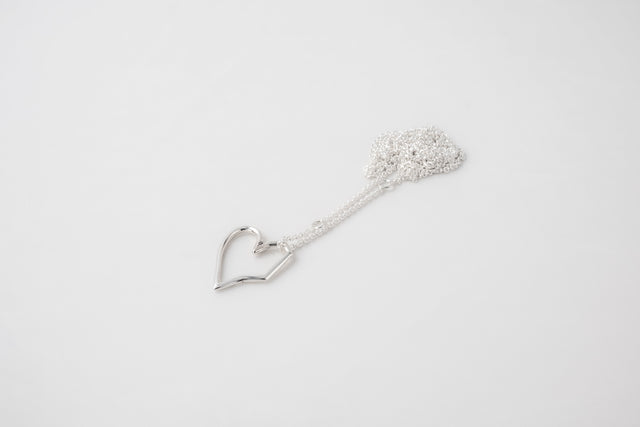
Alexander McQueen Jewelry Alternative — STRUGA Dark Fashion Silver Jewelry
Alexander McQueen Jewelry Alternative — STRUGA Dark Fashion Silver Jewelry
Alexander McQueen is a British fashion house founded in 1992, known for theatrical runway shows and a consistent dark romantic aesthetic — skulls, thorns, gothic architecture, nature-as-darkness. The jewelry line follows that visual language with skull rings, knuckle rings, and ornate pendants. STRUGA is a dedicated jewelry brand, founded in 2018 by Dmitry and Ekaterina Strugovshchikov, working in Bali in 925 sterling silver with an architectural design philosophy. Both brands attract buyers who want dark, non-mainstream jewelry — but the material substance, production approach, and design intent differ considerably.
- Alexander McQueen jewelry is primarily fashion jewelry: most pieces use a brass or zinc alloy base with silver-tone, gold-tone, or black plating; solid sterling silver pieces exist but are not the majority.
- STRUGA uses 925 sterling silver throughout — no brass base, no plating — handcrafted in Bali since 2018.
- STRUGA's surface is Living Silver: unsealed, unplated 925 that develops a natural oxidation patina through wear — recesses darken, high points stay brighter.
- Price ranges as of 2026: Alexander McQueen jewelry runs approximately $150–$2,000+; STRUGA's range is $50–$500 in solid 925 silver.
- Design approach differs: McQueen works with iconographic motifs (skulls, roses, Gothic tracery); STRUGA uses architectural and structural forms — the BRUTALISM, BLADE, THORN, and DARK UNION families are closest for dark jewelry buyers.
- Plated brass wears through at contact points over time; solid 925 silver tarnishes, but tarnish is removable and the metal itself does not wear away.
Design Approach
Alexander McQueen jewelry is an extension of the fashion house's runway DNA. The skull is the brand's central motif — appearing on rings, bracelets, scarves, and bags for decades. Alongside skulls: roses, thorns, Gothic architectural tracery, snakes. The pieces are theatrical and immediately recognizable as McQueen. They work as fashion-world accessories — items that anchor an outfit in a particular aesthetic universe.
STRUGA does not use iconographic motifs. There are no skulls, no symbols, no recognizable shapes that pre-exist the design. The reference points are spatial: brutalist architecture (asymmetric concrete planes), industrial structure (the Blade family's sharp-edged sections), botanical structure under strain (the Thorn family). STRUGA's pieces look like they were designed from an architectural or engineering starting point, then reduced to what can be worn. The darkness comes from form and material, not from iconography.
A McQueen skull ring communicates immediately what it is and where it comes from. A STRUGA piece requires closer attention — the design logic emerges through the object rather than through symbol recognition. These are different ways of making dark jewelry, and which one works better depends on what the wearer wants to communicate and whether symbol-driven or form-driven design resonates more.
Materials
Alexander McQueen jewelry is primarily fashion jewelry by material classification. Most pieces use brass or zinc alloy as the base metal, finished with silver-tone, gold-tone, or black plating. Some pieces include Swarovski crystals or other glass stones. Solid sterling silver pieces exist in the McQueen range but are not the majority. The material choice reflects manufacturing economics for fashion-house accessories — brass is cast efficiently at scale and takes plating well.
This is an important practical point: McQueen pieces will show plating wear over time as the brass beneath becomes visible at contact points. This is normal for brass-base fashion jewelry and does not indicate a quality defect, but it is a different material behavior than solid silver.
STRUGA uses 925 sterling silver throughout — no brass base, no plating. The surface treatment is Living Silver: silver left unsealed and unplated, developing a natural oxidation patina through wear. Recessed areas darken; high points remain brighter. The patina develops through actual use and contact with skin. Carbon fiber appears in STRUGA's RITUAL world as a structural element — dense, flat panels that are significantly lighter than silver at equivalent volume. Raw stones (aquamarine, tourmaline, heliodor) appear as natural inclusions, not faceted gemstones set conventionally. No lab-grown stones are used.
The material difference is fundamental: McQueen jewelry is fashion jewelry (base metal with plating), STRUGA is silver jewelry (solid 925 throughout). Both are valid categories with different care requirements, aging behavior, and long-term durability.
Fashion Jewelry vs Silver Jewelry: Practical Considerations
The distinction between fashion jewelry and silver jewelry matters more than it might seem at point of purchase. Fashion jewelry — brass or zinc base with plating — is designed to be worn within the context of a season or collection. It looks correct when new and maintains its appearance with reasonable care, but the plating is a finite surface. At points of repeated friction (the inner shank of a ring, the back of a pendant against skin), the plating gradually wears away, exposing the base metal beneath. This is not a defect; it is the nature of the material category.
Silver jewelry behaves differently. Solid 925 silver tarnishes through oxidation — a natural chemical reaction with sulfur compounds in air and skin oils — but tarnish is removable and does not represent degradation of the object. The silver itself is not wearing away; the surface is changing color. STRUGA's Living Silver approach accepts and embraces this: tarnish in recessed areas is part of the design intent, creating contrast between dark recesses and lighter high points that develops through actual wear rather than being applied at manufacture.
For buyers who want jewelry that develops character over years of wear rather than showing plating wear at contact points, solid silver is the more durable material choice. The price difference between a plated brass McQueen ring ($150–$600) and a solid silver STRUGA ring ($80–$250) is relatively modest given this difference in material longevity.
Price Comparison
Alexander McQueen jewelry runs approximately $150–$2,000+. Entry-level pieces cluster around $150–$350. The iconic double-skull ring and knuckle rings typically run $300–$600. More elaborate pieces with stones or multiple elements push $800–$2,000. These prices reflect the fashion-house brand premium more than the underlying material cost, since brass-base jewelry costs relatively little to produce at scale.
STRUGA's range is $50–$500 in solid 925 silver with handcraft production. At $150–$350, a McQueen piece is brass with silver plating. At the same price, a STRUGA piece is solid silver, cast and hand-finished in Bali. The trade-off is brand recognition: McQueen's skull ring communicates fashion-world fluency; a STRUGA piece communicates design sensibility without a brand label.
STRUGA Design Families for Dark Jewelry Buyers
For buyers drawn to McQueen's dark aesthetic who want to explore STRUGA, the most relevant families are:
DARK UNION — the darkest world in STRUGA's catalog. Pieces with the most gothic register, heavy forms, and explicit darkness as a design premise.
Thorn — botanical forms under structural strain. McQueen has used thorn and rose motifs extensively; STRUGA's Thorn family approaches similar territory from a structural rather than decorative direction. The results share a quality of controlled threat.
Blade — sharp, directional, industrial. For buyers who want dark jewelry with an edge (literal and figurative), Blade pieces carry presence without symbolism.
Brutalism — architecturally heavy rings and pendants. For those drawn to McQueen's knuckle rings and chunky statement pieces, Brutalism offers comparable visual weight in solid silver.
Who It Is For
Alexander McQueen serves buyers embedded in or adjacent to fashion culture — people who follow runway, who use clothing and accessories as cultural language, who want the brand's theatrical darkness alongside the house name. McQueen jewelry works best as part of a McQueen or fashion-forward wardrobe context. It is also gift-legible: recognizable to the person receiving it, easy to describe to people who ask about it.
STRUGA serves buyers who approach jewelry as a category of object distinct from fashion accessories — people interested in silver as a material, in handcraft as a production process, in architectural design as a reference point. STRUGA buyers tend to be less interested in brand recognition and more interested in what the object does on its own terms.
Side-by-Side Comparison
| Attribute | Alexander McQueen | STRUGA |
|---|---|---|
| Brand type | Fashion house jewelry line | Dedicated jewelry brand |
| Primary material | Brass/zinc alloy base, silver/gold plating | 925 Sterling Silver throughout |
| Key motifs | Skulls, roses, Gothic architecture | Architectural forms, structural geometry |
| Surface finish | Silver-tone, gold-tone, black plating | Living Silver — natural oxidation patina |
| Price range | $150 – $2,000+ | $50 – $500 |
| Production | Fashion manufacturing, Italy/Asia | Handcrafted, Bali workshop |
| Plating wear | Yes, over time on brass base | No — solid silver, no plating to wear |
| Stones used | Swarovski crystals, glass stones | Raw natural stones only (aquamarine, tourmaline) |
Related Reading
Frequently asked questions
Didn’t find the answer — write to us, we reply personally.
Ask a question →01Is Alexander McQueen jewelry real silver?+–
Most Alexander McQueen jewelry is not sterling silver. The majority of the range uses brass or zinc alloy as the base metal, finished with silver-tone or gold-tone plating. Some select pieces use sterling silver, but these are not the core of the line. The plating on brass-base pieces will wear over time, particularly at high-contact points. All STRUGA pieces are solid 925 sterling silver with no brass base.
02What is the main practical difference between McQueen jewelry and STRUGA?+–
Material composition. McQueen is primarily fashion jewelry (plated base metal) suited to styling use, where brand identity and visual impact are the primary value. STRUGA is solid silver jewelry suited to long-term daily wear, where material substance and hand-finishing are the primary value. A STRUGA piece will not develop plating wear because there is no plating. It will develop a natural silver patina (Living Silver), which is intentional and considered part of the design.
03Is STRUGA suitable for someone who likes McQueen's dark aesthetic but wants solid silver?+–
Yes, that is a reasonable switch. STRUGA's Blade, Thorn, and DARK UNION families share a dark, serious character with McQueen's jewelry line. The design vocabulary is different — STRUGA does not use skull motifs — but the overall register (non-decorative, dark, substantial) is similar. The material upgrade from plated brass to solid silver is significant in practical terms.
04Does STRUGA have pieces comparable to McQueen's skull rings?+–
STRUGA does not produce skull motifs. For structural weight and visual impact at the ring level, the Brutalism family and Signature Asymmetric family are the closest equivalents — pieces with real mass, dark surfaces, and architectural presence. Different visual language, same register of seriousness.