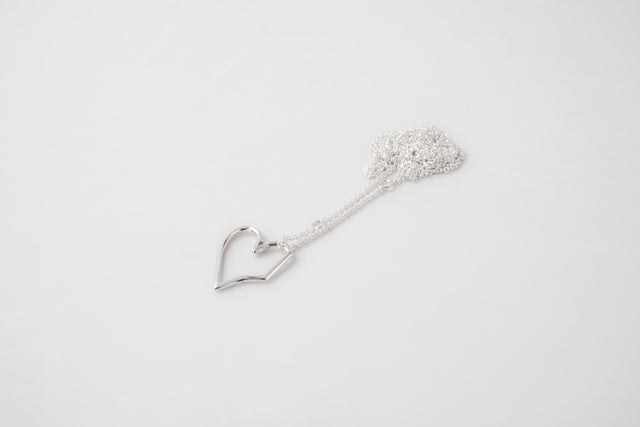
Silver 875, 925 or 999 — which grade is best for jewelry
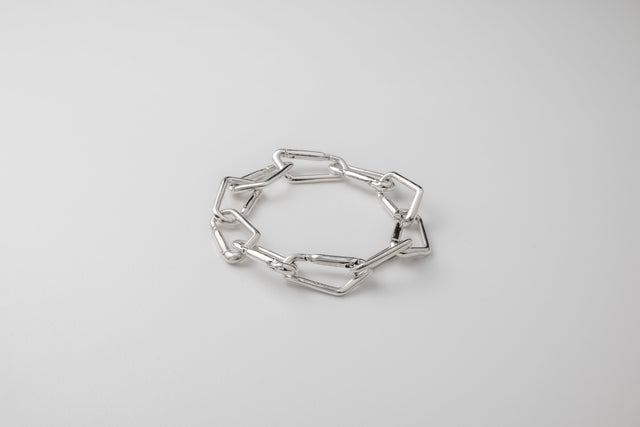
For most everyday jewelry, 925 sterling silver is a practical starting point. It contains 92.5% silver. The remaining metals, the way the metal is worked and the shape of the piece all affect how it wears. 875 contains less silver, while 999 contains more and is usually softer. To choose between them, consider what you want to wear: a ring, a chain and a decorative object place different demands on their material.
Updated October 13, 2026
In the catalogue: Signature Links V.1 Ring · Thorn Earring · Blade Medium Links V.2 Bracelet
875, 925 and 999 describe silver content: 87.5%, 92.5% and 99.9%. For everyday jewelry, begin with 925, then check the alloy, fit, construction and finish. Higher purity alone cannot establish durability, skin compatibility or the price of the finished piece.
Short answer — grade table
A silver grade, also called fineness, expresses silver content in parts per thousand. The figures in the table tell you how much silver is present. The last column takes the comparison further, to the details that matter when buying a finished piece.
| Grade | Silver content | What the number tells you | What to check |
|---|---|---|---|
| 875 | 87.5% | Real silver with a larger non-silver fraction than 925 | Actual alloy, condition and origin |
| 900 | 90% | A silver-content designation between 875 and 925 | Stated alloy and intended use |
| 925 | 92.5% | Sterling silver, widely used for jewelry | Alloy, thickness, joints and finish |
| 958 | 95.8% | The UK Britannia silver standard | Construction and the applicable national rules |
| 999 | 99.9% | Fine silver with a very small non-silver fraction | Suitability of the design for a softer material |
The remaining fraction is not identified by the grade alone. In a conventional silver-copper sterling alloy, it is copper; other formulations exist. A seller describing an object as 925 should be able to explain which material and finish you are buying. Our guide to silver marks explains how to read the figures on an object.
Composition and physical properties
Knowing the silver content is the first step. Next comes the way the metal has been worked: casting, heating it to soften it, and working it again can change its properties. The dimensions matter too. A broad ring and a thin ring made from the same alloy can respond differently to a load, so compare their thickness and shape alongside the grade.
875 — a lower silver content, not a counterfeit
875 means 87.5% silver. In a silver-copper alloy, the remaining 12.5% is copper; other recipes need their own composition details. This is genuine silver, whether the piece is old or newly made. For an older object, inspect wear, previous repairs and the clasp, and compare what you find with the seller's description.
925 — the usual starting point for everyday jewelry
925 is the sterling designation. It combines a high silver content with an alloy used for rings, chains and other jewelry. Within that grade, thin sections and joints still need to suit the loads they will carry. The detailed 925 guide explains the composition and the different ways its surface can be finished.
999 — high purity with different demands on the design
Fine silver is generally softer than sterling. It can be used in jewelry, but its form needs to accommodate that softer material. A broad ring and a delicate clasp make different demands on the metal. Ask the maker how the particular design is built and how to care for it; a fixed deformation deadline cannot be inferred from 999 alone.
Comparison on 8 parameters
1. Strength and hardness
A useful hardness comparison starts with metal in the same condition. Annealed metal has been softened by heat; cold working can harden it again. For a finished ring, also compare the width and thickness of the shank. For a bracelet, look at the links and clasp. These details show what a grade on its own leaves open.
2. Colour
Polishing, patina and plating can all change the visible colour. Compare similar finishes when looking for a difference between alloys. A dark or bright surface tells you about appearance; the material description and marks provide the information needed to check silver content.
3. Tarnish
Fine silver can tarnish too. The Canadian Conservation Institute explains how sulfur-containing gases and humidity affect the reaction. Its pace depends on the environment, so a silver grade has no universal timetable in weeks or months. Our patina guide follows the visible changes; Living Silver explains the uncoated surface used by STRUGA.
4. Skin compatibility
For skin compatibility, the remaining metals and the parts touching the skin matter as much as the silver content. DermNet identifies nickel and cobalt as common causes of jewelry allergy. Ask about the alloy, coatings and contact components. A tolerance percentage quoted for 925 cannot predict your individual response.
5. Workability
The maker chooses a material to suit the form and the way it will be made. Casting a ring, shaping a sheet and making a clasp are different tasks. Higher purity brings different properties, rather than an automatic improvement in workmanship. Look for a finished design whose construction suits the selected alloy.
6. Price
At equal total mass, 999 contains more silver than 925 or 875. That comparison describes metal content, not a retail price. Design, workmanship, components, condition and the seller's terms also enter the price of a finished object. Comparing a ring with a bullion bar solely by weight leaves most of the ring's purpose out of the calculation.
7. Repairability
A repair begins with an inspection of the piece. Soldered joints, previous repairs, stones, inserts and coatings can affect what a workshop can do. Before resizing or refinishing, ask which parts will change and whether the original surface can be restored. The grade alone cannot establish whether a particular repair is possible.
8. Application
The intended use brings these comparisons together. A ring worn daily, a decorative piece, a vintage object and bullion need different things from their material. Once you know the use, compare the alloy and construction against it. This makes the grade a useful part of the choice without turning purity into a ranking of every silver object.
Which silver grade is best for daily wear
For daily wear, start with 925 and look closely at the construction. Check how a ring fits, whether a chain's joints suit its weight, and whether a bracelet's clasp is comfortable to use. Inspect thin parts and moving connections as carefully as the broad surfaces.
Regular wear also makes care and repair worth discussing before you buy. Ask how the finish should be cleaned and which repairs are possible. Surface changes can be part of normal wear; the alloy and the construction together determine how the piece holds up.
If you prefer an 875 piece, assess its alloy and condition in the same way. If a 999 design interests you, ask how its shape accommodates the softer metal. Neither grade comes with a fixed lifespan or deformation deadline: those depend on the particular object and how it is used.
Which silver grade is best for investment
For a bar or coin, check the stated purity and fine-silver weight of the particular issue. Some products go beyond 999: the Royal Canadian Mint's Twin Maples coin, for example, is specified as 99.99% pure silver.
A ring and bullion are bought for different purposes. Purity tells you the fraction of silver, while resale price depends on more than that fraction. Higher fineness alone predicts neither resale value nor investment performance. For jewelry, return to the design and fit of the piece you want to wear.
Which silver grade is best for sensitive skin
A known allergy calls for information about the exact alloy and components, not a purity ranking. Ask whether the metal touching your skin contains your known allergen. A 925 mark does not identify every trace element, coating or clasp component. Fine silver is not a universal answer for skin compatibility either.
If jewelry has caused a persistent reaction, a dermatologist can help identify the cause. Our silver and sensitive skin guide sets out the questions to ask a maker. Look for a clear account of the metals and finishes in contact with your skin.
Which grades are legal where
Silver standards and marking requirements vary between markets. The Hallmarking Convention's UK profile lists 800, 925, 958 and 999 silver standards. The British Hallmarking Council's guidance explains the UK's separate marking requirements. A 925 mark alone cannot establish compliance with every market's rules.
875 contains genuine silver below the 925 threshold for the sterling designation. When buying across borders, check the rules that apply to the seller and destination. For Russian-market verification, the Federal Assay Chamber's FAQ explains the distinction between imported and domestically made silver and how to check product identifiers.
Which grade STRUGA uses
STRUGA uses 925 silver in its silver line. For the international market, STRUGA objects are made in Bali. The grade describes the silver, while the product description tells you about the complete object and its finish.
In the BLADE family, 925 silver is shaped into angular forms. Related objects sit within CODEX. These designs show one use of sterling; other silver grades have their own applications.
The catalogue also contains carbon and mixed-material objects. Check the description of each part: solid silver and a silver-plated insert are different materials. The information for the silver line applies to its silver components, rather than every part of every STRUGA object.
Summary — which grade to choose
For everyday jewelry: begin with 925 and compare construction, fit, alloy and finish. A higher number alone is not a better design.
For an 875 object: check its actual condition and description. It is genuine silver at that fineness; newness alone is not evidence of a counterfeit.
For fine silver: distinguish the appeal of high purity from the mechanical demands of the object. 999 is not the highest purity produced in every context.
See our sterling silver jewelry guide, comparison with other metals and silver engagement ring guide. If you have a question about the material of a specific STRUGA object, use the contact form.
About STRUGA. STRUGA is a dark silver jewelry brand founded by Dmitry Strugovshchikov and Ekaterina Strugovshchikova. Its jewelry is handcrafted by Balinese and international silversmiths. Its silver line uses 925 sterling silver. Uncoated silver develops patina through exposure to the environment and wear; deliberate patination is a separate surface treatment. Darkening is part of the design.
Frequently asked questions
Didn’t find the answer — write to us, we reply personally.
Ask a question →01Is Living Silver the same as oxidised silver?+–
No. Living Silver describes uncoated 925 silver that changes through contact with air and wear. Deliberate oxidation is a surface treatment. The same silver grade can have different finishes; care should follow the instructions for the particular surface.
02Is 875 silver the same as fake or low-grade silver?+–
No. 875 denotes 87.5% silver. It is a real silver fineness, below the 925 sterling threshold. Being newly made does not make an 875 object counterfeit. Check its actual composition and the seller’s description.
03Is dark silver a different metal from light silver?+–
No. Colour alone does not establish silver content. Polishing, patina and coatings can change the surface of an object without changing the silver grade beneath it.
04Which silver grade is most expensive?+–
At equal total mass, 999 contains more silver than 925 or 875. Retail prices also depend on the design, workmanship, components and condition. Fineness alone cannot rank the prices of finished jewelry.
05Can I wear 999 silver every day?+–
It depends on the design and use. Fine silver is generally softer than sterling, so thickness and construction matter. Ask the maker about the particular piece rather than assuming that every 999 ring has the same durability.
06Is 875 still considered silver?+–
Yes. 875 means 87.5% silver. It does not meet the 925 silver content required by the sterling designation, but that is not the same as saying it is fake silver. National marking requirements differ.
07What is the difference between 925 and 950 silver?+–
The silver content: 925 means 92.5%, while 950 means 95%. To compare finished pieces, also ask about the other metals in the alloy and how the metal has been worked. Those details are separate from fineness.
08What is better — 925 silver or white gold?+–
They are different materials, so compare the actual alloys, surface, design and price of the pieces. Neither a universal hardness ranking nor a fixed price multiple follows from the names. See our comparison with other metals.
09Which silver is better — dark or light?+–
That is a question of surface and preference. Dark and light finishes can both be made on 925 silver. Follow the care instructions for the finish; see Living Silver for the uncoated silver surface.