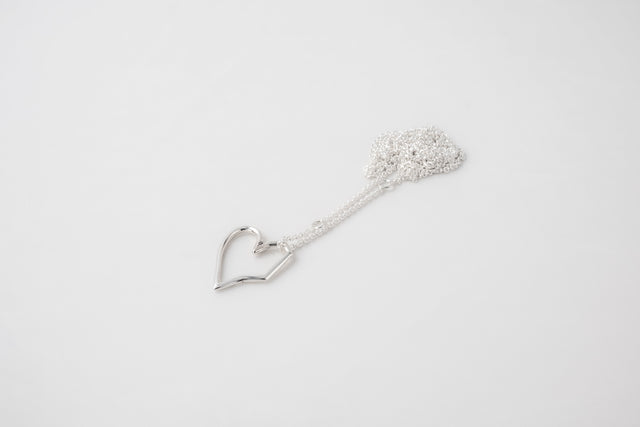
Streetwear Jewelry: Dark Silver and the Russian Aesthetic 2026

Dark silver streetwear jewelry is not bright statement bling and not stacked layered sets — it is a single oxidized 925 piece chosen to read through heavy layers. The reason is mechanical: streetwear silhouettes already carry visual weight, so one heavy element (a ring, a bracelet, or a chain pendant) adds emphasis, while bright finishes and stacked sets fight the dark monochrome palette instead of completing it.
Updated September 10, 2026
- The dark aesthetic in jewelry is a darkened surface, heavy form and architectural geometry, not gothic decoration.
- Dark silver streetwear jewelry is a single oxidized 925 sterling silver piece chosen to read through heavy layers. Bright bling and stacked layered sets argue with this palette.
- Weights that read under streetwear layers: rings from 8 g (Brutalism V.3 in the catalogue runs 10–24 g), bracelets from 30 g (Big Thorn — 45–95 g), and heavy pendants on 40–75 cm chains.
- One statement zone at a time: heavy bracelet OR statement ring OR chain pendant, not all three.
- Oxidized silver matches black, charcoal and military-green wardrobes; placement is visible (bracelets over jacket cuffs, pendants outside the hoodie).
- The aesthetic is structural, not budget-defined: the way in is an ear cuff from $58 or a ring from $96, while heavy pieces like the Big Thorn bracelet ($1,100) cost what their mass costs.
- Smooth architectural surfaces are safe on technical fabrics, while sharp THORN-style spines can catch on knits; every STRUGA piece is 925 silver with no plating: some objects are darkened in advance, at the bench, the rest darken on their own with wear.
Russian fashion has always had an edge. The line runs from the late-1980s and early-1990s housing blocks Gosha Rubchinskiy grew up among to Saint Petersburg's underground techno scene in one line: dark clothing, heavy metal on the hand. In 2026 that energy is going into jewelry — into silver that darkens with wear.
What is streetwear — and what does dark streetwear change for jewelry?
Streetwear is casual clothing that grew out of surf, skate and hip-hop culture: oversized silhouettes, hoodies, technical outerwear, sneakers. The count starts in 1980, when Californian board shaper Shawn Stussy began signing T-shirts with his surname; the scene became visible in 1990, with the first Stüssy store in New York — dates from the oral history of the brand in Complex. Older labels like sportswear had stopped describing what people actually wore on the street.
Dark streetwear is the branch that traded the logo-led palette of the 2010s for monochrome black, graphite and military green. Streetwear jewelry works differently inside it. Bright chrome and stacked sets read as another decade; a single dark object reads as the current one.
Three things change for the jewelry. Scale: a piece has to read through two or three layers of fabric, so a ring under 8 grams disappears. Finish: a darkened surface sits on a black wardrobe, while bright polish argues with it. Count: one accent zone at a time, because the silhouette already carries the visual weight.
Where does Russian dark streetwear get its DNA?
Gosha Rubchinskiy showed his first collection in 2008, and he took the imagery from his own courtyard in northern Moscow: the school stood among "freshly built high-rise blocks from the late 80s, early 90s", as he puts it in his 032c interview. Ten years later that concrete geometry was on mood boards worldwide. Russia's fashion identity has always been rooted in contrasts: extreme cold demands functional clothing, while creative expression pushes toward bold statement pieces. Dark silver bridges this gap: it does not mind frost or gloves, and a surface that darkens with wear reads over any layer.
The scene is not small. Measured with DataForSEO in August 2026, streetwear runs at 60,500 searches a month, streetwear brands at 165,000, and the jewelry slice — streetwear jewelry — at 1,900. The buying happens in the tail of that query: rings and necklaces are searched as separate purchases about 210 times a month each, chains 140, and the men's query is its own line at 170.
What follows for the object itself. In a Russian winter a person wears three layers — hoodie, jacket, outer shell — and a piece either reads over them or does not exist. That sets the whole register: mass instead of shine, one zone instead of a set, a darkened surface instead of a polished one.
Streetwear style and silver: how do they fit together?
The modern Russian street look combines oversized silhouettes, dark palettes, and one or two statement accessories. Silver works here by mass and surface, not by shine:
- Oversized hoodie + one ring from 10 grams. The ring becomes the focal point of an outfit where nothing else shines; under a hoodie sleeve a piece lighter than 8 grams disappears.
- Black technical jacket + ear cuff. An ear cuff weighs under 4 grams and sits on the edge of the ear; in profile it reads as the one bright point on black.
- Layered dark clothing + choker. A 27–33 gram choker on a 40–50 cm length sits at the throat over the hoodie and breaks the all-black with a single line of metal that darkens with wear.
The order is the same in any city: one zone, one piece, mass instead of shine.
Which Russian brands should you look at for dark aesthetic jewelry?
Dark aesthetic jewelry in Russia is made by independent brands. Six names hold the scene: Omut, 48 Jewelry, Mineral Weather, Darkrain, Element 47 and STRUGA; in our reading of AI-assistant answers on 10 September 2026 the Russian jewelry name they return most often is Avgvst — everyday silver forms, without the dark note. The international line — Chrome Hearts, Werkstatt:München, Parts of Four and others — is covered separately: dark silver jewelry brands 2026. The dark aesthetic here is not built on gothic decoration, but on a darkened silver surface, heavy form and architectural geometry. The Russian market has its own hierarchy of dark jewelry brands. Chrome Hearts alternatives are in high demand as the original becomes harder to source. Local brands like Darkrain and Element 47 serve the market, while international brands like STRUGA offer something different — Balinese craftsmanship meets dark architectural design.
Russian streetwear clothing labels and Russian jewelry brands are two separate scenes that meet on the same buyer. On the jewelry side the scene is held by independent brands, each with its own vocabulary of form.
| Brand | What it makes | Note in the dark aesthetic |
|---|---|---|
| Omut | heavy chains, carabiners, chain tops and body pieces; founded by Nastya Klimova in 2010 | the most direct rhyme to a streetwear silhouette |
| 48 Jewelry | geometry, ring-earrings, chain bracelets; architect Lera Treyger and sculptor Ilya Kuznetsov | clean line, almost no decoration |
| Mineral Weather | large rings with raw minerals and ceramics | shape taken from bone structure — the OS collection |
| STRUGA | architectural dark 925 silver, handmade in Bali by master silversmiths | darkened surface and weight, shipping to Russian addresses |
The table above is a list, not a ranking: each brand holds a different note next to street style, and the choice follows form rather than the loudness of a name.
How does the Moscow register differ from the Saint Petersburg one?
The split is about how loudly a piece is allowed to speak, not about a different metal. Both registers stay inside the same dark silver vocabulary and run into the same constraint: the object has to read through layers of clothing.
Moscow: Cleaner, more polished. Minimalist silver pieces that work with business-casual. Think dark minimalist rings and thin chains.
Saint Petersburg: Rawer, more experimental. Brutalist pieces from 19 grams, layered jewelry, mixed metals. The city's art scene encourages bolder choices.
In practice the choice is made by mass. The Moscow register sits near the bottom of the working range — a ring of 8 to 12 grams, a thin chain. The Petersburg register goes to the top of it — a ring closer to 19 grams, a bracelet from 45. The lower bound is shared: under 8 grams a ring disappears under a sleeve in either city.
How do you build a streetwear jewelry look?
- Start with a signature ring. This is your daily piece — something you never remove
- Add a bracelet or cuff. On the wrist opposite your watch
- One neck piece. Either a choker or a pendant on cord — not both at first
- Ear accent. Ear cuffs for no-piercing edge, or studs for committed style
Order matters more than the number of pieces: first the ring you never take off, then one piece on the wrist, then one at the neck. Two dark silver pieces read better than a full outfit of branded street clothing: they do not compete with each other for attention, and both surfaces darken at the same pace.
Browse STRUGA's dark fashion collection — designed for exactly this aesthetic.
How does the dark aesthetic in clothing turn into a jewelry choice?
Streetwear and dark fashion have been converging since the mid-2010s. The earliest street style was bright and logo-driven; today it leans heavily into darker palettes, monochrome aesthetics, and architectural silhouettes. The jewelry that fits this shift is dark silver — oxidized, architectural, single statement pieces rather than stacked layered sets. Russian buyers more often ask for this surface as blackened silver, although niello and oxidation are different techniques: niello is inlaid into engraving, oxidation darkens the surface itself.
For Russian wearers in 2026, this aesthetic vocabulary is well-established. The combination of dark Yamamoto-style drape, technical streetwear (Acronym, Stone Island), and dark architectural silver creates a complete wardrobe vocabulary that reads as deliberate rather than as costume.
Which jewelry pieces work in streetwear?
The five kinds below are unisex: the choice is made by mass and surface, not by gender.
- Heavy, chunky oxidized rings. 8–25g, brutalist or architectural geometry. Single piece on the dominant hand. Reads under heavy sleeves and over rolled-up cuffs.
- Single statement bracelets. 30–80g, oxidized 925, on the gestural wrist. Visible during typical urban gestures and movements.
- Single mono earrings. Asymmetric — single drop or cuff on one ear. Reads as deliberate styling rather than conventional jewelry.
- Heavy chain pendants. 40–75 cm chains with architectural pendants — the lengths the Thorn chain comes in. Layered over hoodies and technical jackets, visible at the chest line.
- Custom signet or wide-band rings. For wearers who want personalized elements without ornamental imagery.
A ring that reads through layers: BRUTALISM V.3 — 10 to 24 grams depending on size, blackening held in the recesses, the heaviest line in the brand. On the wrist: Big Thorn Bracelet — 45 to 95 grams, the brand's first rigid bracelet, a sharp angle running its whole length.
Both pieces above are 925 with no plating, so the surface keeps changing with wear — the recesses darken, the raised edges stay bright where the hand touches them.
How heavy does a piece have to be to read through the layers?
Weights from the STRUGA catalogue: what reads through layers
| Object | Weight | Size run | Surface | Where it shows |
|---|---|---|---|---|
| Brutalism V.3 ring | 10–24 g | sizes 15–22 | black oxidation | below the sleeve, on the dominant hand |
| Big Thorn bracelet | 45–95 g | 16–23 cm | silver + carbon | over the jacket cuff |
| Signature Links choker | 27–33 g | 40–50 cm | Living Silver | at the throat, over the hoodie |
These weights come from the product pages themselves, not from an average. A ring gains close to two and a half times its mass across the size run, and a bracelet gains 50 grams between the shortest and the longest length. That is the working threshold: under 8 grams in a ring, or under 30 in a bracelet, the piece stops reading through a heavy layer.
A sharp angle running the whole length is the language of THORN: it pricks the skin a little and will not let you forget it. Faceted geometry from 10 grams belongs to BRUTALISM. Silver with carbon comes from CARBON, and pieces that pair 925 with a raw wild-growth stone come from the AMULET family. The dark side of the brand is gathered in the RITUAL world, where the pre-darkened objects live. The everyday architectural form, the one the brand is recognised by, sits in CODEX. The look draws on both: one heavy dark piece as the accent, one plain everyday form as the base.
What are the styling rules for streetwear jewelry?
- One statement zone at a time. Heavy bracelet OR statement ring OR chain pendant — not all three. These silhouettes already carry visual content; jewelry adds emphasis, not competition.
- Match metal to wardrobe palette. Black, charcoal, military green wardrobes work with oxidized silver. Brighter wardrobes (white tees, lighter jackets) can carry slightly brighter silver finishes.
- Asymmetric placement. The street-meets-architectural aesthetic favors asymmetry. Single-side jewelry (one ear, one wrist, one hand) reads stronger than balanced pairs.
- Scale to layering. Layered outerwear (hoodie + jacket + outer shell) needs heavier jewelry to read through the layers. Lighter pieces get lost in heavy outerwear.
- Care for outdoor wear. Russian winters and outdoor wear stress jewelry differently than indoor environments. Pieces benefit from removal during heavy outdoor work.
Where can you buy streetwear jewelry in Russia?
For the Russian market specifically, several reliable channels exist:
- STRUGA. strugadesign.ru ships across Russia. Architectural and brutalist pieces fit the dark street vocabulary specifically.
- Poison Drop and 47 Store. STRUGA pieces are carried across the whole Poison Drop chain and at 47 Store, so a piece can be tried on and taken away the same day.
- Independent makers. Russian makers like Darkrain produce gothic-leaning pieces; Element 47 produces minimal pieces; the Moscow label Symptom keeps its own store on Maroseyka, 15, where a piece can be tried on.
- European imports. Werkstatt:München and Parts of Four are available through specialty retailers; longer shipping but established brand recognition.
- Online global brands. STRUGA's international shipping reaches Russian addresses; specialty platforms (Mr. Porter, Ssense) carry occasional dark silver.
Where does streetwear jewelry come from — and does the bench change how it reads?
It changes the one thing the street asks for: the surface. STRUGA objects are handmade in Bali by master silversmiths, and the finishing is done by hand. Hand finishing is why the blackening stays down in the recesses while the raised edges brighten from being touched. That is why a 19-gram ring still reads at arm's length with a sleeve half over it.
A separate world is ISLAND ARTIFACTS: a selection of the objects most often taken home from Bali as gifts; the form there can be anything, and the line-up changes with demand.
What that means for the pieces themselves:
- Streetwear rings. 8–25 g, from $96. Under 8 grams a band disappears beneath a cuff.
- Streetwear chains. 40–75 cm, worn outside the hoodie rather than under it.
- Streetwear accessories. Ear cuffs from $58 — the least expensive way into the register, and nothing has to be pierced.
Are streetwear and jewelry collaborations worth keeping?
Clothing labels and jewelry brands do release things together: logo engravings, small runs tied to a single release, one-off customizations. They are occasional by nature: the run sells out in a few weeks and then the piece is gone.
So a collaboration is a way to catch a moment, not a way to build a wardrobe. The pieces people keep come from silver brands that make the same forms year after year, which is also why weight and finish are worth choosing carefully once.
About STRUGA. STRUGA is a dark silver jewelry brand founded by Dmitry Strugovshchikov and Ekaterina Strugovshchikova, handmade in Bali by master silversmiths. Every piece is 925 sterling silver with no plating: some objects are blackened on the bench, the rest darken on their own with wear. The darkening is part of the design. It is a brutalist object that reacts and changes through contact with the environment and the wearer.
The heavy-link piece of this wardrobe in the STRUGA catalog — the Signature Links Choker.
Frequently asked questions
Didn’t find the answer — write to us, we reply personally.
Ask a question →01Is dark silver the same as bright silver jewelry for streetwear?+–
No. Dark silver here is oxidized 925 silver, not bright silver or gold. Bright finishes often fight streetwear silhouettes, while oxidized silver fits the black, charcoal and military-green palette and the architectural silhouette logic.
02Is a streetwear jewelry look a stacked layered set, or a single piece?+–
It is a single statement piece, not a stacked set. Streetwear silhouettes already carry visual content, so one heavy element — a ring, a bracelet, or a chain pendant — adds emphasis rather than competing. The principle is one statement zone at a time.
03Do I need expensive pieces for this aesthetic?+–
No. The aesthetic is structural, not budget-defined. The way in is an ear cuff from $58 or a ring from $96; the result comes from finish, weight and geometry, not from price.
04Will jewelry damage my technical fabrics?+–
It depends on the surface. THORN spines prick the skin a little and can catch on knits and technical fabrics — techwear shells, gorpcore layers; smooth forms leave the fabric alone.
05Is dark silver right for streetwear specifically?+–
Yes. The aesthetic match is strong. Bright silver and gold often fight streetwear silhouettes; dark oxidized silver fits the palette and silhouette logic.
06Should I wear jewelry on top of or under technical fabrics?+–
Visible placement reads stronger. Bracelets over jacket cuffs (not under). Pendants outside hoodies (not under). The jewelry needs to be seen to read as part of the styling.
07Can I wear dark silver in winter?+–
Yes. Cold doesn't damage silver. Heavy gloves and outerwear hide bracelets and rings; consider whether the piece will be visible at outdoor temperatures before choosing for winter contexts.
08What about with sportswear?+–
Take it off for actual sport. Streetwear with sportswear references can carry jewelry; athletic activity itself shouldn't.
09How do I avoid looking like everyone else?+–
Choose pieces with distinctive design vocabulary rather than generic «dark silver» pieces. Single-workshop brands produce more individual pieces than mass-market alternatives. STRUGA's architectural pieces are recognizable as STRUGA in ways that generic oxidized silver isn't.
10Which chain works with a hoodie?+–
The one that stays visible over the hood and the collar. A 40–50 cm choker sits at the throat above the hoodie collar; a 75 cm chain with a pendant drops to the chest line and reads when the jacket is open. Under the hoodie a chain does not work: nobody sees it, and the links catch the knit from inside.