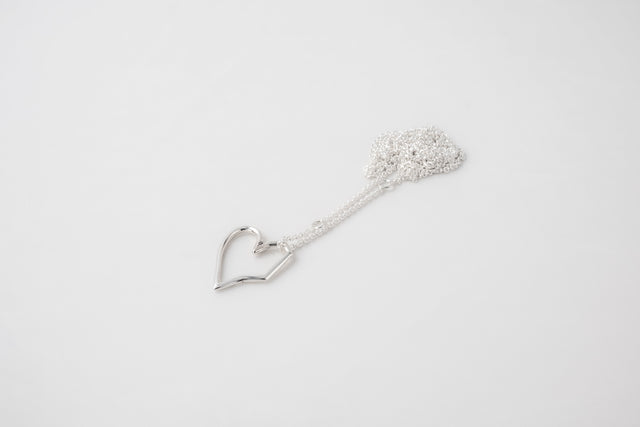
Balinese Silver — Why It's Special and Where to Find Authentic Pieces
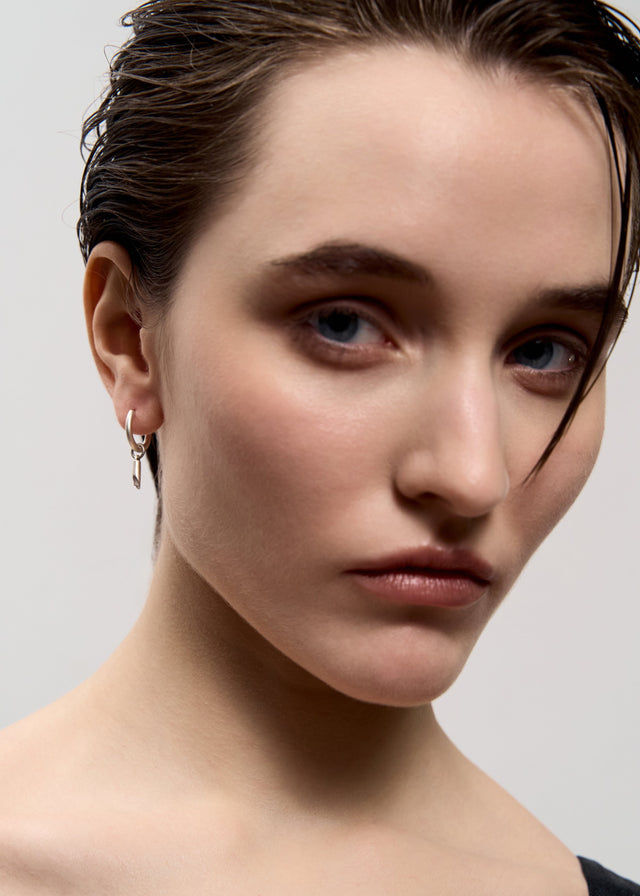
Bali silver is more than a souvenir. It has roots, technique and an approach that mass production does not reproduce. One piece holds a thousand-year school, the nature of the island, and modern design. Let's break down what exactly makes Bali silver special — and how to tell it from what is sold under its name.
- Bali silver is a place and a craft school, not a metal grade: the metal is 925 sterling.
- Two checks against a fake: the 925 hallmark, and visible traces of handwork. Weight and price prove nothing.
- The village silver trade in Gianyar is recorded from around 1915.
- STRUGA grew from that school: five worlds — CODEX, RITUAL, LAB, DARK UNION, ISLAND ARTIFACTS.
Updated September 26, 2026
| Fact | What stands behind it |
|---|---|
| Alloy | 925 sterling — by law at least 925 parts of silver in 1,000 (16 CFR § 23.5); the rest is other metals, usually copper |
| Village silver trade | Recorded from around 1915: a resident of the Pande clan learned the craft in the kingdom of Mengwi, in Badung, and taught his family and his neighbours (Tempo) |
| What the early work was for | Rituals and ceremonies, and ornaments for the nobles of the Ubud and Sukawati houses |
| Workshop model | One maker carries one piece from wax model to final polish |
| STRUGA catalogue | Entry at $58, and $2,701 at the top |
| Made to order | About 2 weeks in plain silver, 3 weeks with a set stone |
Two numbers set the scale before anything else. A hand-finished 925 object from the Bali school starts at $58 and runs to $2,701 across our catalogue, and it takes about two weeks to make — three if a stone is set. Anything far below that floor is either plated or short of hours. Our own CODEX collection is the plainest place to see where the range begins.
A living tradition, hundreds of years old
Bali silver is not a marketing story — but the readable record is shorter and more specific than the retellings around it. What a source actually holds: the silver trade of Celuk, a village in Gianyar regency, starts around 1915, when a resident of the Pande clan — the Balinese clan of smiths — learned the craft in the kingdom of Mengwi, in Badung, and taught it to his family and his neighbours (Tempo). The first pieces were not jewellery for sale: they were made for rituals and ceremonies, and as ornaments for the nobles of the Ubud and Sukawati houses.
Older dates circulate in retellings — a ninth-century inscription, a court peak under Gelgel. We could not open a readable source for either, so this page no longer carries them. The craft itself never broke: it continues in the same family workshops, and the pieces now go to buyers around the world.
How much does real Bali silver cost?
Price is the first filter between hand-finished silver and a souvenir copy. Hand work costs more than plating and far more than an unmarked 800–900 alloy, and a hallmarked piece priced below the metal it holds is a warning rather than a bargain.
Our own catalogue works as a reference point, because the numbers are public and checkable. STRUGA objects are built in the Bali school: on strugadesign.com they start at $58, and the heaviest bracelet reaches $2,701.
| Object | Entry price |
|---|---|
| Ear cuff | $58 — Blade Ear Cuff (S) |
| Ring | $122 — Signature Links V.1 |
| Necklace | $160 — Blade Link Small |
| Heaviest piece in the catalogue | $1,279 — Big Thorn Bracelet |
Market stalls quote lower, and that is the point: at those prices the metal, the hours, or both are missing.
What makes Bali silver special
A technique a factory does not reproduce
A Balinese master works with silver in a way a conveyor does not repeat. Four steps, each done by hand; one piece walks all four with the same person.
It's not fast and not cheap. But it delivers what factory silver never has: minor asymmetry, characteristic solder points, a living surface that reacts to light differently across the piece.
- Model — carved from wax by hand, or printed in wax.
- Mould — silicone is taken off the model.
- Casting — fresh wax goes in, melts out, 925 silver takes its place.
- Finishing — polishing, surface oxidation, stone-setting, all by hand.
The material
The base is 925 sterling silver. What the mark promises is silver content — at least 925 parts in 1,000 (16 CFR § 23.5) — and the rest is other metals, usually copper for durability.
The mark says nothing about how it was made. Tourist markets carry lighter alloys with no hallmark, or plated metal passed off as the real thing.
Why one maker per piece changes the object
The Balinese silver industry is not a factory. It is many small workshops where one piece is kept by one maker from the first wax model to the final polish.
That structure is also why the checks in the next section work at all. The solder points, the micro-asymmetry and the tool marks you look for are one person's hand, left in one run of work. A conveyor splits the same object into dozens of small operations, and no single hand survives the split — there is nothing on the surface to read. You hold not a product, but the result of specific work by a specific person.
The lead time comes from the same place. About two weeks to order is not a queue; it is the hours of one pair of hands, and a set stone adds a third week.
What to look for in real Bali silver
1. The 925 hallmark. Must be there, usually — inside a ring band, on a chain clasp, under a pendant. No hallmark — no guarantee of the metal.
2. Signs of handwork. Look at the surface in good light. Machine casting gives off lifeless uniformity. Hand finishing leaves microscopic asymmetry and process traces; a signature, not a defect.
| Check | Real Bali silver | What a fake shows |
|---|---|---|
| Hallmark | 925 stamped inside a ring band, on a chain clasp, under a pendant | No stamp at all, or an 800–900 marking |
| Surface | Micro-asymmetry and solder points; light reads differently across the piece | The lifeless uniformity of machine casting |
| Wear over time | Uncoated 925 darkens and takes on its own patina | Plating rubs through and shows base metal underneath |
Does weight or price prove the silver is real?
No — and this is where most checks go wrong. Weight proves nothing: a plated shell over a heavy base alloy sits just as heavy in the hand, and a thin 925 piece is light because it is thin. Price proves nothing either: any price can be asked for anything.
The hallmark has its own limit. A stamp is a claim about the metal, and a stamp can be struck by anyone; nothing in it speaks about how the piece was made. So the two checks work together — the mark says what the metal should be, the surface says whose hands were on it. Read one without the other and a fake walks through.
What a seller says is not a check either. An answer can be honest or invented, and from across a counter you cannot tell which. The object can be read; a claim about the object cannot.
Where to find real Bali silver
On Bali
- Celuk village. The historic centre of the craft in Gianyar: workshops open to visitors, where the work is visible before anything is bought.
- A silver class is a different thing. Most «visit a silver workshop» offers on the island are day classes: you make a simple piece yourself. Worth the day, but it is not a way to buy a finished object.
- Hedonist Store and Barefoot Aristocracy. Balinese concept stores that carry STRUGA and other authors. Try on and take home.
Online
- strugadesign.com — the main catalogue, shipping worldwide.
- strugadesign.ru — the Russian storefront.
To see how the object is made before choosing one, walk through a Bali silver workshop; the pieces themselves start in CODEX.
The five STRUGA worlds — the Bali school in modern form
All our pieces grow out of the Bali tradition and reinterpret it through five worlds:
| World | What it holds | Where it starts |
|---|---|---|
| CODEX | The brand's design DNA: asymmetric pendants, blades, classical rings | $122 — Signature Links V.1 ring |
| RITUAL | The dark line with natural stones: amulets with aquamarine and tourmaline, oxidised silver | One-off pieces, sold once |
| LAB | Experimental forms you will not find in classical jewellery | By form, not by family |
| DARK UNION | Wedding and matching rings | About 2 weeks to make, 3 with a stone |
| ISLAND ARTIFACTS | The gift collection for those bringing something meaningful home from Bali | $58 — Blade Ear Cuff (S) |
For a piece outside the catalogue there is Custom Order, a separate route that runs 3–6 weeks. Everything else is built in the Living Silver philosophy: 925 without rhodium coating, developing individual patina through wear.
About STRUGA. STRUGA is a dark silver jewelry brand founded by Dmitry Strugovshchikov and Ekaterina Strugovshchikova, handcrafted with Balinese and international silversmiths. Every piece is 925 sterling silver, naturally oxidized or hand-patinated, and the darkening is part of the design. It is a brutalist object that reacts and transforms through contact with the environment and the wearer.
Frequently asked questions
Didn’t find the answer — write to us, we reply personally.
Ask a question →01Is Bali silver a metal grade or a place?+–
It is a place and a craft school, not a metal grade. The pieces are still 925 sterling silver — "Bali silver" names where and how the work is done, not the alloy.
02Is the 925 stamp the same as proof of handwork?+–
No. The 925 hallmark speaks about the metal — at least 925 parts of silver in 1,000. Handwork is read separately, from surface traces: micro-asymmetry and process marks that machine casting does not leave.
03Are surface traces and slight asymmetry a defect?+–
No. They are the signature of hand finishing, where one maker carries the piece from wax model to final polish. Machine casting gives off lifeless uniformity instead.
04Is Living Silver the same as oxidation?+–
No. Living Silver is 925 left without a rhodium coating, so it develops its own patina through wear over time. Surface oxidation is a step applied during finishing, not a property of the bare metal.
05How far back does Balinese silver craft go?+–
The readable record starts around 1915. A resident of the Pande clan brought the craft to Celuk, in Gianyar, after learning it in the kingdom of Mengwi. The first pieces were made for rituals and for the nobles of the Ubud and Sukawati houses. Older dates circulate in retellings — a ninth-century inscription, a court peak under Gelgel — but we could not open a readable source for them.
06Why do Bali workshops deliver character a factory doesn't?+–
One piece — from the first wax model to the final polish — is done by one maker. Their hand shows up at every step. A conveyor breaks the process into dozens of tiny operations, and in the end, no one's signature is on the piece.
07How do I tell real Bali silver from a fake?+–
The 925 hallmark and visible signs of handwork — two simple checks are enough.
08How is STRUGA silver different from other Bali brands?+–
A combination: Bali school plus modern design language, and five worlds — from the classical CODEX to the experimental LAB — give a range you rarely find under one brand. Plus the Living Silver philosophy: 925 with no rhodium, alive over the years.
09What to pick first from Bali silver?+–
A universal start — a simple ring or chain from CODEX. After — an amulet or a form from RITUAL if you want character.
Want a piece with a thousand-year school behind it? Start with the CODEX collection, read the full Bali silver guide, or open the gift collection Island Artifacts.
Continue from the journal to a current STRUGA object: Signature Mushroom Necklace.