Handmade Silver Jewelry in Bali — Authors and Craft
On Bali, silver can be an architectural block, a fine outline or a carved ornament. Parts of Four begins with material, STRUGA with planes and links, Monad with the drawn line, Padmala with an architect’s structure and Reva with the idea behind a collection. We look at those differences through actual pieces, not a ranking.
Updated November 10, 2026
How to read a jewelry scene through objects
A shop address does not explain a ring. Nor does a single word “brand” tell you who drew it, who made it or who will answer for the order. A designer gives an object its form. A workshop teaches and preserves technique. A manufacturer makes a process repeatable. A shop lets you compare and buy. These activities can meet in one company, but they are not the same.
| Perspective | What to look at | Examples |
|---|---|---|
| Author and object | Designer, formal language and a specific object | Parts of Four, STRUGA, Monad, Padmala, Reva and adjacent designers |
| Craft and making | Technique, process, material and scale | Sunaka, Prapen, UC Silver and Kapit Mas; John Hardy as historical scale and Samuel B. as a cross-regional production model |
| Places and networks | Display, memory, retail and choice of maker | Runa, Jia, Canggu stores, NOVICA, Kapal-Laut and cultural platforms |
Look first at the object, then at the people and places around it. The five author-led examples below are followed by the craft schools, factories, retailers and cultural institutions that make the work visible. They belong to different parts of the map, not to one invented school.
Four practical questions keep the distinctions clear: who designed the piece, who made it, where it is sold and who takes responsibility for the order. Design in Bali, manufacture in Bali and a shop in Bali are three separate statements. None of them proves the alloy.
Within STRUGA’s CODEX collection, four objects offer different answers: Brutalism V.3 works with volume, Thorn with direction and angle, Signature Links V.1 with the rhythm of geometric links, and Signature Asymmetric L with an open asymmetric link shaped as an ear cuff. They are examples, not four winners.
Parts of Four: Sistema and the life of a material
Evan Sugerman founded Parts of Four in 2011. The official history describes sculptural processes, industrial forms and mixed materials, rather than a house built around a single motif. That is easiest to understand through Sistema.
The official Sistema catalogue includes a 4 mm version with blue diamond slabs and a 17 mm Deco-Slits version described as Layered. These are materially different objects, not variations of the vague label “industrial style”: the small version brings the stone to the foreground, while the larger one makes the layered construction explicit. The catalogue entry is an example to examine, not a promise of current stock.
Material is the beginning of the design conversation here. Metal, stone and industrial details meet as substance and structure. In an interview with Vogue Hommes published on 30 June 2020, Sugerman also speaks about jewelry as an object of personal significance. That helps explain why a Sistema ring can be read both as a constructed object and as something worn for its own history.
The STRUGA monograph on Parts of Four follows Sugerman’s biography and method in greater depth. What it cannot establish by itself is the origin of every ring: the place of design, the stages of manufacture and the point of sale must still be checked for the particular object.
STRUGA: planes, links and the surface of wear
STRUGA is both the publisher and one of the authors discussed here. Dmitry and Ekaterina Strugovshchikov founded the brand, and Dmitry is its designer. Bali is where its visual language and craft context developed; the separate brand history documents that path.
The clearest way to read the work is through its objects. Brutalism V.3 is about mass and the edge. Thorn turns direction and angle into a different outline. Signature Links V.1 uses a sequence of geometric links; the selected 16 mm inside-diameter variant weighs 2.7 g. Signature Asymmetric L opens the link and wears it on the ear, at 2.4 g in the selected version. These are different constructions, not four names for one aesthetic.
Living Silver is STRUGA’s term for 925 silver without rhodium plating. Friction lightens raised areas while recesses darken, so the surface records contact with its owner. Deliberate oxidation is different: the dark surface is established during finishing.
CODEX brings together everyday architectural forms, RITUAL objects with personal symbolic weight and LAB experiments. Brutalism explores mass and the edge, THORN direction and angle, and SIGNATURE ASYMMETRIC the open link. The pieces in the international catalogue are made in Bali; that statement belongs to this storefront and to the object being ordered. For the next step, compare rings by form, size and weight or ear cuffs by construction and fit.
Monad: a line, a stone and a heart
Monad was founded in 2013 by designer and artist Lili Rashidova. The official Monad page describes architectural forms, clean lines, natural stones and pearls, Art Deco and minimalist references, and handmade production in Bali.
TESS makes that language tangible. The official product page describes a bold heart-shaped ring in 925 sterling silver, carefully crafted by hand. The heart is not a secondary decorative detail: it is the object’s recognisable form. SAVANNA appears in the official collection list as another named example. Neither entry is a promise of current availability.
Monad’s architectural quality therefore differs from that of STRUGA or Parts of Four. A clearly drawn silhouette can share the foreground with a stone or a pearl, rather than relying only on a plane, a link or a heavy volume. When choosing a piece, the useful next questions are the name of the stone, the dimensions, the weight, the fit and the ordering terms.
Padmala: architecture made by named hands
Padmala Atelier brings an architect’s way of thinking into a small workshop. Ariana is an Argentine architect; the independent Punch profile updated in August 2024 names her as the designer and Joko and Darmo as the Balinese makers who produce her designs to order in silver and brass.
The relationship between those people is the important detail. A form begins with an architect, but it becomes an object through named makers and a particular commission. The Padmala presentation at Hedonist describes sculptural architectural structures and private consultations with Ariana. That is a retail presentation, not independent confirmation of every production stage.
There are also named objects to examine. A 2022 profile in The Yak lists the Constellation earrings in large silver and the Elektra earrings in medium silver. These dated examples show the kind of statement pieces Ariana’s workshop was making; they are not presented as the current assortment.
Padmala’s work belongs here because authorship and making can be traced separately instead of being hidden behind a shop label. The available evidence has limits: The Punch profile is from 2024 and the official history page could not be read in full for this chapter. The entry therefore explains authorship and the making relationship rather than promising a current assortment.
Reva: a different idea for every collection
Reva Jewellery began in Bali in 1997, and founder Laurent Leger designs every collection. The official Reva answers describe design and handcraft in the brand’s own Bali workshop, a Seminyak boutique and private commissions.
The collections do not have to look like variations of one permanent signature. Residence explores silver through texture and surface, taking irregular patterns found in stone as a starting point. Mokume Gane turns to a Japanese technique in which layers of silver, copper and brass are bonded, forged and worked. The official current site also presents individual objects such as the Neo Bracelet and Candi Ring. The right comparison is therefore the composition and technique of a particular series, not a generic idea of “Balinese style”.
Reva also gives the scene a longer memory: author-led work did not begin with today’s social platforms or one generation of Canggu shops. The official page establishes private commissions as a format, but current terms, opening hours and prices must be confirmed directly with the brand.
Other authors and the scale of history
The author-led core is not a closed circle. Nearby studios work with other materials, colours and cultural references. Their differences are more useful than an artificial “dark” or “architectural” label.
| Name | What distinguishes it | What to compare separately |
|---|---|---|
| JewelryLab | Organic and abstract forms and its own models | 925 silver and brass must be distinguished item by item |
| Gardens of the Sun | An author-led studio, natural gemstones and custom design | Not automatically part of the architectural core |
| Ohana | Contemporary minimalism and vivid gemstones | A different colour and decorative register |
| Bits of Bali | Designer Sri Utami and simple, versatile forms | A connection to place does not make one formal school |
| Baruna Silver | Marine and diving subjects made with Balinese silversmiths | A thematic niche rather than a direct formal analogue |
John Hardy stands at a different historical and institutional scale. The brand history and the official chronology show the workshop tradition, chain weaving and international retail that distinguish it from a small independent studio. Samuel B. represents another production model: a designer-founded collection involving artisans in Bali and Thailand, sterling silver, gemstones and gold details. Compare these structures and particular collections rather than assigning ranks.
For an actual visit, use the official Visit Us in Bali page, not the history page. The Kapal Bamboo Boutique and Workshop is listed as open daily from 10:00 to 18:00. The workshop tour and jewelry masterclass operate Monday to Friday: the tour runs from 10:00 to 17:00 and requires a reservation at least one day in advance, while the masterclass runs from 10:00 to 14:00 and requires a reservation two days in advance. On that page, choose the visit format and check whether your date is available. The published conditions do not guarantee a place until the venue confirms it.
Craft schools and the work of production
Author-led form rests on craft knowledge. Sunaka traces its business to Ketut Sunaka Silversmith in 1979; the family enterprise took its current name in 2014. The official Sunaka history describes Balinese and Indonesian motifs and the Bun Jawan technique using wire and small silver balls. Here the emphasis is the transmission of technique into contemporary collections.
Prapen in Celuk is a family business connected with the Pande Mas metalsmithing clan and spanning more than four generations. Its workshop, exhibition space, replica forge and Asian art library make technique visible and explain it. This is a place to understand material memory, not a single design signature.
UC Silver & Gold in Batubulan combines its own collections, custom work, a gallery and wholesale activity. Kapit Mas is a specialist manufacturer established in Denpasar in 1996, with design support, casting, finishing, testing and photography within one production system.
These four entries perform different kinds of work. Kapit Mas appears as production infrastructure, not as a manufacturer for STRUGA or any other brand named here. A casting service in a list does not tell you which stages of a particular object were completed by hand.
Museums, shops and the cultural setting
Culture also needs places where work can be seen, compared and remembered. Runa preserves that memory. The official Runa history connects Runi Palar’s nature-inspired work and limited editions with the Ubud museum and a family archive. An Indonesia Design interview dates the museum’s opening to 29 December 2001 and CV Runa’s history to 1976. Current visiting arrangements must be confirmed separately.
Jia shows the wider design environment. According to Wallpaper’s report on the 2025 event, Jia Curated grew out of Jia Collective and launched in 2022. That event comprised about 70 displays and more than 200 participating brands, linked by the communal principle of Gotong Royong. These figures describe a past event, not a 2026 programme or a single jewelry school.
Shops make comparison possible. Barefoot Aristocracy and Hedonist in Canggu are multi-brand spaces where jewelry can be discovered alongside fashion and design objects. Our store notes document STRUGA’s inclusion in their selections; ask the shop about its current selection and the particular model, size and stock before travelling for a fitting.
Kapal-Laut belongs to the retail offer: polished silver, pearls, crystals and ear cuffs. Its general catalogue does not establish the manufacture of an individual piece. NOVICA is an international marketplace for named artisans, with a regional Bali and Java catalogue, not one Balinese brand or production school. Read the artisan’s biography and the item description.
The surrounding culture is broader than jewelry. Potato Head maintains a music programme in Seminyak; Bali Tattoo Expo documents the body-art scene and records the dates of its sixth edition in 2024. Neither proves a jewelry-making connection or an aesthetic partnership. They show that objects are made and worn alongside music, body art, clothing and the island’s wider design life.
Five objects: a comparison of construction
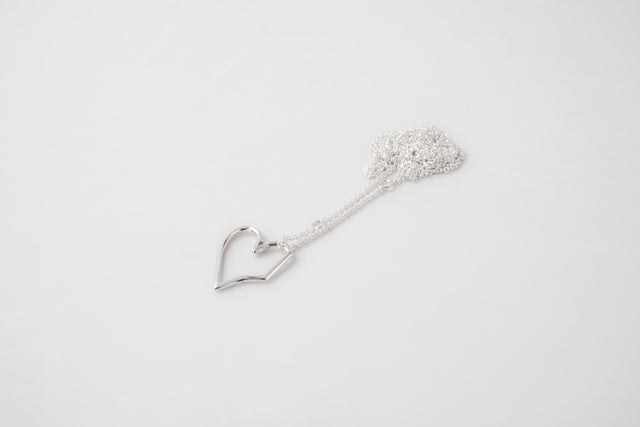
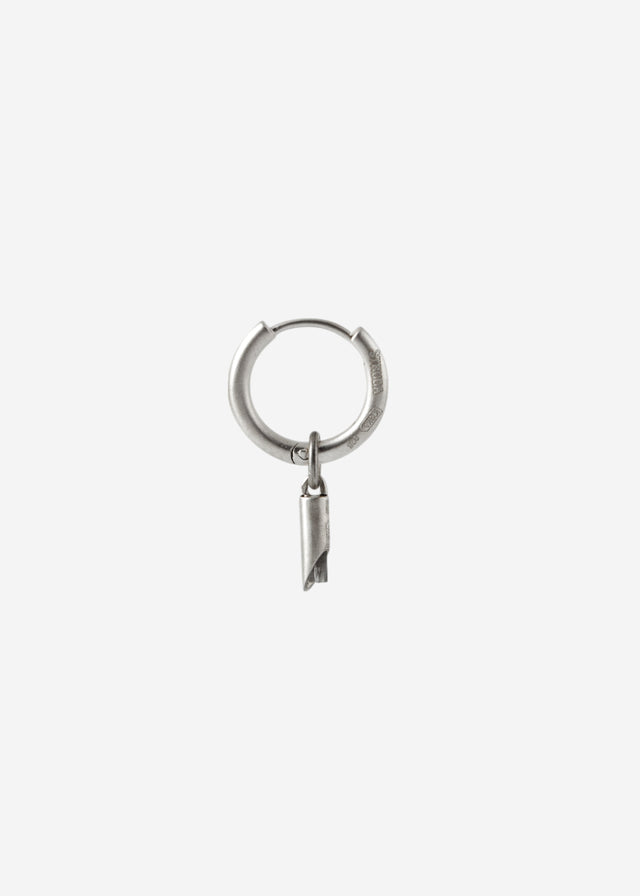
The following five pieces compare construction, not the author-led core as a whole. JewelryLab’s uneven UJA outline is set against the geometric rhythm of Signature Links V.1; AKAR adds three inserts called stones in the product description, without identifying their type or composition; Kapal-Laut’s small hoop is set against the open asymmetric link from STRUGA. This selection shows how two rings or two ear cuffs can solve different problems even when the metal is the same.


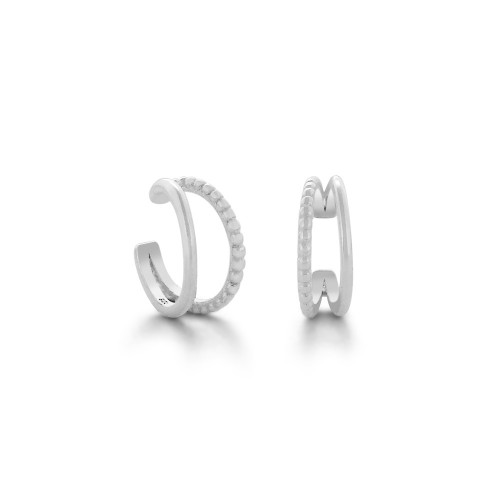

Catalog photographs: JewelryLab, STRUGA and Kapal-Laut. Open each piece for its selected material, size and terms.
| Piece | Material and form | Size and weight | Product page and ordering route |
|---|---|---|---|
| JewelryLab MEDIUM UJA | Selected 925-silver version; uneven abstract form | US sizes; the description gives no weight | Official product page → Buy On Etsy button |
| JewelryLab AKAR | Selected 925-silver version; a small ring with three inserts the product description calls stones | US sizes; stone type and weight not stated | Official product page → seller's Etsy listing |
| Signature Links V.1 Ring | STRUGA | 925 silver, Living Silver; geometric links | Selected inside diameter 16 mm, SKU R-0485-D16; 2.7 g | International product page with the selected size → order |
| Kapal-Laut Twin Mini Hoop Silver Ear Cuff | Twin Mini Hoop design in polished sterling silver | Model PSCF20; diameter 12 mm, width 4 mm; weight not stated | Official product page → seller's terms |
| Signature Asymmetric Ear Cuff L | STRUGA | 925 silver without rhodium plating; an open asymmetric link | SKU K-0493-L; 2.4 g; one cuff | International product page → making and ordering terms |
The comparison is deliberately not presented as five representatives of Parts of Four, STRUGA, Monad, Padmala and Reva. Their own examples are examined in the preceding sections. Here, two JewelryLab pieces and one Kapal-Laut cuff widen the contrast, while two STRUGA objects let us compare a repeated link and an open one at object level.
Rings: an uneven outline, geometric links or three inserts
MEDIUM UJA offers an uneven abstract outline rather than strict geometry. The comparison selects its 925-silver version: JewelryLab also offers the design in brass, so the shared design name does not establish a shared metal. US sizes should be converted into actual measurements rather than treated as interchangeable numbers.
Signature Links V.1 shifts attention from surface texture to the rhythm of the links. The selected inside diameter is 16 mm and the selected variant weighs 2.7 g, SKU R-0485-D16. The ring size guide explains how to compare that diameter with a ring that already fits.
AKAR adds three inserts. The official description calls them stones but does not identify their type or composition. Before ordering, ask which stones are fitted and what care they need; a rough texture in the surrounding metal does not describe the inserts’ cut or treatment.
Ear cuffs: a small hoop or an open link
The official Kapal-Laut description lists the Twin Mini Hoop at 12 mm in diameter and 4 mm wide, model PSCF20. These are dimensions of the object, not of the ear. Signature Asymmetric L instead leaves a gap between the ends of a geometric link, weighs 2.4 g, SKU K-0493-L, and is sold as one cuff. L is a model designation, not a promise of the same fit on every ear.
Compare the side views: where the metal touches the ear, how far it projects, where the gap sits and how the piece stays in place. Then use the ear cuff fit guide. The MEDIUM UJA product details were checked against a record dated 28 October 2026; the official AKAR record and the STRUGA and Kapal-Laut specifications were reread on 10 November. Manufacturing origin and ordering terms remain market-specific, and the seller should confirm the final price, selected size, quantity, lead time and delivery.
925 silver, casting and handwork
Geography does not change the alloy, but applicable standards and the marking of an individual item must be checked separately. In US usage, sterling silver generally denotes an alloy containing 92.5% silver, with the remaining 7.5% made up of other metals. The US Federal Trade Commission explains the material in its consumer guide to silver materials. Indonesia’s BSN lists SNI 319:2023, Barang-barang perak in its standards catalogue. A standards entry and an item’s fineness mark are different kinds of evidence. Our separate guide to 925 stamps explains how to read the mark.
Fineness alone does not answer who designed or made the piece, which stages were completed by hand or where it was produced. A silver colour, silver plating and solid 925 silver are not interchangeable descriptions. Material, process and place of manufacture need separate statements.
Casting can be part of handmade work. A wax model can become a silver casting and receive finishing by hand, and a repeated silhouette can still require manual work. The useful question is therefore not “cast or handmade?”, but “which stages of this piece were done by hand?”. Our guide to handmade and mass-produced jewelry examines that distinction.
Compare the answer with the object: the inner surface, edges and setting of a ring, the movement of links and clasp on a chain, or the gap and contact points of an ear cuff. Deliberate roughness alone does not prove handwork, while an even surface does not prove machine production.
Raw stones and ear cuffs
For a stone, “raw” needs an explanation: is it an uncut mineral, a rough surface on a cut stone or simply a design name? Ask for the mineral’s name, whether it is natural or manufactured and what treatment it has received. The material guide to Balinese silver treats that subject separately; this chapter is concerned with authors and the structure of the scene.
Within RITUAL, the AMULET family is built around raw, wild-growth stones. That describes the family, not what is available on any given day: the individual item determines the offer. ISLAND ARTIFACTS provides a separate gift-selection route and does not duplicate the research into designers.
An ear cuff begins with the way it grips the edge of the ear. STRUGA’s Signature Asymmetric L is an open 925-silver link worn without a piercing. Kapal-Laut offers other constructions and stone materials. Compare the gap, dimensions, weight, contact points and whether the cuff is sold singly or as a pair. A photograph shows scale; your own ear determines fit.
How to compare prices fairly
A general Bali price range says very little about the piece you have chosen. A small cuff, a heavy chain and a stone-set ring require different amounts of material and work. Compare the same category, fineness, size and composition, recording currency, coating and any stones.
Add delivery and applicable import costs for your destination. Weight helps you understand scale, but retail price also includes design, making, finishing, stones and service. Price per gram neither tests fineness nor creates a fair ranking of brands.
Sizes and versions of one model can differ in weight and price. Before ordering, compare the selected variant and the terms of the seller taking payment, rather than the collection name alone.
The limits of this map
This is a researched map, not a census of every maker on the island or a sales ranking. Parts of Four, STRUGA, Monad, Padmala and Reva differ in how each designer approaches form; workshops, factories, stores and events have not been turned into participants in one style or commercial network.
Some sources belong to the participants themselves and describe their own histories. Independent records from Vogue Hommes, The Punch, Indonesia Design and Wallpaper add context where it can be checked. Source dates matter: the Padmala profile belongs to 2024, Jia’s scale to the 2025 event and the Bali Tattoo Expo programme to 2024.
Alkemi, Ayuna, Koi Koi, Loka, Mala Elements, Merasa and Naula remain candidates in the research registry, not evaluated participants in this chapter. A name associated with the words “made in Bali” does not establish authorship or a place in the map. Unknown roles stay unknown rather than becoming an attractive but false completeness.
From the scene to one object
Start with the object, not a longer list of names. Choose what interests you: the designer’s form, a craft school, production or a place where different work can be compared. Name the formal principle — volume, angle, links, ornament, stone or chain construction — then read the material line: solid 925 silver, plated metal and mixed materials are different.
Check the designer or maker, the item’s identity and its origin separately from the shop address. Compare size and fit with your own measurements; inspect edges, joins, stone settings and clasps. Check the selected variant, currency, stock or production time, delivery and return terms before paying.
If the material description remains unclear, ask the seller for evidence or consult a qualified jeweler. A stamp, colour, weight or photograph alone cannot establish composition. Do not scratch, heat or apply acid to a piece during an ordinary fitting; choose care according to the surface and stone.
For a first STRUGA object, compare ear cuffs by shape and fit or rings by size and weight. You can contact us about a piece; Custom Order is for a form or size outside the catalogue. The aim of this chapter is to leave you with a way to read the scene and to choose one object with a clear author, material, fit and way to buy it.
Frequently asked questions
Didn’t find the answer — write to us; we reply personally.
Ask a question →01Which Bali silver jewelry brands should I start with?+–
Start with the objects rather than a ranking. Sistema shows how Parts of Four works with material, STRUGA with planes and links, Monad with a drawn line, Padmala with an architect’s structure and Reva with a new idea for every collection. John Hardy supplies a different historical scale, while Sunaka and Prapen preserve craft techniques. NOVICA is a marketplace for individual artisans.
02Does Bali silver always mean 925 sterling silver?+–
No. Bali is a geographic description. In US usage, sterling silver generally denotes an alloy containing 92.5% silver, with the remaining 7.5% made up of other metals. Applicable standards and the marking of an individual item must be checked separately. Not every silver-coloured object connected with Bali has that fineness. Read the material description of the specific piece.
03Does a 925 stamp prove that jewelry is handmade?+–
No. It describes the declared alloy, not independent proof of the designer, maker, process or country. Ask for the material and process description and a receipt identifying the object.
04Can handmade silver jewelry be cast?+–
Yes. Casting can be one stage within handwork, followed by manual finishing. Casting alone cannot prove that a whole piece is handmade, so compare the claim with the process the seller describes.
05Where can I look for raw-stone silver jewelry?+–
Ask what “raw” means for the particular stone: an uncut mineral, a rough surface on a cut stone or a design name. Within STRUGA’s RITUAL collection, the AMULET family uses raw, wild-growth stones; the individual item determines what is available.
06Where can I buy a silver ear cuff without a piercing?+–
STRUGA’s Signature Asymmetric L is an open 925-silver link worn without a piercing; the selected variant weighs 2.4 g. Check its current product page and the ear cuff size guide. Kapal-Laut also offers silver ear cuffs, including the Twin Mini Hoop; check the model and fit before ordering.
07How much does handmade silver jewelry in Bali cost?+–
Compare the current price of the selected object, alloy, size and currency, then add delivery and applicable import costs. A broad island-wide range or price per gram cannot fairly compare a small cuff, a heavy chain and a stone-set ring.
08Are Living Silver and oxidized silver the same?+–
No. Living Silver is STRUGA’s term for 925 silver without rhodium plating: friction lightens raised areas while recesses darken, so the surface records wear. Deliberate oxidation is a separate darkening technique applied during finishing.
09What is STRUGA’s relationship with Bali?+–
Bali is where STRUGA’s visual language and craft context developed. The brand was founded by Dmitry and Ekaterina Strugovshchikov, and the pieces in its international catalogue are made in Bali.
10How do I arrange a workshop or museum visit?+–
Use the official Visit Us in Bali page. John Hardy lists the Kapal Bamboo Boutique and Workshop as open daily from 10:00 to 18:00. The workshop tour and jewelry masterclass operate Monday to Friday: the tour runs from 10:00 to 17:00 with a reservation at least one day in advance, and the masterclass runs from 10:00 to 14:00 with a reservation two days in advance. On that page, choose the visit format and check whether your date is available; the published conditions do not guarantee a place until the venue confirms it. For Runa, Jia and other places, confirm current access directly before travelling.