Silver Ring Symbolism — Meaning Across Cultures, Fingers, and Design
A silver ring has no single meaning fixed by its finger. A wedding band, a working seal and a ring chosen for its shape belong to different contexts. Thumb, index, middle, ring finger and pinky each change how a ring sits and is seen; they do not reveal the wearer's character. Read the custom, the object and the person's own explanation together.
Updated October 9, 2026
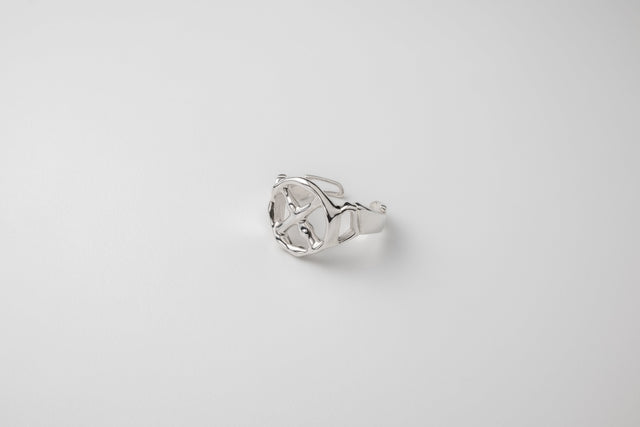
Start with the object: Brutalism V.1 Ring puts an architectural relief above a wide band. Its shape is visible; the meaning you give it remains yours. The ring atlas places that form beside other types.
- Five fingers offer five placements, not five reliable personality tests.
- Wedding customs are specific to a community; ask before reading a ring as a relationship signal.
- Historical rings can have a documented job: sealing a document or helping an archer hold a bowstring.
- 925 sterling contains 92.5% silver; its surface can change through tarnishing.
- Our catalogue examples span 2.7–24 g across the listed sizes. Weight and width matter to fit, not to a fixed symbolism.
What does a silver ring symbolize?
A silver ring can stand for a bond, a memory, a role or a personal choice. The metal alone cannot tell you which. An inherited ring may matter because of its previous owner; a newly commissioned band may mark an agreement; a sculptural ring may simply be a form someone wants to live with.
The familiar comparison of gold with the sun and silver with the moon is a symbolic reading, not a rule shared by every culture. It is useful when a person chooses that association. It does not establish that silver belongs to one temperament or that gold belongs to another.
There is a material difference you can observe. Unplated silver changes at the surface. The Canadian Conservation Institute explains silver tarnish as a reaction with sulfur-containing gases. That chemistry does not prove a symbolic or medical effect. STRUGA calls its unplated 925 Living Silver: the changing surface becomes part of the object as it is worn.
Which finger should you wear a silver ring on?
Choose a finger by fit and the way you use your hands, then decide whether a local custom matters to you. A catalogue of finger meanings can supply ideas; it cannot identify a stranger's marital status, sexuality, profession or personality. A ring can also move from finger to finger as the hand changes.
What does a thumb ring mean?
Today a thumb ring can be a deliberate placement apart from the other fingers. Reading it as independence is a modern interpretation, not proof of what the wearer intends. The thumb bends and grips differently, so try the ring while holding an ordinary object rather than judging it only with an open hand.
There is a specific historical example. The Metropolitan Museum's Ottoman archer's thumb ring, dated to the 16th–17th century, helped grip the bowstring and could signal status. It is jade with gold and stones, not a silver fashion band. Its job cannot be transferred to every modern thumb ring.
What does a ring on the index finger mean?
A ring on the pointing finger is conspicuous when the hand moves. That makes it a useful place for a relief or a strong outline; authority and direction are possible readings of the gesture, rather than a universal historical code. A signet is defined by its seal face, not by an obligatory finger.
Brutalism V.3 Ring offers another architectural form. Compare the upper relief and the space it needs beside the middle finger. The same object will read differently on a different hand, even before anyone assigns it a meaning.
What does a ring on the middle finger mean?
The middle finger gives a ring a central position. Balance and identity are common interpretations in contemporary style guides, but a central placement is not evidence of those qualities. A broad upper face can be visually clear here; it still needs enough room for both neighbouring fingers to move.
If you are choosing a first ring, try the middle and index fingers rather than treating either as the safest place for everyone. Hand shape, ring thickness and daily tasks decide comfort. Our ring size guide addresses measurement; symbolism does not replace sizing.
What does a ring on the ring finger mean?
A plain band on this finger may be read as a wedding or commitment ring where that custom applies. It may also be a family ring, a gift or an everyday object. The side of the hand and the surrounding tradition matter; the metal does not settle the question.
The ancient story connecting this finger directly to the heart is documented in Aulus Gellius, Attic Nights 10.10. Gellius reports Apion's account of a fine nerve. That is evidence for an old explanation, not evidence that the anatomy is correct or that every wedding custom descends from it.
For a pair chosen as a shared object, DARK UNION is STRUGA's route to wedding and paired rings. An individual design starts through Custom Order. The agreement belongs to the people, not to a prescribed metal or finger.
What does a pinky ring mean?
A pinky ring may carry a seal, an inherited design or no formal symbol at all. The smaller placement changes the scale of the object. It does not by itself establish a profession or relationship status. Claims that all Victorian pinky rings meant refusal of marriage need a specific source and context; we do not use that as a general rule.
Try the ring while closing the hand. A raised face or a projecting edge can meet the ring finger even when the ring looks comfortable in a photograph. The pinky ring atlas develops the question of form and placement.
Five placements at a glance
| Finger | Possible reading | What to check |
|---|---|---|
| Thumb | Separate, deliberate placement | Bending and grip |
| Index | A visible gesture or seal | Relief beside the middle finger |
| Middle | A central personal marker | Room on both sides |
| Ring | A bond where a custom applies | The person's own context |
| Pinky | A small seal or personal object | Contact when closing the hand |
Left hand or right hand — does it matter?
It matters when your own community or ceremony gives it a meaning. Otherwise choose the hand on which the ring fits and works with your movements. There is no dependable global split between a receiving left hand and an acting right hand. Nor is there one worldwide map that identifies marriage from hand and finger alone.
Before choosing a paired ring, agree where each person plans to wear it and measure that exact finger. Do not assume equal sizes on both hands. Before interpreting someone else's ring, ask: an heirloom or a ring moved for comfort may look like a symbol you recognise without carrying that meaning.
Does silver give a ring powers beyond its material?
This guide makes no such claim. A protective motif can matter as a cultural image or a personal reminder; wearing a silver ring is not evidence of any effect beyond its material and design. Museum descriptions tell us what an object depicted or how it was used, not that its promised effect occurred.
Surface darkening also needs no supernatural explanation. The visible chemistry of tarnishing is separate from the meaning a wearer gives the change. In Living Silver that change is part of STRUGA's design language. The care guide explains how to care for the surface.
How do you read ring symbolism across cultures?
Read a documented object before treating an entire country as one tradition. LACMA catalogues a silver signet ring from the 15th–16th century with an engraved Arabic inscription. The inscription and seal form are useful evidence about that object; they do not determine the meaning of every silver ring worn in the region.
The Ottoman archer's ring and the account preserved by Gellius show two different routes into symbolism: a tool associated with status, and an explanation attached to a finger. Neither produces a complete code for today's hand. Date, material, inscription, use and provenance are stronger starting points than a generic list of traits.
For the international market, STRUGA objects are made in Bali. That is a production fact, not a promise that every ring carries an inherited Balinese ritual meaning. A ring chosen on the island can become a record of a journey through the person who wears it. Our Bali silver guide treats that context separately.
How do STRUGA forms change the reading of a ring?
Form gives the eye something concrete to read. Brutalism works with architecture in silver; Thorn with sharp angles; Signature Asymmetric with asymmetry. These are design languages, not a chart assigning personalities or fingers to customers. STRUGA does not divide objects by gender: size, weight and fit follow the body.
Our listed variants supply a practical comparison: Brutalism V.1 and V.3 each run from 9.6 to 24 g; Thorn Ring from 4.7 to 12.7 g; Signature Links V.1 Ring from 2.7 to 6 g. These are catalogue ranges across sizes, not four weights for one size. Compare the actual variant before choosing.
Fused means the aesthetic of molten metal, rather than joined geometric units. Amulet is the family of earrings and necklaces built around raw stones; it is not a ring category. A symbolic reading should not erase those differences or attribute a protective effect to a form.
How do you choose a ring for a personal meaning?
Begin with the occasion or the memory, if there is one. Then choose a form you can wear. The meaning does not have to precede the object: it can grow from years of use. A ring can remain visually spare while becoming important through its history with one person.
- For a personal everyday object, compare shape and weight in the ring collection.
- For a seal-like upper face, compare the relief rather than assuming it has a family crest.
- For a pair, agree the shared idea and finger before design and sizing.
- For a changing surface, understand Living Silver and avoid choosing a finish you expect to stay identical.
Measure the intended finger and check the actual model. Brutalism V.1 and V.3 are not resized after manufacture; choose the size before ordering. If an ordinary catalogue shape cannot express the idea, bring a drawing or a reference to Custom Order. Meaning can guide the brief; it does not replace the fit.
Frequently asked questions
Didn’t find the answer — write to us, we reply personally.
Ask a question →01Is a silver ring's meaning fixed by the finger?+–
No. Finger placement can suggest a local custom or a personal reading, but it does not reliably identify character, profession or relationship status. Fit and the wearer's own explanation matter.
02Is silver's symbolism the same as gold's?+–
Neither metal has one universal symbolism. Sun and moon are possible cultural associations, not rules for every wearer. A particular ring's history, form and use explain more than its metal alone.
03Is unplated Living Silver the same as a darkening defect?+–
Living Silver is STRUGA's unplated 925 silver. Its surface changes with wear and the environment; that intended change is part of the design. It does not establish a protective or medical effect.
04Does a pinky ring read as a marriage signal?+–
You cannot establish that from the finger alone. A pinky ring may be a seal, an inherited object or a personal choice. Ask the wearer rather than treating a placement as a fixed code.