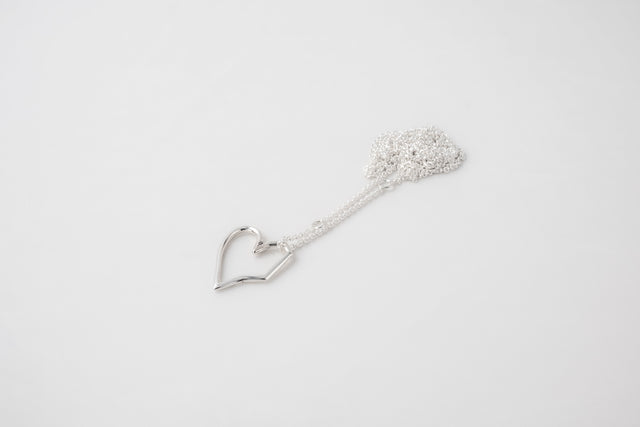
925 sterling silver — composition, hallmarks, and how it differs from other silver standards
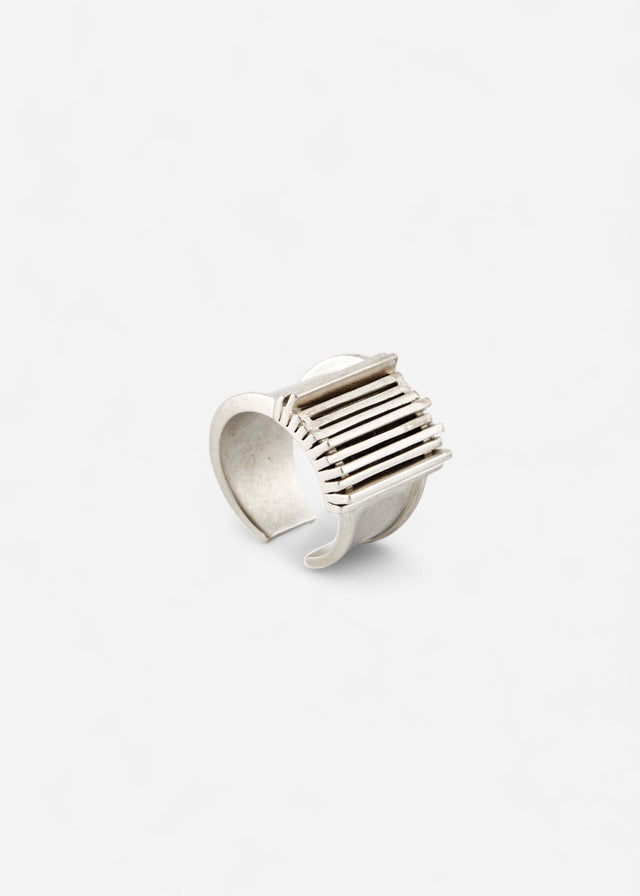
The 925 stamp on the inside of a silver ring is not a marketing label but a guarantee: the metal is 92.5% pure silver, and the remaining 7.5% is alloy, most often copper. Pure silver alone is too soft for daily wear — without that 7.5% it would bend under light pressure and lose its shape within a month.
- 925 sterling silver is an alloy of 92.5% pure silver and 7.5% alloy metals, most often copper; «925», «.925», «S925» and «sterling» all mark the same standard.
- Pure 999 silver measures 25–30 HV on the Vickers scale and loses shape within a month of wear; the 925 alloy reaches 70–90 HV after annealing and up to 200 HV after cold work.
- The dark film on silver is silver sulphide (Ag₂S); 925 tarnishes faster than 999 because the 7.5% copper also oxidises — a sign the silver is genuine, not a defect.
- Real 925 silver is diamagnetic: it does not attract a magnet, and a certified piece carries a national assay mark next to the «925» figure.
- Every STRUGA piece is cast in 925 sterling silver with a copper-based, nickel-free alloy; many pieces are oxidised from the start — the patina is part of the design (see Living Silver).
In short.
- 925 = 92.5% pure silver + 7.5% alloy, most often copper.
- Sterling silver is the English name for the same 925 standard — «925», «.925» and «S925» all mean the same alloy.
- Pure silver (999) measures 25–30 HV on the Vickers scale and loses shape in a month; the 925 alloy reaches 70–90 HV after annealing.
- 925 tarnishes faster than 999 because the 7.5% copper also oxidises — a sign the silver is genuine, not a defect.
- A real 925 piece is diamagnetic: it does not attract a magnet.
If you hold a silver ring or chain in your hand, on the inside there is almost certainly a small stamp with the digits 925. This is not marketing notation — it is a guarantee that the metal contains 92.5% pure silver. The remaining 7.5% is the alloy, most often copper. Without it, pure silver would be too soft for daily wear: it would bend under light pressure and lose its shape in a month.
This guide breaks down the 925 standard from every angle: what goes into the alloy, how to read hallmarks, how 925 differs from 800, 875, 960 and 999, and why STRUGA works only with this grade.
What 925 sterling silver is
The hallmark figure refers to the proportion of pure precious metal in the alloy, expressed in parts per thousand. 925 means 925 parts of silver per 1000 parts of alloy, or 92.5% Ag (Argentum). The remaining 75 parts are the alloy — metals added for strength.
The standard took shape in medieval England. In the twelfth century, German merchants from the town of Esslingen (one account names them; another points to the Hanseatic cities) supplied England with silver coins of 92.5% silver content. The English called these merchants easterlings — eastern men. From easterling came sterling, the name that stuck to silver of this grade. From 1158 onwards, English coins were minted to the 925 standard — and that is where the term pound sterling came from, originally a measure of silver weight.
Today 925 is the international jewelry standard. In the United States and Europe it is called sterling silver (or just sterling); in Italy argento 925; in France argent 925. It is the same alloy in any country.
What metal 925 silver is
925 is silver — not a separate metal and not «white gold». The base of the alloy is pure silver (92.5%), and it is the silver that sets the colour: a cold silvery-white with a slight blue cast. The 7.5% of copper barely shifts the tone — to the eye the alloy reads as plain white silver.
925 silver is sometimes confused with a yellow metal. It should not look yellowish: a warm, yellow tone appears in grades with a higher copper content — old 875, for example. If a 925 piece visibly leans towards yellow, it is either gilding over the silver or a violation of the alloy composition. Where the surface has darkened, the metal goes dark grey and graphite — that is patina, not yellowness.
The composition of 925 — what goes into the 7.5% alloy
The 92.5% pure silver figure is fixed. The remaining 7.5% varies — and that variation defines the alloy's physical properties: colour, hardness, rate of tarnish, workability.
Copper
The classic alloy. 7.5% copper is the historical sterling silver recipe. Copper gives silver strength while keeping the bright tone and the malleability. The downside is that copper is what oxidises in air and produces the surface darkening (the patina). The vast majority of 925 silver in the world is the 92.5% Ag + 7.5% Cu alloy.
Germanium
The modern alternative is Argentium silver, where part of the copper is replaced by germanium. The alloy almost does not tarnish in air and is more resistant to deformation, but it is more expensive in production and rarer in the market. It is more often used by mass-market Western brands where ease of care is the priority.
Zinc, nickel, silicon
Sometimes added in small quantities to improve casting properties. Nickel is a risky additive — it triggers contact dermatitis in 10–15% of people. Hypoallergenic silver means an alloy without nickel, most often copper-based or germanium-based.
STRUGA works with the classic sterling alloy: 92.5% silver and 7.5% copper, with no nickel. More on silver tolerance in our hypoallergenic silver jewelry guide.
How to read silver hallmarks
Every country has its own hallmarking system. The piece itself is stamped on a hidden part — the inside of a ring, the clasp of a chain, the post of an earring.
The full mark language — lion passant, kokoshnik, maker’s marks beside the number — is unpacked in our guide to silver hallmarks.
The most common 925 markings worldwide:
- «925» — three digits, the bare minimum that says the alloy is 92.5% silver. Used worldwide.
- «.925» or «S925» — variants of the same standard, common in the United States and Asia.
- «STERLING» or «STG» — the English-language equivalent.
- UK lion passant — the British hallmark for sterling silver, in use since the fourteenth century.
- National assay marks — most countries with strong jewelry traditions add a national mark next to the figure (UK Goldsmiths' Hall leopard's head, French Minerva head, etc.).
Next to the country's hallmark there is usually the maker's mark — letters and digits in a small frame. This identifies the maker and, in some systems, the year of manufacture.
If a silver piece carries only the digits 925 with no national hallmark, it is either uncertified or a forgery. Pieces imported across most national borders pick up an additional import hallmark from the receiving country's assay office.
925 versus other silver grades — comparison
Beside 925, other silver grades exist. Each has its own purpose and properties.
800 silver (80% silver) — a low jewelry grade. Used for table silver (spoons, trays), coins, technical parts. The high copper content makes the alloy hard but more prone to tarnish. Modern jewellers in Europe and the United States rarely use it for jewelry.
875 silver (87.5% silver) — a Soviet-era jewelry standard. Until the 1990s in the USSR this was the main grade for silver jewelry: spoons, brooches, chains, watches. After the shift to international standards 875 almost vanished from mass production but still appears in vintage pieces and restoration work.
925 silver (92.5% silver) — the global jewelry standard. The optimal balance of strength and beauty. Used for every type of jewelry: rings, earrings, chains, bracelets, pendants, necklaces.
960 silver (96% silver) — a soft alloy used for thin decorative and investment pieces, and for plating cutlery. Too soft for daily-wear jewelry: a 960 ring deforms within six months of active wear.
999 silver (99.9% silver) — technical or investment silver. Used for bullion, coins, chemical electrodes, and conductors in high-end audio. Almost never used for jewelry because of its critical softness — a 999 ring can be deformed by hand.
A more detailed comparison of the three main grades — 875, 925 and 999 — is in our companion piece «875, 925 or 999 silver — which is best».
Why 925 became the global jewelry standard
Over a thousand years jewellers have tried dozens of alloys and arrived at 92.5% silver as the optimum. There are three reasons.
Strength for everyday wear. Pure silver (999) has a Vickers hardness of 25–30 HV — the level of soft tin. A 999 ring loses its shape within a month. The 925 alloy comes in at 70–90 HV after annealing and up to 200 HV after cold work — enough for a ring to last decades without deformation.
Colour and shine retained. Pure silver in itself is white with a slight blue cast. A 7.5% copper addition does not visibly shift the tone — the alloy stays silvery-white. With more copper (as in 875) the alloy starts to yellow — a visible sign of a lower grade. On 925 the effect is minimal.
Workability. 925 casts, stamps, engraves, and solders well. A jeweller can use any technique: investment casting, forging, stamping, weaving. Purer alloys (960+) are harder to work because of softness; lower grades become brittle from high copper content.
Every STRUGA piece — rings, earrings, ear cuffs, bracelets, necklaces — is cast in 925. This is not marketing, it is an engineering choice. More on how we work with silver on the STRUGA 925 silver guide page.
925 and tarnish — why silver darkens
The dark film on silver is silver sulphide (Ag₂S), known as tarnish. It forms when silver reacts with sulphur from air, skin, cosmetics, and food. On 925 silver, tarnish forms faster than on 999 because the 7.5% copper also oxidises.
The rate of tarnishing depends on:
- Skin pH of the wearer. Silver darkens in a week on some people and in six months on others. This is normal — it tracks individual sweat chemistry, not the quality of the alloy.
- Contact with cosmetics and perfume. Creams, fragrances, hair sprays contain sulphur — take pieces off before applying.
- Storage. Silver tarnishes more slowly in a sealed box with an anti-tarnish strip than in an open drawer.
- Humidity and temperature. In tropical countries with sea air silver darkens faster than in dry northern climates.
Tarnish is not a defect or damage — it is the natural behaviour of silver. Many STRUGA pieces are oxidised from the start: the patina is part of the design, not something we remove. More on living patina on the Living Silver page.
925 in STRUGA pieces — how we work with silver
Every STRUGA piece is cast from 925 sterling silver. A wax model is placed inside a plaster mould; the mould is fired in a kiln (the wax burns out); molten silver is poured into the resulting cavity. After cooling the mould is broken open and the piece is cleaned, filed, and finished by hand.
Every piece carries the «925» hallmark, the workshop mark, and in selected pieces the STRUGA author mark. Our silver comes from a licensed refinery; the grade is confirmed by certificate for each batch.
In our collection:
- Blade family — heavy rings with architectural geometry.
- Women's silver jewelry — earrings, rings, necklaces.
- Sterling silver versus other metals — why 925 is more durable than it appears.
How to care for 925 silver
Basic care for a 925 piece comes down to three rules:
- Take it off before showering, swimming, or training. Chlorine destroys the copper component of the alloy; sea salt accelerates tarnish.
- Store in a closed box. Best with an anti-tarnish paper strip. Do not keep silver in the bathroom or on an open shelf.
- Clean with a soft cloth. A polishing cloth handles light tarnish. For deeper tarnish use a silver cleaning paste or a dedicated cleaning bath.
The full cleaning guide is on our how to clean a sterling silver bracelet page. The same approach works for any 925 piece.
FAQ — common questions about 925 sterling silver
Is 925 silver the same as nickel silver or German silver?
No. 925 silver is a precious-metal alloy that is 92.5% pure silver. Nickel silver and German silver contain no silver at all — they are copper-nickel-zinc alloys named for their colour, not their content. Pieces sold as «925» that turn out to be these alloys are caught by the hallmark and the magnet test.
Is oxidised 925 silver the same as silver darkened by age?
No. Oxidised silver is darkened deliberately during the work as a finish; tarnish from age is a slow surface reaction with sulphur from air and skin. On STRUGA pieces the dark tone is part of the design, applied from the start, not a sign of wear — and it can be returned to a lighter state with care.
Is sterling silver a different metal from 925?
No, it is the same thing under two names. Sterling silver is the English name for the 92.5% silver + 7.5% alloy; 925 is the numeric notation of that same standard. A piece marked «sterling», «.925» or «S925» is all 925 silver.
How is 925 different from sterling silver?
It is the same thing. Sterling silver is the English name for the 92.5% Ag + 7.5% alloy. 925 is the numeric notation of the same standard. If a piece carries «sterling», «.925», or «S925», it is all 925 silver.
Can 925 silver cause an allergy?
Silver itself is hypoallergenic. The allergy is most often to nickel sometimes added to the alloy. STRUGA uses a copper-based alloy with no nickel — no reactions to our pieces have been reported. If you have had an allergic response to silver jewelry before, check the alloy composition of the brand you wore.
Can I swim in 925 silver jewelry?
Not recommended. Chlorinated water, sea salt, and sulphur springs accelerate tarnish and can oxidise the copper component of the alloy to a green shade. Taking pieces off before pool or sauna is the simplest way to extend the lifespan.
Why does 925 silver tarnish if it is genuine?
Precisely because it is genuine. Tarnish is the chemical reaction of silver with sulphur from air and skin. On 999 silver it forms more slowly; on 800 faster. On 925 it happens at the natural pace for daily wear. If your «silver» does not tarnish for years, it is worth checking the grade.
What that darkening actually is — and how controlled oxidation differs from niello blackening — is covered in Living Metal, our patina guide.
How much does one gram of 925 silver cost in 2026?
The spot price of pure silver in early 2026 sits around USD 0.85–0.95 per gram. Given the 92.5% Ag content in 925 alloy, the pure metal in one gram of a piece is worth roughly USD 0.80–0.90. Add the jeweller's labour, design, and brand, and retail jewelry pricing for 925 rarely starts below USD 2.50–4 per gram at mass-market level and reaches USD 18–40 per gram for author work.
Should I buy 925 as an investment?
No. For investment use 999 silver — bullion and coins, priced to the spot value of silver. A 925 jewelry piece loses 30–50% of its value at resale because you also pay for the work, not just the metal. Buy 925 as jewelry, not as an asset.
The history of the 925 standard — from Esslingen to today
Before the twelfth century Europe had no single silver standard. Every mint used its own alloy: some coins held 80% silver, others 95%, others 70%. This made trade chaotic: merchants weighed each coin and melted it down to find out how much metal it actually contained.
In 1158 King Henry II of England set a single standard for English coinage: 92.5% silver, 7.5% copper. It was an optimum found by practice: purer is softer and serves worse; lower loses colour and trust. The standard held unchanged until 1920, when Britain temporarily lowered the grade because of the silver shortage after the First World War.
Russia used a spread of grades until the eighteenth century (from 729 to 916). The 925 standard entered Russian jewelry work in the nineteenth century as «factory silver» and became the main grade after the hallmark reform of 1927. Since 1958 the Russian 925 hallmark has been the head in a kokoshnik.
How to spot real 925 silver from a forgery
Pieces sold as «925 silver» that turn out to be silver-plated copper, nickel silver, or German silver still appear on the market. There are several ways to check.
Hallmark check
The most reliable approach is to read the hallmark. A real 925 piece carries a national assay mark plus the «925» figure in a frame. If there is no mark, only the digits with no country stamp, or the mark looks uneven and blurred, that is a signal.
Magnet
925 silver is diamagnetic — it does not attract a magnet. If a piece sticks to a neodymium magnet even slightly, there is a steel or ferromagnetic core silver-plated on the outside. The magnet check does not give a 100% guarantee (some imitation alloys are also non-magnetic), but it cuts the bad fakes immediately.
Smell and taste
Pure silver has no smell. If a piece gives off a metallic «dirty» smell when rubbed between fingers, the alloy is heavy in copper or zinc. 925 silver, when rubbed, gives a faint characteristic scent of oxidising copper (because of the 7.5% copper) — but never sharp or unpleasant.
Nitric-acid test
The professional method is a drop of nitric acid on a hidden spot. On real 925 silver the acid produces a milky-white residue (silver chloride from reaction with the chloride in the acid). On a fake the residue is green or brown. The test damages the surface, so we do not recommend doing it at home — better to take the piece to a jewelry assay office.
Sound
A silver piece struck against a hard surface gives a long ringing tone, like a tuning fork. A cheap imitation sounds dull or short. The method works for larger pieces (bracelets, rings); thin chains do not give enough mass to test this way.
About STRUGA. STRUGA is a dark silver jewelry brand founded by Dmitry Strugovshchikov and Ekaterina Strugovshchikova, handcrafted with Balinese and international silversmiths. Every piece is 925 sterling silver, naturally oxidized or hand-patinated. The darkening is part of the design. It is a brutalist object that reacts and changes through contact with the environment and the wearer.
Where to see STRUGA 925 silver
Every STRUGA object is cast in 925 and carries the fineness mark and the workshop mark; the grade of the silver is confirmed by the refinery certificate for each batch. Browse rings, bracelets and necklaces in 925 silver, or read the comparison of 875, 925 and 999 to see which grade fits your task.
If you have questions about the alloy, the hallmarks, or a custom order — write to us directly through the form on the site. We answer ourselves, without a sales department.