Which Hand Do Wedding and Engagement Rings Go On? 29 Countries
Wedding rings usually go on the left ring finger in the United States and United Kingdom, and on the right in Russia. Engagement rings need a separate check: in Germany they often start on the left while wedding bands go on the right. After the wedding, you can stack the rings or wear them separately. Choose the hand around your ceremony and family custom, then measure that exact finger.
Updated October 17, 2026
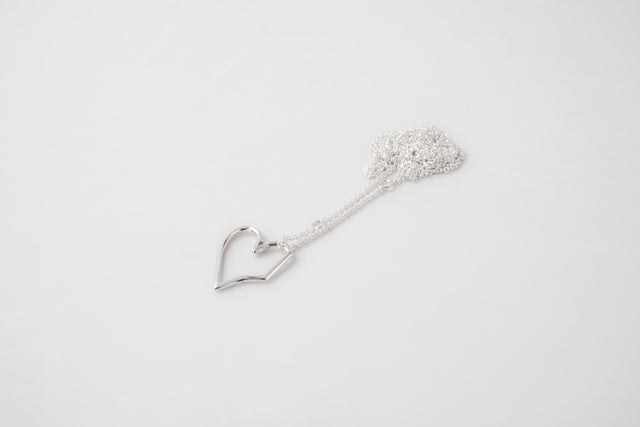
A ring on someone’s hand does not tell you their whole relationship status. Even within one country, its place can depend on the ceremony, family custom and personal choice. Those differences matter when you choose a hand; the shape of the ring matters when you try it on. If you prefer a sculptural silver ring to a plain band, start with its outline: the facets of Thorn are something to try beside a second ring.
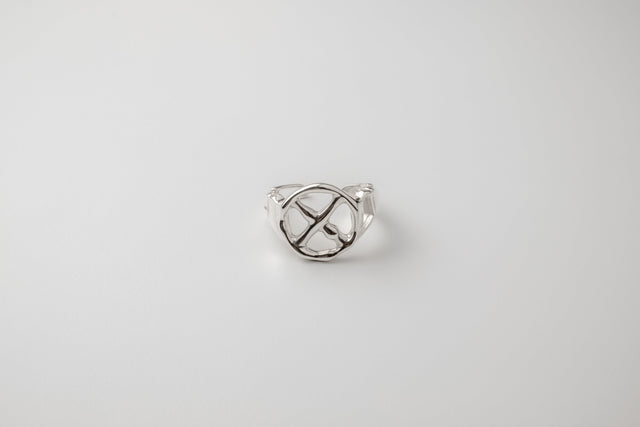
For a rounded open silhouette, compare Fused Cross with the second ring you have in mind.
Engagement ring and wedding band: different occasions, different hands
An engagement ring marks the proposal; a wedding band marks the marriage. Their placements need not match. In Germany, the engagement ring often starts on the left and the wedding band goes on the right. Afterwards, the first ring can stay where it is or join the band. Ring maker Fischer explains these options in its guide to wearing the two together.
For a couple following a Russian custom, the wedding band’s familiar place is the right ring finger. That alone does not settle where a separate engagement ring should go. It may share the finger, move to the other hand or be worn on its own. Decide where you want to wear it after the ceremony before ordering its size.
Which hand for a wedding ring? A guide to 29 countries
The table compares reported practice, not population shares or compulsory rules. It distinguishes a local jeweller’s account, a church rite and the couple’s choice. An Orthodox entry describes that ceremony, not every resident of the country. The links lead to jewellers and published religious instructions. Sources were checked on 10 October 2026.
| Country | Wedding ring | What to check |
|---|---|---|
| United States | Left | Often on the same ring finger; the couple chooses the order. |
| United Kingdom | Left | The published Anglican service specifies the fourth finger of the left hand. |
| France | Left | Engagement ring on the left; together or separately after the wedding. |
| Italy | Left | Wedding-ring placement described by Italian maker UNOAERRE. |
| Spain | Right / left | Right in many regions; left in Catalonia and Valencia. |
| Canada | Left | Left for both rings in Goldshield’s comparative guide. |
| Australia | Left | The engagement ring can stay alongside if the fit is comfortable. |
| New Zealand | Left | Ring finger; the local jeweller also stresses personal choice. |
| Ireland | Left | For a Claddagh: heart outward when engaged, inward when married. |
| Mexico | Left | Engagement ring usually on the left; family variations remain. |
| Argentina | Left | The local jeweller places matching engagement bands on the right. |
| Brazil | Left | Vivara describes the left ring finger for a wedding band. |
| Japan | Left | Both rings often on the left; WAKO also allows other choices. |
| Switzerland | Varies by tradition | Eichstätt’s diocesan guide describes the right; not a rule for everyone. |
| Russia | Right | The Orthodox betrothal rite uses the right ring finger. |
| Belarus | Right in the Orthodox rite | Confirm the ceremony’s arrangement with your own priest. |
| Ukraine | Right in the Orthodox rite | This describes a rite, not every person in the country. |
| Germany | Right | Engagement ring often on the left; both arrangements after marriage. |
| Austria | Right | The diocesan guide describes engagement left, wedding right. |
| Norway | Right in Bjørklund’s guide | The local jeweller describes a custom, not a compulsory rule. |
| Denmark | Right | Baks describes engagement left; wearing both together is also possible. |
| Poland | Right | CUPICHA specifies the right ring finger for the wedding band. |
| Greece | Right in the Orthodox rite | Do not apply the Orthodox rite’s placement to every wedding. |
| India | Either hand | BlueStone accepts right and left; there is no single arrangement for all. |
| Bulgaria | Right | Karat describes engagement left before marriage; practices vary. |
| Serbia | Right in the Orthodox rite | A different ceremony calls for its own placement check. |
| Colombia | Right | Local practice described by Joyería Nexo. |
| Venezuela | Right in JOYARTES’s account | The jeweller reserves the right ring finger for the wedding ring. |
| Netherlands | Either hand | Placement depends on tradition and the couple; there is no single rule. |
The most useful exceptions to a left-versus-right map are Spain’s regional differences, the Netherlands’ two-hand practice and India’s varied arrangements. Switzerland also needs care: a German diocesan guide describes the right, while other accounts use the left. For a particular community, ask about its ceremony. In Norway, Bjørklund describes the right; that statement is not a measured population share.
Why Russia uses the right and the United States the left
The nearest verifiable explanation for a Russian Orthodox ceremony is its betrothal rite. Archpriest Rostislav Lozinsky’s pastoral manual places the ring on the fourth finger of the right hand. The Orthodox Church in America calls the right hand traditional but also recognises left-hand wearing in American practice. Religion alone cannot produce a reliable map of everyone’s daily habits.
The American left-hand arrangement is a familiar local custom, not the more correct side. A simple Catholic-versus-Orthodox explanation also fails. The Catholic Diocese of Eichstätt’s guide describes engagement left and marriage right in Germany and Austria. A couple bringing two traditions together can choose one arrangement for the ceremony and a comfortable one for daily wearing.
Can you wear an engagement ring and wedding band on the same finger?
Yes. A familiar American arrangement puts the wedding band nearer the palm, with the engagement ring above it. That is a wearing convention, not a condition of the relationship. Reversing the order, using separate hands or alternating the rings are also options. The useful test is whether both fit comfortably and one ring’s details press against the other.
Try the complete pair. A raised setting may stop a straight band from sitting flush; a wide band plus a second ring takes more space than either alone. Brutalism V.1 has a substantial stepped outline. Assess a possible combination while moving your hand, not solely from a photograph. A design name cannot establish compatibility.
- One finger: try both orders and bend your hand comfortably.
- Separate hands: measure each chosen finger independently.
- Different days: let each ring work as a piece on its own.
- The ceremony: decide in advance where the engagement ring will go temporarily so the wedding band is easy to put on.
If edges or settings collide, show the pair to a jeweller before buying it. Avoid bending the ring, filing its edges or joining the pieces yourself. An opening in a design does not by itself make the ring adjustable.
Ring size follows the hand and width, not the tradition
Matching fingers on opposite hands can differ. GIA’s sizing guide accounts for the chosen hand, band width and measuring conditions. The dominant hand may be larger; a wide band may feel tighter. Do not automatically transfer a size from the other hand.
Before ordering, note four things: the hand, the finger, the design’s width and whether you plan to add another ring. Measure the intended finger in its normal condition. If you are measuring an existing ring, report its inside diameter rather than its outside edge. A trial ring of comparable width is especially useful for a broad design.
STRUGA’s catalogue shows how size and form change weight. Fused Cross in size 16 is listed at 3.7 g; Brutalism V.1 in size 15 at 9.6 g. These are specific variant records, not one fixed weight for every size. Weight alone cannot rank comfort: a light ring still needs to fit.
Four silver forms to consider for a pair
Sterling silver 925 contains 92.5% silver. At STRUGA this is Living Silver without rhodium plating. For the international market, STRUGA objects are made in Bali. The material is shared; the forms have different characters. Silver does not determine which hand you use.
- Fused Cross combines rounded cross arms with open space within the outline. Compare its silhouette with a plain second band.
- Thorn is faceted. Check where its edges sit in relation to the neighbouring ring.
- Brutalism V.1 combines a wide band with raised flat steps. Try the overall width of the pair.
- Signature Links V.2 uses links and an opening in its construction. That is a different way of building a ring; it does not establish an adjustable size.
Explore ready-made forms in Fused, Brutalism and Signature Asymmetric. For a pair built around your own decision, there are two routes: Dark Union for individual wedding rings, and Custom Order for a commissioned form. Discuss fit and the intended combination before making it. The Atlas explains Living Silver and the differences between materials.
The “vein of love” and the year 866: what the texts establish
The ring finger’s supposed direct connection to the heart is a familiar story. In Aulus Gellius’s Attic Nights, X.10, however, the explanation attributed to Apion concerns a slender nerve. The passage discusses wearing rings generally. It does not establish where the wedding ring began or why every modern country chose its hand.
Pope Nicholas I’s replies to the Bulgarians, chapter III, in 866, mention a ring during betrothal without specifying a hand or finger. That date cannot substantiate the first wedding ring or the start of a universal left-hand rule.
For your own pair, distinguish the ceremony, the family custom and everyday fit. Historical texts establish particular accounts; they do not assign one compulsory meaning to a finger.
Five decisions before ordering your rings
- Ask the person conducting the ceremony which hand it uses.
- Decide whether both rings will share one finger after the wedding.
- Measure that finger instead of automatically transferring a size between hands.
- Try the width, profile and contact between the two designs.
- Contact STRUGA to discuss a form if the ready-made options do not fit the plan.
Further reading: silver 925 composition, ring types and Living Silver. For the choice of ring, read our engagement-ring guide and engagement-ring versus wedding-band comparison.
Frequently asked questions
Didn’t find the answer — write to us, we reply personally.
Ask a question →01Which hand should I use for an engagement ring?+–
There is no universal compulsory hand. The left is a familiar choice in the United States and United Kingdom; other traditions differ. Decide where you want to wear the ring after the wedding and measure that exact finger.
02Do German engagement and wedding rings go on different hands?+–
The engagement ring often starts on the left, while the wedding band goes on the right. After marriage, the engagement ring can stay on the left or join the band. This is a custom, not a compulsory rule.
03Can an engagement ring and wedding band share one finger?+–
Yes, if both fit comfortably and their details do not interfere. Check total width, edges and contact between a setting and the next ring. Separate hands or wearing the rings individually are also options.
04Which ring goes nearer the palm?+–
A familiar American arrangement puts the wedding band on first, followed by the engagement ring. You can choose a different order for comfort. The couple’s decision matters more than the order of two objects.
05Why is the Russian wedding ring worn on the right?+–
The Orthodox betrothal rite places the ring on the right ring finger. This explains the ceremony, not every family habit or the choice of every resident.
06Can I use the same ring size on the other hand?+–
Measure the intended finger first: opposite hands can differ. Account for total width if two rings will share the finger. Do not automatically transfer a size between hands.
07Does an open ring design mean it is adjustable?+–
No. An opening does not itself establish adjustability. Confirm the specific model’s size and construction before ordering, and do not bend it yourself.
08Does STRUGA make silver rings in Bali for couples?+–
For the international market, STRUGA objects are made in Bali. Compare Thorn, Fused Cross, Brutalism V.1 and Signature Links V.2 by form and fit. Explore individual wedding rings through Dark Union and commissioned forms through Custom Order.