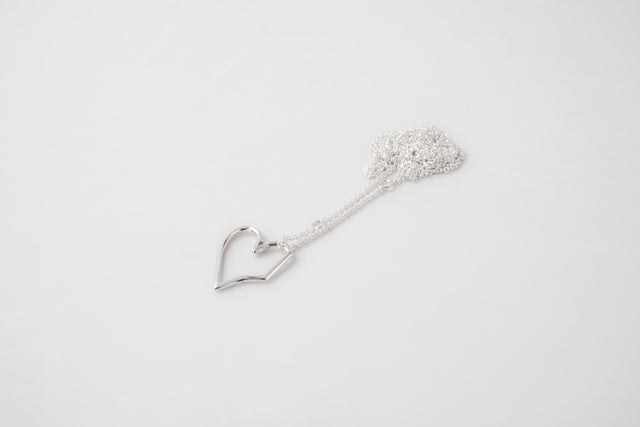
Engagement Ring vs Wedding Ring — What Is the Difference?
One ring is given the moment someone says yes; the other is put on at the ceremony and worn for decades. The first is the engagement ring, the second the wedding ring, and most of the world ends up wearing both on one finger. Below — how the two differ in timing, meaning and form, which hand carries them in which country, and whether one ring can do both jobs.
Updated September 28, 2026
The engagement ring is given at the proposal: one ring, usually with a centre stone. Wedding rings are exchanged at the ceremony: a pair of bands, one for each partner. In the US and UK both go on the left ring finger, in Germany, Poland and most Orthodox countries on the right; the wedding band sits closest to the palm. At STRUGA a pair is made to order under DARK UNION in 2–4 weeks from sketch approval; the ring ready to buy is the Thorn Ring.
What is the difference between an engagement ring and a wedding ring?
The engagement ring marks the agreement to marry: it is given at the proposal, it is usually one ring with a centre stone, and one person wears it. The wedding ring marks the marriage itself: it is exchanged at the ceremony, there are two of them — one for each partner — and they are usually plain or textured bands with no tall setting. After the wedding both rings are often worn together on the same finger.
The terms blur more than the objects do. "Wedding ring" and "wedding band" are two names for the same ring; the engagement ring is a separate one. Where the Orthodox rite shaped the language the words cross over: the rings are blessed and placed during the betrothal service held just before the crowning, so the wedding ring there carries the name of the betrothal.
The two rings side by side
| — | Engagement ring | Wedding ring |
|---|---|---|
| Given | at the proposal | at the ceremony |
| Marks | the agreement to marry | the marriage itself |
| How many | one ring | usually two matching bands |
| Form | a centre stone, raised profile | a plain or textured band, low profile |
| Who wears it | more often one partner | both |
| Hand in the US and UK | left, ring finger | left, ring finger |
| Place in the stack | above | below, closest to the palm |
| At STRUGA | made to order, 2–4 weeks from sketch approval | made to order as a pair; ready to buy — the Thorn Ring from the THORN family |
When is each ring given, and what does it mark?
The engagement ring is given at the moment of the proposal — a year, six months or a week before the wedding; nothing fixes the interval. It announces an intention and belongs to one person, which keeps it personal: the one who proposes chooses it, often in secret.
Wedding rings are exchanged in front of witnesses, as part of the ceremony. In most countries the law does not require them — the marriage comes from the ceremony and its registration, and the rings are custom. That is why the two rings mean different things. The engagement ring is a promise one person gives another. The wedding ring is something the two of them share, so couples choose it together, usually in one metal and one form.
The plainness of the wedding ring follows from that job. It is worn every day for decades, it sits beside other rings and must not catch, and the fact that it is one of a pair reads louder than any decoration.
How do the two rings differ in form?
The engagement ring is taller and more individual. The centre stone sits in a setting that lifts it above the finger; the band beneath is usually slim and the side profile is pronounced. Setting styles run from solitaire, halo and three-stone to vintage — and, in dark silver, a heavy brutalist form with the stone sunk into the metal.
The wedding ring is lower and simpler. It is built for daily impact: nothing to catch, nothing to break. The traits that tell the two apart at a glance:
- Height. The engagement ring lifts its stone above the finger; the wedding band lies low.
- Width. The engagement ring has a slim band under a large setting; the wedding band is often the wider of the two.
- Stones. The engagement ring carries one main stone; the wedding band has none, or has them set flush with the metal.
- Surface. A wedding band can be plain, hammered, matte or oxidized — the surface matters more than any stone.
- Fit. The wedding band is made to sit against its neighbour rather than compete with it.
Which hand and finger, and in what order?
In the United States, the United Kingdom, France, Italy and Spain both rings are worn on the fourth finger of the left hand. The wedding band goes on first, closest to the palm, and the engagement ring sits above it.
The usual explanation for that finger is the "vein of love", and it is a late mistake. Aulus Gellius, writing in the second century CE, quotes the Egyptian grammarian Apion on a nervus — a nerve or sinew, not a vein — running from the fourth finger to the heart. The Latin phrase vena amoris appears far later, in Henry Swinburne's A Treatise of Spousals, published in 1686.
- Right hand: Germany, Austria, Norway, Poland, Greece and most Eastern Orthodox countries.
- Left hand: the United States, the United Kingdom, France, Italy, Spain.
- A switch at the ceremony: in Brazil and Argentina the engagement band is worn on the right hand and moved to the left at the wedding.
For the full breakdown by country and rite, see our guide on which hand engagement and wedding rings are worn on around the world.
Can you wear the engagement ring and wedding ring together?
Yes, and it is the most common arrangement: both rings on one finger, the wedding band closest to the palm, the engagement ring above it. A stack works when three things are settled in advance:
- The rings do not fight each other. A tall setting on a slim band can warp a thinner wedding ring beneath it over time, so the wedding band in a stack is sometimes made slightly thicker than it would be alone.
- The size is shared. Two rings on one finger sit tighter than one; size them together.
- The metals are agreed. One metal reads as a single unit, two metals as a deliberate contrast — and a difference in hardness shows in the wear.
A stack sits right most easily when both rings are designed together. At STRUGA that is a made-to-order route rather than a shelf: DARK UNION is the direction for engagement, paired and alternative wedding rings, and the ring ready to buy under it today is the Thorn Ring. A partner ring for it, or another form entirely, is built from a brief.
Do men get an engagement ring?
Historically, no: the engagement ring went to the bride, and the man received a ring at the wedding. Today men are given engagement rings too — English even coined the playful word "mengagement ring" for it. The men's version is usually plainer: a wider band, a flush-set stone, or no stone at all.
The wedding ring, by contrast, is worn by both partners almost everywhere rings are exchanged at all. For a man who wears no other jewelry it is often the only ring he will own, so weight and fit decide more than form. More on the men's side in our guide to the men's engagement ring.
Can one ring replace the other?
Yes: custom separates the two rings, the law does not. Couples reach a single ring by three routes:
- One ring for both roles. It is given at the proposal, carried through the ceremony and worn for life. The form has to survive both jobs: a low profile, a stone in a bezel setting, or no stone at all.
- Wedding rings only. The engagement ring is skipped and the whole budget goes into the pair of wedding bands — a route that suits a private proposal and a public wedding.
- The same ring at both stages. The engagement ring is a simpler version of the future pair, so the stack assembles itself by the wedding.
A single ring for two roles is easiest to make to order, because the form is planned for daily wear from the start. A tall solitaire is the worst fit for the job: it needs protecting, and a wedding ring has no time to be protected.
Why are there two rings instead of one?
For most of history there was one ring. In Rome it was the groom's gift at betrothal: Pliny the Elder notes that "even now an iron ring, without a stone, is sent to the bride-to-be" (Natural History 33.4.11). By Tertullian's day, around 200 CE, that betrothal ring could be gold. A ring exchanged by both partners at the wedding itself came later, with the Christian rite.
The Orthodox rite kept the two acts apart for centuries as well: the betrothal and the crowning. Today the betrothal is performed immediately before the crowning, but they remain two separate services, and the rings belong to the first: they are blessed and placed on the right hands of bride and groom (Service of Betrothal). That is why the Russian name for a wedding band, obruchalnoye koltso, literally means "betrothal ring".
The second, separate ring with a stone was fixed by the 20th-century market. The line "A Diamond Is Forever" was written for De Beers in 1947 by copywriter Frances Gerety at N.W. Ayer and first ran in 1948, and the diamond solitaire became the American sign of engagement. The wedding band — the older ring — became everything the engagement ring was not: plain and paired. Two rings now do two jobs that one ring did in older rites.
How much does each ring cost, and why is the engagement ring the bigger one?
The engagement ring is the larger purchase because it carries the centre stone. Couples in the US who married in 2025 spent an average of $4,600 on an engagement ring, down from $5,200 the year before, according to the The Knot 2026 Real Weddings Study of 10,474 couples. Wedding bands cost a fraction of that, even bought as a pair.
What does a STRUGA pair cost?
There is no fixed price for a made-to-order pair, and quoting one would be dishonest. A pair is priced from the brief — form, size, stone if any, metal weight and the budget you name — and the offer comes back to you personally. The one ring ready to buy under DARK UNION today is the Thorn Ring, in 925 sterling silver, priced by size.
What stones does STRUGA actually set?
Not diamonds. The stones here are wild-growth crystals left in the form they grew in — tourmaline, aquamarine, quartz, heliodor — or Seymchan meteorite, or no stone at all. That is a different object from a diamond solitaire, and it is the reason couples come to this direction rather than to a jeweller who sells the standard set. For pricing on the engagement-ring side, see our guide on custom engagement ring cost by material.
What about second marriages and renewed vows?
Second engagements often skip the engagement ring: both partners are older, the timeline is shorter, the budget is spent differently. New wedding bands are made for the new ceremony. Past rings are sometimes melted and recast into the new bands, so the metal carries over even when the form is new.
A 10th or 25th anniversary can prompt new bands too — same partner, new rings. STRUGA's custom process handles this the same way as a first pair: brief, sketch, wax model, casting, finishing.
Which beliefs about the two rings are wrong?
- "The engagement ring becomes the wedding ring once we marry." No. They remain two separate rings: the engagement ring stays on and the wedding ring is added.
- "You have to spend three months' salary on the engagement ring." No. The rule came from advertising, and the number kept moving. De Beers first suggested a month's salary; by the 1980s its ads asked, "How can you make two months' salary last forever?"; in Japan, which De Beers entered in the late 1960s, the figure became three months (Al Jazeera).
- "Wedding bands have to match exactly." Not anymore. Many couples wear paired-but-not-identical bands — one metal, different widths or finishes. The match is one of meaning, not of form.
- "The engagement ring has to be a diamond." No, and even inside the diamond convention the stone has changed: 61% of engagement rings bought by US couples who married in 2025 had a lab-grown centre stone, a 239% rise since 2020 (The Knot). Sapphires, emeralds, uncut wild-growth crystals, meteorite and stone-free designs are all in ordinary use. Read more in our guide on engagement ring alternatives and non-diamond stones.
How does STRUGA make an engagement ring and wedding band as a pair?
A pair is built from a brief: form, size, a stone or none, the surface, and how the two rings will sit together from the proposal onward. Then a sketch, a wax model, casting in 925 sterling silver and hand finishing; the guide time is 2–4 weeks from sketch approval, a frame rather than a date. Briefs go through the custom order form, and custom work is handmade in Bali by master silversmiths.
DARK UNION is not wedding jewelry but an object of union, something a couple arrives at deliberately. Dark oxidized silver, a low brutalist profile, an uncut wild-growth stone or a piece of Seymchan meteorite beside a plain band — or no stone at all. Pairs that diverge in width or finish and still read as a set are the norm here. The whole direction is on the DARK UNION concept page.
When should you order the rings to be in time?
Count back from the date. A catalog ring made to order takes 2–4 weeks, often sooner; a DARK UNION pair built from a brief takes 2–4 weeks from sketch approval; shipping adds about a week. Hence a simple rule: start a made-to-order engagement ring six to eight weeks before the proposal, and the wedding pair no later than two months before the ceremony, so there is time left to check the size.
Which ready STRUGA rings work as a wedding band?
To start from something ready, the catalog holds forms that are worn as wedding bands, although only Thorn belongs to the DARK UNION line:
- the Brutalism V.1 Ring — a wide band with a plate of flat bars, uncoated 925 silver that darkens on its own. The relief does not survive resizing, so the size is chosen before the ring is made;
- the Brutalism V.3 Ring — the same architecture darkened at the bench: dark from day one, with only the raised ends catching light;
- the Double Line Ring — two parallel rows of links on an open band, from 6 grams: a light paired ring for those who would rather wear a chain than solid metal.
What happens when a third ring joins the stack?
In time a third ring may join the same finger — an eternity or anniversary band. It is given on a milestone: a first child, a fifth or tenth anniversary; usually it is a band set fully or halfway round with stones.
Three rings on one finger are an engineering problem. The stack grows tall, the rings twist against each other, and the wedding band ends up pinched in the middle. There are two solutions:
- A fitted band. The third ring is curved or shaped to nest under the engagement ring — the usual answer for halo and three-stone designs.
- Soldering. The engagement and wedding rings are joined into one unit and the third ring stays separate. The twisting stops, but the pairing becomes permanent.
If a third ring is likely, plan the stack from the engagement ring forward. Rings designed in isolation start fighting each other by year five.
How do you care for two rings worn as a stack?
Two rings worn together wear differently from one ring alone. Where they rub, the metal polishes bright, and in time those contact zones stand out from the rest of the surface. Three habits keep the stack even:
- Bring both rings back to one finish at once. Patina is not damage and needs no service. But if you want the pair evened out, treat both rings together — treating one leaves the stack mismatched. Silver cleaning liquid resets a polished surface; on a matte surface a mild abrasive such as a scouring pad or fine sandpaper does it. Repairs and anything you think is a fault go to a person at STRUGA, not to a form.
- Match the metal hardness. Sterling silver is roughly half as hard as 18k gold — about 60–70 HV as cast against 140–155 HV for a typical 18k yellow alloy (Fischer-Bühner, Santa Fe Symposium) — so a silver band worn against a gold one takes most of the wear. One metal for both rings keeps the stack even.
- Remove them for heavy work. Both rings come off for the gym, the garden and any work with impact: two rings put twice as much metal in harm's way.
For long-term care across all jewelry types, see our silver jewelry guide.
Which option fits your situation?
| If you want… | Choose… |
|---|---|
| Surprise and tradition | The engagement ring alone, wedding bands together later |
| One ring for life | A single made-to-order ring designed for both roles |
| Unity from day one | Engagement and wedding rings designed as a pair |
| A smaller budget and more meaning | Skip the engagement ring, invest in the wedding bands |
| Flexibility | The engagement ring now, wedding bands once the wedding is settled |
About STRUGA. STRUGA is a dark silver jewelry brand founded by Dmitry Strugovshchikov and Ekaterina Strugovshchikova, handcrafted with Balinese and international silversmiths. Most pieces are 925 sterling silver left uncoated, so they darken with wear; part of the range is oxidized at the bench. The darkening is part of the design. It is a brutalist object that reacts and changes through contact with the environment and the wearer.
Frequently asked questions
Didn’t find the answer — write to us, we reply personally.
Ask a question →01Is the engagement ring the same as the wedding ring once you are married?+–
No. In Western tradition they remain two separate rings. The engagement ring is given at the proposal and carries the center stone; the wedding ring is exchanged during the ceremony and is usually a plainer band. After the wedding the engagement ring stays on and the wedding ring is added beneath it — they are worn together, not fused into one.
02Is a wedding ring the same as a wedding band?+–
Yes — wedding ring and wedding band are two names for the same object: the ring exchanged during the ceremony, usually two matching ones, one for each partner. It is not the engagement ring. The wedding band is typically lower and simpler, often with no center stone, designed to sit comfortably against the engagement ring and to be worn for decades without removal.
03Does the engagement ring have to be a diamond?+–
No. The diamond is a habit of the American market, not a rule, and it is shifting: lab-grown centre stones accounted for about 61% of engagement ring purchases in The Knot's 2025 study, up 239% since 2020. Sapphires, emeralds, rubies, uncut wild-growth crystals, meteorite, and unset metal designs are all in ordinary use. The defining feature of an engagement ring is the role it plays at the proposal, not the stone in it.
04Do men get an engagement ring, or only a wedding ring?+–
Historically only the wedding ring: the engagement ring went to the bride. Men now receive engagement rings too, usually plainer than the women's version — a wider band, a small flush-set stone, or no stone at all. The wedding ring, by contrast, is near-universal: even where engagement rings are rare, two bands exchanged at the ceremony is the standard form.
05If I wear both, do I have to wear them together every day?+–
No. A common pattern is to wear the band alone day to day and reserve the engagement ring for occasions. This is a maintenance decision more than a sentimental one: a tall stone snags on work, a stack pinches under gloves, and two rings double the surface exposed to impact. The flat band absorbs daily wear while the taller ring stays protected between outings. Some keep the two stacked permanently; some rotate; some retire the engagement ring to a chain. There is no rule that fixes the count. Wear what the hand actually lives with.
06If the engagement ring and band sit on separate hands, does that change how they age?+–
It does, and usually for the better. Splitting the two across two fingers or hands removes the stacking pressure entirely, so a tall engagement ring never twists or bends a thinner band riding beneath it over years. Each ring then wears at its own rate against your hand rather than against the other ring. The trade-off is that a stone on the dominant hand takes more knocks. Which hand and finger is also a question of where you live; we map the country-by-country conventions in our guide on which hand engagement and wedding rings are worn on.
07Is a plain wedding band easier to resize later than an engagement ring?+–
Usually, yes, and it matters because hands change over decades. A plain or textured band with no stone can be sized up or down through most of its circumference without disturbing anything structural. An engagement ring is harder: a center setting, a gallery, and side detail limit where metal can be added or removed, and a heavy resize can shift how the stone sits. This is one quiet reason a single durable band serves well as the ring worn for life. For made-to-order pieces we account for likely sizing range in the brief, so adjustment later stays straightforward. Two catalog rings are the exception: the relief of the Brutalism V.1 and V.3 rings does not survive resizing, so their size is chosen before the ring is made.
08Can these rings be engraved, and does engraving survive daily wear?+–
Yes. The usual place is the inner face, where a date, initials, or a short line sits against the skin and is shielded from impact, so it stays legible for the life of the ring. Outer engraving is possible but wears with handling, especially on a band worn every day; on an oxidized surface the recessed lines also hold more patina than the raised metal, which can be the intended effect or not. We confirm placement and depth in the brief before the piece is made, since engraving on a low brutalist band reads differently than on a tall setting.
09Can a single ring do the job of both the engagement ring and the wedding band?+–
Yes, and it is the simplest way to do it. One ring is given at the proposal, carried through the ceremony, and kept for life. It works best as a made-to-order object, because the form has to hold up as both the announcing ring and the band worn every day. That constraint pushes the design toward a low profile, bezel-set or stone-free, so the ring takes daily impact without a tall setting to protect. The result is one object instead of a stack, which removes the twisting two separate rings create over years. One ring, two moments, nothing to engineer around later.
10If the daily band is oxidized, does the dark finish need upkeep or wear off?+–
The dark finish is Living Silver: 925 sterling with no rhodium and no plating, so the colour is the silver itself reacting, not a coating that can chip away. On a band worn daily the high points polish bright from contact while the recesses stay dark, which deepens the relief over time rather than ruining it. The patina is the intended finish, not dirt and not a flaw. It needs no special upkeep; if you ever want it darker or brighter the surface can be re-treated. Left alone, an oxidized band simply settles into the hand that wears it.
11How does ordering a matched engagement-and-band pair actually work?+–
As a made-to-order build, not a stock purchase. There is no ready DARK UNION pair to take off the shelf; each is assembled around a specific couple through a brief that fixes form, finish, stone if any, and how the two rings sit together from the proposal forward. Designing the engagement ring and the band as one pair from the start prevents the awkward fit that comes from two rings made separately. A pair can be ordered together, or the band added later to match an engagement ring already in hand. Everything is made in 925 sterling silver, handmade in Bali by master silversmiths.
12What does STRUGA offer couples who want something other than the standard set?+–
DARK UNION, our direction for engagement and paired bands, made to order only. The house language carries straight into it: oxidized Living Silver, a low brutalist profile, an uncut wild-growth stone or a piece of Seymchan meteorite against a plain band, or no stone at all. Because nothing is pre-stocked, the pair is built around how you two actually wear rings rather than around a fixed product. Pairs that diverge in width or finish while reading as a set are welcome here. Browse the DARK UNION concept for the idea, then we build to your brief in 925 sterling silver, handmade in Bali by master silversmiths.
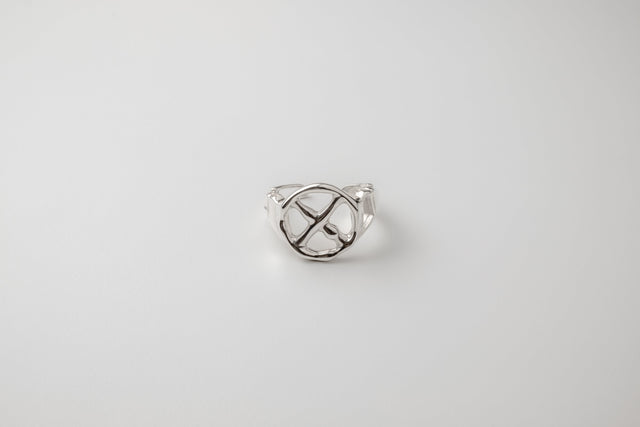
Continue from the journal to a current STRUGA object: Fused Cross Ring.