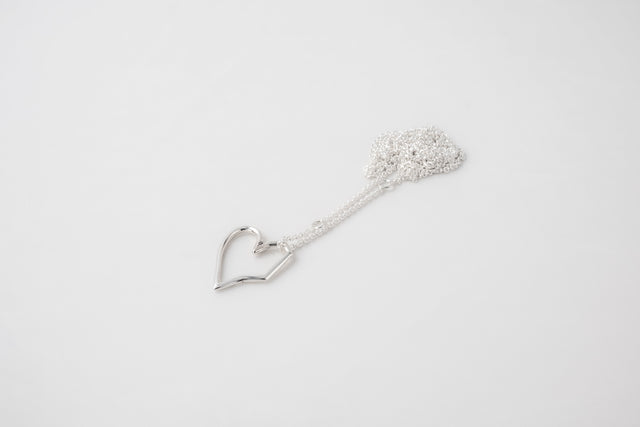
Rings
A ring is the only piece of jewellery its owner sees on themselves all day. Earrings live in the mirror, a chain lives in photographs, but a ring stays in view — on the wheel, on the keyboard, in someone else's palm during a handshake. Hence the oddity: people wear one ring for years and change everything else.
- Types by form — what separates rings before any question of style
- Types by purpose — why one ring does not replace another
- Material changes the type, not only the colour
- Size and fit — where people get it wrong most often
- How STRUGA makes rings
- In short
- Frequently asked questions
There are more types of rings than it seems, and they are told apart not by beauty. By the width of the band, by whether the ring has a face, by the finger it is built for, by what happens to the surface after 6 months of wear. One figure decides more here than taste does: band width alone shifts the size you need by 0.5 to 1 size.
Rings differ along four axes: form (signet, statement, narrow, wide, stacking), purpose (everyday, engagement, wedding, keepsake), material (uncoated or blackened silver, meteorite, carbon) and fit — band width shifts the size you need by half a size, sometimes a full one.
At STRUGA rings are grouped into families as forms: SIGNATURE ASYMMETRIC, BRUTALISM, THORN, BLADE. Each is cast from a wax model and finished by hand; made to order takes about two weeks.
The ring catalogue holds 9 models in 925 silver, from 2.1 to 17 grams — the heaviest is more than eight times the lightest. Carbon and Seymchan meteorite exist at STRUGA in other forms, not in rings.
Types by form — what separates rings before any question of style
The form of a ring comes down to one question: does it have a face.
A signet does. A flat plate turned outward, historically carrying an imprint, today carrying a surface — smooth, textured, engraved. A signet is worn as a mark, and it is the only ring that reads at arm's length.
A statement ring is a large object with no face. It works through mass and silhouette: a wide band, a sharp edge, asymmetry. A ring like this is worn alone.
A narrow ring is the opposite pole. It argues with nothing, and so it stacks: two, three, five on one finger, in different widths.
A pinky ring is a separate type, not a size. The little finger is smaller, and an object on it reads differently: what looks massive on an index finger becomes a point here.
The difference between a type and a family is simple. Type is what the thing is. Family is whose language it speaks.
More: Signet rings · Statement rings · Pinky rings · What a ring means on each finger · How rings stack
Types by purpose — why one ring does not replace another
An everyday ring lives on the hand permanently, and the demands on it are engineering ones: it must not catch, must not spin, must survive water and soap. Everything else is secondary.
Engagement and wedding rings follow another logic. They are chosen together, worn for decades and almost never removed, so what decides is not how striking the ring is but whether the form survives twenty years of daily friction. The classic pairing of a diamond and gold has long stopped being the only one: dark silver, meteorite, a ring with no stone at all.
A keepsake ring is a third kind. It is not worn daily and not shown. It rests — and that is its work.
More: Types of engagement ring · Engagement rings without a diamond · Alternative engagement rings · Dark wedding rings · Men’s silver rings
Material changes the type, not only the colour
Uncoated 925 silver darkens on its own. Not spoils — darkens: patina settles into the recesses of the relief, ridges wear back to bright metal, and after six months the ring looks different from the day it arrived. On a wide band this shows more than on a narrow one: more surface, more contact.
Blackened silver is the reverse move. The surface is darkened at the bench in advance, then the patina is taken off the edges to bring the relief forward. The difference is fundamental: the first happens over time, the second was done by a silversmith.
Seymchan meteorite gives a pattern that cannot be repeated: the alloy structure formed over millions of years, and no two pieces share it.
Carbon changes the weight, and the difference is not subtle: a carbon ear cuff in the catalogue weighs 0.3 grams against 2.1 to 17 grams for a silver ring. Weight of that order is felt on the second day, not in the first minute.
Both materials sit outside the rings at STRUGA. Meteorite lives in two necklaces, carbon in seventeen objects — necklaces, ear cuffs, bracelets, one earring. Rings here are silver: uncoated or blackened. A ring in a material the catalogue does not hold is made through Custom Order.
More: Oxidised silver rings · How silver rings hold up · Cleaning silver rings
Size and fit — where people get it wrong most often
Band width changes the size you need. A wide ring sits tighter than a narrow one at the same number, because it wraps a longer stretch of the finger — the difference reaches half a size, sometimes a full one.
The second place mistakes happen is the knuckle. A ring has to pass over it without hanging loose at the base of the finger; the correct size lives between those two conditions.
The third is time of day. Fingers are fuller in the evening than in the morning.
Width also decides weight, and the spread across the catalogue is wide enough to feel: the heaviest ring is more than eight times the lightest. That difference shows itself over a day of wear, not on the scales.
In full: Ring size guidance · Ring weight — 5, 15, 30 grams
How STRUGA makes rings
A ring begins as a wax model. A silicone mould is taken from it, 925 silver is cast into that mould, and the casting is then finished by hand: sprues cut away, the surface smoothed, the metal annealed where a line needs to soften.
Families are not collections but forms. SIGNATURE ASYMMETRIC is the first form of the brand, an asymmetric silhouette. BRUTALISM is mass and rough surface. THORN is sharp angles that break the light. BLADE is machine-shop aesthetics that began with a chain link.
All rings are made by hand by master silversmiths in Bali. Made to order takes about two weeks — in that time your size is made, rather than a finished ring adjusted to it.
In short
| Type | What sets it apart |
|---|---|
| Signet | flat face, reads at a distance |
| Statement | mass and silhouette, worn alone |
| Narrow | argues with nothing, stacks |
| Pinky | a different scale, not a different size |
| Engagement | chosen together, worn for decades |
| Blackened | darkened at the bench in advance |
| Meteorite | a pattern that cannot repeat |
| Carbon | at the same volume, about six times lighter than silver |
The signet is the form STRUGA builds as an architectural plate rather than an engraved seal — signet rings in the catalogue.
Other sections of the Atlas: Earrings · Ear cuffs · Bracelets · Cuff bracelets · Necklaces
Frequently asked questions
Didn’t find the answer — write to us, we reply personally.
Ask a question →01What is the difference between a signet ring and a seal ring?+–
A seal ring is the older name for a ring with a stone or a large setting. A signet is a ring with a flat plate, originally made to leave an imprint. Today a signet is more often worn without engraving, for the form itself.
02What does a ring on the little finger mean?+–
Historically it marked a guild or a family. Today it carries no fixed meaning. The little finger is chosen because a ring there does not get in the way of the hand and reads differently: an object of the same size looks larger.
03What kind of rings do men wear?+–
More often wide ones: signets, statement rings, rings with pronounced relief. The limit is not the type but the width — a narrow band gets lost on a large hand.
04How do I choose the width of a ring?+–
It depends on whether you wear the ring constantly. A wide band is felt on the finger all day; some like that, others find it in the way. For a first ring, start with a medium width.
05Will a silver ring darken?+–
Yes, if the silver is uncoated. That is not a fault: patina settles into the recesses and brings out the relief, while the ridges wear back to bright metal. A silversmith can restore the original tone.