The STRUGA Story — How an Entrepreneur Built a Silver Brand in Bali
STRUGA did not begin with a jewelry-design degree or a family silver tradition. It began with a question — what happens when a serial entrepreneur with no craft background walks into a Balinese silver village and refuses to leave. This is the story of how that question turned into a brand: the workshop discovery, the design language, the Living Silver philosophy, and the choices that defined what STRUGA actually is.
- STRUGA is a silver jewelry brand founded in 2018 by Dmitry and Ekaterina Strugovshchikov, who are responsible for the design and the founding of the brand. Dmitry arrived in Bali from video surveillance and consumer tech, not from jewelry.
- The brand grew out of long-term contact with Bali's silversmith tradition; every piece is handmade in Bali workshops, where wax models are sometimes 3D-printed but all silver work is done by hand.
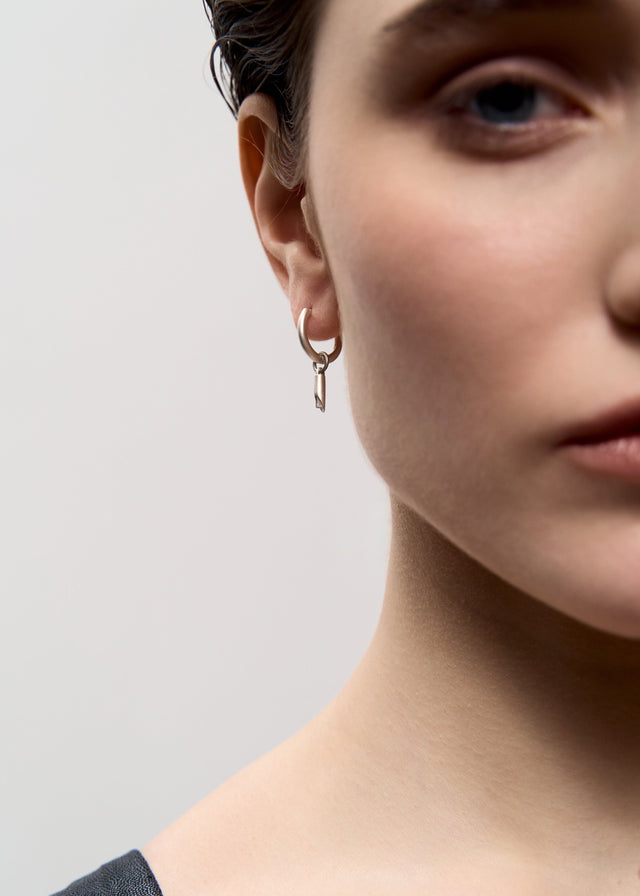
- 925 sterling silver is the base of the brand, left uncoated: no rhodium, no lacquer. Silver is not the whole catalogue — carbon, meteorite, stones and other metals are extensions of the same language, and part of the range carries no silver at all, like the Signature Asymmetric Carbon ear cuff.
- Living Silver is a property of that uncoated 925: it darkens on its own through contact with air and skin, a gradual change STRUGA designs for — patina is a map of wear, not a defect.
- Oxidation is different: a deliberate step taken in the workshop to darken the surface up front, not what the metal does over time.
- STRUGA is built on five design codes (Blade, Signature Asymmetric, Signature Heart, Thorn, Brutalism) and operates across five worlds — CODEX, RITUAL, LAB, DARK UNION, ISLAND ARTIFACTS — all anchored in Bali production, with retail at Hedonist Store and Barefoot Aristocracy in Bali.
Updated September 26, 2026
| The brand in figures | |
|---|---|
| Founded | 2018, in Bali |
| Founders | Dmitry and Ekaterina Strugovshchikov — design and founding; the silver is worked by master silversmiths |
| Metal | 925 sterling silver as the base, uncoated: no rhodium, no lacquer; carbon, meteorite, stones and other metals as extensions |
| Design codes | 5 — Blade, Signature Asymmetric, Signature Heart, Thorn, Brutalism |
| Worlds | 5 — CODEX, RITUAL, LAB, DARK UNION, ISLAND ARTIFACTS |
| Families | 11 |
| Where it is made | Bali, by hand |
| Made to order | about 2 weeks in plain silver, 3 weeks with a stone, 4 weeks for carbon; shipping about 7 days |
| Seen in person | Hedonist Store and Barefoot Aristocracy, Bali |
From business to craft
STRUGA didn't begin with a jewelry-design degree or a family silver tradition. It began with a question: what happens when an entrepreneur with no craft background walks into a Balinese silver village and refuses to leave? Background on the island of Bali on Wikipedia.
Dmitry Strugovshchikov trained as an engineer and spent his working life as an entrepreneur in security-systems equipment. A complex technical device travels the world badly — the chain from factory to installer is long.
Bali's silver region offered something no business plan could: a living craft tradition willing to teach anyone patient enough to learn. The workshops there have been making silver for generations. Families pass techniques from parent to child, workshop to workshop, in a system that long preceded any of the brands now built on top of it.
What the founder brought from engineering
None of it was jewelry. What crossed over was a way of building things, and a short list of materials he already knew by hand.
| Stage | What it was | What it left in STRUGA |
|---|---|---|
| Engineering degree | Technical training, not a jewelry school | A piece is designed as an assembly, not as an ornament |
| Security-systems business | Dealer networks and manufacturing in China | Production and distribution are treated as part of the design, not as a later problem |
| Chameleon door intercom | Five years on the 3D models, the housing, the board and the software | The first design work of his life, done end to end |
| Face plates of that intercom | Copper, brass and carbon | The material palette the brand still works with today |
| Bali, 2018 | Arrived with that experience; jewelry was not on the plan | The silver village, and the decision not to leave it |
Why STRUGA started with carbon, not silver
The brand did not start with silver. It started with carbon: the first tests and the first objects were made of carbon — the material already familiar from those face plates. That is where STRUGA begins and where the inspiration comes from. Purely carbon it almost never was: from the very beginning other materials were set into the carbon — silver-plated jewellery alloy, copper, brass, meteorite. Silver came later, on the island, and became the base of the language.
The move from those face plates to jewellery was short — the same layered material, at the scale of a ring. That is why carbon still lives in LAB, the world of objects that do not exist in classical jewelry, next to meteorite. And it is why part of the range carries no silver at all.
The workshop discovery
The first months were not about making anything. They were about watching. Silversmiths transform raw silver grain into intricate objects using tools that have not changed in centuries — hand files, charcoal-fueled torches, wax-carving tools, polishing wheels driven by a foot pedal. Each piece passes through a single pair of hands from raw material to finished object.
The contrast with the tech background was total. Where previous businesses moved fast and scaled digitally, working silver demands patience, physical skill, and acceptance that each piece takes as long as it takes. A complex ring is not «two hours.» It is «as long as the metal needs.» You don't optimize that out without losing what makes the piece worth buying in the first place.
That asymmetry — fast in business, slow in craft — became the founding tension of the brand. STRUGA exists at the intersection of how an entrepreneur thinks (systems, repeatability, distribution) and how a silversmith thinks (the next millimetre of file, the angle of the polish, the shape of the patina). Neither alone produces what STRUGA produces.
Finding the design language
STRUGA's aesthetic did not emerge overnight. Early pieces were experimental — testing what silver could do when pushed by someone who thought in systems rather than ornaments. Some failed entirely. The ones that worked started to share a logic: clean structural lines, modular construction, surfaces treated as material rather than canvas.
That logic resolved into a five-code system:
- Blade. Modular links and architectural geometry. Built for a single object that reads as several.
- Signature Asymmetric. Off-axis forms that earn their balance through tension, not symmetry.
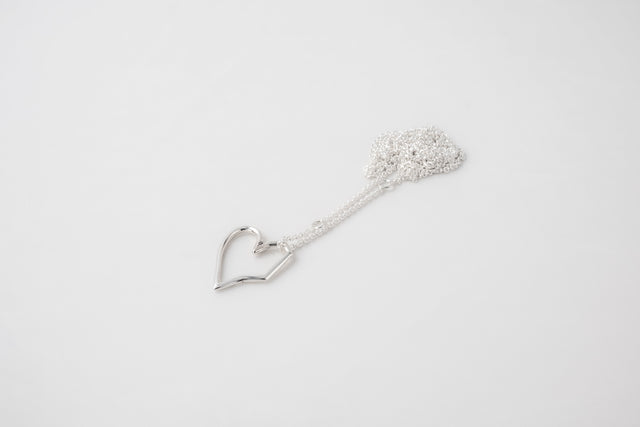
- Signature Heart. The classical heart re-cut in a structural language — sharp where the ornamental version is soft.
- Thorn. Aggressive spines, the pointed sister of Blade. Lives most clearly in amulets and earrings.
- Brutalism. The most uncompromising of the five codes — heavy, textural, raw at the edges.
These five codes are now the brand's DNA. Each is its own design language but all of them share the same construction logic: built, not decorated. That phrase — «built, not decorated» — captures the engineering mindset applied to a craft tradition. It also separates STRUGA from the ornamental schools of silver (Ottoman, gothic, ornamental Bali) that solve the same problem in completely different ways.
Living Silver — the philosophy
The decision not to rhodium-plate STRUGA silver was deliberate, and it was unusual. Most commercial silver jewelry is plated to prevent tarnish. The plating sits between the metal and the air, and it produces a uniform chrome-like surface that looks the same on day one as it does six months in. The trade-off is that when the plating wears off — typically inside 12–18 months — the piece dulls unevenly, and looks worse than the day you bought it.
STRUGA chose the opposite. Let the metal live. Let it darken at contact points and brighten where you touch it. Let each piece become a record of how it has been worn. The technical name for the metal underneath is just 925 sterling silver. The choice we make on top of that — no rhodium, no protective lacquer, no chemical seal — is what turns the metal into Living Silver.
This philosophy — that change is a feature, not a defect — runs through everything STRUGA makes. It also defines the kind of customer the brand is right for. If you want a stable, mirror-bright surface that does not change for a year, Living Silver is not your choice. If you want a piece that ages with you and reads back the wear, it is exactly the choice.
The five worlds
As STRUGA grew, the design codes resolved into five distinct «worlds» — each with its own tone, materials, and place in the wardrobe.
| World | What it is | Materials and form |
|---|---|---|
| CODEX | The most architectural side of the brand | Asymmetric pendants, blades, signature rings in 925 silver |
| RITUAL | The dark, spiritual line | Tourmaline, aquamarine, raw quartz; heavier oxidation; amulet-form pieces |
| LAB | Objects that do not exist in classical jewelry | Meteorite components, carbon fiber, unusual proportions |
| DARK UNION | The quietest world by design — personal, not statement | Wedding and matching rings, made to order |
| ISLAND ARTIFACTS | The gift collection at an accessible price | Full STRUGA build standard, smaller forms |
Each world is anchored in Bali production. Each draws on the same eleven families but resolves them differently. A BRUTALISM ring in CODEX and a BRUTALISM band in DARK UNION are recognizably the same brand, but they are answering different questions.
Where STRUGA is now
From a single workshop experiment the brand has grown into five working parts:
- Worldwide shipping — orders leave the island for customers across multiple continents.
- Retail partners on Bali — Hedonist Store and Barefoot Aristocracy.
- Bespoke work for couples — wedding and matching rings under DARK UNION.
- Custom Order for individuals — one piece designed and made for one person.
- Made to order as the default — nothing sits in stock; a piece is built after it is bought.
The Bali workshops are still the heart of production for the international market. Every piece is still made by hand by master silversmiths — the founders lead the design, they do not work the metal themselves.
The growth has been deliberately slow. STRUGA does not chase volume that would force the brand into committee design or stamped production. The cost is reach — there are markets where the brand is not yet present. The benefit is that everything that ships still goes through the same hands, in the same workshops, finished to the same standard. That trade-off is the whole point.
Why Bali specifically
Bali was not chosen for cost. Cheaper production exists in Bangkok, in coastal China, in parts of India. Bali was chosen because the local school and the local nature precisely match the design language. Three things mattered.
The casting tradition
A long-running tradition of hand casting from wax models makes complex forms possible at small scale. The same workshop that can produce a minimalist CODEX ring can also produce a sharp Thorn amulet. The flexibility is rare.
The climate and the workshop culture
Tropical climate and open-door workshops keep the metal in conversation with humidity and sea air. Living Silver behaves differently here than it would in a sealed industrial space. The brand uses that.
Local materials
Access to local stones — aquamarine, tourmaline, raw quartz — and to natural composite materials including carbon and meteorite gives the RITUAL and LAB lines their character. Sourcing globally is possible; sourcing locally produces stones with a regional fingerprint.
Related
- About STRUGA
- Dmitry Strugovshchikov, founder and designer
- How a STRUGA piece is made, from concept to finished silver
- Celuk, the silver village behind the workshops
- The Living Silver philosophy
- Where STRUGA is made
About STRUGA. STRUGA is a dark silver jewelry brand founded by Dmitry Strugovshchikov and Ekaterina Strugovshchikova, handcrafted with Balinese and international silversmiths. 925 sterling silver is the base of the brand and is left uncoated — no rhodium, no lacquer; carbon, meteorite, stones and other metals extend that language. Uncoated 925 darkens on its own through contact with air and skin; on some pieces the surface is darkened deliberately in the workshop. Both are part of the design. It is a brutalist object that reacts and changes through contact with the environment and the wearer.
Objects from this article
- Brutalism V.3 Ring | STRUGA — the most uncompromising of the five codes.
- Blade Big Links Bracelet | STRUGA — modular links, the Blade code in a single object.
- Asymmetric Destroyed Necklace | STRUGA — Signature Asymmetric inside the RITUAL world.
- Triple Drills Ring | STRUGA — a LAB object built around perforation.
- All STRUGA objects
Frequently asked questions
Didn’t find the answer — write to us, we reply personally.
Ask a question →01Living Silver vs oxidized silver: are they the same thing?+–
No. Living Silver is a property of uncoated 925 sterling silver: it darkens on its own through contact with air and skin, and that change is gradual. Oxidation in STRUGA pieces is a deliberate step taken during the work to darken the surface up front. One is what the metal does over time; the other is a choice made in the workshop.
02Is Living Silver patina a defect or wear damage?+–
No. Patina is the surface STRUGA designs for, not a flaw. It is reversible with care and reads as a map of how the piece has been worn, rather than as damage that lowers the value.
03Did STRUGA start as a jewelry brand?+–
No. It started with an entrepreneur from a security-systems and tech background spending time in Bali silver workshops in 2018. The first STRUGA objects were carbon, not silver; silver came later and became the base of the language. The brand grew out of long-term contact with that craft tradition, not a design degree or a family silver line.
04Does uncoated 925 mean lower-grade silver than plated jewelry?+–
No. The metal underneath is the same 925 sterling silver in both cases. Plating is a surface layer on top; choosing not to plate does not change the silver — it changes how the surface ages.
05Did Dmitry train as a jeweler?+–
No. He trained as an engineer and worked as an entrepreneur — security-systems equipment, dealer networks, and then the Chameleon door intercom, the first design work of his life, whose decorative face plates were copper, brass and carbon. The craft side of STRUGA was learned through long-term contact with Bali silversmiths — watching, asking, attempting, and slowly building a working understanding of what each technique can and cannot do.
06Are STRUGA pieces fully handmade?+–
Yes. Wax models are sometimes 3D-printed for geometric precision, but everything that happens to the silver — casting, filing, polishing, soldering, oxidation, stone-setting — is hand work. No mass stamping, no automated finishing.
07Does STRUGA design every piece, or are workshops free to add their own?+–
Every piece is STRUGA design. The brand controls the design system end-to-end. Workshops execute, refine, and contribute craft expertise — but the design language is centralized, which is what keeps the brand consistent across collections.
08Is the Living Silver approach more expensive than rhodium plating?+–
The metal cost is the same — it is the same 925. The labor cost is slightly higher because more attention goes into the surface finish that will be the final finish (no plating step to forgive small flaws). The honest answer is that Living Silver is not a cost saving — it is a design choice that some customers want and some do not.
09Can I visit the workshop on Bali?+–
No. The workshop is a production floor, not a showroom, and it is not open to visitors. The pieces are visible at Hedonist Store and Barefoot Aristocracy in Bali — concept-store environments where you can handle, try on and take home pieces directly. For online buyers worldwide, strugadesign.com ships internationally; for the Russian market, strugadesign.ru handles delivery to any Russian city.
10What is next for STRUGA?+–
The brand grows along the existing five worlds — slowly, with the same hands and the same workshops. New worlds are added only when a coherent design language and a real reason exist. Volume is not the goal; consistency of build and design over time is.