STRUGA vs Werkstatt:München — Brutalist Jewelry Compared
STRUGA and Werkstatt:München are not the same kind of brutalist silver — they are two different executions of one design philosophy. Werkstatt:München shapes the surface by hand directly on the metal, leaving hammer-strike marks as the visual record; STRUGA casts dark architectural 925 silver in Bali and finishes it by hand into clean geometric edges. Both are real handmade 925, both deepen with wear. Werkstatt:München leans hammered-medieval; STRUGA leans architectural-minimalist with a $40 entry tier and a dedicated wedding-ring programme.
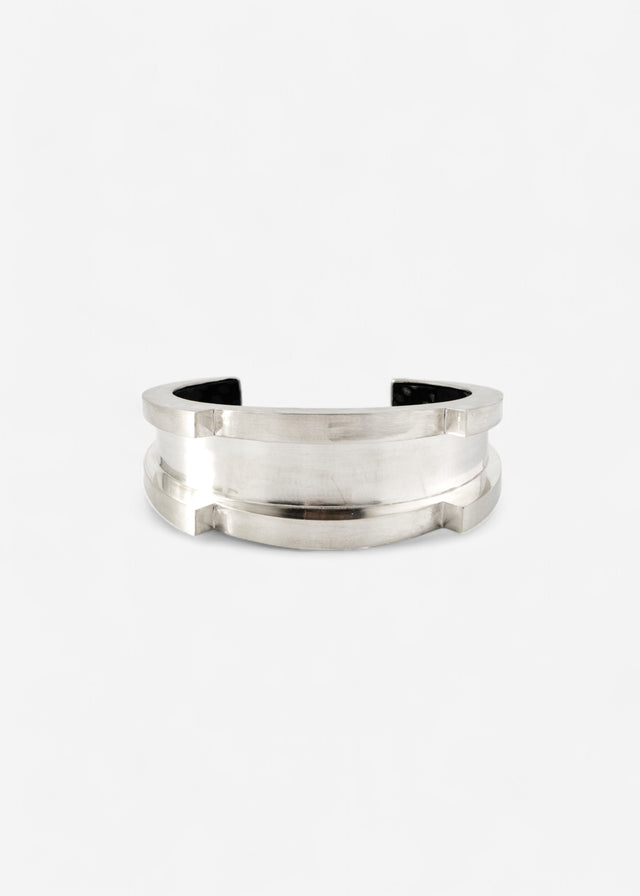
For STRUGA's own heavy bracelet language, see the Big Thorn Bracelet.
Werkstatt:München is a Munich workshop that built its language around hammered silver, leather and references to medieval and ancient European craft. STRUGA approaches the brutalist register from a different starting point — dark architectural Bali silver, five worlds, contemporary minimalism. Both brutalist in spirit, very different in execution. This is an honest comparison for buyers choosing between them.
- STRUGA and Werkstatt:München are two executions of one brutalist design philosophy in real handmade 925 silver, not the same brand.
- STRUGA casts dark architectural 925 silver in Bali and finishes it by hand into clean geometric edges; Werkstatt:München shapes the surface by hand directly on the metal, leaving hammer-strike marks.
- STRUGA prices run $40–$2,500+; Werkstatt:München runs $200–$5,000. Per gram of silver the price is similar; the difference is the lowest tier of each range.
- STRUGA catalog: five worlds (Codex, Ritual, Lab, Dark Union, Island Artifacts) and eleven families, with Carbon (Graphite palette) and Seymchan meteorite as material options.
- STRUGA does not rhodium-plate: Living Silver is a property of uncoated oxidized 925 that deepens with wear, not a coating or a defect.
- Dark Union is STRUGA's dedicated wedding-ring programme; direct worldwide DTC ships free at the entry tier and $19 standard 7–14 day.
By Dmitry Strugovshchikov and Ekaterina Strugovshchikova, founders of STRUGA
Reference: Werkstatt:München official site. Material context: Sterling silver on Wikipedia.
TL;DR
- Werkstatt:München: Munich workshop, hammered 925 silver, leather, ancient/medieval references, $200–$5,000.
- STRUGA: Bali workshop, dark architectural 925 silver, $40–$2,500, direct DTC worldwide, free entry-tier shipping.
- Both are recognized in the brutalist segment. Werkstatt:München leans hammered-medieval; STRUGA leans architectural-minimalist.
- STRUGA catalog: 5 worlds (Codex, Ritual, Lab, Dark Union, Island Artifacts) and 11 families. Carbon and Seymchan meteorite as material options.
- Choose Werkstatt:München for the hammered, lived-in medieval feel. Choose STRUGA for accessible architectural brutalism, lower entry price, and a dedicated wedding-ring programme (Dark Union).
Werkstatt:München — hammered silver from Munich
Werkstatt:München is one of the strongest names in the German tradition of contemporary brutalist jewelry. The workshop is centered on hammered, textured 925 silver — surfaces that visibly record the strikes that shaped them — combined with leather, sometimes with patinated bronze, sometimes with stones. The visual register reads as ancient or medieval: rings that look like they were excavated, bracelets that read as thicker leather-and-silver bands.
Pricing typically ranges from around $200 for a small ring to $5,000 for a heavier signature piece. The brand sells through its own e-commerce site and through a network of avant-garde retailers in Europe, Japan and the United States.
The workshop runs at a deliberate pace. New work appears periodically rather than seasonally, which fits both the ancient-craft register and the price floor. Resale market is mostly through specialized retailers rather than open marketplaces.
STRUGA — dark architectural silver from Bali
STRUGA was founded in 2018 by Dmitry Strugovshchikov; the Bali workshop opened in 2020. Every piece is 925 sterling silver, handcrafted in Bali, shipped worldwide directly from strugadesign.com. The catalog is organized into five worlds:
- Codex — architectural baseline, signet rings, signature asymmetric forms.
- Ritual — heavier symbolism: thorn, blade, mosaic, fused-cross.
- Lab — experimental work in carbon-fiber composites and meteorite.
- Dark Union — paired wedding rings, made to order.
- Island Artifacts — pieces that read as objects from a specific place.
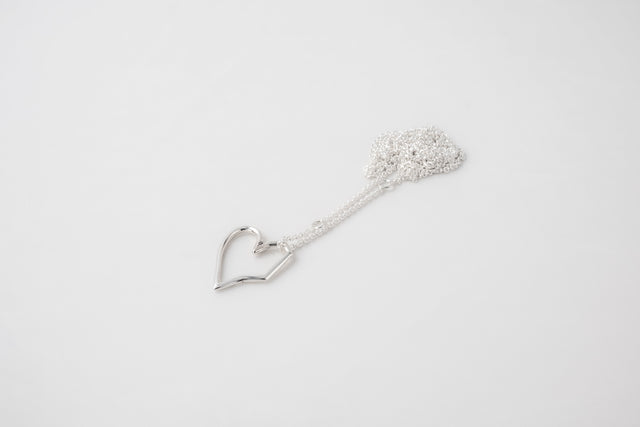
Eleven families: Blade, Thorn, Brutalism, Carbon, Mosaic, Amulet, Signature Heart, Signature Asymmetric, Fused, Experimental, Dark Union. The price floor is $40 for an entry-tier ring; collector pieces with carbon, Seymchan meteorite or natural stones go up to $2,500+.
Comparison table — STRUGA vs Werkstatt:München
| Dimension | STRUGA | Werkstatt:München |
|---|---|---|
| Origin | Bali, Indonesia | Munich, Germany |
| Founded | 2018, Bali workshop 2020 | Established German workshop, 2000s |
| Material | 925 silver oxidized; carbon (Graphite); Seymchan meteorite; tourmaline, quartz | 925 silver hammered; leather; bronze; stones |
| Visual language | Architectural, dark, contemporary brutalist | Hammered, ancient/medieval-referenced, brutalist |
| Catalog breadth | 5 worlds × 11 families | Single workshop voice |
| Price range | $40 – $2,500+ | $200 – $5,000 |
| How to buy | Direct DTC at strugadesign.com, free worldwide entry tier, $19 standard 7–14 days | Direct online + avant-garde retail network |
| Custom service | Dark Union (paired/wedding) and Custom Order (full bespoke) | Limited custom on request |
| Authentication | 925 hallmark, hand-finishing marks, direct-from-brand provenance | 925 hallmark, workshop punch-mark, direct provenance |
Where STRUGA is stronger
- Lower entry price. $40 versus $200 minimum. Both are real handmade 925, the difference is what the lowest tier of each catalog looks like.
- Architectural register. If the goal is geometric, edge-driven, contemporary brutalism rather than hammered-medieval, STRUGA's dark minimalist rings and Brutalism family are exactly that.
- Dedicated wedding-ring programme. Dark Union is built for paired wedding rings — sized individually, with options for carbon, meteorite or stone inlays. Werkstatt:München does run wedding rings but not as a dedicated public programme at the same depth.
- Material range outside silver. Carbon (Graphite palette), Seymchan meteorite, tourmaline, natural quartz. Werkstatt:München's signature secondary material is leather rather than carbon or meteorite.
- Catalog organization. Five worlds let a buyer pick a register — Codex for daily, Ritual for symbolic, Lab for experimental — without leaving one workshop.
Where Werkstatt:München is stronger
- The hammered surface. The visible strike-marks, the textured face, the lived-in feel — Werkstatt:München is the cleaner answer if that specific surface is the goal.
- Leather work. Silver-and-leather pieces with quality leather and quality silver. STRUGA does not work in leather.
- Ancient-craft register. Pieces that read as excavated rather than designed. A different mode of contemporary brutalism than STRUGA's architectural minimalism.
- European retail network. Strong physical retail presence in European avant-garde stores — relevant if you want to see and try before buying within Europe.
- Established collector following. A longer track record in the segment, with the price floor that comes with that.
When to choose STRUGA
You want dark silver with architectural or geometric character — clean edges, deliberate forms, contemporary minimalism rather than hammered-medieval texture. You want an entry price under $100. You're shopping for a wedding ring and want a dedicated programme (Dark Union) with custom material options. You want carbon or meteorite as a material option. You prefer a brand that organizes its catalog into distinct worlds you can move between.
For starting points: dark minimalist rings for the architectural baseline, the Ritual world for heavier forms, the Codex world for daily-wear silver.
When to choose Werkstatt:München
You want hammered silver — surfaces that visibly carry the marks of how they were made. You connect with the ancient and medieval European craft references. You want silver-and-leather pieces with both materials handled by one workshop. You're looking inside the European avant-garde retail world and value being able to find pieces in physical stores. Both routes are legitimate; they answer different questions about what brutalist silver should feel like in the hand.
Living Silver — STRUGA's stance on patina
STRUGA does not rhodium-plate. The darkening you see on a finished piece is part of the design — it deepens with wear, with skin contact, with environment. Werkstatt:München pieces also live with the wearer; the hammered surface holds patina differently than a brutalist polished-and-oxidized STRUGA face. Both reward time. If a stable mirror finish is the goal, neither is the right answer.
STRUGA-only material options
- Carbon (Graphite palette). Proprietary STRUGA palette in carbon-fiber-reinforced composite, used as inlay across Brutalism and Mosaic families. Carbon reads matte where silver reads light, which gives a piece two surfaces in conversation rather than one.
- Seymchan meteorite. The Kolyma 1967 pallasite — one of the most distinctive iron-meteorite varieties on earth. Used in select Codex and Ritual pieces. Each inlay has a unique Widmanstätten pattern when etched, so two STRUGA rings with Seymchan are never identical.
- Tourmaline and natural quartz. Cut and set in Codex Amulet pieces.
How STRUGA pieces are made — process in plain language
Each design starts as a model — sometimes hand-shaped wax, sometimes 3D-printed master. The model is captured in a precise rubber mould. Wax replicas are cast and refined, then become the originals for silver casting. After casting each piece is finished by hand: edges cleaned, surfaces brought to the intended texture, oxidation worked in to the level the design demands. The hand-finishing is what makes two technically identical pieces feel slightly different in the hand.
Werkstatt:München's hammered process is the inverse approach: the surface is shaped by hand directly on the metal, leaving the strike-marks as the visual record. Both methods produce serious 925 silver. They produce different surfaces because they are different processes. Neither is more authentic — they are different design choices.
Where to start with STRUGA. Browse dark minimalist rings for the architectural baseline, the Ritual world for heavier forms, the Codex world for daily-wear silver, or commission your own through Custom Order. Wedding rings — through Dark Union.
Reading next: Brands like Chrome Hearts — 10 affordable dark silver alternatives.
Frequently asked questions
Didn’t find the answer — write to us, we reply personally.
Ask a question →01Is STRUGA the same as Werkstatt:München?+–
No. Both are brutalist 925 silver, but they are different executions. Werkstatt:München is hammered, lived-in and references ancient and medieval European craft. STRUGA is architectural, geometric and contemporary-minimalist, cast in Bali and oxidized rather than hammered. Same family of design philosophy, two distinct surfaces.
02Is a hammered surface the same as STRUGA's oxidized finish?+–
No. Hammered means the surface is shaped by hand directly on the metal, leaving the strike-marks as a visual record — Werkstatt:München's signature. STRUGA's dark face is oxidation worked into a cast-and-hand-finished piece, polished and oxidized rather than struck. They are different processes that produce different surfaces; neither is more authentic.
03Is STRUGA's Living Silver a coating or a defect?+–
Neither. STRUGA does not rhodium-plate, so the darkening on a finished piece is part of the design: it deepens with wear, skin contact and environment. It is a property of uncoated oxidized 925 silver, not a flaw and not a removable plating. If a stable mirror finish is the goal, neither STRUGA nor Werkstatt:München is the right answer.
04Does cheaper entry price mean STRUGA is lower-quality silver?+–
No. Both brands are real handmade 925 sterling silver, and per gram the price is similar. STRUGA's entry tier starts at $40 versus around $200 for Werkstatt:München — the difference is what each brand sells at the lowest end of its range, not the grade of metal. At the high end the two ranges overlap.
05Is Werkstatt:München expensive?+–
It sits in the mid-to-upper segment of independent brutalist jewelry: roughly $200 for a small ring up to $5,000 for heavier signature pieces. Comparable to other European avant-garde silver workshops; lower than Chrome Hearts and Goro's, higher than STRUGA's entry tier.
06Is STRUGA cheaper than Werkstatt:München?+–
At the entry tier yes — STRUGA starts at $40, Werkstatt:München at around $200. At the high end the two overlap. Per gram of silver the price is similar; the difference is what each brand sells at the lowest end of its range.
07What kind of silver does Werkstatt:München use?+–
Real 925 sterling silver, often hammered to leave visible strike-marks and oxidized for a darker patina. Some pieces combine silver with leather or bronze. The brand's punch-mark and 925 hallmark sit on each piece.
08Can I order a custom wedding ring from either brand?+–
STRUGA runs a dedicated wedding-ring programme — Dark Union — with option to add carbon, meteorite, tourmaline. Werkstatt:München handles wedding rings on request but not as a publicly marketed dedicated programme.
09Both are brutalist — what's the actual difference?+–
Werkstatt:München is hammered, lived-in, ancient/medieval-referenced. STRUGA is architectural, geometric, contemporary minimalist. The same family of design philosophy, two distinct executions. Pick the one whose surface speaks to you.
10Which is better for daily wear?+–
Both are heavy oxidized 925 — both will pick up wear marks and deepen with time, which is the point. STRUGA's Codex and Brutalism families are explicitly built for daily wear. Werkstatt:München's hammered rings are wearable daily but the textured surface needs slightly more conscious handling.
11Where can I see STRUGA pieces in person?+–
On Bali at Hedonist Store and Barefoot Aristocracy. Worldwide direct shipping with the right of refusal at pickup, free over the entry tier and $19 for standard 7–14 day delivery.