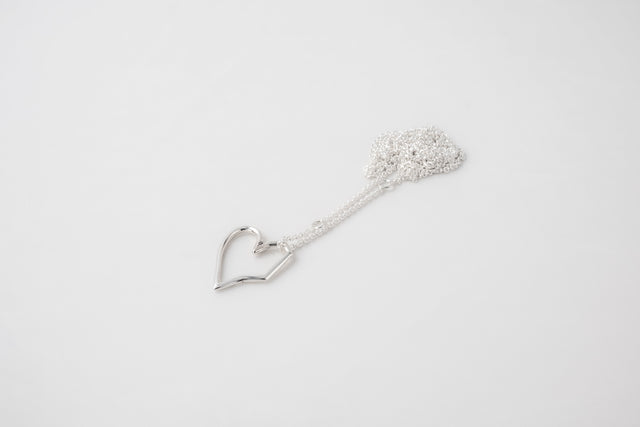
Handmade vs Mass-Produced Jewelry — What You're Really Paying For
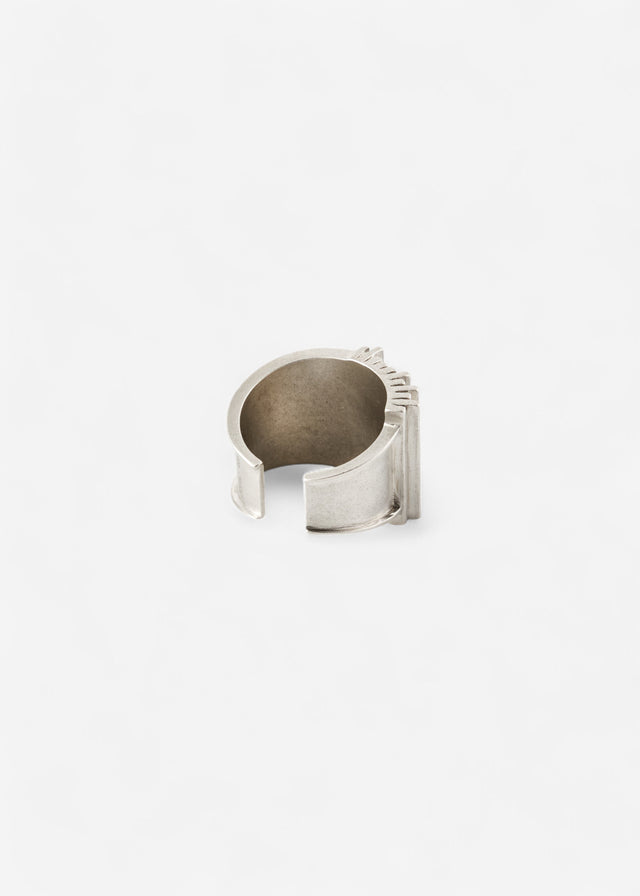
Walk into any mall and you can find silver jewelry for $15. Open a designer site and you see silver jewelry for $150. The same metal, ten times the price. What are you actually paying for? This guide breaks the difference into the parts that matter — the manufacturing reality, the alloy, the design, the durability, and the long second life of a piece you can repair instead of replacing.
Updated September 28, 2026
- Mass-produced jewelry is stamped or injection-molded by the thousand from a single mold, while handmade casting destroys each wax model, so every cast piece is structurally one-of-one.
- The 925 stamp guarantees only 92.5% silver; the other 7.5% varies — usually copper, sometimes with traces of nickel, zinc or tin — and that alloy partner determines how the piece ages.
- Weight is the cheapest test of build quality: STRUGA rings run 2–24 g with a median of 8 g, and the heavy families such as BRUTALISM sit at 19–24 g, against 3–5 g for a typical mass-brand ring of the same external size.
- Rhodium plating on cheap silver goes through in 6–12 months of daily wear, while uncoated handmade silver reacts with sulfur compounds and develops a soft patina within weeks.
- A handmade silver piece can be resized, resoldered and refinished across decades — a realistic lifetime of 20+ years versus 2–4 years for a $15 mass-produced ring.
What is the difference between handmade and mass-produced jewelry?
The difference between handmade and mass-produced jewelry is where the labour goes and how many hands touch each piece. Mass-produced jewelry is cast in large batches from one master mould, machine-polished, and finished identically by the hundred — efficient, consistent, cheap. Handmade jewelry is shaped, filed, and finished one piece at a time, so each carries small variations, a maker's judgement, and metal worked to last decades rather than seasons. You pay more for handmade because you are paying for hours of skilled labour and a piece that can be repaired, re-finished, and worn for life — not for the metal, which is often identical. At STRUGA every piece is hand-finished in the Bali workshop, so no two are exactly alike — two castings of the same model, the Brutalism V.1 ring (9.6–24 g depending on size), leave the bench with different file marks and their own patina map.
Handmade vs mass-produced at a glance
| Mass-produced | Handmade (STRUGA) | |
|---|---|---|
| How it is made | thousands of identical pieces from one mould | the wax model is destroyed with each cast, so every piece is one-of-one |
| Ring weight, same external size | 3–5 g | 2–24 g, median 8 g |
| Alloy partner | cheapest available | copper blend mixed in the workshop |
| Surface | rhodium plating, through in 6–12 months of daily wear | uncoated, patina within weeks |
| Repair | usually costs more than replacement | resizing, resoldering and refinishing for decades |
| Realistic life | 2–4 years | 20+ years with periodic refinishing |
How is mass-produced jewelry made, and how is handmade different?
Mass-produced jewelry uses injection molding or stamping. A machine presses out thousands of identical pieces per hour. The mold itself costs $500–$2,000 to make, but amortized over 10,000 units that is cents per piece. The result is fast, consistent and cheap — and structurally identical at the molecular level to every other piece off the same line.
Handmade jewelry uses wax-and-mold casting — a technique with five thousand years of recorded history. Each piece is sculpted in wax (or printed and then refined in wax), encased in plaster, burned out, and filled with molten silver. The wax model is destroyed in the process. The next piece is cast from a fresh wax. Every casting carries microscopic asymmetries that make it physically unique, even within the same design.
For background, see the handicraft tradition and the history of casting from wax models.
What does the 925 stamp actually guarantee, and what does it not?
The 925 stamp guarantees one thing: 92.5% silver, 7.5% other metals. It does not guarantee what those other metals are. Mass brands use the cheapest available alloy partner — usually copper, sometimes copper with traces of nickel, zinc or tin. Nickel is a common allergen, and budget production lines do not always check whether trace nickel ends up in the final piece.
Single-workshop brands control their own alloy. At the Bali workshop, the silver is alloyed with a copper blend optimized for durability and the warm, slightly grey tone of Living Silver. The same approach holds at most artisan workshops: when you can trace the alloy back to the same person who finished the piece, you can answer questions about it years later.
This matters more than it sounds. Two pieces both stamped 925 can age completely differently — one developing a soft warm patina, the other tarnishing into a dull, almost greenish grey. The difference is not the silver, which is identical. The difference is the 7.5%.
Why does factory jewelry all look the same?
Factory jewelry follows trends. It is designed by committee to appeal to the widest possible market, then iterated based on what sells. The result: everything looks the same. A heart pendant from one mass brand is structurally and visually almost interchangeable with a heart pendant from a competitor. The differentiator becomes packaging and price.
Handmade jewelry usually starts from a vision. STRUGA's eleven families — SIGNATURE ASYMMETRIC, BLADE, THORN, BRUTALISM, SIGNATURE HEART, CARBON, MOSAIC, FUSED, AMULET, EXPERIMENTAL, and DARK UNION — each represent a distinct architectural language. They are not trend-following. They are a design system, where pieces in different families share underlying construction logic but resolve into completely different objects. A BLADE ring and a THORN ring look like two species of the same animal.
This is the practical difference: a committee design optimizes for a sale today; a design system is built to still make sense in five years.
What are the hidden costs of cheap silver jewelry?
The ticket price is not the full cost of cheap jewelry. Several things tend to follow.
- Rhodium plating on cheap silver hides imperfections — but goes through in 6–12 months of daily wear, revealing dull grey underneath. The piece looks worse a year in than at purchase.
- Thin construction means deformation, broken clasps, lost stones. Mass rings under 4 grams bend out of round on serious wear; mass clasps fatigue faster. Even our lightest ring, the Signature Links V.2 at 2.1 g, is built as a closed link rather than a thin band, because thinness fails where geometry does not.
- Generic sizing means poor fit, especially for men's rings, where the cheap-jewelry size range often runs in half-size jumps and tops out at US 11.
- No repair possible. The economics make resoldering, resizing or refinishing more expensive than a replacement. So when a piece fails, it goes in a drawer or in the bin. Each loss is small but the lifetime cost adds up.
- No traceable maker. When you cannot reach back to the workshop that made the piece, you have no recourse if the alloy reacts unpleasantly with your skin or the stone falls out.
What do you actually get for the extra money?
The list works the other way too. The added cost pays for several specific things.
- Unique character. No two pieces are molecularly identical. Two STRUGA rings of the same model will have slightly different file marks, slightly different patina maps, slightly different micro-asymmetries. This is the maker's hand visible in the metal.
- Solid construction. STRUGA rings weigh 2–24 grams, median 8 g, against 3–5 g for mass-brand rings of the same external size, and the heaviest BRUTALISM ring reaches 24 g. A heavy piece is not just heavier; it is mechanically more durable, holds stones more securely, and feels different in the hand.
- Repairable. A skilled silversmith can resize, resolder, refinish, even partially recast a damaged piece. A handmade ring with twenty years of wear can come back to the same workshop and leave looking like new — without being new.
- Investment in craft. The added cost supports a workshop, a maker, a chain of suppliers who keep alloy quality high. Mass production supports a logistics chain optimized for unit cost.
- Specifiable provenance. When you can answer the question «who made this and where» you can also answer «what alloy did they use, what stones, what surface treatment.» That information has practical value if anything goes wrong, or if the piece needs work decades later.
How can you tell handmade from mass-produced yourself?
You don't need a microscope. Three checks separate handmade from mass production for almost every piece.
- Weight test. Pick up a ring of the same external size at a mass retailer and a single-workshop brand. The handmade piece will be 2–4× heavier. That weight is metal, not packaging.
- Surface inspection. Look closely at edges, joints, and inside surfaces. Mass pieces are smooth and identical because a stamping die makes them that way. Handmade pieces have visible file marks, slight micro-asymmetries, and a finishing logic — coarser inside, refined outside, or vice versa, depending on the design intent.
- Maker question. Ask the seller who made the piece, where, and how the alloy is mixed. A mass piece often has no answer beyond a brand name. A handmade piece traces to a specific workshop.
Where does the money in the price actually go?
Start with the metal, because it sets the floor under every price. Silver traded at about $1.96 per gram — roughly $61 per troy ounce — on September 28, 2026 (spot price); the metal moves daily, so every sum below is counted at that mark. A mass ring of 3–5 g therefore carries $6–10 of silver — two fifths to two thirds of a $15 ticket. Almost nothing is left for labour in that price, which is exactly why the labour is a machine.
| Piece | Weight | Silver in it at $1.96/g |
|---|---|---|
| Typical mass-brand ring | 3–5 g | $6–10 |
| STRUGA ring, median of the catalogue | 7 g | about $14 |
| Signature Links V.2 ring, our lightest | 2.1 g | about $4 |
| BRUTALISM V.1 ring, our heaviest | 24 g | about $47 |
The metal is the part you can verify in a minute, and it is not where the difference lives. A mass piece is touched by machines for seconds. A handmade piece goes through a silversmith's hands many times — sculpting, casting, filing, setting, finishing — and every pass is paid for. That is the line item that scales, not the silver.
When is mass-produced jewelry the better choice?
Honest answer: mass production is the right choice for a piece you expect to lose, gift to a stranger, or wear once. Festival jewelry. Gym backups. The silver chain that lives in a bag. The economics work for short-life or low-stakes wear, and there is no point overspending on something that does not need to last.
Handmade makes sense when the piece will be on you most days, will be remembered by people who notice it, or will need to outlast the trend it was bought into. The price difference is mostly time. Time has a way of justifying itself when the object survives.
Related
- Inside the Bali workshop — how STRUGA pieces are made
- Casting from a wax model — how the technique works
- Living Silver — why we don't rhodium-plate
- All STRUGA pieces
- Dark Fashion Jewelry
About STRUGA. STRUGA is a dark silver jewelry brand founded by Dmitry Strugovshchikov and Ekaterina Strugovshchikova, handcrafted with Balinese and international silversmiths. Most pieces are 925 sterling silver left uncoated, so they darken with wear; part of the range is oxidized at the bench. The darkening is part of the design. It is a brutalist object that reacts and changes through contact with the environment and the wearer.
Continue from STRUGA catalog:
Frequently asked questions
Didn’t find the answer — write to us, we reply personally.
Ask a question →01Is handmade the same as expensive?+–
No. Handmade silver from artisan workshops in Bali, Thailand, Mexico and parts of Europe runs from $40 upward. The gap over mass production is real but not enormous on smaller pieces; the big delta shows up on heavier work, where the labour-to-material ratio is higher.
02Does an expensive price mean a piece is handmade?+–
No. Many high-end brands run mass production with a brand markup added on top. The price tells you about the brand and the marketing budget, not the manufacturing method. Ask who made it, look at the surface, and weigh the piece — provenance is a question, not an assumption.
03Is the 925 stamp a quality grade?+–
No. The 925 stamp is a purity floor, not a quality grade. It guarantees 92.5% silver and 7.5% other metals, but says nothing about which other metals — usually copper, sometimes copper with traces of nickel, zinc or tin. Two pieces both stamped 925 can age completely differently because of that 7.5%.
04Is uncoated silver darkening a defect?+–
No. It is a reaction, not a defect. Most mass silver is rhodium-plated, which sits between the metal and the air; most handmade silver is uncoated, so it reacts with sulfur compounds in air, sweat and skin chemistry and develops a soft patina within weeks. This is a feature of the unplated approach, not a flaw.
05Will a handmade piece last longer?+–
Almost always, yes — and not by a small margin. Construction is heavier, alloy is better-controlled, repairs are possible. The realistic lifetime of a $15 mass ring is 2–4 years before deformation or finish loss. The realistic lifetime of a $150 handmade ring is 20+ years with periodic refinishing.
06Can a handmade piece be repaired indefinitely?+–
Practically, yes. As long as the workshop or a competent silversmith remains accessible, a handmade silver piece can be resized, resoldered, partially recast and refinished many times across decades. Some heritage pieces in family collections have been refinished four or five generations in.
07What about 3D-printed wax models — does that count as handmade?+–
Yes. The wax model can be carved by hand or printed from a digital file, but the rest of the process — the silicone mold work, the burnout, the casting, the filing, the polishing, the stone-setting — is hand work. A printed wax model just gets the geometry exact at the start. Everything that happens to the silver still happens by hand.
08Are all 925 stamps reliable?+–
Mostly, but not always. Reputable workshops in Bali, Europe and the US stamp pieces honestly. Some tourist-trade producers stamp 925 on under-925 alloy. The cheapest test is a reaction with nitric acid — silversmiths can do this in seconds, but few buyers will. The more practical test is asking the seller about the alloy partner and watching how confidently they answer.
09Why does some handmade silver darken faster than mass silver?+–
Most mass silver is rhodium-plated, which sits between the metal and the air. Most handmade silver is uncoated, which lets the metal react with sulfur compounds in air, sweat and skin chemistry. The plated piece looks the same for a year and then dulls; the uncoated piece begins to develop a soft patina within weeks. This is a feature of the unplated approach, not a flaw.