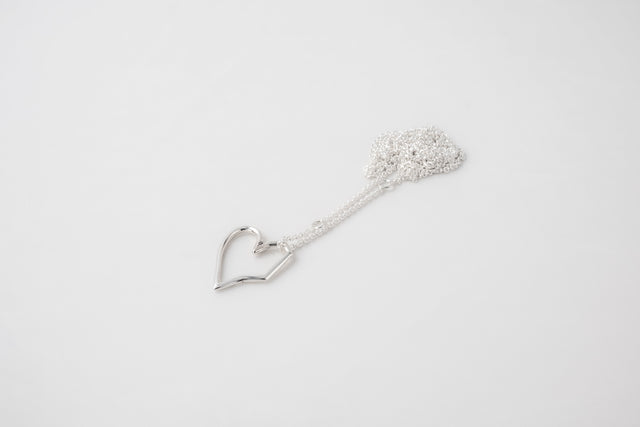
Chain types: cable, curb, figaro, rope, box, snake and more
A chain type is the pattern by which a chain is built: the shape of the link, how many rows it holds, which way each link is turned. Nine patterns — cable, curb, figaro, mariner, rope, box, snake, wheat and bismarck — cover almost everything sold. They decide weight before length does: at one and the same 45 cm a chain can run 12 grams or 90. At STRUGA the chain runs on none of the nine — it runs on a link of its own.
A chain type is the pattern by which links are joined and turned; cable, curb, figaro, rope, box, snake and wheat are the ones you meet most often.
Cable is the baseline — plain oval or round links. Curb is cable twisted flat. Figaro is curb with alternating link lengths. Mariner is a link with a bar across the middle.
The strongest patterns are the dense ones: mariner carries a bar inside each link, curb and Miami cuban interlock flat, and the multi-row family sold in Russia as bismarck sits closest to byzantine in English.
Weight is set by the link, not by the length: at the same 45 cm a STRUGA Thorn Links Chain weighs 12 grams and a Blade Mini Links V.1 weighs 90 — a difference of seven and a half times.
STRUGA runs no classic pattern: its chains use a large link of their own — the BLADE family of the CODEX world, cut on a machine, in uncoated 925 silver.
- What a chain type is
- The main types
- How to tell them apart
- What a chain weighs
- Chains at STRUGA
- At a glance
- FAQ
What a chain type is
A chain type is the way the links connect: their shape, the number of rows, the angle each link is turned to. The same metal gives a different chain depending on that pattern — soft or rigid, smooth or textured, quiet or loud. So a chain is chosen not only by thickness but by pattern: the link sets the character, and the character is what you see across a room.
A link can lie as it falls, or it can be twisted, flattened, locked into 2 or 3 rows. Hence the range: from a plain cable of single oval links to a dense multi-row weave that holds its own shape when you set it down. Length adds to that but does not drive it — the standard neck run is 40, 45 and 50 cm, a long chain goes to 75 or 120, and across those five lengths a single STRUGA design gains between 2 and 30 grams depending on which link it is built from.
Two names for the same thing travel between markets, and the mismatch trips people up. The English trade calls the plain baseline a cable chain; the Russian trade calls it yakornoye, "anchor". The English mariner — a link with a bar across its middle — is the one that actually came off ships. And the dense multi-row pattern sold across Russia and Eastern Europe as bismarck has no entry at all in the two largest English chain guides: the closest English names are byzantine and Miami cuban.
The main types
Nine patterns cover almost everything on a jewellery counter. Each is described here by what you can actually see, because that is how a chain is identified in the hand.
- Cable. Uniform oval or round links, each turned a quarter against its neighbour, one join per side. The baseline against which every other pattern is a variation. Reads as a line, not as volume.
- Curb. A cable whose links have been twisted and flattened so they lie flush and interlock. Smooth, dense, sits close to the skin. The heavy flat-faced version sold as Miami cuban is a curb.
- Figaro. A curb pattern with links of alternating length — usually one long to two or three short. The rhythm is the point; it is the most searched chain name in English by a wide margin.
- Mariner (anchor). Flat oval links with a bar across the centre. The bar is structural — it keeps the link from pulling out of shape under load, which is where the ship's name comes from.
- Rope. Links set so each connects to two others at once, which forces a natural twist. Dense but mobile; catches light along the spiral rather than in flat planes.
- Box. Square links interlocking end to end. Geometric, even, with no visible give — the pattern that looks machined even when it is not.
- Snake. Tightly closed plates or bands with a slight point at the centre of each, forming a chevron and a smooth round tube. Flexible in every direction, but the most easily kinked of the group.
- Wheat. Twisted oval links braided together into a single strand that reads like an ear of wheat. Textured, dense, holds a straight line.
- Bismarck. A multi-row weave of soldered links, the heaviest and most rigid on this list. A term of the Russian and Eastern European trade rather than the English one — English guides file the dense multi-row family under byzantine.
How to tell them apart
Lay the chain flat and look at one link, not at the whole. Is it round in section or pressed flat? Flat means curb or one of its descendants. Does a bar cross the middle of the link? That is a mariner and nothing else. Do the links alternate long and short? Figaro. Is the link square? Box. If you cannot see individual links at all, only a continuous surface, it is a snake or a herringbone.
Then pick the chain up and let it hang. Cable, mariner and figaro break into visible segments; rope and wheat read as one twisted strand; box and snake read as a solid line. Density is the second axis: the denser the pattern, the heavier and more present the chain, and the more it holds its shape rather than following the neck.
Strength follows the same logic, with one exception. The dense interlocking patterns — curb, Miami cuban, mariner, the multi-row weaves — resist pulling because load is shared across several contact points at once, and the mariner's bar adds a brace inside each link. Snake and herringbone are the fragile end: they are strong along their length and creased permanently by a single sharp bend. Thickness and pattern work together, so a thin bismarck is still dense and a thick cable still breathes.
What a chain weighs
Length is what people ask for and weight is what they feel, and the two are only loosely related. The link decides. STRUGA publishes the weight of every variant, so the spread can be shown with real numbers rather than adjectives — at one and the same 45 centimetres:
| Chain | 45 cm | Range across lengths |
|---|---|---|
| Thorn Links Chain | 12 g | 11 g at 40 cm to 18 g at 75 cm |
| Signature Asymmetric Links Choker | 30 g | 27 g at 40 cm to 33 g at 50 cm |
| Small Beads with Heart Choker | 30 g | 27 g at 40 cm to 33 g at 50 cm |
| Blade Mini Links V.1 Choker | 90 g | 80 g at 40 cm to 110 g at 50 cm |
| Long Chain with Signature Asymmetric Links | — | 35 g at 120 cm |
Seven and a half times, from 12 grams to 90, at an identical length. That is the whole argument for looking at the link before looking at the tape measure. It also explains why the same chain in two lengths is not the same purchase: the Blade Mini Links gains 30 grams between 40 and 50 centimetres, while the Thorn gains two.
Chains at STRUGA
STRUGA runs no classic pattern. Instead of curb or bismarck the brand makes a link of its own — large, cut on a machine: the BLADE family, STRUGA's chain architecture. Where a classic pattern repeats a centuries-old rhythm, BLADE sets the single link as an object and lets the chain follow from it. As the founder puts it, STRUGA is a study of object design — of ways of making, of forms, of styles; an object that lives with a person becomes, in time, an artefact.
The silver is uncoated 925 — Living Silver: the edges of the link lighten with wear, the recesses between them go to graphite, and the pattern reads sharper over time. A polished chain loses its relief as it ages; an uncoated one gains it. That is a different bargain than the one a plated chain offers, and it is the one the brand has taken.
Alongside BLADE sit the Heart Lock clasp and the perlin chains — again not a pattern of links but a joining mechanism of its own. All chains live in the chains collection; neck forms sit one level up in necklaces. Everything is made to order in Bali by master silversmiths, and a length or density outside the range goes through Custom Order.
Chain types at a glance
| Type | What you see |
|---|---|
| Cable | Plain oval or round links, each turned a quarter against the next; the baseline pattern, called "anchor" in the Russian trade |
| Curb | Cable twisted and flattened to lie flush; smooth and dense; Miami cuban is its heavy flat-faced version |
| Figaro | Curb with alternating link lengths, usually one long to two or three short |
| Mariner | Flat oval links with a bar across the centre — the brace that gives the ship's name |
| Rope | Each link joined to two others, forcing a spiral; dense but mobile |
| Box | Square links end to end; even, geometric, no visible give |
| Snake | Closed plates in a chevron forming a smooth tube; flexible, but creased by one sharp bend |
| Wheat | Twisted oval links braided into one strand; textured, holds a straight line |
| Bismarck | Soldered multi-row weave, heaviest and most rigid; a Russian-trade name, filed under byzantine in English |
| STRUGA | No classic pattern: a large machine-cut link of its own — the BLADE family, uncoated 925 silver |
| Weight spread | At 45 cm, from 12 g (Thorn Links) to 90 g (Blade Mini Links V.1) — the link decides, not the length |
The link decides the chain. What decides between a chain, a pendant and a choker — one level up. How the metal itself changes on the wearer — in the note on Living Silver.
Frequently asked questions
Didn’t find the answer — write to us, we reply personally.
Ask a question →01What are the main types of chain?+–
Cable, curb, figaro, mariner, rope, box, snake and wheat cover most of what is sold, with bismarck added in the Russian and Eastern European trade. They differ in link shape, density, weight and how the chain sits on the body.
02What is the strongest chain link type?+–
The dense interlocking patterns hold up best: mariner carries a bar across each link as a brace, and curb, Miami cuban and the multi-row weaves spread load across several contact points at once. Snake and herringbone are the fragile end — one sharp bend creases them permanently.
03How do I identify a chain type?+–
Look at a single link, not the whole chain. Round in section means cable; pressed flat means curb; a bar across the middle means mariner; alternating long and short links mean figaro; square links mean box. If no individual links are visible at all, only a continuous surface, it is a snake or herringbone.
04What is the difference between a cable and a curb chain?+–
A curb is a cable that has been twisted and flattened so the links lie flush against each other. Cable keeps its links round in section and breaks into visible segments; curb reads as one smooth dense band close to the skin.
05How much does a silver chain weigh?+–
The link decides, not the length. Across STRUGA chains at the same 45 cm the range runs from 12 grams for the Thorn Links Chain to 90 grams for the Blade Mini Links V.1 Choker — seven and a half times. Every variant weight is published on its own page.
06What chain type does STRUGA use?+–
None of the classic ones. The brand makes its own large machine-cut link — the BLADE family, its chain architecture — alongside the Heart Lock clasp and the perlin chains. All of it in uncoated 925 silver, made to order in Bali.
07Is there a silver chain without shine?+–
Yes. At STRUGA it is Living Silver — uncoated 925: it darkens in the recesses of the link and lightens on the edges, so the chain does not shine evenly but lives by its relief.