Asymmetric Jewelry
The first form of the brand
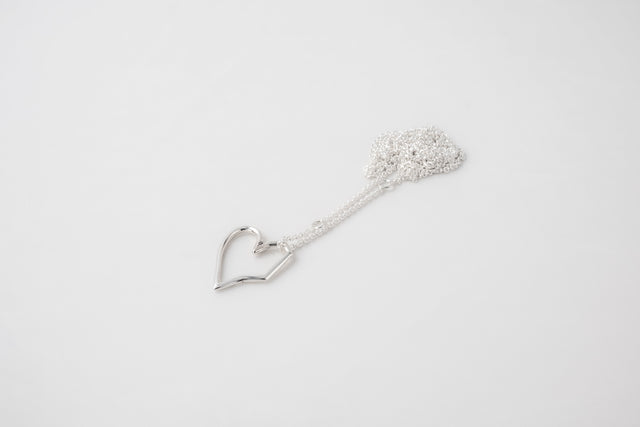
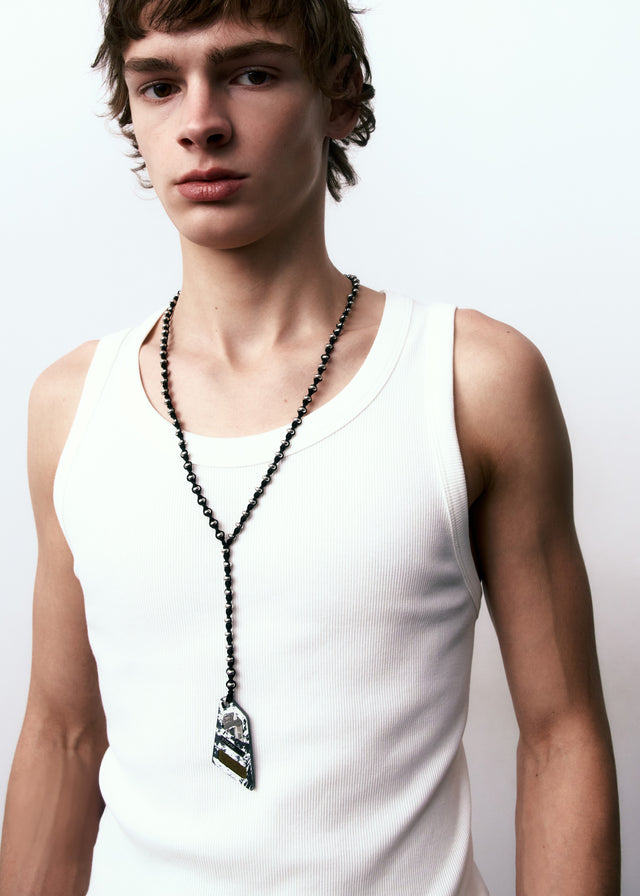
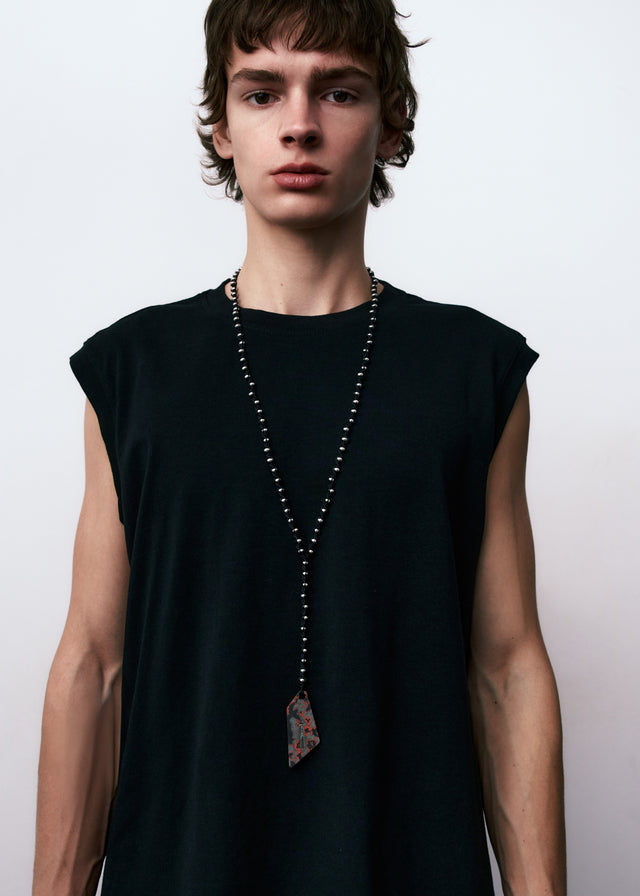
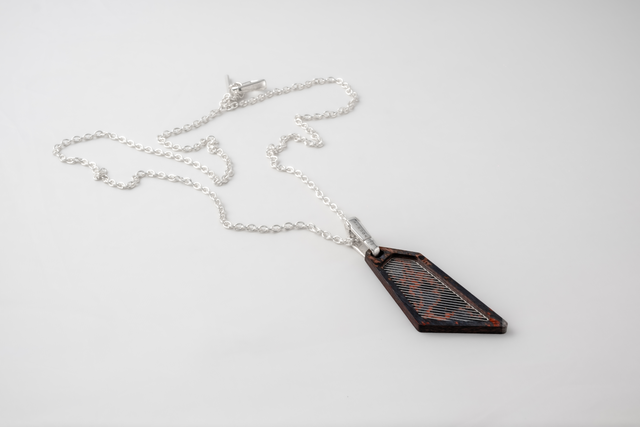
SIGNATURE ASYMMETRIC is where STRUGA began — and so did the project's central experiment: take one form and carry it across different types of pieces.
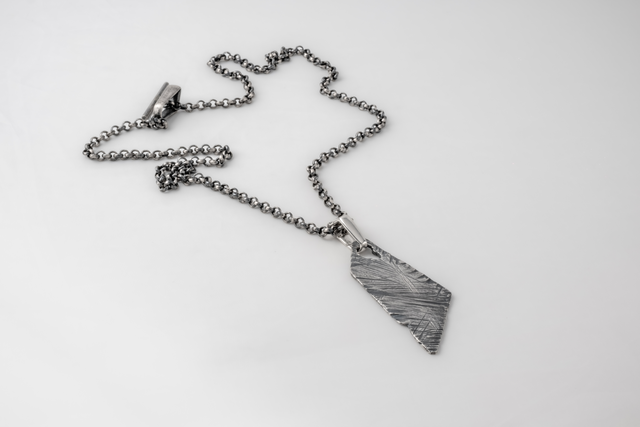
The aesthetic came from CNC-cut sheet material: sharp edges, even planes, recessed depth. STRUGA was the first to translate that language into a design of its own.
What asymmetry does
A symmetrical object resolves — the eye finds the centre and stops. An asymmetric one keeps the eye moving, because there is no point at which the two halves agree.
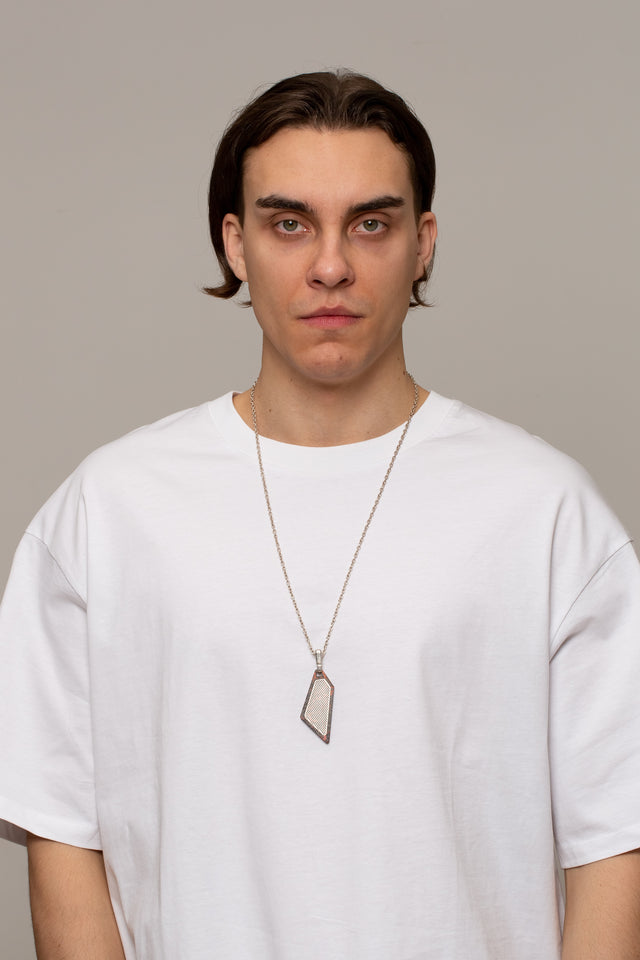
Four pieces here, from 9 to 80 grams. At the heavy end the asymmetry is structural: the weight itself sits off-centre and the piece hangs at an angle it chose rather than one you set.
What is in this collection
Three of the four combine materials rather than using silver alone. Two carry FUSED — the LAB family of melted metal with no clear edges or facets, where the surface runs wavy instead of cut. Two include meteorite.
Asymmetric Destroyed is the outlier: a broken version of the form in a dark register, and the one all-silver piece in the selection.
Where the form went next
It started with a pendant, and there were many. From there the form moved into construction: a chain link, a toggle clasp with its counterpart, a carabiner bail. That is why the same angle turns up across the brand at completely different scales.
Care
Silver darkens in the recessed depth and stays bright on the raised planes, which increases the contrast that the form was built on. Cloth or silver cleaner reverses it. Carbon and meteorite need nothing.
Frequently asked questions
What is SIGNATURE ASYMMETRIC?
The first form of the brand, where STRUGA began. The aesthetic came from CNC-cut sheet material: sharp edges, even planes, recessed depth.
Why asymmetry?
A symmetrical object resolves and the eye stops. An asymmetric one keeps the eye moving, because the two halves never agree.
How heavy are these pieces?
From 9 to 80 grams. At the heavy end the weight sits off-centre and the piece hangs at an angle it chose.
What is FUSED?
The LAB family of melted metal: no clear edges or facets, the surface runs wavy rather than cut. Two pieces here carry it.
Are they all silver?
One is silver alone; three combine materials, two of them with meteorite.
Will they darken evenly?
No. Silver darkens in the recesses while raised planes stay bright, which increases the contrast the form was built on.
Read further
- Meteorite in jewellery — what the material actually is.
- Sculptural silver — form as the subject.
- Carbon fiber and meteorite — how the materials behave.
- How silver patinates — what the darkening actually is.