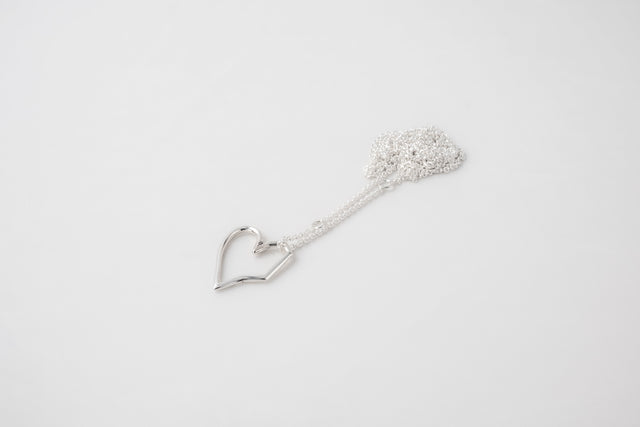
What Is Brutalist Jewelry? A Guide to Architectural Design
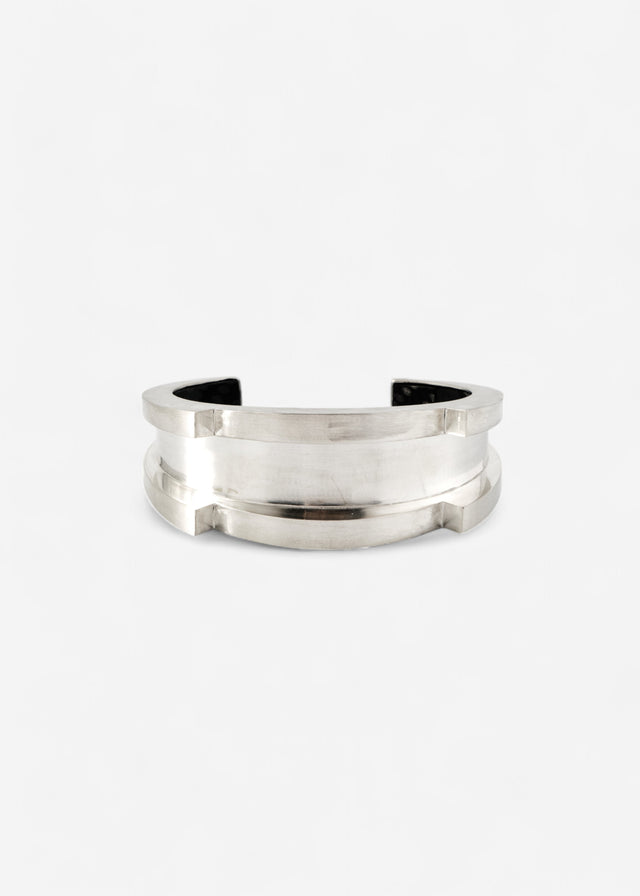
Raw surfaces, large geometry and mass instead of ornament carry the brutalist principle — expose the material, let structure speak — from concrete into wearable form.
Sterling silver 925 — 92.5% silver alloyed with copper — holds texture and oxidizes directly: potassium sulfide darkens the recesses and leaves high points bright, a reaction with the metal, not a coating.
Weight tells the style apart: a Brutalism ring weighs 9.6 grams in size 15 and 24 grams in size 22.
Updated August 10, 2026
Brutalism Beyond Architecture
When most people hear "brutalist," they think of raw concrete buildings — massive, unapologetic structures that dominated post-war architecture. But brutalism was never just about buildings. It was a philosophy: strip away decoration, expose the material, let the structure speak for itself. That same philosophy has found its way into jewelry design, and it's producing some of the most compelling pieces in contemporary fashion.
In the catalogue: Brutalism V.1 Ring — $235 · Brutalism V.3 Ring — $235 · Brutalism Ear Cuff V.1 (L) — $160
Brutalist jewelry takes the principles of raw materiality, bold geometric forms, and unpolished surfaces and translates them into wearable art. The result is jewelry that doesn't try to be pretty in a conventional sense. Instead, it aims to be powerful, honest, and architecturally striking.
Weight is the first thing that separates it from ordinary silver. A brutalist ring in 925 runs 9.6 to 24 grams across sizes 15 to 22, where a slimmer band of the same size sits at 4.7 to 12.7 grams. That is roughly double the metal on the same diameter, and it is the part you notice before you notice the shape.
The Origins of Brutalist Jewelry
The movement has roots in the studio jewelry tradition of the 1960s and 70s, when artists like Art Smith, Alexander Calder, and the Finnish modernists began treating jewelry as sculpture rather than decoration. They worked with raw metals, asymmetric forms, and oversized proportions that challenged what jewelry was supposed to look like.
In the 2010s, a new wave of designers revived and expanded these ideas. Brands began combining industrial aesthetics with handmade craftsmanship, creating pieces that felt equally at home in a gallery or on the street. The rise of dark fashion, avant-garde streetwear, and subcultures like techno and post-punk fueled demand for jewelry that matched these aesthetics — bold, dark, unapologetic.
From Raw Concrete to Metal
The word came from architecture. Le Corbusier used béton brut — raw concrete — for the surface of Unité d'Habitation in Marseille, completed in 1952. The plank formwork left a wood grain in the concrete, and it was never smoothed away. British architects Alison and Peter Smithson applied the phrase «new brutalism» to their own work in 1953. Critic Reyner Banham fixed the term in the December 1955 issue of Architectural Review. In his 1966 book he reduced the style to three marks: memorability of image, clear exhibition of structure, and materials «as found».
In jewelry the idea took hold through the 1960s and 1970s. Metal stopped being polished to a mirror: it was cast, melted, oxidised, and the marks of work were left visible. These are the makers the style started with.
| Maker | Years and country | What they set |
|---|---|---|
| Andrew Grima | 1921–2007, United Kingdom | Textured gold and uncut stones. From 1970, jeweller to Elizabeth II. |
| Björn Weckström | b. 1935, Finland | Worked for Lapponia from 1963. Surfaces like cracked rock. |
| Pentti Sarpaneva | 1925–1978, Finland | Cast bronze and silver with dense, almost mineral texture. |
| Arthur King | 1921–2000, United States | Cast gold with geological relief. |
Those methods still work. Casting from a wax model, reticulation — heating until only the surface moves — and oxidation give the same texture they gave in the sixties. STRUGA makes the BRUTALISM rings the same way: wax model, silicone mould, 925 silver, finishing by hand. The V.1 and V.3 rings weigh from 9.6 grams in size 15 to 24 grams in size 22.
What Makes Jewelry "Brutalist"
- Raw surfaces. Instead of high polish, brutalist pieces often feature oxidized, matte, or deliberately textured finishes. The metal shows its character — hammer marks, casting textures, and the natural patina that develops over time are considered part of the design.
- Geometric or architectural forms. Clean angles, sharp edges, and structural shapes define the silhouette. Think less flowing curves, more concrete beams translated into silver.
- Substantial weight. Brutalist jewelry tends to be solid and heavy. The weight is intentional — it's part of the experience. You don't just see the piece; you feel it.
- Minimal ornamentation. Decoration for its own sake is avoided. If a stone is set into a brutalist piece, it's chosen for its raw, natural quality — rough-cut tourmaline, unpolished quartz, meteorite fragments.
- Intentional imperfection. Hand-casting processes create slight variations between pieces. In brutalist design, this is a feature: each piece is a unique object, not a mass-produced copy.
How STRUGA Approaches Brutalist Design
At STRUGA, brutalism meets Bali's silver-craft tradition. Our approach takes the philosophy of raw, architectural design and channels it through centuries-old handcraft techniques. The Brutalism collection (V.1 through V.3) explores this directly — each ring is a study in aggressive geometry, cast in solid 925 sterling silver from a hand-built wax model. The form itself — the right angle, the plane, the open chamfer, and where the family sits among the brand's other forms — is set out in the Atlas entry What Is BRUTALISM.
But brutalist thinking runs through the entire STRUGA catalog. The Thorn collection translates organic sharp forms into wearable silver. The Blade series draws from industrial cutting tools. The Carabiner pieces borrow from climbing hardware and military equipment. In every case, the design principle is the same: let the form and material do the talking.
What makes our approach distinct is the combination of this modern aesthetic with Bali's artisanal production. Each piece is hand-cast, hand-finished, and hand-set by Balinese silversmiths.
How to Wear Brutalist Jewelry
- Let one piece anchor the look. Brutalist jewelry is designed to be a focal point. A single bold cuff or statement ring often works better than layering multiple pieces.
- Dark palettes work naturally. Black, charcoal, deep navy, and earth tones provide a natural backdrop for oxidized silver.
- Mix textures, not styles. Pair a raw-surfaced silver bracelet with leather, matte cotton, or wool. The contrast between textile and metal textures adds depth.
- Consider the occasion differently. Brutalist jewelry doesn't follow traditional "fine jewelry" rules. A heavy silver ring can be everyday wear. A statement cuff can go to a gallery opening or a late-night set.
Brutalist Jewelry and the Subcultures That Wear It
Techno, industrial and dark fashion communities wear brutalist jewelry because they rank authenticity above decoration and substance above trend: they judge a piece by its material and construction, not by the amount of finishing.
In Berlin's club scene, silver belongs to the uniform alongside black clothing. In Tokyo's avant-garde fashion districts, architectural jewelry complements designers like Rick Owens, Julius, and Boris Bidjan Saberi. In underground creative communities worldwide, brutalist pieces signal an aesthetic orientation — a preference for design that has weight, both literally and figuratively.
This isn't jewelry for everyone, and that's exactly the point.
Why Sterling Silver Is the Metal of Brutalist Jewelry
Not every metal suits brutalist design. Gold carries associations of opulence and delicacy that conflict with the brutalist rejection of ornament. Platinum is too rare and too polished. Bronze and brass patina unpredictably. Sterling silver 925 — 92.5% pure silver alloyed with copper — has the exact properties that brutalist design demands.
First, silver holds texture. The surface retains casting texture, tool marks, hammer strikes, and oxidation at a resolution no other accessible metal matches. A matte brutalist surface in silver reads differently at every angle. Second, silver can be oxidized directly — applying potassium sulfide darkens the recesses while leaving the high points naturally bright. This is not a coating. It is a controlled chemical reaction with the metal itself, and it produces the dark, architectural tonal depth that defines the aesthetic.
Third, silver develops a living patina. Uncoated 925 sterling without rhodium plating responds to the wearer's skin chemistry, friction, and exposure. Over weeks and months it deepens in shadow areas and brightens on contact points. This is not decay. It is the material recording its history of use — exactly the kind of honest material behavior that brutalism demands from architecture and applies to jewelry.
The combination of workability, oxidation response, and natural patina development makes 925 sterling silver the only metal that fully delivers on brutalist design principles. This is why every serious brutalist silver jewelry brand builds its production around it.
What to Look for in a Brutalist Silver Jewelry Brand
The term "brutalist jewelry" is now used loosely enough that it covers everything from mass-produced blackened rings to the output of independent ateliers working with traditional silver-craft methods. There is a real difference.
- Production method. Authentic brutalist silver is cast by hand from a wax model: a wax model is sculpted or 3D-modeled, encased in a plaster mold, burned out, and then filled with molten silver. The resulting casting carries the surface memory of the wax and retains grain, texture, and slight dimensional variation. Industrial castings done at scale use pressure or spin casting, which creates smoother, more uniform results — the opposite of what brutalist design intends. Hand-cast pieces are not perfectly identical. They should not be.
- Weight and dimension. Brutalist silver jewelry has mass. A brutalist ring in 925 silver is heavy for its diameter. The STRUGA BRUTALISM castings run from 9.6 grams in size 15 to 24 grams in size 22 — roughly double a THORN ring of the same size. If a piece feels light, it is likely hollow or thin-walled. The weight is structural honesty: the material is present in full, not economized.
- Surface finishing. Look for hand-finishing — evidence of tool marks left intentionally, matte surfaces achieved with abrasive work rather than machine tumbling, and oxidation applied selectively to enhance sculptural depth. Overly uniform finishes signal industrial finishing, not hand work.
- Transparency about materials. A credible brutalist silver jewelry brand specifies exactly what it uses: 925 sterling silver (not silver-plated, not silver-tone, not white metal). It states whether rhodium plating is used (authentic brutalist design does not use it, since plating hides the material and prevents patina development). It describes the oxidation method and whether it is a surface treatment or a direct chemical reaction with the silver.
- Workshop origin. The most compelling brutalist silver jewelry brands locate their production in places with active silver-craft traditions — Bali, Morocco, Mexico City, Istanbul. These places have the craftspeople who know how to hand-finish complex castings, set rough stones without precision tools, and work with the material on its own terms.
Brutalist Silver Jewelry from Bali: Workshop and Craft
Bali has been a center of silver production for centuries. The island's silver-craft tradition is concentrated in the village of Celuk and the workshops of Ubud and Denpasar, where families have passed metalworking skills across generations. What makes Bali distinctive is not just skill — it is a particular approach to material. Balinese silversmiths work slowly, by hand, with small tools and direct contact with the metal. This is not industrial production wearing the costume of craft. It is craft.
The convergence of this tradition with contemporary brutalist design is not accidental. Brutalism demands the same things from its maker that traditional craft does: honesty with the material, acceptance of variation, patience with process. A hand-cast piece that might take three hours to hand-finish in a Balinese workshop would be machine-polished in minutes in an industrial facility — and the result would look it.
STRUGA is a dark silver jewelry brand founded in Bali in 2018 by Dmitry Strugovshchikov and Ekaterina Strugovshchikova. Its Brutalism collection — the V.1 and V.3 rings, with ear cuffs in V.1, V.2 and V.3 — is the brand's most direct exploration of architectural form in silver. Each ring is a solid casting in 925 sterling, hand-finished to preserve surface texture, and either left natural or oxidized selectively to emphasize the structural geometry. The rings weigh 9.6 grams in size 15 and 24 grams in size 22; the ear cuffs weigh 1.6 grams in M and 3.8 grams in L. They are objects before they are ornaments.
Brutalism in the catalogue: sizes and weights
These are measured weights from the STRUGA catalogue, not estimates. Ring weight rises with size because the wall thickness stays the same and the band gets longer.
| Piece | Sizes | Weight in 925 silver |
|---|---|---|
| Brutalism V.1 Ring | 15 to 22 | 9.6 g to 24.0 g |
| Brutalism V.3 Ring | 15 to 22 | 9.6 g to 24.0 g |
| Brutalism Ear Cuff, M (V.1 and V.3) | one size | 1.6 g |
| Brutalism Ear Cuff, L (V.1, V.2 and V.3) | one size | 3.8 g |
The Bali workshop produces every STRUGA piece by hand from wax models. Wax models are built by hand or from digital models. Each mold is made individually. Each casting is inspected, finished by hand, and oxidized manually where the design calls for it. No two pieces are identical at the microscopic level. This is the work. For more on Bali's silver-craft tradition and the brands it produces, see Best Handmade Silver Jewelry from Bali.
Continue Reading
About STRUGA. STRUGA is a dark silver jewelry brand founded by Dmitry Strugovshchikov and Ekaterina Strugovshchikova, handcrafted with Balinese and international silversmiths. Every piece is 925 sterling silver, naturally oxidized or hand-patinated. The darkening is part of the design. It is a brutalist object that reacts and changes through contact with the environment and the wearer.
Frequently asked questions
Didn’t find the answer — write to us, we reply personally.
Ask a question →01Is brutalist jewelry the same as a dark or Gothic style?+–
No. Gothic jewelry is defined by iconography — skulls, crosses, bats, pentagrams. Brutalist jewelry is defined by form, material, and structural honesty, with no iconographic allegiance. A brutalist piece may use a cross, but architecturally, not symbolically. The aesthetic comes from construction principles, not from subcultural symbols.
02Is brutalist silver oxidized, or just darkened with a coating?+–
Oxidation is not a coating. On 925 silver it is a controlled chemical reaction — potassium sulfide darkens the recesses while leaving the high points naturally bright. A coating would hide the material; oxidation works with it, producing the architectural tonal depth the aesthetic depends on.
03Is a brutalist piece's darkening over time a defect, or the patina?+–
It is the patina, not a defect. Uncoated 925 sterling without rhodium plating responds to skin chemistry, friction, and exposure — deepening in shadow areas and brightening on contact points. This is the material recording its history of use, the intended finish state, not decay. STRUGA calls this Living Silver.
04Is brutalist jewelry the same as minimalist jewelry?+–
No — they are opposites in intent. Minimalism aims for visual quiet: thin bands, small forms, absence; a minimalist ring disappears on the finger. Brutalism aims for presence: mass, texture, structure; a brutalist ring anchors it. Both reject decoration, but minimalism strips away to achieve lightness while brutalism strips away to expose what remains when only structure survives.
05Why is the style called brutalist?+–
From the French béton brut — raw concrete. Le Corbusier used the phrase for the untreated concrete of Unité d'Habitation in Marseille, finished in 1952. Alison and Peter Smithson applied the phrase «new brutalism» to their own work in 1953, and critic Reyner Banham fixed the term in Architectural Review in December 1955. The name is about material shown as it is. It was never about aggression.
06What is the price range for brutalist silver jewelry?+–
Price tracks silver weight and hand finishing more than branding. A STRUGA Brutalism ring in 925 silver starts at $235, and the large Brutalism ear cuff is $160. Across independent makers, large statement rings and heavy bracelets run considerably higher, and one-off commissions higher still.
07How do you care for brutalist silver?+–
Oxidized brutalist silver darkens with wear, and that is correct behaviour. To brighten it, use a silver polishing cloth on matte surfaces and a liquid silver cleaner on mirror-polished areas. On uncoated 925 with a natural patina, polishing the high points while leaving the recesses dark deepens the sculptural effect. Avoid ultrasonic cleaners on set stones and on surface textures you want to keep.
08Can brutalist silver jewelry be worn every day?+–
Yes. Solid 925 sterling silver is durable and wearable. The patina that develops from daily wear is not damage — it is the intended finish state of an uncoated silver piece. A brutalist ring worn daily for a year looks more itself than it did when new, because it carries the record of its contact with the wearer.