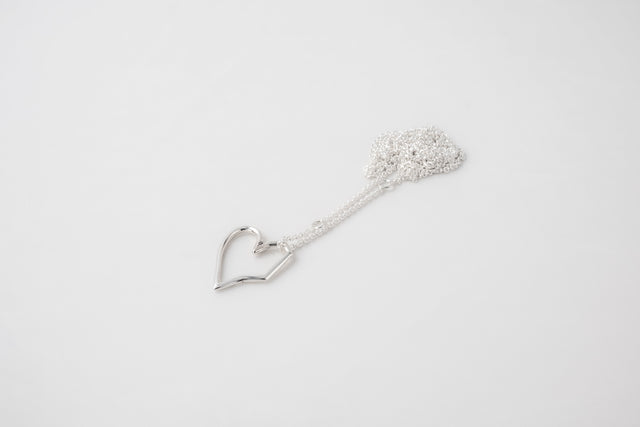
STRUGA Cross Necklaces: Carbon, Steel, and Silver
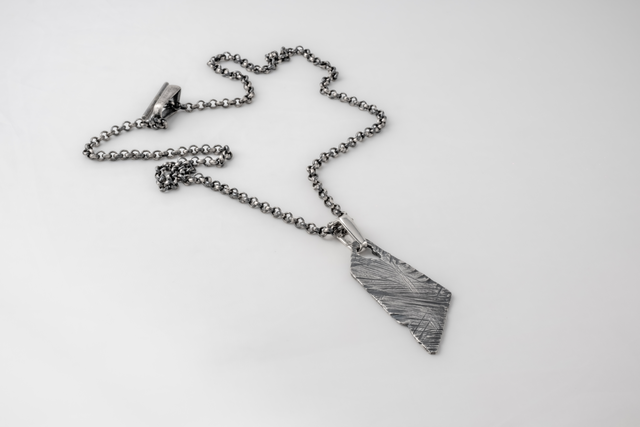
Five different constructions stand behind one cross form. Carbon with steel, carbon with a blackened cast-silver element, carbon with steel and a silver bail-carabiner, carbon with a copper cross on a silver chain — and a fully silver cross that belongs on the hand, as Fused Cross Ring.
Updated September 2, 2026
- Cross V.4 Arctic is carbon and stainless steel; it contains no silver.
- Cross V.4 Bloody is the same carbon-and-steel body with a 925 silver bail-carabiner on a suede cord.
- Signature Cross V.3 pairs carbon with a deliberately blackened cast 925-silver element.
- Cross Bloody Graphite is carbon with a copper cross set into it; the bail and the chain are 925 silver.
- The form has no assigned gender and makes no religious, protective, or health-effect promise.
A search for a silver cross necklace often assumes one clear thing: a pendant made from 925 silver. STRUGA uses the cross differently. Here it is a frame for comparing materials. One version cuts carbon around steel, another places blackened cast silver over carbon, a third closes the same carbon-and-steel cross with a silver carabiner, and a fourth sets a copper cross into Bloody carbon on a silver bail and chain. Choose by exact composition, weight, fastening, and the way each surface changes over time — not by the shared word “cross.”
What are STRUGA crosses actually made from?
The four necklace constructions begin with layered carbon. It is cut from a sheet, so the edge keeps its visible strata while the faces stay precise. Arctic is a cold white-and-blue matte palette. Bloody is black and graphite shot through with red veins. Classic Graphite stays within a neutral black-and-graphite range. Carbon is not a coating over silver and it is not an imitation of metal. It is the body of the object.
From there the constructions separate. Cross V.4 sets a second cross of stainless steel into the carbon body; the Bloody version hangs from a 925 silver bail-carabiner, the Arctic version carries no silver at all. Signature Cross V.3 carries a cast 925-silver element over Classic Graphite; the element is offset and blackened at the bench. Cross Bloody Graphite sets a copper cross into Bloody carbon and hangs from a polished 925 silver bail on a 75 cm silver chain. Only Fused Cross Ring is cast wholly from 925 silver: cross and ring are one body.
That difference matters more than the silver wording in a query. Silver, carbon, and steel age differently. They sit differently on the body and need different care.
How do the four necklace crosses differ?
| Model | Materials | Fastening and weight | Price | What shapes its character |
|---|---|---|---|---|
| Cross V.4 Arctic | Arctic carbon, stainless steel; no silver | 75 cm cord with a sliding knot; 4 g | $165 | Cold white-and-blue palette, matte |
| Cross V.4 Bloody | Bloody carbon, stainless steel, 925 silver bail-carabiner | 75 cm suede cord; 4 g | $165 | Red veins in the same light V.4 construction |
| Signature Cross V.3 | Classic Graphite carbon, blackened cast 925-silver element | 75 cm suede cord; 9 g | $218 | An offset silver detail and asymmetric construction |
| Cross Bloody Graphite | Bloody carbon, copper cross, 925 silver bail and chain | 75 cm silver chain; 11 g | $260 | The largest plane of the four at almost no weight |
Prices and weights come from the catalogue; the product page carries the current figure and the production time. Every cross is made to order: about four weeks for the carbon constructions, about two weeks for the silver ring, plus transit. The guide’s job is to help select a construction, not to replace the product page.
How do material, weight, and length change the choice?
V.4 offers a distinct silhouette with little metal on the chest. Both versions weigh 4 g; the choice is the palette and the fastening. Arctic is cooler and quieter and hangs on a 75 cm cord with a sliding knot. Bloody adds red veins without changing the construction and closes with a 925 silver bail-carabiner on a suede cord — the one place silver enters V.4.
Signature Cross V.3 weighs 9 g and makes silver part of the drawing. Its silver element crosses carbon at an angle, so the piece reads as an assembled construction. Cross Bloody Graphite weighs 11 g and gives the largest plane: carbon stays matte, the copper cross holds the inner sign, and a wide polished silver bail carries the composition on the chain.
STRUGA does not divide these objects into men’s and women’s pieces. Other variables do the work: the size of the plane, position on the chest, weight, cord or chain, and the colour of clothing. For a non-standard length or a different construction there are two separate routes: Custom Order for an individual object and DARK UNION for wedding and paired rings. For a standard choice, use the current product page.
What changes with wear?
Carbon does not become Living Silver. It has a different surface and a different relationship to time. Its layered pattern belongs to the sheet, and it does not need silver polish. Stainless steel does not develop a silver patina either, so V.4 Arctic keeps the contrast between carbon and steel as it arrived. In Cross Bloody Graphite the cross itself stays as it was, while the uncoated 925 silver of the bail and chain darkens from air and skin.
In Signature Cross V.3, the silver element is blackened in advance. That is not the same condition as bright uncoated silver gradually becoming darker. The dark surface is part of the object’s finish, and aggressive polishing can remove some of its intended contrast. In Cross V.4 Bloody, the uncoated silver bail-carabiner carries the Living Silver behaviour: recesses darken while friction keeps the edges light, and the carbon beside it stays as it was.
Fused Cross Ring is a separate case. It is silver throughout and arrives without pre-darkening. Patina gathers between the four arms and along the uneven cast form while raised points stay lighter. It changes across its whole surface, not only in a silver detail or chain.
How can a cross sit on the body without a gender script?
Height changes the reading more than a gender label. A cross held higher on the chest looks more contained and often stays within the collar line. A long cord or chain gives the form more air and turns it into an independent plane. All four arrive at 75 cm on their supplied chain or cord; a different length is a Custom Order question, not a knot.
When layering, separate pendants by height first. A second object should not cover the crossing of the axes, because that removes the construction itself. Carbon can work beside another surface: a matte plane next to a silver chain, for example. Repeating the cross is unnecessary. A ring, earring, or bracelet can connect an outfit through material rather than the same symbol.
All four pendants sit in RITUAL. The carbon constructions also connect to CARBON and MOSAIC. These routes are more useful than an abstract instruction to wear black: they show neighbouring objects in the same material language and help establish scale before an order.
How should carbon, steel, and silver be cared for?
Care begins with the material the cloth will touch, not the model name.
- V.4 Arctic. Wipe carbon and steel with a soft clean cloth. Silver polish is not needed.
- Cross Bloody Graphite. Carbon and the copper cross take the same wipe; the silver bail and chain can be cleaned separately with a soft cloth or a silver cleaner, without harsh chemicals or ultrasonic baths.
- V.4 Bloody. Carbon and steel take the same wipe; the silver bail-carabiner can be brought back to light with a soft cloth or a silver cleaner, kept away from the carbon.
- Signature Cross V.3. Clean carbon gently and do not polish the blackened silver element with force. Ultrasonic baths, chlorine, and silver dips strip the blackening.
- Fused Cross Ring. A soft cloth can brighten raised areas. Patina in recesses may remain because it makes the cross easier to read.
If an object gets wet, blot it with a soft cloth and let it dry. There is no need to prove a material through shower water, sea water, or household chemistry. Specific and gentle care is more reliable than a universal promise.
Is the cross here a religious symbol or an architectural form?
STRUGA works with the cross as a form and cultural reference: two axes, their proportion, the meeting of materials, and the position on the body. This is neither a religious denial nor a promise of protection, energy, therapeutic effect, or spiritual effect. The brand does not assign belief to a wearer and does not take away personal meaning. It is responsible only for the construction and an accurate description of what the object is made from.
That approach belongs to RITUAL: symbolic weight stays with the person while public copy does not turn a cultural sign into a claim of effect. A cross chosen as a confessional object with an established tradition is a different selection criterion. Material, plane, asymmetry, and the meeting of surfaces are the criteria this STRUGA catalogue can describe honestly.
Frequently asked questions
01Are all STRUGA necklace crosses made from 925 silver?
No. Cross V.4 Arctic is carbon and stainless steel with no silver. Cross V.4 Bloody is the same carbon-and-steel body with a 925 silver bail-carabiner. Signature Cross V.3 combines carbon with a blackened cast 925-silver element. Cross Bloody Graphite is carbon with a copper cross set into it; the bail and the chain are 925 silver.
02Which piece has the most silver?
Among the objects named here, Fused Cross Ring is wholly silver: cross and ring are cast as one body. Among the necklaces, silver appears as a cast detail in Signature Cross V.3, as the bail and the 75 cm chain in Cross Bloody Graphite, and as the bail-carabiner in Cross V.4 Bloody. Comparing a percentage of silver without an exact specification would be misleading.
03Why is V.4 called a cross if it has no silver?
The name describes a form, not a metal. In V.4, the body is cut from layered carbon and a second cross is made from steel and placed in the central plane.
04Will carbon darken in the same way as silver?
No. Carbon does not develop a silver patina, and neither does the steel set into it. In Cross V.4 Bloody the silver bail-carabiner changes with wear while the carbon body remains a separate stable surface. In Cross Bloody Graphite the silver bail and chain change in the same way, while the carbon frame and its copper cross stay as they were.
05Which cross is the lightest?
Under the current public specifications, Cross V.4 Arctic and Cross V.4 Bloody each weigh 4 g. Signature Cross V.3 weighs 9 g, and Cross Bloody Graphite weighs 11 g.
06Are these crosses for men or women?
STRUGA does not divide the objects by gender. Choose by form, weight, length, fastening, and where the cross should sit on the body.
07How much do the STRUGA crosses cost, and how long do they take?
Cross V.4 Arctic and Cross V.4 Bloody are $165 each, Signature Cross V.3 is $218, Cross Bloody Graphite is $260, and Fused Cross Ring runs $150–359 by size. Every object is made to order: about four weeks for the carbon crosses, about two weeks for the silver ring, plus transit. The product page carries the current figure.
Compare the four current constructions in the STRUGA cross section by material, weight, and fastening, then use the selected product page for the current price and production time.