Jewelry Capsule Wardrobe — the 6 Silver Pieces That Cover Everything
A minimalist jewelry wardrobe is not about owning less — it is about owning the right pieces. In practice it means six to eight items in a single metal that work together as a system, worn most days for years, instead of twenty pieces bought over a decade and worn twice each. The decision is made once; the wearing happens every day.
A full silver wardrobe closes at 6 pieces: an everyday ring, a chain, a pendant, small earrings, a bracelet, and one statement piece.
All six stay in one metal, and a second is added no sooner than 12 months in; choose solid 925 sterling silver over plated alloy — plating wears off in months.
You wear the same 4–5 pieces on about 80% of days and swap the statement piece in on the other 20% — 8 to 10 looks from 6 objects.
Updated August 29, 2026
What "minimalist" actually means in jewelry
The word "minimalist" gets used for two different things, and confusing them leads to worse shopping decisions. There is minimalist design — clean lines, no ornament, no stones, no engraving — and there is minimalist wardrobing — owning a small, coherent set of pieces and wearing them as a system.
You can have a minimalist wardrobe that includes one ornate statement piece, and you can have a maximalist wardrobe of fifty thin clean rings. The two ideas are not the same and neither one requires the other. This guide is about the wardrobing decision: how to build a small, coherent jewelry set in 925 sterling silver that you wear most days for years.
The trade-off is unambiguous. A minimalist wardrobe asks for more thinking up front and less thinking every morning. You decide once, you wear every day. Most women I talk to in the Bali workshop, after building a minimalist set, never go back to the larger drawer.
The single-metal rule
The fastest way to make a small jewelry collection look intentional is to keep it in one metal. The fastest way to make it look chaotic is to mix silver, gold, rose gold and oxidized blackened pieces in equal parts.
This is not a stylistic dogma — there are styled looks that mix metals beautifully. But mixing metals well is a high-skill move and it requires more pieces, not fewer. In a minimalist wardrobe of six to eight items, sticking to one metal is the simplest path to a coherent visual language.
Why silver works particularly well for minimalist wardrobes. 925 sterling silver pairs cleanly with every clothing palette — black, white, navy, beige, denim, grey. Gold reads warmer and shifts how a face looks under different lighting; silver is more forgiving across morning, midday and evening light. Sterling silver also takes oxidation as a design choice — the dark patina in our dark minimalist rings collection is something you cannot easily replicate in gold without enamel or special plating.
Stay in silver for a year before introducing a second metal. Doing it the other way around — buying in three metals from the start — creates the drawer-of-miscellany problem.
The six-piece starter wardrobe
A complete minimalist silver wardrobe for a woman does not need to be more than six pieces. Add one or two if you want flexibility, but six covers everything from a workday to a wedding. Here is the structure I recommend in the Bali workshop when a client wants to build from zero.
What goes into the six-piece set?
| Slot | What to look for | How often it is worn |
|---|---|---|
| Everyday ring | Simple band with a textured finish, solid 925 sterling | Most days |
| Everyday chain | 45–50 cm box, fine curb or delicate cable chain | Most days |
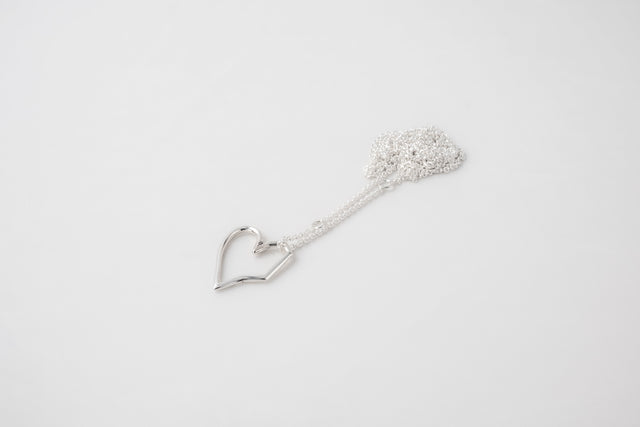
| Pendant | Small geometric shape, single stone or amulet on the same chain | Swapped by season or mood |
| Small earrings | Studs, small hoops or tiny drops that sit under hair and headphones | Most days |
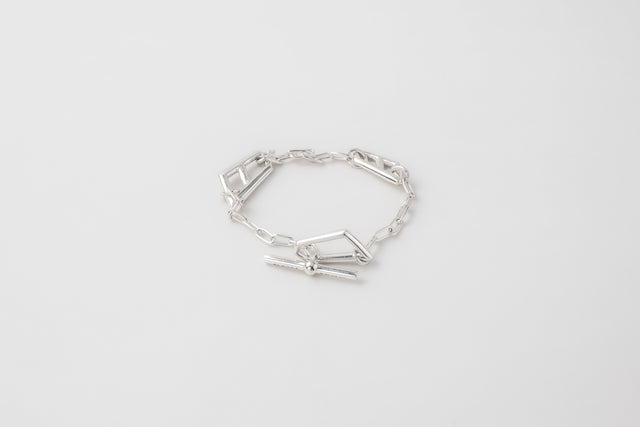
| Bracelet | Thin chain bracelet that works with a watch, or a slim cuff alone | Every other day, or instead of a watch |
| Statement piece | Larger ring, bold cuff or pendant on a heavier chain | Roughly one day in five |
1. The everyday ring. One ring you wear every day, on the same finger, that becomes part of your hand. It should be solid 925 sterling, comfortable enough to forget you are wearing it, and quiet enough to work with everything. A simple band with a textured finish is the canonical choice. This is the single piece that gets the most use in your wardrobe — invest the most thought here.
2. The everyday chain. One silver chain, 45–50 cm long, worn alone or layered with a pendant. The chain is the connective piece — it works with t-shirts, shirts, dresses, sweaters. A box chain, a fine curb chain or a delicate cable chain all work. Avoid thick statement chains for this slot — that is a different category.
3. The pendant. One charm or pendant that goes on the chain when you want a focal point. It can be a small geometric shape, a single stone, an amulet, or a meaningful symbol. The pendant is the piece you can swap with the seasons or with a mood without breaking the rest of the wardrobe.
4. The small earrings. One pair of earrings small enough for everyday wear under hair, hats, sweaters and headphones. Studs, small hoops, or tiny drops — any of them works, and not statement earrings; those come later. Browse our earrings collection for the kind of scale that fits this slot.
5. The bracelet. One thin bracelet or fine bangle for the wrist. Either a chain bracelet that works with a watch, or a slim cuff that sits alone. The bracelet is often the first piece women drop from their wardrobe — a watch on one wrist, nothing on the other. If you want to keep one slot for a bracelet, make it thin enough to forget. Our bracelets collection has the right scale.
6. The statement piece. One bigger, louder piece that you bring out for occasions — dinner, a date, a wedding, a party. A larger ring, a bold cuff, a statement pendant on a heavier chain. This is the piece that breaks the everyday rhythm and tells your jewelry story when you want context.
That is the whole starter kit, and six pieces. Worn in rotation, they cover almost every situation a modern woman dresses for, from working at a laptop to attending a black-tie event.
How to wear six pieces every day without feeling repetitive
The fear of a small jewelry wardrobe is that it gets boring, and in practice, the opposite happens — a small wardrobe gets louder, because each piece becomes legible, tied to you, recognized by people who see you regularly.
The mechanism is rotation, not addition. Out of the six pieces, you wear the everyday ring, the everyday chain and the small earrings most days. That is your three-piece base, and on top of the base, you swap:
- Add the pendant on days you want a focal point.
- Add the bracelet on days you want fullness on the wrist (or skip the watch).
- Swap in the statement piece for evenings, dates, occasions.
This gives you eight to ten distinct looks from six pieces. Not because you mathematically combined them, but because each combination has its own register and the people around you read the difference.
The way we explain it in our women's silver jewelry guide: a minimalist wardrobe is a vocabulary, not a dictionary. You do not need every word — you need the words you use most often, used well.
Why quality matters more in a minimalist wardrobe
When you own twenty jewelry pieces and wear each one a few times a year, a single low-quality piece is hidden inside the volume. When you own six pieces and wear them every day, every detail is visible.
Plated jewelry — gold-plated brass, silver-plated copper — is fine for occasional wear. It is not fine for everyday wear in a minimalist set. The plating wears off in months under everyday contact with skin oil, soap, sweat and friction. What was a clean piece becomes a half-worn piece, with the brass underneath showing through. That undermines the entire wardrobe.
Solid 925 sterling silver is the simplest answer, and the metal is the same all the way through. There is no plating to wear off, no surface to fail. Patina develops, but patina is a feature, not a defect — it marks the story of how the piece has been worn. Our pieces follow what we call the Living Silver philosophy: 925 sterling with no rhodium coating, designed to age with you.
Hypoallergenic matters too — for a piece you wear every day, contact dermatitis from a high-nickel alloy is not theoretical. We cover this in detail in our hypoallergenic silver jewelry guide. The short version: 925 sterling with verified low-nickel content does not cause skin reactions in normal wear, and it is the only material I would recommend for an everyday wardrobe.
The dark minimalist register
Inside the minimalist family, there is a sub-register that has become its own movement: dark minimalism. The look is silver, but the silver is intentionally darkened — oxidized in the recesses, polished only on the high points. The result is a piece that reads black-on-silver, much heavier visually than its actual weight.
Dark minimalism works particularly well in capsule wardrobes for two reasons. First, the contrast between dark and light gives a single piece more visual register than a uniformly polished piece — it does more work in your wardrobe. Second, the darker tone reads as more "serious" with formal clothing while still working with denim and t-shirts.
If you are building a minimalist silver set and want it to do more across formal and casual contexts, choose two or three pieces in the dark register out of your six. The everyday ring and the statement piece are the natural slots — both are visible enough that the dark contrast pays off, both are worn long enough that the patina becomes part of you.
Our dark minimalist rings collection is built specifically for this approach: solid 925 sterling, intentional oxidation in the texture, designed to look right on day one and better on day three thousand.
What not to do when building a minimalist jewelry wardrobe
Most failures come from the same five mistakes, and avoiding them gets you most of the way to a working set.
Which five mistakes break a minimalist set?
1. Buying everything at once. A six-piece set built in one shopping trip rarely works — pieces look like they came from one catalogue, not like they grew with you. Buy two pieces, and wear them for two months. Then add the third; take a year to build the full set.
2. Buying for occasions you do not have. The "I might need a fancy cocktail ring" reasoning is how drawers fill with unworn jewelry. Build the wardrobe for the life you actually live, not the life in a magazine.
3. Mixing metals in a six-piece set. Two silver rings and a gold chain do not form a coherent set in such a small wardrobe. Pick the metal first, and add a second metal only after the first set is complete.
4. Swapping pieces too often. A minimalist wardrobe earns its identity through repetition. If you replace the everyday ring every six months, you never get to the point where the ring is part of you. Commit for a year before deciding it is wrong.
5. Choosing pieces that need too much care. An everyday piece needs to survive everyday life. Pieces with delicate stones, fragile plating, or settings that catch on clothing belong in the statement slot, not the everyday slots.
How a minimalist wardrobe evolves over time
The six-piece starter is not a permanent ceiling. After the first year of living with it, most women discover one or two natural directions.
How does the set grow after the first year?
Direction A: deepen the set. Replace the everyday ring with a slightly heavier everyday ring, and replace the everyday chain with a chain that has more presence. Same six slots, each piece upgraded; the wardrobe stays small but the quality per piece grows. This is the path I see most often with clients who care about the craft side.
Direction B: add a parallel set. Add a second metal — usually 14k gold — and build a parallel three-piece subset (one ring, one chain, one earring) for warmer-toned days. The original silver set stays intact, and now you have two registers to choose between or mix.
Both directions work, and neither requires growing into a forty-piece collection.
For the relationship-and-occasion lens — when to give a minimalist piece as a gift, what scale to choose for which occasion — see our gift guide for her by occasion. The minimalist register is one of the easiest to get right as a gift, because it is hard to overshoot.
Continue from the journal to a current STRUGA object: Mini Line Classic.
About STRUGA. STRUGA is a dark silver jewelry brand founded by Dmitry Strugovshchikov and Ekaterina Strugovshchikova, handcrafted with Balinese and international silversmiths. Every piece is 925 sterling silver, naturally oxidized or hand-patinated, and the darkening is part of the design. It is a brutalist object that reacts and transforms through contact with the environment and the wearer.
Frequently asked questions
Didn’t find the answer — write to us, we reply personally.
Ask a question →01Is minimalist jewelry the same as minimalist design?+–
No. Minimalist design is about the look of a single piece — clean lines, no stones, no ornament. A minimalist jewelry wardrobe is about wardrobing: owning a small, coherent set of 6–8 pieces in one metal and wearing them as a system. A minimalist wardrobe can include one ornate statement piece, and a maximalist wardrobe can be fifty thin clean rings. The two ideas do not require each other.
02Is dark minimalism the same as a piece that has tarnished?+–
No. Dark minimalism is a deliberate design register: the silver is intentionally oxidized in the recesses and polished only on the high points, so the piece reads black-on-silver from day one. That is a choice made during the work, not damage from age. In solid 925 sterling, the patina that develops over time is also a feature that marks how the piece has been worn — not a defect.
03Is plated jewelry a cheaper version of solid silver?+–
Not for everyday wear. Plated jewelry — gold-plated brass, silver-plated copper — is a thin coating over a different base metal, and under daily contact with skin oil, soap, sweat and friction the plating wears off in months, with the base metal showing through. Solid 925 sterling silver has no plating to wear off: it is the same metal all the way through, which is why it is the right choice for a minimalist set worn every day.
04Is the statement piece an exception to the single-metal rule?+–
No. The statement piece is one of the six pieces and stays in the same metal as the rest of the wardrobe — it is louder in scale, not in metal. Mixing metals is a separate, high-skill move that needs more pieces, not fewer; in a six-piece set it reads as chaos. Add a second metal only after the first single-metal set is complete.