Silver or Gold: How to Choose, and the Real Difference
Silver or gold is a choice about character, not price. Gold holds its shine and its status — it barely changes over the years. Silver lives: it darkens, it takes on a patina. If you want a metal that stays exactly as you bought it, choose gold. If you want a metal with a biography of its own, one that ages alongside you, choose silver.
- Silver or gold is a choice about character, not price: gold holds its shine and barely changes, silver lives and takes on a patina.
- 925 silver is 92.5% silver and 7.5% copper for strength; pure silver is too soft to wear, and the 925 hallmark is the formal guarantee of that composition.
- Living Silver is the property of unplated 925 silver that darkens naturally with air and skin; oxidising is a deliberate bench technique — STRUGA uses no rhodium.
- Patina is not a defect or damage but the age of a piece, and it is reversible: a silver cloth lifts the darkening from open surfaces.
- Two checks for real handmade silver: the 925 hallmark and visible marks of handwork; weight is not a criterion.
- STRUGA is handmade dark silver in worlds CODEX, RITUAL and LAB; every piece is 925 silver, assembled by hand in Bali by master silversmiths, with pendant chain lengths from 40–45 cm to 60 cm and up.
In short
- Gold is stability and shine. Silver is character and patina. Two different relationships to an object — not "more or less expensive."
- Dark, oxidised silver is not damage and not a defect. It is intent: the metal is meant to live and darken.
- A silver pendant is the simplest way into silver. It works in a women's look and a men's look alike.
- Care is simple: keep the patina as part of the character, or polish it back to a shine.
- 925 means 92.5% silver. Two checks for the real thing: the 925 hallmark and visible marks of handwork.
Silver or gold: how to choose
The silver-versus-gold question almost always gets reduced to money. That is a shortcut. The real difference runs deeper — in how each metal behaves on the body and over time.
Gold does not oxidise and holds its colour. It stays the way you bought it for years. That is why gold has been the metal of status and savings for centuries. It costs several times more, and part of what you pay for is that stability — the piece asks nothing of you.
Silver lives. It reacts to air and skin, darkens in the recesses, takes on a patina. Many read this as a flaw. In truth it is the character of the material: a silver piece records how it is worn. Silver is more affordable than gold, and that is exactly what leaves room for a bold, large, authored form — where gold would be hard to justify.
| Silver | Gold | |
|---|---|---|
| Character | Lives, darkens, takes on a patina | Unchanging, holds its shine |
| Price | Affordable — room for a large form | Several times more |
| Care | Minimal; patina is your choice | Almost none |
| For whom | Those who want a piece with a biography | Those who want constancy and shine |
The short answer: choose gold if you want a metal that does not change. Choose silver if you want a metal that ages with you and earns its own character. STRUGA works in dark silver for the second reason.
See STRUGA jewelry in 925 silver →
Dark and oxidised silver: character over shine
Dark silver unsettles those used to a mirror finish. It shouldn't. The darkening of silver is oxidisation — a natural reaction of the metal. In jewelry it is not hidden but used: dark recesses bring out the form, the relief, the texture.
Most mass-market pieces are plated with rhodium — a thin layer that stops silver from darkening and keeps it bright. It is convenient, but the metal under the plating stops living. STRUGA uses no rhodium. We call this approach Living Silver: not to preserve the metal, but to let it change.
Patina is not dirt and not a defect. It is the age of a piece: dark recesses and edges worn bright with use make the object yours over time. For anyone who wants a permanent mirror shine from silver, dark silver is not the answer.
Dark silver is the ground of the RITUAL world and of many CODEX objects: an oxidised surface, a brutal form, decoration kept to a minimum.
The silver pendant: a simple way into silver
If you are only beginning to look at silver, a pendant is the clearest first step. It needs no sizing the way a ring does, and it works with almost any look.
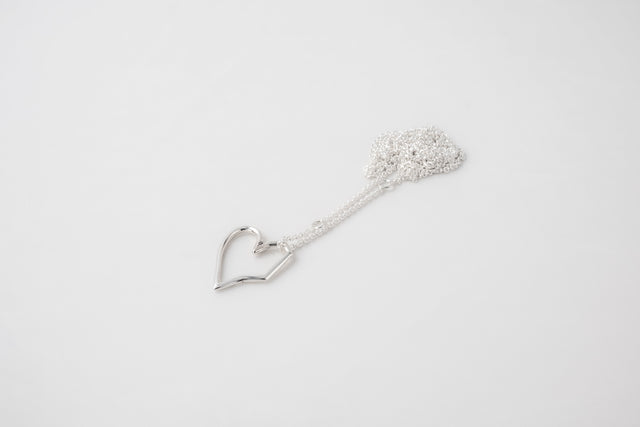
A women's silver pendant is about line and an accent at the throat. A fine chain and a small form read as a detail; a large pendant reads as a statement. Dark silver here gives contrast against skin and fabric, light fabric especially.
A men's silver pendant is a large form on a long chain. The simpler the line and the heavier the volume, the better the pendant sits on a man. At STRUGA these are asymmetric pendants and objects on a chain or cord — worn over a T-shirt or against bare skin.
One practical point is chain length. Short (40–45 cm) holds the pendant at the collarbone; medium (50–55 cm) drops it onto the chest; long (60 cm and up) carries it toward the solar plexus and reads larger. Length changes a piece more than you would expect.
STRUGA pendants and necklaces are made in 925 silver, many paired with carbon and natural stones.
How to care for silver
Caring for silver is simpler than its reputation suggests. The main decision is yours: keep the patina, or take it off.
To keep the character — just wear the piece and wipe it with a soft dry cloth. The patina stays in the recesses; the raised parts lighten naturally from contact with skin and clothing. This is how silver is meant to live.
To bring back the shine — a soft silver cloth lifts the darkening from open surfaces. Heavily oxidised pieces are best not scrubbed hard: the dark recesses are part of the drawing, and without them the form goes flat.
Store silver on its own, in a dry place, away from contact with other metals. Take it off before the pool and the sea — chlorine and salt darken it fast and unevenly.
Where to buy and what to choose at STRUGA
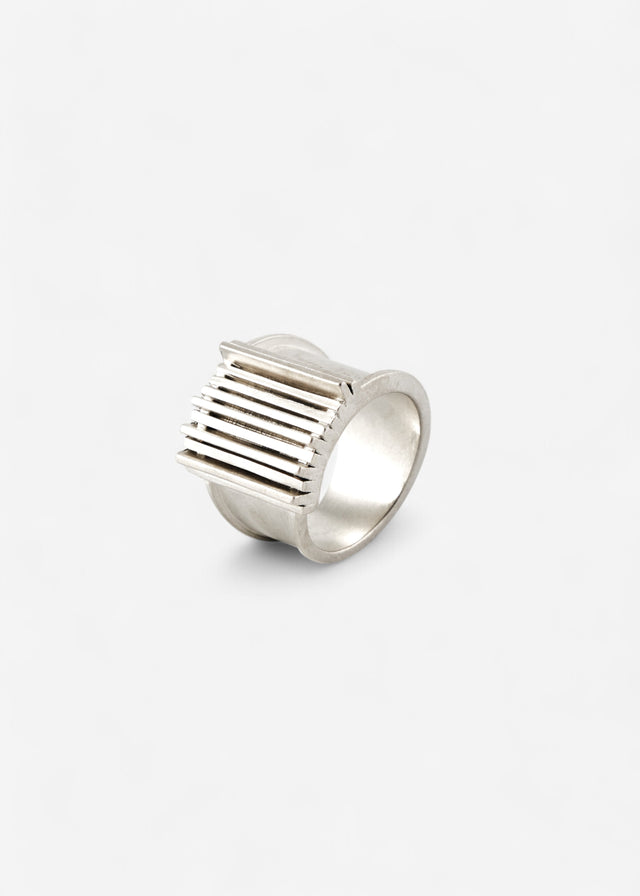
STRUGA is handmade dark silver. The design is divided into worlds: CODEX — the ground of the brand, asymmetric pendants and rings; RITUAL — a dark line with natural stones; LAB — experiments with carbon and meteorite. Every piece is 925 silver, assembled by hand in Bali by master silversmiths.
Buy directly at strugadesign.com with worldwide shipping. In Bali you can try STRUGA on and take it home the same day from the concept stores Hedonist Store (Seminyak) and Barefoot Aristocracy (Canggu).
If you want not a ready piece but your own: Dark Union makes wedding and paired rings to order, and the Custom Order service makes any individual form.
Frequently asked questions
Is Living Silver the same as oxidised silver?
No. Living Silver is the property of unplated 925 silver — it darkens naturally with air and skin over time. Oxidising is a deliberate technique applied at the bench to darken a surface at once. STRUGA uses no rhodium, so its silver lives rather than being kept bright.
Is patina a defect or wear?
No. Patina is not dirt and not damage. It is the age of a piece: dark recesses and edges worn bright with use. It is reversible — a silver cloth lifts the darkening from open surfaces.
Is 925 silver a lower grade than pure silver?
No. Pure silver is too soft to wear. 925 is 92.5% silver and 7.5% copper for strength, and the 925 hallmark is the formal guarantee of that composition.
Is dark silver the same as silver gone black with age?
No. At STRUGA the darkening is intended oxidising, used to bring out the form and relief — not neglect. Open surfaces can be brought back to a shine with a cloth, while the dark recesses are best left, since the form holds on them.
Which is better — silver or gold?
It depends on what you want from a piece. Gold holds its shine and barely changes — a choice for constancy and status. Silver lives and takes on a patina — a choice for character. Silver is more affordable, which is why a large authored form is possible in it.
Why does silver darken, and is that normal?
Darkening is oxidisation, a natural reaction of silver to air and skin. It is not damage. In dark silver the darkening is used on purpose: it brings out the form and the relief. If you want, a silver cloth removes it.
What is 925 silver?
925 is the standard: 92.5% pure silver and 7.5% copper for strength. Pure silver is too soft to wear. The 925 hallmark on a piece is the formal guarantee of its composition.
Which silver pendant suits a man?
A long chain (60 cm and up) and a large, simple form usually suit a man. At STRUGA these are asymmetric pendants and objects in dark silver on a chain or cord.
How do you tell real handmade silver?
Two checks. First, the 925 hallmark on the piece. Second, visible marks of handwork: small irregularities, a living surface, stones set by hand. Weight is not a criterion — a heavy piece is not the same as a good one.
Does STRUGA silver darken, and can that be removed?
Yes — STRUGA silver carries no rhodium and lives: it darkens and takes on a patina. That is part of the intent. Open surfaces can be brought back to a shine with a cloth, but the dark recesses are best left: the form holds on them.
Chose silver? Look at STRUGA dark silver — from an everyday ring to a sculptural object with a stone. Open the catalogue →