How to Order a Custom Engagement Ring from Bali
A custom engagement ring from Bali is not a catalogue ring fitted to your finger. It is an authored piece: one couple, one wax model, one casting in 925 sterling silver, hand finished. You are not paying for a name on the tag — you are paying for the maker's time, the silver, and the work of the hand.
- A custom STRUGA engagement ring is made by hand in a Bali workshop in a single example: a one-off wax model, cast in 925 sterling silver, then hand finishing.
- Pricing is built from three open parts — design from $700, silver at $50 per gram of the finished piece, and a $250 consultation deposit credited toward the final quote — and the total is fixed once the design is approved.
- Making a ring takes around 3–6 weeks as a guideline, plus transit; the ring ships tracked from Bali after final photos are confirmed.
- The wax model stage is the last point for significant changes — width, stone setting position, texture — and it is photographed from multiple angles for approval before casting.
- Standard stones are raw, wild-growth tourmaline, quartz, and aquamarine; rarer stones cost more to source.
- Most briefs do not start from a blank page. They start from a ring that already exists — the Thorn Ring band, for example — and change what does not fit.
Updated August 21, 2026
Updated: August 21, 2026
You want an engagement ring that doesn't exist yet. Something designed around your relationship rather than pulled from a display case. Something handmade by skilled artisans in a place with centuries of metalworking tradition. Something from Bali.
How does the custom ring process work, step by step?
Six steps, and only one of them has a deadline you set: the brief. Everything after it is bench work with a confirmation point at each end. The table below is the whole route; the sections after it explain what happens inside each step and what it costs you in time.
| Step | What happens | What we need from you |
|---|---|---|
| 1. Brief | You send a sketch, a reference, or a description of the feeling | Ring size, preferred stone, budget, date |
| 2. Consultation | We answer with a direction, an estimate and a rough timeline | Questions and corrections |
| 3. Wax model | The form is made in wax and photographed from several angles | Approval — the last point for changes |
| 4. Casting | The approved wax becomes a mould; 925 silver is cast into it | — |
| 5. Finishing | Hand finishing, oxidation if chosen, stones set by hand | — |
| 6. Shipping | Final photos, then tracked shipping | Confirmation and a delivery address |
Why Bali for a Custom Ring?
Bali is a deep school of silver handwork. The island's silversmiths train for years in a craft passed down through family workshops, generation to generation: a wax model, 925 sterling silver, hand finishing. The same path fine jewelers follow in Paris and New York — but here it has stayed handmade, with no assembly line.
A custom ring isn't "cheaper than the store." It's a different thing entirely. A production piece is designed once and repeated thousands of times; an authored one is made for a single couple and exists in one example. You're not paying for a name on the tag — you're paying for the maker's time, for the silver, and for the work of the hand that you can see on the finished piece. Working directly with the workshop, without a long retail chain, keeps the price honest — but this is an investment in an object built to last, not a one-off purchase.
What do most custom rings start from?
Almost no brief starts from a blank page. It starts from a ring that already exists — its proportion, its edge, the way it sits on the hand — and then changes what doesn't fit. Three rings in the STRUGA catalogue carry most of those briefs:
- A grown, sharp band. Thorn Ring — the Dark Union world, the Thorn family: for people who do not want a smooth circle at all.
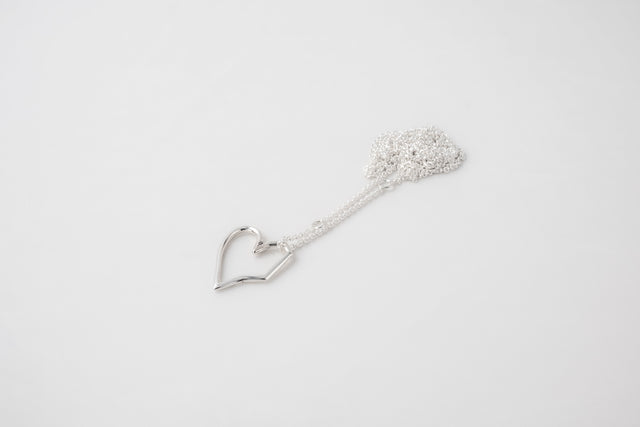
- A symbol built into the form. Heart Lock Ring — the Signature Heart family, where the heart is the structure of the ring rather than an engraving on it.
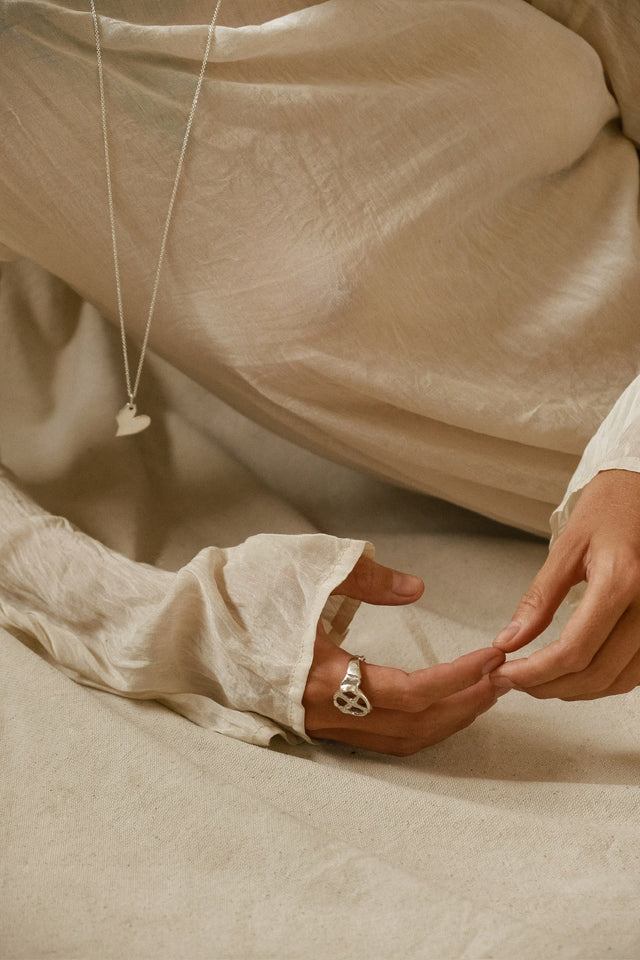
- Architecture, not ornament. Signature Links V.2 Ring — the Signature Asymmetric family: a chain link closed into a band, the usual start when the brief says "structural."
What people change most often, starting from one of the three:
- Width and weight — the same form in a heavier profile, or a narrower one for a smaller hand.
- Darkness — a blackened surface instead of bright silver, or the reverse.
- A stone — the band opened for a raw tourmaline, quartz or aquamarine.
- A pair — the same form in two sizes, made together so the surfaces match.
Naming one of them in the first message saves a whole round of guessing: it fixes the proportion, and the conversation moves straight to what has to change.
What do you need to send in the first message?
Step 1: Share Your Vision
Start with whatever you have: a detailed sketch, a Pinterest board, a photo of a ring you love but want modified, or simply a description of the feeling the ring should carry. "Dark, architectural, with a single black stone" is a perfectly valid brief. So is "something that looks like it was found in a temple ruin." Then add the practical half:
- Ring size — measured at a local jeweler if you are unsure.
- Preferred stone — or "no stone," which is also an answer.
- Budget range — it decides silver weight before it decides anything else.
- The date — a proposal, a wedding, a flight home, if there is one.
Step 2: Design Consultation
We come back with initial design thoughts, a price estimate, and a rough timeline. This is a conversation: ask questions, request adjustments, push the design where it feels right. There is no commitment at this stage, and the $250 deposit is only taken when work on the sketch begins.
Why is the wax model the last point for changes?
Step 3: Wax Model
Once you approve the direction, an artisan shapes a wax model of your ring by hand. Wax is the perfect prototyping material — it can be shaped, adjusted, and refined far more easily than metal. We photograph the wax model from multiple angles and send the images for your approval.
After this stage, significant changes get expensive, because the wax is consumed by the casting: the mould is built around it and the model does not survive the pour. A second version means a second model made from scratch. Three things are straightforward in wax and difficult in silver:
- Width and profile — a band a fraction wider is a different ring on the hand.
- Stone setting position — how deep the stone sits, and how much metal holds it.
- Texture — where the surface is worked and where it is left raw.
Take your time reviewing. This is the cheapest hour in the whole process.
What happens after the wax model is approved?
Step 4: Casting
The approved wax model becomes a mould, and 925 sterling silver is cast into it. What comes out is a silver piece that matches the wax original exactly — ready for the hand finishing that follows.
Step 5: Finishing
The piece is cleaned and worked by hand until the surface is right, and the inside is smoothed for comfort. If you have chosen a dark finish, the silver is oxidized, then selectively polished so the edges and high points stay bright. Nothing is plated: the surface is left exposed, which is why the ring keeps changing on the hand instead of staying frozen at the moment you got it. Stones are set by hand at this stage — each one individually fitted and secured. Standard stones are raw, wild-growth tourmaline, quartz and aquamarine; a rarer stone has to be sourced before anything can be cast around it.
What happens before the ring ships?
Step 6: Quality Check & Shipping
Final photos are sent for your confirmation before shipping — the ring does not leave the bench on our judgement alone. If something in the photographs is not what you approved in wax, it goes back to the bench rather than into a box. Once you confirm, the ring is packed carefully and shipped tracked from Bali, to the island or anywhere else you will be. Nothing about this step is automatic — a person photographs the ring, a person packs it, and the same person answers if the parcel goes quiet.
Three things travel with the parcel, and they are worth knowing before you confirm:
- Transit is counted separately. Shipping time is not inside the 3–6 weeks quoted above, and it depends on the destination rather than on the ring.
- Tracking goes out the same day. The number reaches you on the day the parcel leaves the bench, not when it clears the first hub.
- The final photographs stay yours. They are the record of what you approved, which matters if the ring is ever resized or repaired years later.
How long does a custom engagement ring take?
Making the ring takes 3–6 weeks as a guideline. The clock starts when the design is approved, not when you first write: the brief and the consultation happen before it, and how long they take depends on how quickly answers come back. Transit is counted separately and depends on where the ring goes. Three things stretch the estimate, and all three are visible early:
- A sculptural setting takes longer at the bench than a plain band.
- A rare stone has to be sourced before anything can be cast around it.
- A second round of wax changes adds its own week — which is why the wax stage is worth taking slowly.
If there is a date — a proposal, a wedding, a flight home — name it in the first message. The schedule is built backwards from it, and we will say plainly whether it fits before you pay anything.
How much does a custom engagement ring cost?
| Part of the price | What it covers | Amount |
|---|---|---|
| Design | Work on the form, drawing, 3D sketch, approval | from $700 |
| Material | 925 sterling silver, stone and accompanying metals, counted by the weight of the finished piece | $50 per gram |
| Consultation deposit | Paid before work on the sketch begins, credited toward the final quote | $250 |
At STRUGA the price is built from these three open parts, the same as on our custom order page: design from $700, silver at $50 per gram of the finished piece, and a $250 consultation deposit that is credited toward the final quote. The total depends on the form, the silver weight, and the stone, and it is fixed once the design is approved. Every quote is broken down — material, labour and stone separately — so you know exactly what you are paying for, and the design part is quoted before any silver is bought.
What makes one quote higher than another?
Two rings made in the same workshop, in the same month, from the same metal can differ by a wide margin. The reasons are always the same three, and each is a choice you make rather than a surcharge we add:
- Design complexity. A plain band and a sculptural setting are the same silver and a different number of hours at the bench.
- Silver weight. Material is counted at $50 per gram of the finished piece, so a thicker or wider ring costs more because more metal stays in it.
- Stone selection. Raw, wild-growth tourmaline, quartz and aquamarine are the standard; rarer stones cost more to source, and the sourcing is quoted openly.
Because all three are visible before casting, the number you approve at the design stage is the number you pay. The $250 deposit is inside it, not on top.
Where do I start if I want a ring made?
Ready to begin? Send us your idea through our custom order page, or email us directly. There's no obligation — we're happy to discuss feasibility and ballpark pricing before you commit to anything. If you're proposing in Bali, tell us the date when you first write: we build the schedule backwards from it and send the finished ring tracked to the address you give us.
Three neighbours of this guide go deeper where it stays short:
- What a custom engagement ring costs — takes the price apart line by line, part by part.
- The custom ring process — follows a single order from the first brief to the hallmark.
- Dark wedding rings guide — the same work seen as a pair rather than a single ring.
Continue Reading
Custom Bali Engagement Ring — Process Overview
Ordering a custom engagement ring from Bali involves six steps: sharing your design vision, design consultation with a quote, wax model approval, casting in 925 sterling silver, hand finishing with oxidation and stone setting, and tracked shipping. Making a ring takes around 3–6 weeks as a guideline, plus transit. It is an authored piece, made in a single example. Custom pricing at STRUGA is built from three open parts — design from $700, silver at $50 per gram of the finished piece, and a $250 consultation deposit — and is fixed by quote once the design is approved.
About STRUGA. STRUGA is a dark silver jewelry brand founded by Dmitry Strugovshchikov and Ekaterina Strugovshchikova, handcrafted with Balinese and international silversmiths. Most pieces are 925 sterling silver, left without rhodium plating, so the surface keeps changing on the wearer; some are blackened at the bench. The darkening is part of the design. It is a brutalist object that reacts and changes through contact with the environment and the wearer.
Frequently asked questions
Didn’t find the answer — write to us, we reply personally.
Ask a question →01Is a custom engagement ring the same as a cheaper version of a store ring?+–
No. A custom ring is not "cheaper than the store" — it is a different thing entirely. A production piece is designed once and repeated thousands of times; an authored ring is made for a single couple and exists in one example. Working directly with the workshop keeps the price honest, but it is an investment in an object built to last, not a discount on a display-case ring.
02Is the $250 consultation deposit an extra fee on top of the ring?+–
No. The $250 consultation deposit is not an added charge — it is credited toward the final quote. Pricing is built from three open parts: design from $700, silver at $50 per gram of the finished piece, and that deposit, which rolls into the total once the design is approved.
03Is the quoted timeline the time until the ring arrives?+–
No. The 3–6 weeks is the making time as a guideline, not the delivery date — transit is separate. The ring is shipped tracked from Bali after a final quality check, and the exact timing depends on the design and the season, confirmed with you once the form is set.
04Do I have to design the ring from a blank page?+–
No. Most briefs start from a ring that already exists in the catalogue — the Thorn Ring, the Heart Lock Ring, the Signature Links V.2 Ring — and change what does not fit: width, darkness, or an opening for a stone. Naming one in the first message fixes the proportion and saves a round of guessing.
Continue from the journal to a current STRUGA object: Signature Links V.2 Ring.