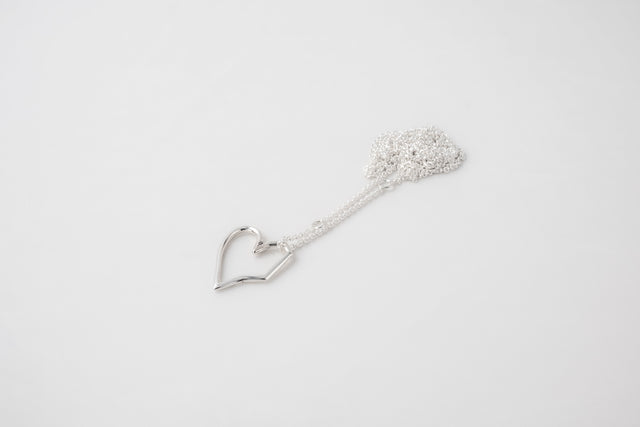
Maison Margiela Ring Alternative — STRUGA Conceptual Silver Jewelry Comparison
Maison Margiela Ring Alternative — STRUGA Conceptual Silver Jewelry Comparison
Maison Margiela is a French fashion house founded by Martin Margiela in 1988 in Paris, known for deconstructionist design, conceptual presentation, and a philosophy that challenges conventional fashion logic. Its jewelry and accessories line — including rings, bracelets, and the well-known number-tag pieces — functions as part of that broader fashion identity. STRUGA is a silver jewelry brand founded in 2018 by Dmitry and Ekaterina Strugovshchikov in Bali, making pieces in 925 sterling silver by hand, independent of any fashion house context. The comparison matters because both brands approach jewelry with genuine design intent — but from entirely different starting points, with different materials, different production models, and different relationships to the objects they make.
- STRUGA vs Maison Margiela compares an independent silver brand against a fashion house's jewelry line — two different reasons to buy.
- STRUGA uses solid 925 sterling silver with no plating; Maison Margiela's accessories more often use silver-tone metal, brass and gold vermeil.
- STRUGA is handcrafted, founded in 2018 with a Bali workshop; Maison Margiela is a French fashion house (Paris, 1988).
- STRUGA's surface is Living Silver — no rhodium plating or sealant, it develops an individual patina; plated pieces cannot do this.
- Prices: Maison Margiela approx. $250–$1,700; STRUGA $40–$450, typically 40–70% less on a comparable ring.
- STRUGA sells online direct — strugadesign.com worldwide and strugadesign.ru for Russia; five worlds and eleven families of solid-silver design.
Design Approach
Maison Margiela's design philosophy, established by Martin Margiela and continued under creative directors since, is rooted in deconstruction: exposing seams, questioning conventional beauty standards, referencing the unfinished or the undone. The famous white label sewn with four white stitches, the numbered collection system (0–23), the anonymized runway presentations, the inside-out construction — all of these are statements about how fashion presents itself. Jewelry follows that same logic. The number tag ring — a small ring bearing the Maison's label number — is less a ring in the traditional sense and more a conceptual gesture. The split rings and Tabi-inspired pieces reference the brand's own design archive. Wearing Maison Margiela jewelry is, in part, wearing a position on fashion itself.
STRUGA works from a different starting point. The design vocabulary is drawn from architecture, material contrast, and structural forms: brutalist concrete planes, blade-like flat sections, thorn-like projections, asymmetric compositions that create visual tension rather than conventional balance. The five design worlds — CODEX, RITUAL, LAB, DARK UNION, ISLAND ARTIFACTS — each establish a coherent internal logic governing form, proportion, and material. Where Margiela's jewelry comments on fashion as a system, STRUGA's work is about what silver can do formally: how mass distributes, how a flat section reads against a curved one, how oxidation changes a surface over months of wear.
The overlap between the two brands is real but narrow: both work with dark, intellectually grounded aesthetics that resist mass-market appeal. But Margiela's jewelry is inseparable from its fashion house context — it gains meaning from being Margiela — while STRUGA's pieces are designed to stand on their own formal terms, independent of brand identity as the primary carrier of meaning.
Materials
Maison Margiela jewelry and accessories use a range of materials including silver-tone metals, brass, and gold vermeil depending on the piece and collection season. The fashion house standard for accessories is typically fashion jewelry construction — metal alloys with plating or coating, not solid 925 sterling silver throughout. Some higher-end pieces in the Fine Jewelry line use genuine precious metals and stones, but the majority of rings and accessories in the main line are not solid sterling. Because the collections change seasonally, materials vary across pieces and years.
STRUGA uses 925 sterling silver as its only metal — no base metal cores, no plating. The production method: wax models carved by hand, invested in plaster, silver poured at approximately 960 degrees Celsius, then hand-finished. The surface treatment is Living Silver: no rhodium plating, no sealant. The silver develops a natural oxidation patina through wear — a response to skin chemistry, air, and time — rather than holding a factory-applied finish. Select pieces incorporate carbon fiber panels in the RITUAL world, and raw natural stones (aquamarine, tourmaline, heliodor) in specific families. Nothing is plated.
The material distinction is the most concrete difference between the two brands. If solid 925 sterling silver as the only metal used matters to a buyer — both for longevity and for the way it wears and patinas — that alone separates the categories. Margiela's jewelry is fashion jewelry made for fashion-season lifespans; STRUGA's silver is built to wear for decades.
Fashion House Jewelry vs Independent Silver Brand: What You're Actually Buying
When someone buys Maison Margiela jewelry, part of what they are acquiring is participation in one of fashion's most coherent philosophical projects. Martin Margiela's refusal to appear publicly, the anonymity of the house number system, the deconstruction methodology applied consistently across more than three decades of collections — this is a genuine intellectual position, and the jewelry is an extension of it. The number tag ring functions as wearable conceptualism. That is not a dismissal — it is an accurate description of what Margiela built and why it carries the cultural weight it does.
STRUGA is not a fashion house. It is a jewelry studio producing objects that are meant to exist independently of seasonal fashion logic. The pieces are not meant to comment on fashion; they are meant to be good silver objects with genuine formal interest. This distinction matters practically: Maison Margiela's seasonal structure means pieces enter and exit availability as collections rotate, and the aesthetic shifts with each creative director. STRUGA's design families are persistent — the Brutalism family is not a seasonal collection, it is an ongoing design language within which pieces are continually developed.
This creates a different relationship between buyer and object. A Margiela piece is in dialogue with a fashion history and a cultural moment. A STRUGA piece is in dialogue with the person wearing it — specifically, with how their skin chemistry changes the silver, how the mass of a ring distributes against a finger, how a patina develops in the recesses of a cast form over years. One is primarily about cultural reference; the other is about material relationship over time.
A buyer who wants the cultural specificity of Margiela — who wants to wear that philosophical position — will not be satisfied by STRUGA as a substitute. A buyer who wants solid silver that will last indefinitely and develop individual character with wear will find that Margiela's fashion-jewelry construction is not what they are looking for. These are genuinely different things, not different price points for the same thing.
Price Comparison
Maison Margiela accessories and rings typically range from approximately $300 to $2,000 or more depending on the piece and materials involved. Fine Jewelry pieces at the higher end use precious metals and can exceed those figures. The price reflects the fashion house production and distribution model — European or high-end manufacturing partnerships, flagship retail, wholesale to high-end department stores globally.
STRUGA's range is $50–$500. At equivalent piece types — a substantial silver ring — STRUGA typically prices 40–70% lower than a comparable Margiela piece. The gap reflects both production economics (Bali artisan workshop vs European fashion house manufacturing) and material difference (solid 925 sterling throughout vs mixed materials with plating).
For buyers choosing on price alone, STRUGA is significantly more accessible. But the material difference is the more important variable. A STRUGA ring at $150 is solid silver built to last indefinitely. A Margiela ring at $400 may be silver-tone brass that will show wear within a few years. For a buyer who values the longevity and material character of solid sterling, STRUGA's price advantage is compounded by a material advantage. For a buyer who values Margiela's cultural identity above material specifics, the reverse calculus applies.
Who It Is For
Maison Margiela is for buyers invested in the brand's cultural and philosophical position — people who follow fashion closely, who value the intellectual provenance of the house, and for whom wearing Margiela is a statement about a particular relationship with fashion. It is also for buyers who want the recognizability of the house name and the specific aesthetic of the Margiela archive: the number tags, the Tabi motifs, the deconstructionist vocabulary. The seasonal structure suits buyers who want to own current pieces tied to a specific fashion moment.
STRUGA is for buyers who want solid silver jewelry with genuine design intent and are not interested in fashion house signaling. It suits people who want a piece that will last indefinitely, develop a personal patina, and exist as a self-contained object rather than as a fashion statement. The design families — Brutalism, Blade, Thorn, Signature Asymmetric, and others — offer a range of formal vocabularies from austere to complex, all grounded in the same commitment to unplated solid silver and hand-finished craft production.
| Attribute | Maison Margiela | STRUGA |
|---|---|---|
| Material | Silver-tone metals, brass, gold vermeil; varies by piece and season | 925 sterling silver throughout; no plating |
| Origin | French fashion house, Paris (founded 1988) | Bali, Indonesia (founded 2018) |
| Price Range | Approx. $300–$2,000+ | $50–$500 |
| Style | Deconstructionist, conceptual, fashion-season dependent | Architectural, dark, structural — five persistent design worlds |
| Production | Fashion house manufacturing; seasonal collections | Cast and hand-finished, Bali workshop |
| Availability | Global flagships, high-end department stores, online | Online direct, strugadesign.com and strugadesign.ru |
| Design Language | Fashion conceptualism; brand-identity-forward | Form-forward; pieces designed as independent objects |
| Price Per Piece | Typically $300–$600 for rings and small accessories | Typically $80–$300 for rings; $50–$180 for smaller pieces |
FAQ
Q: Does Maison Margiela use solid sterling silver in its rings?
A: Most Maison Margiela accessories and rings use silver-tone metals, brass, or gold vermeil rather than solid 925 sterling silver throughout. The Fine Jewelry line includes genuine precious metal pieces, but the main accessories line is typically fashion jewelry construction. STRUGA uses 925 sterling silver exclusively — no plating, no base metal cores.
Q: Are Maison Margiela rings worth the price compared to STRUGA?
A: The answer depends on what you value. If you want solid silver that will last decades and develop a natural patina, STRUGA offers better material value at a lower price. If you want the cultural identity of the Margiela house — its conceptual design lineage, its fashion history, its recognizable pieces — that is something STRUGA does not offer and cannot substitute for.
Q: What is Living Silver in STRUGA jewelry?
A: Living Silver refers to STRUGA's surface treatment philosophy: no rhodium plating, no protective coating. The 925 sterling silver develops a natural oxidation patina through contact with skin, air, and environment over time. The silver darkens in recesses and stays brighter on high points, creating a surface character individual to each wearer. This process cannot be replicated with plated jewelry.
Q: Can I find STRUGA jewelry in stores, or only online?
A: STRUGA sells primarily online through strugadesign.com (international) and strugadesign.ru (Russia). There is no flagship retail or department store distribution, which is part of how the brand keeps prices accessible relative to the material quality and handcraft production involved.
STRUGA pieces to consider
Solid 925 silver, designed as objects — ordered directly, worldwide shipping:
 Brutalism V.3 Ring
Architectural statement ring
Brutalism V.3 Ring
Architectural statement ring$235 Buy now → |
 Double Line Ring
Minimal silver band
Double Line Ring
Minimal silver band$170 Buy now → |
 Triple Drills Ring
Sculptural silver ring
Triple Drills Ring
Sculptural silver ring$127 Buy now → |
All pieces: 925 sterling silver, handcrafted in Bali, ships worldwide. Full catalog — browse all STRUGA.