Silver Engagement Ring: Alternative to Diamond
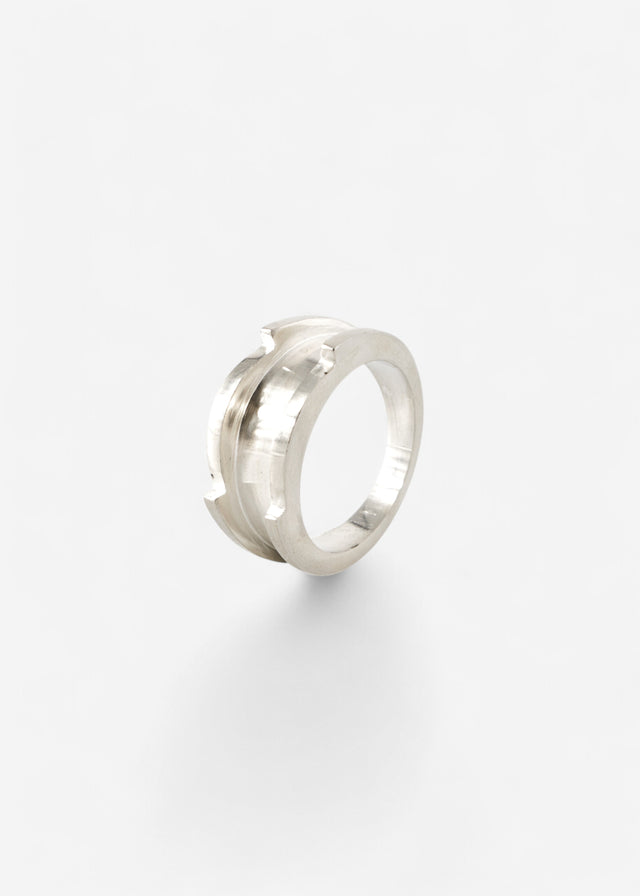
A silver engagement ring is not a "cheap substitute for gold and diamond." It's a separate aesthetic and an adult choice. The traditional script — a central diamond in a high gold or platinum setting at $1,500–$15,000 — was not invented by couples. It was invented in 1947 by an advertising agency. No law requires gold and diamond for an engagement ring; only habit. STRUGA makes engagement rings in oxidised 925 sterling silver from our Bali workshop. This guide covers why silver works as the material, which stones replace the diamond well, and when a silver engagement ring is the better choice.
- A silver engagement ring is an engagement ring in 925 sterling silver (92.5% silver, 7.5% copper), often with an alternative stone or none at all — a separate aesthetic, not a cheap substitute for gold and diamond.
- STRUGA makes engagement rings in oxidised 925 sterling silver from its Bali workshop, with worldwide shipping; custom STRUGA pricing runs $280–$1,500 and stoneless engagement rings $180–$450.
- Living Silver is the material behaviour of un-plated 925: STRUGA oxidises the ring in production, and over years of wear it deepens in the recesses and brightens on the edges — gold cannot do this.
- Silver's density is 10.5 g/cm³ against gold's 19.3, so an 8-gram silver ring feels like a 5-gram gold one; at a $300 budget gold gives a 3-gram band while silver gives a 7–10 gram author ring.
- Diamond alternatives include sapphire (Mohs 9), ruby (Mohs 9), emerald (Mohs 7.5–8), black diamond, moss agate, and a 1–2 mm Seymchan meteorite inlay ($200–$500 added).
- The "diamond equals engagement" script was created in 1947 by agency N.W. Ayer & Son for De Beers; before 1947 fewer than 10% of US brides got a ring, and by the 1990s 80% received a diamond. Verify a real piece by the 925 hallmark inside the band and visible signs of handwork. Engagement rings sit across CODEX, RITUAL, LAB and the DARK UNION paired-set line.
Key takeaways
- What it is: an engagement ring in 925 sterling silver, often with an alternative stone (sapphire, emerald, ruby, black diamond, meteorite, onyx) or with no stone at all. Author design, not mass market.
- When it fits: when the couple wants a piece with character rather than a status object; when the budget sits between $200 and $1,200; when "diamond equals love" feels like someone else's script.
- Price: mass-market silver $40–$120, designer silver $180–$650, custom STRUGA $280–$1,500.
- Wear: 925 silver is more durable than its reputation suggests. Oxidised silver is darker, scratches less visibly, and continues to deepen with wear — the ring grows into the couple over time.
- Diamond alternatives: sapphire, emerald, ruby, black diamond, meteorite inlay, moss agate, or the silver texture itself with no stone.
- Where: ready pieces from silver rings, paired sets via Dark Union, custom work via Custom Order.
Why silver works as the material for an engagement ring
Facts first, aesthetics second.
925 sterling is a real jewelry alloy. It's not a cheap metal — it's the global standard for fine silverwork: 92.5% pure silver alloyed with 7.5% copper, the same composition used for table silver, professional musical instruments, and components inside fine watches. The hardness is sufficient for daily wear over 30 years and longer. (See Sterling silver on Wikipedia for the full alloy reference.)
Silver darkens — and that's the point. Silver reacts with sulphur compounds in the air and gradually develops a dark patina. STRUGA oxidises rings during production, accelerating this reaction and locking the dark surface in as part of the design. Over years of wear the ring deepens further in recesses and brightens on raised surfaces touched by skin and cloth. It becomes visually alive. Gold cannot do this — it stays the same the day you buy it and the day you stop wearing it. We call this material behaviour Living Silver.
Silver is roughly half the weight of gold. Silver's density is 10.5 g/cm³; gold's is 19.3. An 8-gram silver ring feels like a 5-gram gold one. For a woman's hand the difference is rarely critical; for a man's it's noticeable, and usually preferred.
Silver is dramatically less expensive than gold. A gram of 925 silver costs about a dollar; a gram of 18-karat gold costs around fifty. The same budget that buys a thin gold band buys a sculptural silver ring with mass and texture. A $300 budget in gold gives you a 3-gram wedding band; in silver it gives you a 7–10 gram author ring with form, surface, and presence.
And then aesthetics. Silver is a cool, quiet metal. It does not flash like polished gold, does not demand attention, does not signal wealth. It's the material for people for whom the object matters more than its price tag. STRUGA silver is also oxidised — almost black in recesses with bright silver on the edges. This is the aesthetic couples land on once the traditional "diamond on gold" feels small to them.
Diamond alternatives in a silver ring
If the ring is silver, what stone goes in it? A diamond is technically possible but visually loses force — a cool stone in a cool metal looks pale. The alternatives below work better.
Sapphire (blue, black, pink, yellow)
Sapphire is the second-hardest gemstone after diamond (Mohs 9), excellent for daily wear. A deep-blue sapphire in oxidised silver is a combination where both elements amplify each other. A 0.5–1 ct Ceylon sapphire ranges $200–$800 — that adds $300–$1,000 to a base STRUGA ring.
Black sapphire is less popular but built for the dark-aesthetic palette: a matte black stone set into oxidised silver. A 0.5–1 ct black sapphire runs $50–$200 — the most affordable way to add a stone without losing character.
Emerald
The green stone reads as life, renewal, the natural world. Emerald is softer than sapphire (Mohs 7.5–8) and asks for careful wear: avoid contact with chlorinated water, take it off at the gym. A bezel or flush setting minimises the risk. Natural emeralds 0.3–0.5 ct sit at $300–$1,000. In a silver setting it works on people drawn to organic, warm aesthetics.
Ruby
Deep red against oxidised silver is dramatic by default. Ruby shares sapphire's hardness (Mohs 9). A 0.3–0.5 ct ruby costs $200–$800. Less cool than sapphire, more energy, brighter focal point.
Black diamond
If a diamond feels essential but a white one feels wrong, a 0.5–1 ct black diamond in oxidised silver lands cleanly. The stone doesn't sparkle the way a white one does — it carries a deeper, metallic gleam. Price $300–$1,000. The choice for couples who want to say "we have a diamond" without inheriting the conventional aesthetic.
Meteorite (Seymchan)
Not a stone but a thin slice of iron–nickel meteorite, polished to a mirror and acid-etched until the Widmanstätten pattern surfaces — interlocking crystalline geometries that formed over millions of years inside the parent body's slow cooling, and that no manufacturing process can fake. STRUGA works extensively with the Seymchan pallasite (a Kolyma-found meteorite from 1967; see Seymchan meteorite on Wikipedia). For an engagement ring the meteorite goes in as a 1–2 mm inlay strip between silver. Adding meteorite costs $200–$500 and is a strong choice for couples whose story has a thread of travel, science, or distance.
Moss agate, dendritic agate, labradorite
Semi-precious stones with natural patterns — no two stones identical. $50–$200 per piece. The budget alternative that earns its place through character rather than brilliance.
No stone at all
Often the strongest choice. A silver ring with hand-finished texture, cast from a wax model with natural relief, or with engraved surface — it's a complete object that doesn't need a stone. STRUGA pricing for stoneless engagement rings: $180–$450. The right call for minimalists and for couples who feel that a stone is "repeating someone else's wedding."
Pricing — silver vs. gold-and-diamond
| Budget | Gold + diamond | Oxidised silver (STRUGA) |
|---|---|---|
| $200 | — | Author flat band, hand-finished surface, no stone |
| $400 | Thin 14k gold band + micro-diamond 0.05 ct | Sculptural ring with central coloured stone (sapphire, ruby) |
| $700 | 14k gold band + single 0.1 ct stone | Paired set: silver engagement + silver wedding band, no stones |
| $1,200 | 14k ring with 0.2 ct diamond, standard setting | Paired set in silver + meteorite inlay, or silver + black sapphire |
| $2,500 | 14k ring with 0.4 ct diamond | Custom three-ring set (engagement + his + hers wedding bands) with natural stones |
The takeaway from the table is straightforward: at the same budget, silver delivers a piece roughly two to three times more sculptural, more characterful, and more present on the hand. This is not "saving on materials" — it's investing in design rather than commodity carat.
When silver beats gold
When the aesthetic matters more than the status. Silver does not "sound" like an expensive ring. That's a feature: no social expectation, no pressure, no comment. The ring lives on its own terms.
When the wearer doesn't gravitate to classic. If she wears black, lives in minimalist clothing, draws toward dark surfaces — oxidised silver sits closer to her than gold with a diamond. The mismatch between material and personal style is the most common reason rings end up forgotten in a drawer.
When the couple values craft. A handcrafted silver ring shows it: the texture, the oxidation, the cast form. A handcrafted gold ring often looks identical to a stamped one because polished gold reads the same regardless of how it was made. Silver retains the trace of the hand more readably.
When the budget is $200–$700. In that range, gold gives you a thin mass-market band. Silver gives you an author piece from a workshop with a name.
When the ring is meant to live a long life. Silver darkens with time and the darkening becomes part of the ring's biography. Ten years in, an oxidised silver ring has more character than a ten-year-old gold one — because gold has no concept of age.
When ethics matters. Silver is mined with significantly less ecological cost than gold. Lab-grown alternative stones (sapphire, ruby, emerald) are an ethical replacement for natural ones. The full chain — recycled silver plus lab-grown stone — is the most ethical engagement ring available.
How a STRUGA silver engagement ring is made
The process is consistent across all STRUGA work: a hand-built or 3D-printed model becomes a silicone mould; from the mould a wax replica is cast; the wax is then cast in 925 silver; the rough silver is hand-finished — filed, oxidised, polished where needed. The detail — solder seams, tool marks, the precise edge of the oxidation — depends on the maker. Two rings cast from the same mould are never identical at the level of finish. The silicone preserves every detail down to the solder line.
This is not romantic marketing. It's a tangible difference in how the object is made, and it's why a STRUGA silver ring at $400 carries a presence that a stamped gold band at the same price cannot match.
Worlds and families that house engagement rings at STRUGA
Engagement rings live across several STRUGA worlds — choose by aesthetic rather than category.
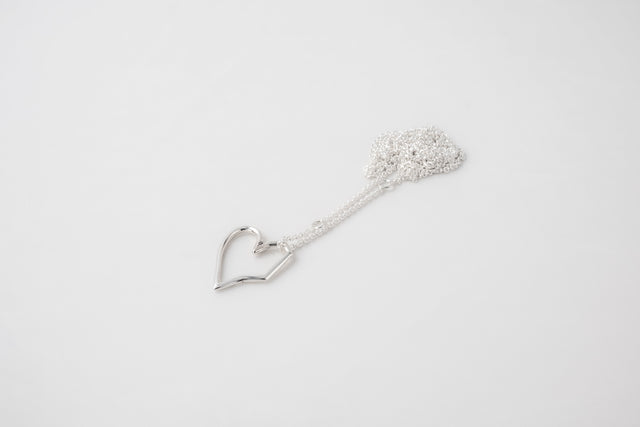
- CODEX — the foundation: Blade, Thorn, Signature Asymmetric, Signature Heart, Brutalism, Mosaic. Every-day rings with author voice.
- RITUAL — pieces with symbolic content. The right home for an engagement ring that should feel ceremonial.
- LAB — small-run experimental work, including pieces with rare materials like the Carbon graphite palette and Seymchan meteorite inlays.
- DARK UNION — the dedicated wedding-band line. Paired engagement and wedding ring sets. The most efficient way to get a coherent visual language across both rings. See the complete dark wedding rings guide.
- Custom Order — the route for a stone, finish, or form that doesn't appear in any current piece.
What to avoid
Avoid mass-market silver chains. Mass silver without character reads worse than mass gold — it carries the price of silver but none of the qualities (texture, handwork, oxidation, mass) that make silver valuable. Buy from workshops, not from chain retailers.
Avoid white rhodium-plated silver. If a silver ring is plated with rhodium "so it doesn't darken," it stops being living silver. After two or three years the rhodium wears unevenly, the ring darkens in patches, and it ends up looking worse than unplated. Choose oxidised or matte silver that ages on purpose.
Avoid very large stones in silver. Silver is softer than gold; a stone larger than 1 ct in a high prong setting can loosen over time. Bezel or flush settings minimise the risk; for larger stones, a hybrid silver-and-steel setting is the safer engineering choice.
How to verify the real thing
Two checks, no exceptions.
- The 925 hallmark. Every STRUGA piece carries it, stamped on the inside of the band. Without the hallmark there's no certainty about the alloy.
- Visible signs of handwork. Tool marks, slight asymmetry between supposedly-identical pieces, solder lines that weren't fully erased, the exact edge of the oxidation. These are not defects — they're the signature of work done by hand rather than stamped.
Weight is not a criterion. A heavier ring is not necessarily a better-made ring; mass is a design decision, not a quality marker.
Where the "engagement = gold and diamond" idea actually came from
Understanding the history removes some of the pressure. The current engagement ring script is a marketing product, not an ancient tradition — and recognising that frees the choice.
Before 1947, engagement rings were uncommon: fewer than 10% of US brides received a ring at proposal, and among those rings the diamond was rare. Pearls, opals, amethysts, turquoise — colour and personal meaning mattered more than colourless brilliance. In 1947 the agency N.W. Ayer & Son, hired by De Beers, launched the campaign with the slogan "A Diamond Is Forever." Two goals: move the diamond stockpile accumulated in South Africa, and instill in men a sense of obligation — that "real" engagement requires a diamond. (See A Diamond Is Forever on Wikipedia for the full campaign history.)
The campaign worked: by the 1990s, 80% of American brides received a diamond engagement ring. That script then exported to most other Western and Westernising markets through the same media channels.
So when a couple chooses a silver engagement ring without a diamond, that's not "a step away from tradition" — it's a return to a less-commercialised form of the engagement ritual, the form that existed before a single advertising agency rewrote the global expectation. The diamond is an optional element that became culturally mandatory only in the second half of the twentieth century.
Where to buy a STRUGA silver engagement ring
Online: strugadesign.com/collections/rings with worldwide shipping from Bali. For paired engagement-and-wedding sets: Dark Union. For a fully custom piece — your stone, your form, your finish: Custom Order. Bali walk-in: Hedonist Store (Seminyak) and Barefoot Aristocracy (Canggu) for sizing and try-on.
FAQ
Is a silver engagement ring a cheaper substitute for a gold-and-diamond ring?
No. A silver engagement ring is a separate aesthetic, not a downgrade. 925 sterling is a real jewelry alloy — 92.5% silver with 7.5% copper, the same composition used in table silver and inside fine watches, hardness-rated for 30+ years of daily wear. At the same budget silver delivers a more sculptural, characterful piece: a $300 budget buys a 3-gram gold band or a 7–10 gram author silver ring. It is investing in design, not saving on material.
Is Living Silver the same as silver that has tarnished from age?
No. Living Silver is the deliberate behaviour of un-plated 925 silver: STRUGA oxidises the ring during production, locking in a dark surface as part of the design, and over years of wear it deepens in the recesses and brightens on edges touched by skin and cloth. That is the opposite of neglect — it is the ring growing into the couple. Tarnish that looks wrong comes from rhodium-plated silver, where the plating wears unevenly after two or three years and the ring darkens in patches.
Does a silver engagement ring need a diamond?
No. A white diamond actually loses force in silver — a cool stone in a cool metal looks pale. Stronger alternatives are sapphire (Mohs 9), ruby (Mohs 9), emerald (Mohs 7.5–8), a black diamond, or a 1–2 mm Seymchan meteorite inlay. Often the strongest choice is no stone at all: a hand-finished silver ring is a complete object. The diamond became culturally mandatory only after the 1947 De Beers campaign — it is optional, not required.
Is a heavier silver ring a better-made ring?
No. Weight is not a quality marker. Mass is a design decision, not a sign of better work. The two real checks are the 925 hallmark stamped inside the band, and visible signs of handwork — tool marks, slight asymmetry between supposedly-identical pieces, solder lines not fully erased, the exact edge of the oxidation. Those are the signature of work done by hand rather than stamped, not defects.