Is Sterling Silver Valuable? Spot Price, Resale, and What 925 Silver Is Really Worth
Sterling silver has a measurable metal value because it contains 92.5% silver. A finished piece can sell for a different amount: its condition, construction, maker and the buyer matter. Calculate the silver content first, then compare actual offers. Neither a 925 mark nor a retail price establishes a certain resale value or future return.
Metal content, a scrap offer and a jewellery sale are three different numbers.
For an all-sterling piece, silver mass in grams = alloy mass × 0.925. Stones and other materials need separate treatment.
Use a dated quote in the right currency and unit. The examples below are arithmetic, not today's silver price.
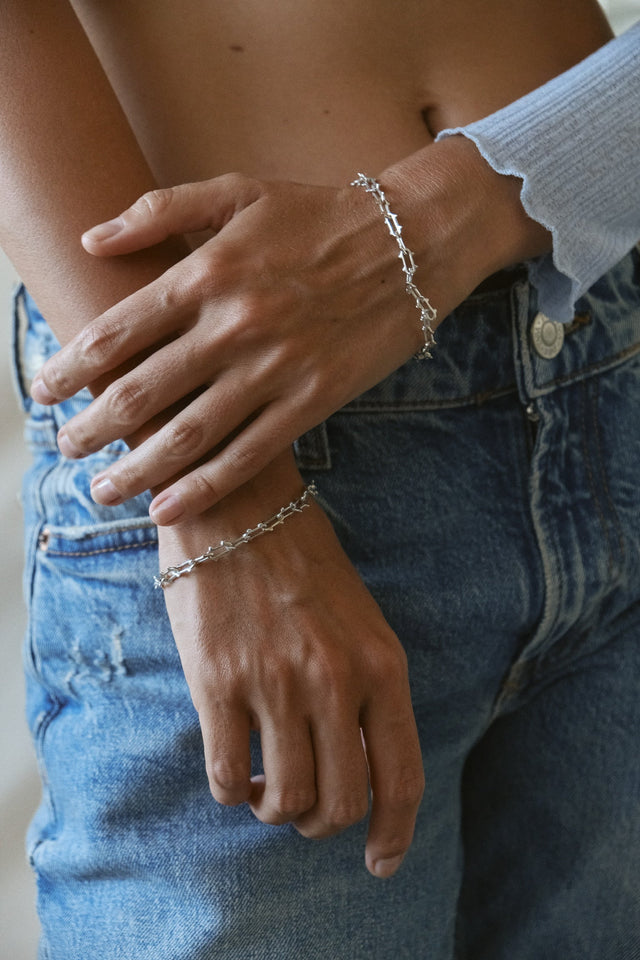
The Signature Links bracelet illustrates why size matters: the catalogue lists 15 g for S and 18 g for M.
Updated September 29, 2026
What does “valuable” mean for sterling silver?
There are three useful questions. How much fine silver does the object contain? What will a buyer pay for it as scrap? What will someone pay to keep and wear the object? The first is a calculation once composition and metal mass are known. The other two require offers from real buyers. A shop price answers a fourth question: what the seller asks for a new piece.
A broken, unmarked chain and an intact ring with purchase records may contain the same mass of silver. That does not make them interchangeable purchases. Equally, a maker's name does not establish a higher resale price on its own. Check completed sales of comparable pieces, their condition and the fees charged to the seller. An unsold listing shows an asking price, not a transaction.
How do you calculate the metal value of 925 silver?
The FTC's guide to silver jewellery explains the 925 designation as 925 parts of silver per thousand. For a piece made entirely of that alloy, multiply its mass by 0.925. For 15 g of sterling, the calculated fine-silver content is 13.875 g.
Then multiply fine-silver grams by a dated price for one gram of fine silver in your currency. If the quote uses a different unit, convert the unit before multiplying. Do not mix grams with ounces, a dollar quote with a pound-denominated offer, or a rate for pure silver with a rate already adjusted for 925.
Metal reference value = sterling-alloy mass × 0.925 × fine-silver price per gram. This estimates the silver component. It is not a payment offer. Do not apply the whole item's scale weight when it includes stones, steel components, a core or other non-silver material. If their masses are unknown, the calculation is provisional until the item is examined.
| Sterling-alloy mass | Calculated fine-silver content | Example at $1 per fine-silver gram |
|---|---|---|
| 5 g | 4.625 g | $4.63 |
| 10 g | 9.250 g | $9.25 |
| 15 g | 13.875 g | $13.88 |
| 20 g | 18.500 g | $18.50 |
| 30 g | 27.750 g | $27.75 |
The $1 input is hypothetical and is used only to show the calculation. It is not a market quote. Values are rounded to cents after multiplication. For example, at a hypothetical $2 per fine-silver gram, 15 g of sterling would contain $27.75 of silver before any buyer's deductions. Changing the input changes the result, not the purity factor.
Which silver price should you use?
The LBMA Silver Price is a London benchmark set once daily in US dollars per troy ounce. Record the provider, date, time, currency and unit of whichever quote you use. A benchmark for wholesale fine silver is a reference for the calculation; it is not an offer to buy your jewellery.
When comparing buyers, use quotes from the same period and ask what their per-gram number means. Some quote for fine silver; others quote directly for 925 material after their allowance. Applying 0.925 twice understates the result. A quote without its unit, purity basis and deductions is not enough to compare with another offer.
Why can a scrap offer differ from metal value?
A buyer's offer depends on what they accept, the assessed composition and mass, and their charges. Ask for the accepted weight, rate, deductions and final amount in writing. Do not assume a universal payout percentage.
The CFTC and FINRA metals advisory distinguishes the dealer's buying and selling prices and recommends asking about fees and the buy-back price. Its discussion concerns physical precious metals; it does not establish a resale percentage for designer jewellery. For your piece, compare the net amount you would receive after all costs.
Before agreeing to a destructive test or melting, make sure you want the object treated as metal. If you want to compare a sale as jewellery, do that first. A broken clasp, missing stone or unclear mark calls for inspection; a photograph cannot determine every component's composition or mass.
Can a finished piece sell for more than scrap?
It can, but the difference must be demonstrated for the piece and market in question. Useful evidence includes dated completed sales of the same model or close comparables, clear photographs, dimensions, condition and records that identify the maker. Separate a dealer's offer, an auction estimate and a completed sale. They are different stages, with different costs and uncertainty.
Keep purchase records and document alterations. An invoice can help identify the piece; it does not determine what a later buyer will pay. Retail price multiples, a general claim about handmade work or another brand's auction result are not a valuation of your ring. This guide makes no promise that designer silver retains a fixed share of its original price.
What should you compare when buying silver jewellery?
Compare the material description, dimensions, construction, fit, finish and the seller's current terms. Ask what is included in the price and what future work would cost. A repair or resizing option depends on the particular construction and the maker's assessment; it should not be treated as an unlimited service promise.
Weight helps explain the metal component, but it does not describe the whole object. A large open form and a compact ring can have similar masses and feel different on the hand. The ring-weight guide examines that separate question. Choose a piece for its use and form with the price visible, rather than treating a ratio to silver price as proof of craftsmanship.
| STRUGA catalogue example, checked 29 September 2026 | Listed mass by size | What to compare |
|---|---|---|
| Signature Links bracelet | S: 15 g; M: 18 g | Length and the selected size |
| Signature Links V.1 ring | 2.7–6.0 g across sizes 16–22 | The weight listed for your size |
| Thorn ring | 4.7–12.7 g across sizes 16–22 | Form, dimensions and fit |
These are catalogue variant weights, not a fresh weighing of an individual object or an offer to buy it back. They show why one weight cannot describe every size of a model. For an actual sale, use the assessed mass and composition of the piece being sold.
Does owning sterling silver ensure a financial return?
No. A retail purchase and a later sale involve different counterparties and potentially different costs. A rise in a silver benchmark does not mean that a jewellery buyer will pay enough to recover your purchase price. This article does not recommend a fund, coin, bar or allocation of savings. Those products have their own costs and risks and require a separate decision.
Separate a reason to wear an object from a forecast about its selling price. You may value its design, fit or history without assuming appreciation. If resale matters to the purchase, obtain relevant evidence before buying and compare net proceeds, not promotional percentages. If no comparable completed sales are available, the resale value remains uncertain.
What to check next
For finished objects, browse the CODEX world and the THORN family. Compare the pieces by their form and fit, with the material calculation kept separate.
- Read the guide to 925 sterling silver for the material question.
- Compare silver and platinum by their properties and use.
- Use the ring-size guide before choosing a size.
01Is 925 silver real silver?+–
925 describes an alloy containing 92.5% silver. A mark is useful information, but a disputed item's actual composition needs examination; the mark alone is not a valuation.
02How much silver is in a 15 g sterling piece?+–
If all 15 g are 925 alloy, the calculated silver content is 13.875 g. Stones and non-silver components must be excluded or separately assessed.
03How much is 925 silver worth per gram?+–
Multiply a dated fine-silver price per gram by 0.925 to estimate the silver component of one gram of sterling. This is not a scrap buyer's offer. If the buyer already quotes for 925, do not apply the purity factor a second time.
04Is the table a live price quote?+–
No. Its $1 per fine-silver gram is a hypothetical input that makes the calculation visible. Use a current, dated quote in the correct unit for your own calculation.
05Does designer sterling retain a fixed percentage of retail?+–
No fixed percentage is established here. Compare completed sales for similar pieces, their condition and the seller's net proceeds after costs.
06Is plated jewellery valued by the same formula?+–
No. Applying 0.925 to the whole weight of a silver-plated base-metal object would misstate its silver content. The layer and underlying materials require a different assessment.
07Does a rising silver price ensure a profit on jewellery?+–
No. Purchase price, selling price and transaction costs differ. A metal-price change alone does not establish the net result of a later sale.
08What should I ask before accepting a scrap offer?+–
Ask for the accepted weight, assessed purity, price basis, deductions and final payment. Compare an intact-jewellery sale before agreeing to destructive testing or melting.