Meteorite Wedding Bands — A Dark Union
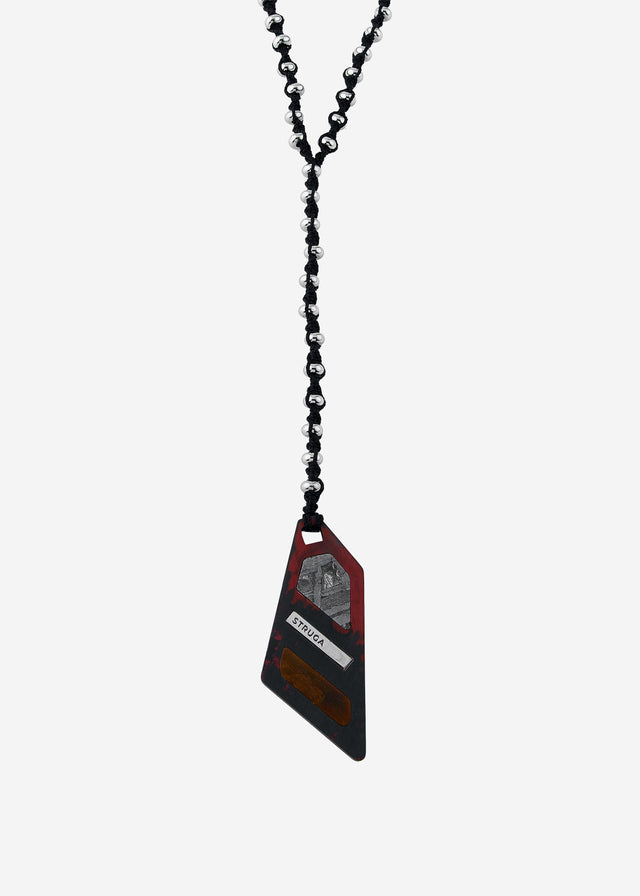
- Material: a documented Seymchan pallasite slice set into silver 925.
- Difference: each cut reveals a distinct metal-and-olivine field.
- Care: keep the insert dry and treat the ring as a composite object.
- Order: size, profile, slice and finish are confirmed in a current commission.
Updated August 29, 2026
A meteorite wedding band joins two materials with different histories and care needs. This guide separates documented facts from object-specific decisions, so the reader can understand the material before discussing a ring.
Why put meteorite in a wedding band
Material before symbolism
A meteorite wedding band begins with a material decision. The centre is a slice of Seymchan pallasite set into a body of silver 925. The Meteoritical Bulletin records Seymchan as a 1967 find and recommends the classification Pallasite, Main Group. Those facts matter because “meteorite” is not one uniform material: a named find and classification let the buyer check what the workshop means.
- The silver body supplies the wearable structure and the surface that records contact.
- The pallasite slice supplies a pattern that cannot be repeated from one cut to the next.
- The commission joins the two materials only after width, profile and placement have been agreed.
The result is not a stock ring with a decorative insert exchanged at the last moment. It is a made-to-order object whose proportions begin with the hand, the intended daily use and the exact slice available for the work.
The brief records whether the band is one object or half of a pair.
- That record keeps the material choice tied to the wearer.
What the Seymchan name proves
Identity, find and classification
Seymchan is a documented meteorite name, not a style label. The Meteoritical Bulletin Database records the find in Magadan Oblast in 1967 and gives the recommended classification Pallasite, PMG. STRUGA uses that identity when it describes the material; it does not turn an unverified fragment into a named fall by appearance alone.
- Identity: the source record names Seymchan.
- Material family: pallasite means metal and olivine occur together.
- Boundary: colour, pattern or a seller’s caption alone is not provenance.
A commission therefore starts with the available fragment and its record. The cut can reveal more metal, more olivine or a quieter field between them. That variation is expected. It is the reason a photograph of the actual slice belongs in the conversation before the ring is made.
A photograph of the chosen face is evidence for the commission, not a generic catalogue promise.
- The record should travel with the exact slice under discussion.
How the metal pattern forms
Slow cooling, not a printed motif
The visible metal structure is geological evidence. The NASA Technical Reports Server describes Widmanstätten structure as a product of slow cooling in iron meteorite material. In a finished slice, the lines belong to the metal itself; they are not a graphic printed on top and they do not repeat like an industrial texture.
- Orientation changes when the workshop turns the slice before cutting.
- Etching reveals structure already present in the iron-nickel matrix.
- Olivine areas interrupt the metal field and change the balance of every insert.
This is also why two rings made from one parent fragment can relate without becoming copies. Their material history is shared, while the revealed sections differ. The claim is modest and checkable: the pattern comes from the structure of the meteorite, not from a promise that every visible line has a separate symbolic meaning.
The revealed structure can be compared with the source description without assigning invented meanings to it.
- This keeps the geological claim narrow.
Silver 925 around the slice
One object, two changing surfaces
The ring body is silver 925. In STRUGA language, Living Silver means silver 925 without rhodium plating. Its surface can darken and brighten with air, skin and friction. That natural patina is distinct from controlled oxidation, where the workshop intentionally darkens selected areas before the object is worn.
- Raised silver areas usually become brighter where they meet the hand.
- Recesses can stay darker and make the form easier to read.
- The meteorite insert follows a separate care boundary because it contains iron.
The contrast is the point: a silver frame that records wear beside an ancient iron-and-olivine slice. The article does not promise an identical finish forever. It explains which surface is chosen at the start, which changes are normal, and which change—such as new orange corrosion on the insert—should be shown to the workshop.
Surface notes distinguish natural patina, deliberate oxidation and a new corrosion concern.
- Each condition leads to a different response.
Decisions made before production
Proportion is part of the commission
Width, profile and slice placement are decided together. A narrow band leaves less room for the insert and asks for a quieter composition. A wider band can show more of the pallasite field, but it also changes weight, edge presence and comfort. There is no useful universal millimetre answer without a hand and a proposed form.
- Choose the ring profile: rounded, flat or faceted.
- Agree the visible size and orientation of the meteorite slice.
- Decide whether the silver stays light, develops Living Silver patina, or begins with controlled darkening.
- Confirm the actual size and fit through the current sizing route before production.
These choices are recorded before the wax model and silver body are finished. Exact price, timing and availability are not frozen into an editorial article. They belong to the current commission because the actual slice and construction determine the work.
The approved brief keeps these variables together instead of treating size as the only production input.
- That prevents an old example from becoming a specification.
Daily wear and the water boundary
Durable does not mean maintenance-free
A meteorite wedding band can be intended for daily wear. The practical boundary is water: pallasite contains iron, so prolonged moisture, salt water and chlorinated water are not neutral conditions. Remove the ring before swimming, showering, washing dishes or using strong household chemicals, then store it only when the object is dry.
- After accidental rain or splashing, dry the surface and the edges of the insert.
- Do not scrub the meteorite with an abrasive intended for plain bright silver.
- Do not send a composite ring into ultrasonic cleaning without the maker’s assessment.
- If colour or texture changes at the insert, stop home treatment and contact the workshop.
That routine is not a lifetime guarantee. It is a clear operating condition for two joined materials. The construction, the finish and any later repair must be assessed on the actual object rather than inferred from a generic ring-care recipe.
Care guidance is reviewed again if the object later receives another finish, repair or component.
- The current construction remains the authority.
Two bands from one fragment
Related, never mechanically identical
A pair can begin with one parent fragment. When the available material and cut allow it, two slices are taken from the same Seymchan piece. This creates a verifiable relationship between the bands without pretending that their visible fields can be mirrored exactly. Pallasite structure changes through the fragment, and every cut meets a different plane.
- The shared origin can be recorded during the commission.
- The two orientations can be chosen to echo rather than duplicate each other.
- Widths and profiles can remain the same or respond to two different hands.
The useful question is not whether the rings are identical. It is whether their differences were chosen and documented. A pair may share silver finish and proportions while the meteorite patterns diverge, or it may keep a common slice direction while each band uses a different width. Both are coherent if the decision is made before production.
The shared-fragment note should be made while the material is still traceable on the bench.
- It cannot be reconstructed from appearance later.
Dark Union and the commission route
A ring made from the actual brief
The route is Dark Union or Custom Order. The conversation begins with the pair, the hand, the way the ring will be worn and the available Seymchan material. STRUGA then resolves the form through a wax model, a silicone mould, silver 925 and hand finishing in Bali for the international market.
- Send the required sizes and describe everyday use.
- Review the proposed profile and the photograph of the actual slice.
- Confirm the surface choice and the water-care boundary.
- Receive the current price and production timing from the commission, not from an old article.
This keeps the editorial promise narrow and honest. The Journal explains the material and the decisions. The active commission confirms what can be made now. A reader can continue to Dark Union or contact STRUGA without treating a past example as current stock.
The same route also records which storefront and production context apply to the order.
- That market boundary stays outside generic geology.
Source record and claim limits
What is documented and what remains object-specific
Three primary records support the factual frame. The Meteoritical Bulletin Database supports the Seymchan name, find year and classification. The NASA report supports slow cooling as the origin of Widmanstätten structure. The U.S. Geological Survey supplies the age context derived from meteorite dating.
- These records do not certify a particular STRUGA slice by themselves.
- They do not guarantee corrosion resistance, skin compatibility or a service life.
- They do not replace the live catalogue or the current commission for price and timing.
STRUGA’s brand constitution supplies the separate canon boundary: silver 925 is the base; Living Silver is unplated silver 925; controlled oxidation is a chosen finish. The exact slice, size, weight, availability and service path remain properties of the actual object and its current production record.
The proposal therefore separates cited material facts, STRUGA canon and current commercial data.
- None of the three substitutes for the others.
Questions about meteorite wedding bands
01Can a meteorite wedding band be worn every day?
It can be designed for daily wear, but the pallasite insert must be kept away from prolonged moisture, salt water and chlorine.
02Are two bands from one meteorite fragment identical?
No. They may share one parent fragment, while each cut reveals a different part and orientation of the material.
03Is every meteorite pattern the same?
No. The visible metal and olivine field changes with the fragment and the plane of the cut.
04Where are current price and timing confirmed?
They are confirmed in the current Dark Union or Custom Order commission after the slice, size and construction are agreed.