Engagement Ring Types — Settings Explained (Solitaire, Halo, Pavé, Bezel)
Most engagement rings that look different are the same band with a different setting — the few millimetres of metal that hold the stone. Prongs, a solid rim, a row of tiny stones, a gap that pinches a gem by pressure alone: each decides how much light reaches the stone, how exposed its edge is, how the ring sits beside a wedding band and what a jeweller will be asked to repair later. Below are the eight settings the trade names most often, what each actually does, and where the claims usually made about them stop being true.
Updated September 28, 2026
An engagement ring's "type" is its setting — the metal that holds the stone. Eight are worth knowing: solitaire on prongs, halo, pavé, bezel, three-stone, channel, tension and cluster. Prongs give the most light, a bezel covers the edge better than prongs, pavé and halo need the most checks, tension is the riskier choice. STRUGA builds engagement and paired rings to order in 2–4 weeks from sketch approval; the ready ring of the line is the Thorn Ring.
What are the main types of engagement ring settings?
Eight settings cover almost every engagement ring on the market: the solitaire on prongs, the halo, pavé, the bezel, three-stone, channel, tension and cluster. They are not eight styles of the same thing. Four of them hold a single centre stone (solitaire, bezel, tension, and the centre of a halo), two are ways of setting many small stones into the band (pavé and channel), and two build the top of the ring from several stones (three-stone and cluster). That is why one ring can combine them — a solitaire head on a pavé band is a common pairing.
| Setting | What holds the stone | In one line |
|---|---|---|
| Solitaire | 4 or 6 prongs | one stone, the most light |
| Halo | prongs, plus a frame of small stones | the centre looks larger |
| Pavé | tiny beads or prongs across the band | a surface of small stones |
| Bezel | a continuous rim of metal | the edge is covered |
| Three-stone | prongs or bezels, three heads | width across the finger |
| Channel | two metal walls | a row of stones in a track |
| Tension | pressure from the band's ends | the stone looks suspended |
| Cluster | many small heads grouped | several stones read as one |
What does "setting" mean on an engagement ring?
The setting is the part of the ring that holds the stone: the prongs, bezel wall or channel rails that grip it, the gallery of metal underneath, and the way that structure joins the band. Two rings with the same band and the same stone can look nothing alike, because the setting decides:
- how much of the stone shows from the side;
- how high the stone sits above the finger;
- how exposed its edge — the girdle — is to knocks;
- how easily the ring cleans;
- whether a wedding band can sit flush beside it.
It also decides much of the bench work. A bezel wraps a continuous wall of metal around the stone, where four prongs touch it at four points; accent stones in the band add their own count and the hours to seat each one. GIA's guide to ring settings draws the same line between a setting, which is the structure, and a style, which is the overall look.
What is a solitaire prong setting?
A solitaire is one stone held by four or six prongs, with nothing else on the head. It is the form most people picture when they hear "engagement ring", and it has a clear origin: Tiffany & Co. introduced the Tiffany Setting in 1886, six prongs lifting a round brilliant diamond above the band so light could enter from below.
What it does well. Prongs cover very little of the stone, so it takes in the most light and stays the only thing the eye lands on. The head sits above the band, which lets a straight wedding band slide underneath.
Where it gives way. The stone's edge is open, and a raised head can catch on knitwear. Four prongs show more stone; six hold it with more points of contact. Prong tips wear with time and are rebuilt by adding metal — a repair jewellers call re-tipping.
Variants. Round, claw or flat prongs change the outline of the head. V-shaped prongs wrap the pointed corners of princess, pear, marquise and heart cuts, which GIA recommends to reduce the risk of chipping. A cathedral mount raises the head on arches of metal and lifts the stone higher still.
What is a halo engagement ring?
A halo surrounds the centre stone with a ring of smaller stones. The frame adds sparkle and, in GIA's words, can make the centre stone appear larger. The exact gain is often quoted as a percentage, but no independent source measures one: it depends on the size of the centre stone, the width of the frame and the distance it is seen from, so treat any number as a sales figure rather than a fact.
What it does well. The most visual presence for the size of the centre stone, and a clear outline — round, cushion or oval — even when the centre stone is modest.
Where it gives way. A halo holds many small stones on many small prongs. GIA notes that halo rings may need more maintenance and that their prongs tend to wear faster; the centre stone sits in its own head and is usually unaffected when an accent loosens.
Variants. A single halo, a double halo of two rows, and a hidden halo — a row of small stones around the base of the head, invisible from above and visible in profile.
What is a pavé setting?
Pavé is French for "paved": small stones are set close together across the band, like cobbles in a street, so the metal almost disappears under them. Pavé describes the band, not the centre — it pairs with any head, from a solitaire to a halo.
What it does well. Light along the whole ring, not only at the top, and a band that reads as a continuous surface.
Where it gives way. Each small stone is held by tiny beads of metal, and those beads are the first thing to loosen. GIA advises occasional maintenance to keep pavé stones secure and notes that pavé bands are harder to resize, because adjusting the band can disturb the stones. How often a pavé band needs attention depends on wear, not on a calendar.
Variants. Micro-pavé uses smaller stones and denser coverage; French pavé cuts a small V under each stone to show more of it; bead-set pavé raises each stone on its own bead of metal.
What is a bezel setting?
A bezel holds the stone with a continuous rim of metal around its edge instead of prongs. A full bezel closes the circle; a partial bezel leaves gaps at the sides. Because the rim sits close to the stone, the head is low and smooth, with nothing to snag.
What it does well. Protection. The rim covers the girdle, the edge where most chips start, and GIA describes bezel settings as offering excellent resistance to chips and everyday wear. That makes it the practical choice for hands that work — clinicians, climbers, anyone who lifts, digs or builds.
Where it gives way. Covering more of the edge lets slightly less light into the stone, so a clear diamond in a bezel looks a little quieter than the same stone on prongs. A bezel is harder to convert later: the stone sits sleeved in metal, so changing the setting usually means a new head.
Variants. Full or partial bezel; east-west, where an elongated stone is turned across the finger; a milgrain edge, a line of tiny beads along the rim.
The bezel is what STRUGA usually proposes when a ring is meant to be worn rather than guarded. It suits the stones the workshop works with — wild-grown crystals left uncut and Seymchan meteorite — because a continuous wall frames an uneven surface better than four tips, and it carries unplated silver around the stone in one line. The same logic runs through the band itself: a darkened ring such as Brutalism V.3 from the BRUTALISM family shows how much presence the metal alone can carry.
What does a three-stone ring mean?
A three-stone ring sets a centre stone between two smaller ones. The meaning usually attached to it — past, present and future — is younger than the form: De Beers' Diamond Trading Company launched that positioning in 2000, first for a three-stone anniversary ring. The form itself appears in rings long before any campaign.
What it does well. Width across the finger, and room to mix — a sapphire centre with white side stones, or a dark salt-and-pepper diamond flanked by clear ones. Side stones that repeat the centre's shape read classic; baguettes or trillions read geometric.
Where it gives way. A wider head is harder to stack: a straight wedding band often leaves a gap, and a curved or notched band is designed to sit around it. Three heads also mean three sets of prongs to check.
What is a channel setting?
A channel setting runs a row of small stones between two walls of metal, with no prongs between them. It is common on wedding and eternity bands and appears on engagement rings as a band beneath the centre stone.
What it does well. The walls protect the stones' edges and leave nothing to catch, and GIA describes channel settings as durable and well suited to everyday wear. The look is clean and architectural.
Where it gives way. Channel-set rings can be difficult to resize, especially when the stones run far around the band, so the size is best settled at the order. Walls cover part of each stone, which shows slightly less of it than pavé does.
Variants. A half-channel along the front of the band, a full channel around it, square princess stones, or long rectangular baguettes.
What is a tension setting?
A tension setting suspends the stone between the open ends of the band, held by the pressure of the metal rather than by prongs or a rim. It is the most engineered of the eight, and the stone appears to float.
What it needs. A hard stone that takes pressure. GIA notes tension is most often used with diamonds and sapphires. On the Mohs scale diamond is 10 and corundum (sapphire and ruby) is 9, while emerald is 7.5–8 with only fair-to-good toughness and opal is 5–6.5 with very poor to fair toughness — hardness and toughness are different properties, and a tension ring needs both.
Where it gives way. GIA calls tension a riskier choice for an engagement ring: a hard blow can shift or loosen the stone. Tension rings can be very difficult, sometimes impossible, to resize, and each band is made for its specific stone.
What is a cluster engagement ring?
A cluster groups several small stones into one larger shape, with no single centre — the group is the centre. The pattern can be floral, geometric or loose and asymmetric.
What it does well. A large presence without one large stone, and freedom to mix colours and cuts. It reads as a considered choice rather than a default.
Where it gives way. Every stone has its own small prongs, so a cluster needs the same checks as a halo: more points of contact, more places to look. Against a very plain wedding band it can read busy.
How do the settings compare on height, protection and care?
The table sets the eight side by side. Height, protection and care are relative — the same setting sits higher under a larger stone — and the resizing column follows GIA's wording.
| Setting | Height | Edge protection | Care | Resizing | With a wedding band |
|---|---|---|---|---|---|
| Solitaire | high | open | check prongs | usually easy | sits flush |
| Halo | high | partial | frequent checks | depends on band | often needs a shaped band |
| Pavé band | as the head | partial | frequent checks | difficult | sits flush |
| Bezel | low | covered | low | usually easy | sits flush |
| Three-stone | medium to high | open | check prongs | usually easy | often needs a shaped band |
| Channel band | low | covered | low | difficult | sits flush |
| Tension | medium | open | check after knocks | very difficult | limited |
| Cluster | medium | partial | frequent checks | depends on band | depends on outline |
Which setting suits which stone shape?
Some settings take any shape; others are drawn around one or two cuts. If the stone is chosen first, this narrows the settings; if the setting is chosen first, it shows which shapes will sit right.
| Setting | Stone shapes that suit it |
|---|---|
| Solitaire | any; V-prongs for princess, pear, marquise and heart |
| Halo | round, cushion, oval |
| Pavé | any centre — pavé is the band |
| Bezel | round, oval, emerald, rough crystals and uneven surfaces |
| Three-stone | round, oval, emerald, pear; sides round, baguette or trillion |
| Channel | small round, princess or baguette stones |
| Tension | round, princess, asscher in hard stones |
| Cluster | small rounds or mixed cuts |
How do you choose an engagement ring setting?
Three questions narrow it quickly.
- How hard does the hand work? Medicine, climbing, workshop, gardening, small children — a bezel or a channel band. Someone who takes rings off for the gym can wear anything.
- What should the ring do with light? The most sparkle: a halo on a pavé band. The most focus on one stone: a solitaire. The most character: three-stone, cluster or tension.
- Will it share the finger? If a wedding band has to sit flush, choose a solitaire, a bezel or a channel band — or design both rings together, which is how paired rings are built at STRUGA.
The stone matters as much as the hand. A clear, hard stone can take prongs and use the light; a dark, rough or softer stone is better framed and protected, and on darkened silver a continuous rim reads as part of the ring rather than a bright interruption. The step-by-step route from blank page to cast ring is in our custom engagement ring process, and the choice of stone is covered in our non-diamond engagement ring guide.
Which setting lasts longest, and what wears out first?
No authoritative source publishes service life in years for each setting, and a figure that ignores how the ring is worn would be invented. What is well documented is the order of risk.
- Most checks: pavé, halo and cluster — many small stones on small prongs or beads. GIA notes halo prongs tend to wear faster.
- Middle: solitaire and three-stone — a few prongs whose tips wear and are rebuilt by re-tipping.
- Best edge protection: bezel and channel — metal walls cover the stones' edges.
- Special case: tension — little wear, but a hard knock can move the stone.
The routine is the same for all of them: GIA suggests having prongs checked every six months or at least on each anniversary, and Jewelers of America advises a check at least once a year. On a STRUGA ring the darkening is never the fault — the silver is 925 without rhodium, patina is the intended finish, and on pieces left bright the owner can reset it with a silver cleaner; pieces darkened at the bench are not polished back. Anything structural — a loose stone, a worn tip, a knock — goes to a person at STRUGA: write in and we look at the actual ring.
What does STRUGA make, and why is there no price list?
Everything above is the trade's vocabulary, not a STRUGA catalogue, and the difference is worth stating plainly. There is no stock line of diamond engagement rings and no diamonds in the catalogue. The stones the workshop works with are wild-grown crystals left uncut — tourmaline, aquamarine, quartz, heliodor — and Seymchan meteorite. A faceted stone can go into a made-to-order ring when the client brings it, and the setting is then built around that stone.
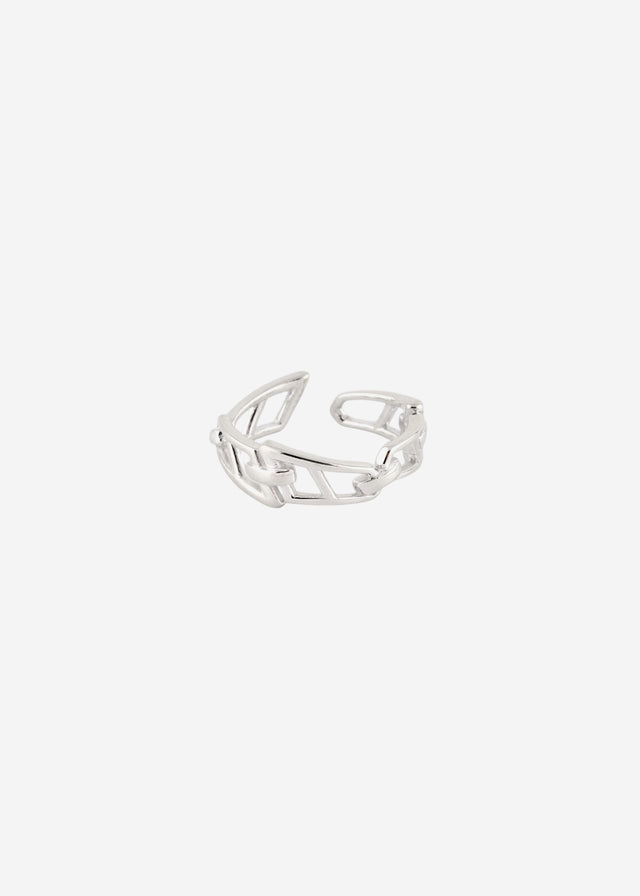
Engagement and paired vow rings run through DARK UNION as made-to-order work, assembled around two people through a brief. The ready-to-buy side of DARK UNION is one ring today, the Thorn Ring from the THORN family; bands such as Signature Links V.1 are worn beside it or on their own.
Why is there no price list for a made-to-order ring?
Because the sum is decided by the metal weight, the stone the client brings, the complexity of the form, the size and the deadline, and quoting a number before the brief would be a guess dressed as a fact. STRUGA collects the brief first and works to the budget named in it; the offer comes from a person, not a table. The work itself takes 2–4 weeks from sketch approval, a frame rather than a promised date, and STRUGA ships worldwide. To start, send the brief through the custom order form.
About STRUGA. STRUGA is a dark silver jewelry brand founded by Dmitry Strugovshchikov and Ekaterina Strugovshchikova, handcrafted with Balinese and international silversmiths. Most pieces are 925 sterling silver left uncoated, so they darken with wear; part of the range is oxidized at the bench. The darkening is part of the design. It is a brutalist object that reacts and changes through contact with the environment and the wearer.
Frequently asked questions
Didn’t find the answer — write to us, we reply personally.
Ask a question →01Is an engagement ring "type" the same as the stone shape?+–
No — they are two different decisions. "Type" almost always means the setting, the structure that holds the stone: solitaire, halo, pavé, bezel, three-stone, channel, tension or cluster. The shape — round, oval, princess, emerald, pear — is the cut of the stone itself. The same round stone looks different in each of the eight settings. Choose the setting for how the ring wears and protects the stone, and the shape for the stone's outline.
02Is a bezel setting the same as a halo?+–
No. A bezel is a continuous rim of metal around the stone's edge, with no prongs; it sits low and covers the girdle, where chips start. A halo is a frame of small stones around the centre stone; it adds sparkle and can make the centre look larger, but it holds many small stones on small prongs that need regular checks. A bezel guards a stone; a halo amplifies it.
03Does a higher setting mean a better ring?+–
No — height is a trade-off, not a grade. A raised prong head lets more light into the stone and lets a straight band slide beneath it, but leaves the edge open and can catch on fabric. A low bezel sleeves the stone in metal and suits working hands, at the cost of a little light. Higher is not better; it is a choice between light and protection.
04Can the setting be changed after the ring is made?+–
Up to a point, and it depends on the form. A prong solitaire or a three-stone head can usually be replaced or reworked, because the stone lifts out and new metal is built around it. A bezel, channel or tension ring is harder to convert — the stone sits in metal made for it, so a new setting often means a new ring. Treat the setting as a decision made once, at the brief; if you think the form may change, say so early and we design for it.
05Does the setting affect whether the ring can be resized later?+–
Yes. A solitaire, bezel or three-stone ring with a plain lower band usually resizes easily, because the band is cut and adjusted far from the stones. GIA notes that channel-set and pavé bands are harder to resize, since the stones run around the band, and that tension rings can be very difficult, sometimes impossible, to resize. If a finger is likely to change, a plain lower band is the safer choice; measuring is covered in our silver ring sizing guide.
06Which setting protects a soft or included stone?+–
A bezel. Softer or less tough stones — opal is 5–6.5 on the Mohs scale, emerald 7.5–8 with fair-to-good toughness — chip at exposed edges and corners, which is exactly where prongs leave them open. A continuous rim covers the whole girdle and takes the knocks instead of the stone; a channel does the same for a row of small stones. Prongs suit hard, clean stones that want light from every side.
07Do paired engagement and wedding rings need matching settings?+–
No, but they have to sit together. The two rings share a finger, so the wedding band has to clear the engagement setting without a gap or rubbing. A low bezel sits beside almost any band; a tall prong head or a three-stone often needs a curved or notched band, which is decided when both rings are designed together. That is why paired rings at STRUGA run through DARK UNION as one made-to-order pair.
08Can STRUGA build a setting to order?+–
Yes — that is how most engagement rings at STRUGA begin. There is no fixed catalogue of settings: the form is decided through a brief, then drawn, modelled, cast in 925 sterling silver and finished by hand by master silversmiths in Bali. You bring the stone, the way you wear rings and the budget; we propose the setting that fits. The work takes 2–4 weeks from sketch approval. The full route is in our custom engagement ring process.
09What setting works for a dark or non-diamond stone?+–
Usually a bezel. A dark stone — a deep tourmaline, a salt-and-pepper diamond, an opaque or uncut crystal — lives on its surface and outline rather than on the fire a clear diamond throws through open prongs. A continuous rim frames that surface and, on darkened silver, reads as part of the ring instead of a bright interruption; it also protects an included stone at the corners. For a clear stone you might choose prongs for light; for a dark one, the frame is the point.
Continue from the journal to a current STRUGA object: Signature Links V.1 Ring.