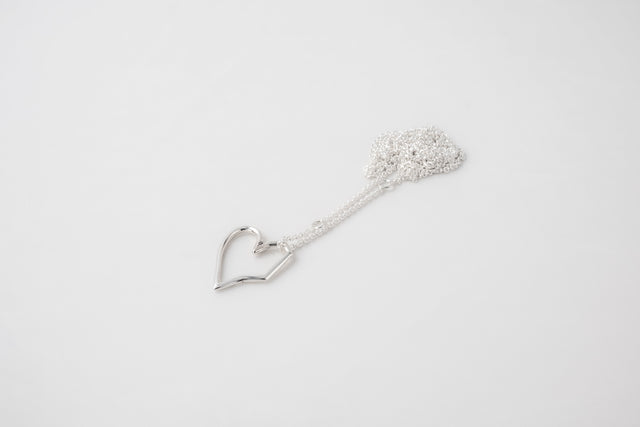
Matching Wedding Bands for Couples Who Don't Match
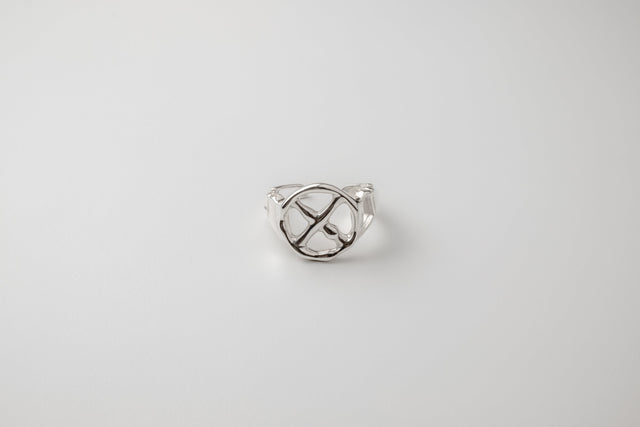
Traditional matching wedding bands say «we are the same.» Non-traditional matching says «we chose the same language but speak it differently.» STRUGA's Dark Union pairs share a material and philosophy — 925 sterling silver, Living Silver patina — but each partner's ring can be a different design. This guide covers the design choices that make non-traditional matching work, the practical implications, and how to decide between identical pairs and matched-but-distinct ones.
Key takeaways
- «Matching» today rarely means «identical» — most modern couples want coordinated-but-distinct pairs.
- Same collection + different forms = the most common matched-but-different approach.
- Same width + different texture works well: visual harmony with individual character.
- One shared element across both rings creates connection without uniformity.
- Silver makes this approach financially possible — paying for two custom rings in gold or platinum is a different conversation.
Same spirit, different expression
Traditional matching wedding bands are identical pairs — same width, same finish, same design, only different sizes. The convention assumes that marriage merges two people into one indistinguishable unit. Most modern couples don't read marriage that way. The pairing is real; the people remain distinct. The rings can reflect that.
The result is a shift toward «matching but not identical.» Same design vocabulary. Coordinated material. Sometimes different specific resolutions — different widths, different surface finishes, different specific designs within a coordinated collection. The rings look like siblings rather than twins.
How to match without matching identically
Same collection, different form
Both rings come from the same STRUGA design code or collection. Example: one partner wears a Thorn Ring, the other wears a Double Line Ring — both within the architectural minimal vocabulary, both 925 Living Silver, but visibly different in form. Same workshop, same finish, same aging behavior — different silhouettes.
This approach works because the underlying construction logic is shared. Two STRUGA pieces from different specific designs but the same brand vocabulary read as related at a glance, distinct at closer inspection.
Same width, different texture
Choose rings of similar proportions — same width, same thickness — but different surface treatments. Smooth versus brushed. Polished versus matte. Heavily oxidized versus subtly oxidized. The width creates visual harmony; the surface tells individual stories.
Practical: most couples choose this approach when one partner prefers darker finishes and the other prefers brighter. Both rings still age into their final character through Living Silver patina, but they start from different points.
One shared element
Pick one design element that appears in both rings — a specific line, a geometric form, a stone color, a finish detail — while the rest differs. This creates visible connection without uniformity. Often the shared element is a small interior engraving (date, initials, single word) that remains private but consistent across both rings.
Different widths, same finish
Many couples choose different widths to reflect different hand and finger sizes. A 6mm band on one partner and a 4mm band on the other is a common pairing. Same metal, same finish, same design language — but each ring is sized for its wearer rather than forcing the partners into matching widths.
Identical with private differentiation
The rings are externally identical but engraved differently inside. Each partner's ring carries the other's name or initials, or a unique private message. From outside, the pair reads as traditional matched. From inside, each ring is unique to its wearer.
Why silver makes this approach work
- Living Silver evolves with wear. Two rings worn through different years develop similar but never identical patina maps. The pair becomes recognizably the couple's over time.
- Affordable customization. At silver prices, you can afford to choose the design you actually want, not compromise for budget. Two custom silver rings cost what one mid-tier gold ring costs.
- Replacement-friendly. If one partner damages a ring after ten years, replacing it doesn't require breaking the wedding budget. Silver rings can be replaced or substantially refurbished without major financial weight.
- Repairability. Plain silver bands can be resized, resoldered, partially recast. Lifetime maintenance is feasible in ways that more brittle metals don't allow.
The Dark Union process
STRUGA's Dark Union service is built around this matched-but-different approach. The standard process:
- Initial conversation — discuss design direction, lifestyle, sizing, budget. Includes deciding between identical, matched-but-different, or coordinated approaches.
- Design proposal — two or three direction sketches showing both rings in coordination.
- Sample fitting — test rings in non-precious metal at proposed dimensions for both partners.
- Production — hand-cast, hand-finished in 925 sterling.
- Delivery — final pair in coordinated packaging.
Total lead time: 3–5 weeks. Plan ahead — wedding dates need to factor this in.
Choosing the right approach for your couple
- Discuss aesthetic preferences first. If both partners want identical, identical is the right answer. If one prefers something different, the conversation opens up the matched-but-different options.
- Consider hand sizes and shapes. Different hands suit different ring proportions. Forcing matched widths on differently-shaped hands often produces uncomfortable results for one partner.
- Think about wear context. Active jobs need different ring designs than office jobs. If one partner has an active job and the other a desk job, matched-but-different makes more practical sense than identical.
- Allow for personality. The rings are the most consistently visible reminder of the marriage. Each partner's ring should be one they actually like wearing, not a compromise.
- Decide on private vs. public differentiation. Some couples want the pair to read as matched from outside; others want visible individual character.
Frequently asked questions
Is identical or matched-but-different more «traditional»?
Identical is more conventional in the post-1900 Western tradition. Earlier traditions and many non-Western traditions allow significant variation between rings in a pair. Neither is universally «more traditional.»
What if one partner wants identical and the other wants matched-but-different?
This is a useful conversation to have. Often one partner is willing to flex if they understand the other's reasoning. STRUGA's design conversation helps surface this trade-off.
Can the rings be different metals?
Possible but unusual. Mixed-metal pairs work for some couples; most non-traditional matching uses the same metal with different design variations to maintain a single material story.
How do I know if my partner will like the matched-but-different approach?
Ask. The conversation alone is informative. Most modern couples are open to it once they understand the options; the resistance usually comes from assumed convention rather than personal preference.
Can we add stones to one ring but not the other?
Yes — this is a clean way to differentiate. One partner's ring gets a small raw tourmaline or aquamarine; the other stays plain. Same design language, visible asymmetry.
What about engraving — should both rings have the same engraving?
Up to the couple. Some pairs share an engraving (same date, same words). Others have inverse engravings (each ring carries the other partner's name). Both work; choose by what feels meaningful.
Is matched-but-different harder to commission?
Slightly. Two designs to refine instead of one. STRUGA's Dark Union process accommodates either approach without significant cost difference.
Related
- Matching wedding bands — dark silver
- Silver wedding rings vs gold
- Alternative engagement rings guide
- Why couples choose silver over gold
- Dark Union service
- Custom Order — design your own
STRUGA Dark Union approach. Coordinated silver wedding pairs — same design vocabulary, often different specific resolution. The pair shares Living Silver philosophy and 925 sterling material; the individual rings reflect that the people wearing them are different. Hand-cast, hand-finished, lifetime refinishing.